
I really need to get back to work, but I am still sorting through the events of the past few days and the memories they have triggered. Here’s another meditation, this one on disappeared things.
Many thanks to those who, here and elsewhere, have offered me condolences on the death of my mother. Today I wrote a post about the little country churchyard where my family are buried — and how they came to be buried there. Posting will continue to be slow for another week or more.

Two quick announcements:
Turns out my Sayers biography is already available in digital form — if you’re a subscriber to Oxford Academic: see here.
Over at the Hog Blog, I have a longish essay about the great American autobiographer Pauline Kael. Some links seem to have disappeared from that piece; that’s generally okay, but a key one goes to the interview with Audrey Diwan in the documentary Room 999.
If I don't post much in the coming days and weeks this is why.
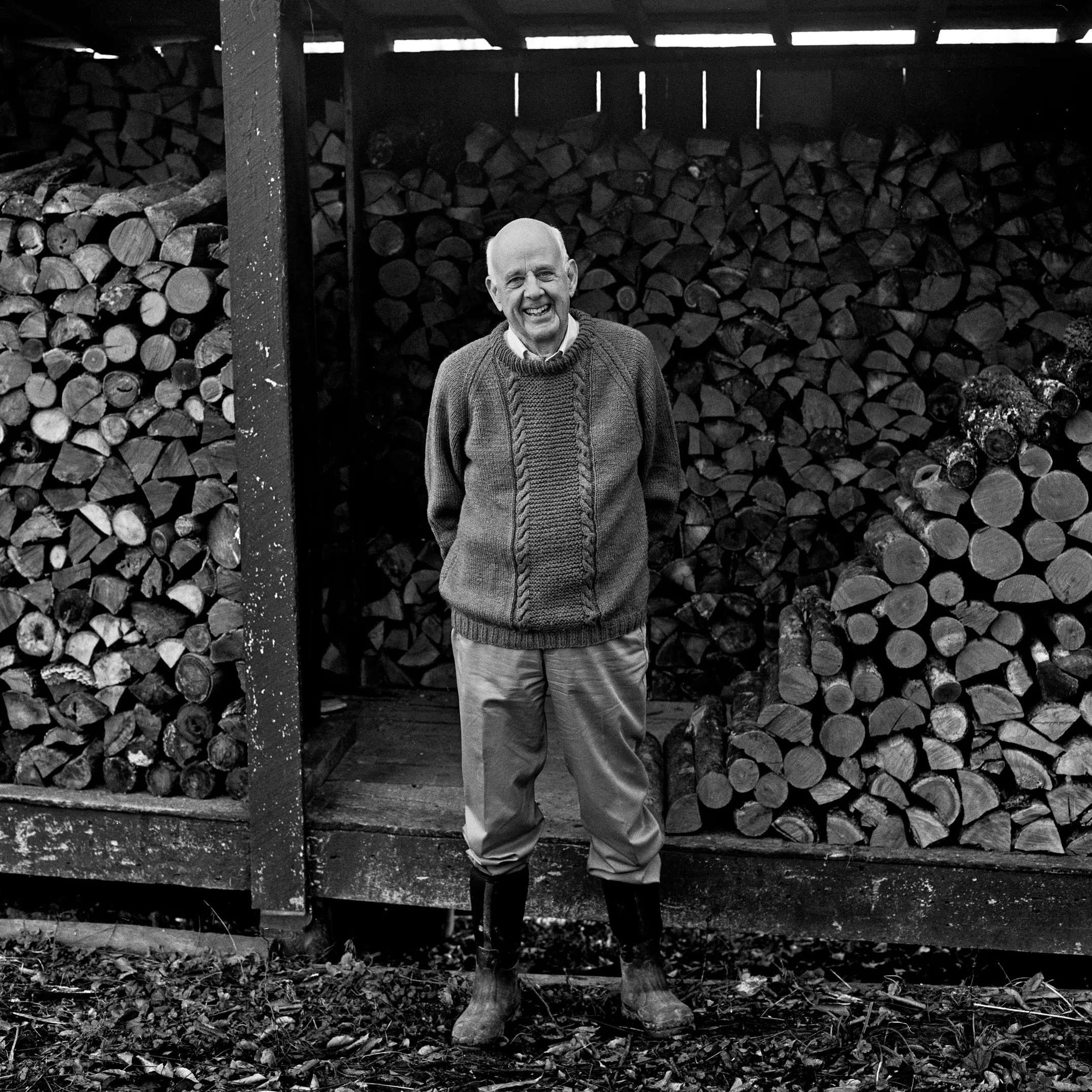
I feel that I ought to say something about what Wendell Berry has meant to me, but I am struggling to articulate it — partly because some family health difficulties are consuming my attention, but also because the debt is deep. Once, in the early 1990s, I was talking with a grad-school friend at a wedding and describing my abiding fascination with Berry, whom I had discovered when, in 1982, I picked up a copy of Standing By Words on the books-possibly-to-be-reviewed table at the offices of the Virginia Quarterly Review. “But,” my friend stammered, “he’s a … a … conservative.” “Yes and no,” I replied. That’s probably where I would start. With that, and with the comment that he is one of the very few contemporary writers I have been reading constantly for more than forty years.
Momentarily on the back burner in 2020, the global emergency of carbon dioxide could still be summoned as needed. But with climate, as with Covid, the politically supine character of technical bodies tasked with science-settling, on behalf of the emerging order, shocked the intellectual conscience of many observers.
Each of these putative emergencies has a solution: Net zero, the hygiene state, DEI. Each solution requires a tightening net of surveillance and social control. Each has its cadres of moralists, as well as its institutional functionaries. All solutions point toward the relocation of sovereignty from representative, parliamentary bodies to experts empanelled at some undisclosed location.
This is confusing to those of us with liberal political instincts. It feels like a concentration of power, of the sort that should set off alarms. But it is also a dispersal of power – to unaccountable bodies which seem to coordinate with one another somehow, without engaging in anything so crude as a conspiracy. As though they communicated by political pheromones. For a sociologist, the question of how this elite coordination comes about is one of the most fascinating questions of our times.
Matt is correct. Whatever your political views — whether you endorse or repudiate the initiatives described here — the question of how this clerisy emerged, for indeed it was emergent rather than planned, is enormously important and enormously difficult to answer.
That moral certainty is perhaps the keenest taste left by Berry’s multitudinous writings. It was never self-righteous—Berry was often self-deprecating, self-questioning, or drily funny—and neither did it pretend that “going back to the past” was any kind of easy solution to the complex mess of the present. His enemies liked to pretend that both of these things were true, but what they probably disliked most about him was that he actually practiced what he preached. Berry never bought a computer or used a smartphone; he wouldn’t use air travel; and he lived and worked in the small rural community he brought to life with his words. Unable to call him a hypocrite, his critics had to content themselves instead with calling him an unrealistic fossil, wedded to a dead past. But there was nothing simple about Wendell Berry, and he was not committed to some Romantic fantasy. He was committed to real human lives and real human work, in real, living communities. The ongoing destruction of all of these things was the fire lit under his words.
I have a tip for anyone teaching Chesterton’s The Man Who Was Thursday. Begin your class thus: “Imagine that you’re sitting on a bench under a tree reading this book. An acquaintance comes up and asks what you’re reading. You show her. She says, ‘Hmmm. What’s it about?’ What do you say?”
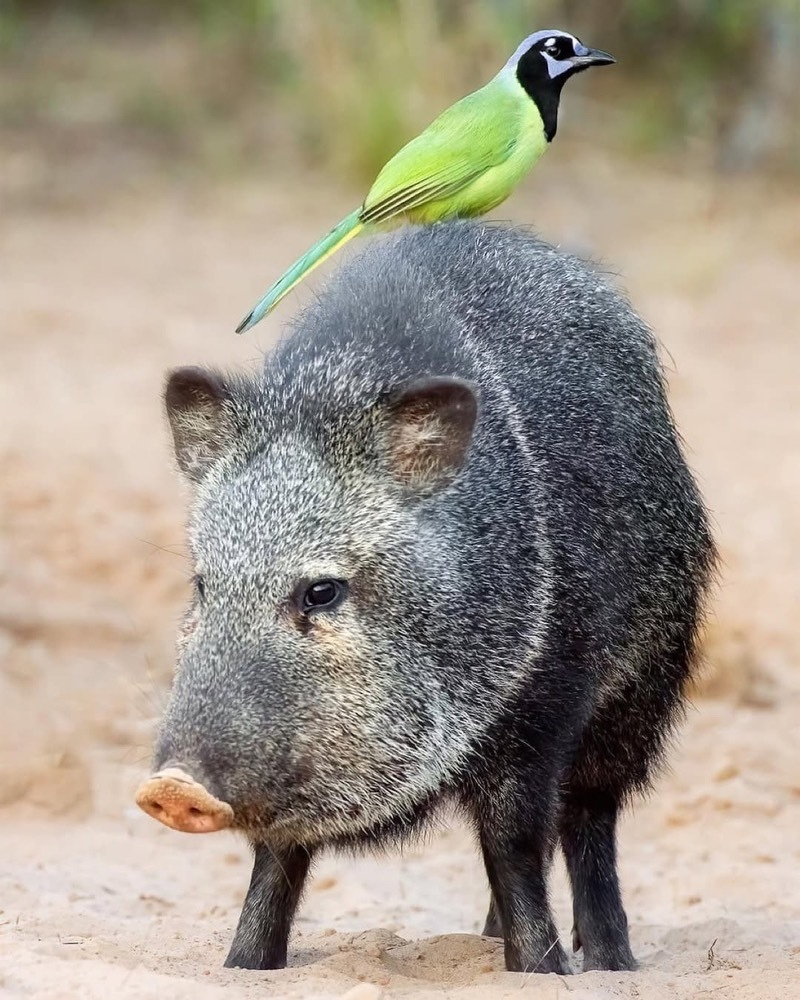
Green jay on javelina; South Texas represent. Via Texas Parks & Wildlife.