
YMMV, but 81.4% of my frustration with my phone disappeared when I removed email apps from it. (I already had no social media, of course.)
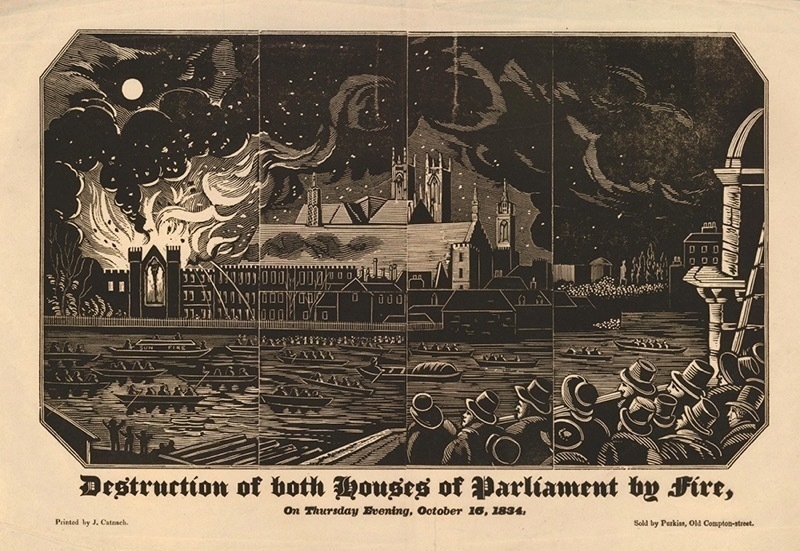
James Catnach, “Destruction of the Houses of Parliament by Fire," 1834, woodcut.
Angua making a new friend at the vet.

Simon Armitage’s translation of the Old English poem “Deor” is beautiful. “As that passed over may this pass also” is not a bad refrain for any difficult times.
The enlightenment tag on my blog is I think an interesting one, and includes this morning’s post.
I’m eagerly awaiting the press release from Real Madrid announcing that they fully support their player, who was completely justified in throwing ice at the referee and should have his red card rescinded. ⚽️
Hooray for the restoration, but someone’s gonna have to explain this poster to me. 🎥

NBA players feature a range of visible accoutrements: headbands, full sleeves, elbow sleeves, knee sleeves, full-length leg sleeves, wristbands. That’s why I always notice the few players who are True Basic. Evan Mobley, for instance: top, shorts, socks, shoes — that’s it. I can’t even see any tats. Impressive! 🏀
FYI, when something appears that’s relevant to a post of mine, or when I simply have further thoughts, I will often update the original post accordingly. I’ve done that recently with posts about