GIGO
Elite American colleges are already more racially diverse than the country writ large, but the perpetual cry is for more people of colour on campus. This is the source of the most persistent criticisms of the SAT. The broad claim about the SAT is that, since there are race and class disparities in SAT scores — white and Asian pupils score better than Hispanic and black, and rich better than poor — then the test must be discriminatory and should be abolished.
This is a bit like blaming seismographs for earthquakes. The SAT does not create inequality; the SAT reveals inequality.
Not a bit like blaming seismographs for earthquakes, almost exactly like that. (Also very much like trying to keep cases of Covid down by limiting testing.)
I’ve said this before, but anyway: Administrators at elite American universities say they want to reduce race and class disparities in America, and let’s take them at their word (even though, as Freddie shows in that essay and elsewhere on his blog, there are actually good reasons for not taking them at their word). Adjusting their admissions policies won’t do that. It will help only a handful of people who are, for the most part, already ahead of the game.
What they should do instead is devote a fraction of their enormous financial and intellectual resources to helping younger people out of poverty. The University of Chicago Laboratory Schools are not now what John Dewey intended them to be, and even Dewey’s original vision was far too politicized, but a more genuinely pedagogical version of that endeavor ought to be a model. Our elite universities ought to be asking themselves what they can do to help educate kids so that those kids can eventually do much better than they now do on the SAT and other standardized tests. Instead they want to toss out the tests that reveal the problems we face.
In general — this is a broad statement, but I really do believe it’s true — all of our major social problems remain intractable largely because we we think we can somehow, magically, achieve “equality of outcomes” without finding out why the existing outcomes are so unequal, and therefore without considering how existing injustices might be ameliorated and future ones headed off. Denouncing unwelcome outcomes is cheap and easy; but there is no law more universally applicable than GIGO.
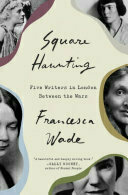
Currently reading: Square Haunting: Five Writers in London Between the Wars by Francesca Wade 📚

“The Teleprinter,” Eric Ravilious (1941)

Currently reading: Once and Forever by Kenji Miyazawa 📚


I mean, it’s what happened to Eustace Scrubb, so it ought to be a word.

Lebenswelt
Adam Roberts (yes, again):
My problem is not that [Miles Cameron’s Against All Gods] gets this or that specific historical detail or mood wrong; it’s that it doesn’t really engage with ‘history’ at all, despite pretending to do so. Its characters’ sensibilities are modern, its gods agents in the imagined world much as its mortals are — the gods are more powerful, though ‘power’ is rendered here only in terms of the ability to overbear, with violence or words — all potestas, nothing of auctoritas. There’s nothing in these gods of the numinous, the transcendent, nothing of the strange, the awe-inspiring, tarrying or resplendent. This is not a dimension that Cameron reproduces in his imagined Bronze Age; although for ‘actual’ Bronze Age human beings, in their porosity of subjectivity, it was a crucial and wondrous and terrifying aspect of existence. The characters go about their various plot-driven actions, and the storylines are punctuated by interludes of purely somatic intensity (the violence, the fighting, the sex) that do nothing to estrange, to capture or embody the wonder and strangeness of the past as such.
Great post by Adam. I would just add that precisely the same problem afflicts most SF, which cosplays an imagined future as fantasy cosplays an imagined past (or past-like secondary world). As someone who has toyed with the idea of writing both fantasy and SF, I have always believed that this is the greatest challenge: How to avoid writing characters who are people exactly like me, only placed in a different natural, cultural, and technological environment? But people who are situated in radically different environments develop in wholly different ways: each Lebenswelt generates its own distinctive range of cultural and personal possibilities. Trying to imagine my way from (a) the possibilities, the options of mind and action, available to me in my Lebenswelt to (b) what someone formed in a radically different environment might experience … well, that’s astonishingly difficult. (Indeed, I have felt this challenge so strongly that I’ve never completed anything in either genre. The problem defeats me.)
One writer who has attempted to think through these problems, though primarily in one novel and with one character, is C. S. Lewis. (He attempts a similar act of historical imagination in Till We Have Faces but without the explicit contrast to our own world.) The novel is That Hideous Strength and the character is Merlinus Ambrosius, who is awakened from 1500 years of sleep into mid-twentieth-century England and is puzzled by everything he sees. For instance:
"Sir," said Merlin in answer to the question which the Director had just asked him. "I give you great thanks. I cannot indeed understand the way you live and your house is strange to me. You give me a bath such as the Emperor himself might envy, but no one attends me to it; a bed softer than sleep itself, but when I rise from it I find I must put on my own clothes with my own hands as if I were a peasant. I lie in a room with windows of pure crystal so that you can see the sky as clearly when they are shut as when they are open, and there is not wind enough within the room to blow out an unguarded taper; but I lie in it alone with no more honor than a prisoner in a dungeon. Your people eat dry and tasteless flesh but it is off plates as smooth as ivory and as round as the sun. In all the house there are warmth and softness and silence that might put a man in mind of paradise terrestrial; but no hangings, no beautified pavements, no musicians, no perfumes, no high seats, not a gleam of gold, not a hawk, not a hound. You seem to me to live neither like a rich man nor a poor one: neither like a lord nor a hermit.”
The novel I think is flawed, but this is quite brilliant, and I wish the world of fiction had more like it. One reason there isn’t: Merlinus is to his modern interlocutors a thoroughly appalling character, who quite readily suggests that a woman who has not behaved in the way he thinks right should be beheaded, and then is befuddled by the response this opinion receives. (“The Pendragon tells me … that you accuse me for a fierce and cruel man. It is a charge I never heard before. A third part of my substance I gave to widows and poor men. I never sought the death of any but felons and heathen Saxons.”) And to create a character so alien to our readerly sensibilities is a risky thing for a storyteller to do; perhaps Lewis was wise to do this only with a minor character.
After all — and here the imperatives of historical imagination may run contrary to the imperatives of good storytelling, readers do typically want to … well, we have different words for it: people used to say that they like to identify with characters, but now they’re more likely to say that they find characters relatable (or not). This is an impulse that I don’t wish to discourage: as Edward Mendelson says in his excellent book The Things That Matter, “A reader who identifies with the characters in a novel is not reacting in a naïve way that ought to be outgrown or transcended, but is performing one of the central acts of literary understanding.” But, I fear, the more seriously a writer takes this reaction the more constrained that writer will be in historical imagination.
The controversies of the day expose a problem with the right and it isn’t corruption. It isn’t “sleaze”. It is the impossibility of chasing money and fighting the culture wars. [Nadhim] Zahawi is one person, but stands for millions of a conservative temper in each generation. They are entitled to choose lucrative work over a life in the institutions that set the cultural weather. They are entitled to deplore the success of the left in bending those institutions to their dogma. What is neither honest nor becoming is to do both: to forfeit terrain and then seethe at its capture by hostile elements. […]
Some conservatives have rationalised this discrepancy between electoral triumph and cultural retreat as a kind of leftwing swindle. Or, worse, as proof of democracy's futility. Their own complicity is lost on them. There are Republicans who can't believe how leftwing universities are and also can't believe that anyone would ever choose the unlucrative life of an academic. At some point, you'd hope, the irony will dawn on them.
(Via Andrew Wilson)
inertia
In the late 19th and early 20th century, many people became concerned about the ill effects of child labor on children’s development and wellbeing, and laws were passed to ban it. But now we have school, expanded to such a degree that is it equivalent to a full-time job—a psychologically stressful, sedentary full-time job, for which the child is not paid and does not gain the sense of independence and pride that can come from a real job.
Elsewhere … I have presented evidence that children, especially teenagers, are less happy in school than in any other setting where they regularly find themselves and that increased schooling, coupled with decreased freedom outside of school, correlates, over decades, with sharply increased rates of psychiatric disorders in young people, including major depression and anxiety disorders.
I came across this 2014 piece via Ed West, and it really does make me think — as it has made others think — that Covidtide has given us a great opportunity to rethink what school is for and who should be in it. But the entrenched assumptions are so strong that I don’t think we’re taking that opportunity.
Doesn’t it seem to be true — and obviously true — that this kind of inertia is a function of a massively bureaucratic and administrative social order? An anarchist, or at least relatively-more-anarchistic, society would be more agile, more adaptive. I’m becoming more of an anarchist by the day.
weapons and separations
But the thing that struck me is the way Gandalf comes back invulnerable. The last we see of Gandalf the Grey he is complaining that he is tired (‘what an evil fortune! And I am already weary’ [348]). Now he has almost limitless energy — when the four of them ride all day and all night across Rohan, Gandalf permits them only ‘a few hours rest’…. Not only does he not need sleep, he cannot be harmed by weapons: ‘Indeed, my friends,’ he tells his companions: ‘none of you have any weapon that could hurt me’ [516]. This carries with it the suggestion that all Gandalf’s subsequent battlefield galivanting with Glamdring is a kind of play-acting: for he can no more be slain than could Milton’s Satan.
Adam is rarely wrong, as I’m sure he will confirm, but I think he’s wrong here. There’s a big difference between “none of you have any weapon that could hurt me” and “no weapon of any kind can hurt me.” Later he is openly uncertain whether he is a match for the Lord of the Nazgul — why couldn’t that encounter at least potentially end in his death again? I suspect that Adam thinks (confirm this for me, friend) that Gandalf could himself be transformed into a wraith, but if that’s what he’s in danger of, I suspect that Tolkien would have him say so.
But that’s just a suspicion — I’m not sure what could befall Gandalf. I just don’t believe we can say that he is “invulnerable” in any sense of that word I know.
(By the way, in the movie of RotK, when Gandalf finally does confront that antagonist, Peter Jackson makes one of his very worst mistakes by having the Boss Wraith instantly destroy Gandalf’s staff, thus demonstrating absolute dominance over the wizard. It’s impossible to imagine that Gandalf, who has returned from death to fulfill his role as the Enemy of Sauron, could be utterly helpless before one of Sauron’s servants. Jackson then compounds the error by having the Wraith distracted from Gandalf by events on the battlefield: he immediately flies away rather than pausing for the four seconds it would clearly take him to destroy the staffless wizard whom he knows to be the leader of the rebels against the Dark Lord. It’s such a dumb scene.)
I’m ignoring the main topics of Adam’s post, but I cherish that as my right. One further thing though: At the end Adam discusses Eomer’s complete ignorance of the existence of Lothlorien, though it’s almost on his borders. I wonder if this is meant to be an illustration in small of a more general phenomenon: the separation of the various peoples of Middle Earth, their withdrawal into “gated communities” with a consequent xenophobia. The leaders of Gondor are largely ignorant, and when not ignorant suspicious, of natural allies like the people of Rivendell; the boundaries of Lothlorien are closely guarded; the people of Bree rarely see travelers from the Shire; the dwarves of the Lonely Mountain don’t even know what has become of their kinsman Balin — and don’t seem especially interested, though they are curious. (How far is it from the Lonely Mountain to Moria? Maybe 600 miles? A goodly distance, but people in these books make such journeys fairly regularly.) We are often reminded that what’s called the Last Alliance of Men and Elves occurred thousands of years before the events of this book. The whole world seems to be afflicted by a mistrust of everyone except those who are definitively One’s Own People. There can be good reasons for mistrust, mind you, but not all of these folks act on good reasons.
more, please
Ah, here it is: the musical equivalent of ChatGPT. Cool. I want to see more of this. I’ve written before — see the links here — about the ways that musicians have been forced into more inflexibly formulaic compositions and performances. Given the way that the music industry thinks today, who needs musicians? If you want the inflexibly formulaic, computers do that better than humans.
My advice to the big music labels: Cut out the middleman (i.e. the musicians).
My advice to musicians and people who love actual music: Check out Bandcamp.
The Media Very Rarely Lies - by Scott Alexander:
Suppose Infowars claimed that police shootings in the US cannot be racially motivated, because police shoot slightly more white people each year than black people (this is true). This is missing important context: there are ~5x as many white people in the US as black people, so police shooting only slightly more white people suggests that police are shooting black people at ~5x higher rates. But I claim it’s also a failure of contextualization when NYT claims police shootings must be racially motivated because they happen to black people at a 5x higher rate, without adding the context that police are called to black neighborhoods at about a 5x higher rate and so have no more likelihood per encounter of shooting a black person than a white person. Perhaps the failure to add context is an honest mistake, perhaps a devious plot to manipulate the populace — but the two cases stand or fall together with each other, and with other failures of contextualization like Infowars’ vaccine adverse response data.
But lots of people seem to think that Infowars deserves to be censored for asserting lots of things like their context-sparse vaccine data claim, but NYT doesn’t deserve to be censored for asserting lots of things like their context-sparse police shooting claim. I don’t see a huge difference in the level of deceptiveness here. Maybe you disagree and do think that one is worse than the other. But I would argue this is honest disagreement — exactly the sort of disagreement that needs to be resolved by the marketplace of ideas, rather than by there being some easy objective definition of “enough context” which a censor can interpret mechanically in some fair, value-neutral way.
I think the difference between Infowars and The New York Times is fairly clear. Because Infowars only covers issues that its editors and readers are exercised about, its stories are reliably dishonest. By contrast, the Times covers a much broader range of stories. When those stories don’t touch on the deep prejudices of the newspaper’s staff and readers, then they can usually be trusted; but on the hot-button issues, the Times is no more trustworthy than Infowars.
schooled
In his brilliant book J. R. R. Tolkien: Author of the Century, Tom Shippey spends a good deal of time trying to account for the depth and intensity of the hatred of Tolkien among the literati. Many of his points are worthy, but I am especially drawn to something he writes near the end of the book, which he is comparing Tolkien to James Joyce — and there are indeed some interesting points of comparison, for instance in the generic forms their great ambitions take and their fascination with language. But of course there are huge differences as well, and Shippey focuses on one of the most important when he notes their radically different attitudes towards the classical tradition.
Shippey points out that much Modernist writing depends heavily on literary allusion, and especially allusion to the literary inheritance of Greece and Rome. Ulysses is the obvious example here, followed closely by Eliot’s “The Waste Land.” Joyce refers occasionally to Irish myth and legend, and Eliot quotes the Upanishads, but those references are not central; if you really want to get to the heart of those texts, you must know Odysseus and Tiresias. (Shakespeare too.) Even Yeats, for all of his invocations of Irish legend, expects his readers to know about Leda and the swan and to grasp the significance of the death of Agamemnon. The essential works of the classical tradition are the lingua franca for the most ambitious and demanding writers in English-language Modernism. (As they were for Milton, who effectively defines ambition for so many writers that follow him.)
Tolkien doesn’t care about any of this.
He alludes frequently to works of what he regarded as his own tradition, the ‘Shire tradition’ of native English poetry…. Tolkien's heroes and his major debts came from the native and Northern tradition which Milton never knew and Eliot ignored: Beowulf, Sir Gawain, Sigurd, the Eddic gods — a tradition seen by most modernists as literally barbarous (the possession of people who speak incomprehensible languages).
In brief, “Tolkien was as educated as [the literati] were, but in a different school.”
Educated in a different school. And the key point here — Shippey hints at this, but is not quite as explicit as he might have been — is that Tolkien never expects his readers to know any of what he knows. To fully appreciate Ulysses you need to know the Odyssey, but the reader of The Hobbit need not be aware of Snorri Sturluson’s “Tally of the Dwarves” in his Skaldskaparmál:
Nár, Nainn, Nipingr, Dainn,
Bifur, Báfur, Bömbur, Nóri,
Órinn, Onarr, inn, Miöð̠vitnir,
Vigr og Gandálfr, Vindálfr, Þorinn,
Fili, Kili, Fundinn, Váli …
Indeed, perhaps it is better if we don’t know, at least not until after we’ve read and enjoyed the story. Similarly, it is certainly interesting to note that the exchange between Gandalf & Co. and Háma, the Doorward of Théoden, in The Two Towers is nearly identical to an early scene in Beowulf — but Tolkien doesn’t expect you to know that and your appreciation of the scene isn’t diminished if you don’t.
The great Modernist writers have a tendency to flatter their learned readers and disdain the others; they are in many respects principially elitist. (As has often been noted, Leopold Bloom is Joyce’s hero but he couldn’t have read Joyce’s book about him.) There’s none of this in Tolkien; the astonishing range of allusions to medieval writing in The Lord of the Rings is certainly meant to provide a kind of felt (not directly perceived) coherence to the reader — Shippey is great on this — but its primary purpose is to satisfy Tolkien’s own imaginative needs. There was, I think, something creatively liberating about having been educated in a school — Germanic and Anglo-Saxon philology — that virtually none of his readers ever attended.
He’s been like this for 30 minutes. I don’t think I’ve ever been that comfortable.


Tony Cearns explains how he made this photograph.
I’m not crazy about David French’s going to the NYT, because I think we need more excellent writers — and David is an excellent writer — outside the orbit of the Big Media. I guess the upside is that he’ll find some new readers. Still, no real credit to the NYT here. Over the past few years they’ve hired a fairly wide range of opinion columnists, but they suffer from a lamentable shortage of reporters who will discover and report truths that the Times’s audience doesn’t want to hear. Hiring David French is nothing; hiring Matt Taibbi or Chris Arnade would be something.

Currently reading: Lud-in-the-Mist by Hope Mirrlees 📚
Hooded intruder thwarted by fierce household defender.