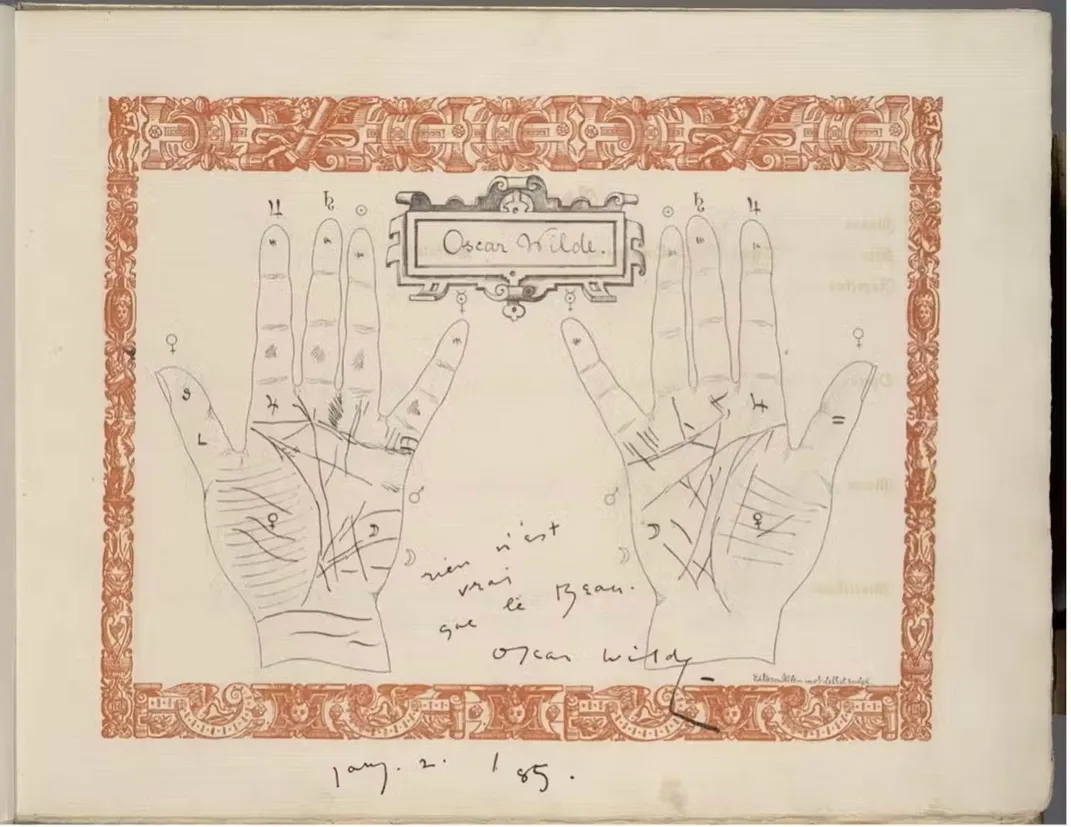
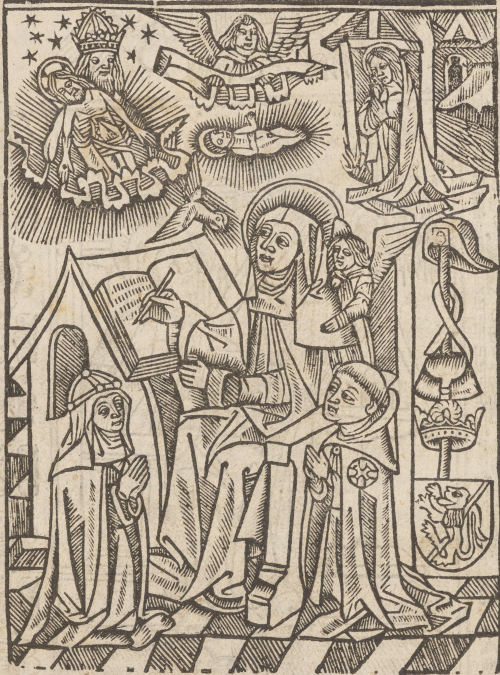
donkey work

John Gregory Dunne, from The Studio

The Studio was simplicity itself to write. It was mainly a matter of transcribing and rearranging my notes. That there were no surprises—I knew exactly what I was going to do—was for me the problem. Writing is essentially donkey work, manual labor of the mind. What makes it bearable are those moments (which sometimes can last for weeks, months) when the book takes over, takes on a life of its own, goes off in unexpected directions. There were no detours like that in The Studio. My notes were like plans for a bridge. Writing the book was like building that bridge. 

This chimes with my experience. The two books I most enjoyed writing are Original Sin and The Year of Our Lord 1943, because they posed serious structural challenges. It was not obvious to me how those stories might best be told. 

Ted Gioia: “When I first came to Silicon Valley at age 17, the two leading technologists in the region were named William Hewlett and David Packard. They used their extra cash to fund schools, museums, and hospitals — both my children were born at the Lucile Packard Children’s Hospital — not immortality machines, or rockets to Mars, or a dystopian Internet of brains, or worshiping at the Church of the Singularity. […] Bill Hewlett had more wisdom than ego. He invested in the community where he lived — not the Red Planet. Instead of promulgating social engineering schemes, Hewlett and Packard built a new engineering school at their alma mater, and named it after their favorite teacher. They wouldn’t recognize Silicon Valley today.”

Man Hunt (1941)

MV5BN2E5MjkzZDItZDRlOC00MjFhLWFiN2MtZTE5MWMzZGM3MDEyXkEyXkFqcGdeQXVyNjc1NTYyMjg@. V1 FMjpg UX1000 .

In theory, Fritz Lang’s Man Hunt faced the same problem that many other Hollywood films of the same era (Hitchcock’s Foreign Correspondent, for instance) faced: How to be anti-Nazi while maintaining a fig leaf of objectivity — a necessary fig leaf, given the supposed neutrality of the United States. But this movie is about as anti-Nazi as it’s possible to be. That said, opposition to Nazism isn’t what the movie is about. To explain why I say that, I have to tell the story. 

447770432 1587921602001845 1749421651388625995 n.webp.

Alan Thorndike (Walter Pidgeon) is a famous English big-game hunter who is caught in the woods near Berchtesgaden and accused of attempting to assassinate Adolf Hitler. Under interrogation by a Nazi official (played with exquisite sliminess by George Sanders) he denies the charge, but is told that he will not be released, indeed will be killed, unless he signs a confession. He refuses, but eventually escapes to London, pursued by Nazis. 

Overall, the movie doesn’t have a very Lang-like look and feel, but there’s a terrific pursuit scene in the Underground that reminds me strongly of M.

Image w1280.

In any event: the Nazis chase Thorndike about the city and eventually, though quite accidentally, into the arms of a cockney girl called Jerry (Joan Bennett), whom he charms. She falls hard for him, though the feeling is not quite mutual. He’s attracted to her but not besotted; she’s a kid to him. In the end Thorndike kills his Nazi pursuers, though not before they find Jerry and kill her, because she refused to betray his location. (There’s a strong dose of poetic justice in the way he does this, but that’s one detail I won’t spoil.) 

Thorndike is wounded in the final confrontation with his enemy, and two scenes follow. In the first, Thorndike is in the hospital, deliriously replaying in his mind his time with Jerry; in the second, he parachutes out of an airplane — not under orders, but on his own initiative — and into Germany. His descent is accompanied by much bombast. It’s the same kind of pseudo-patriotic noise that defaces the conclusion of Foreign Correspondent.  

What the bombast (including a final voiceover) obscures is the real point of the story, which is this: Thorndike is on a suicide mission. At a moment when the Nazis control most of Europe and any meaningful contesting of their continental domination is years away, he floats down to German soil carrying only a high-powered hunting rifle. At the beginning of the film he had told his interrogator that he didn’t enjoy killing any more — he had come to prefer the “sporting stalk” in which he finds and targets his quarry but doesn’t bother to pull the trigger — but now his only thought is killing. He will not come back; he does not want to come back. 

447950635 1007100470359785 5384158410370450900 n.webp.

It is clear that he has but one goal: atonement. He had stumbled into Jerry’s life, charmed her, allowed her to assist him, and by those means he had led her straight to her death. And the only way he can think to atone is to kill as many Germans as he can and then suffer death himself. Man Hunt isn’t a patriotic drama; it’s an existentialist tragedy. 

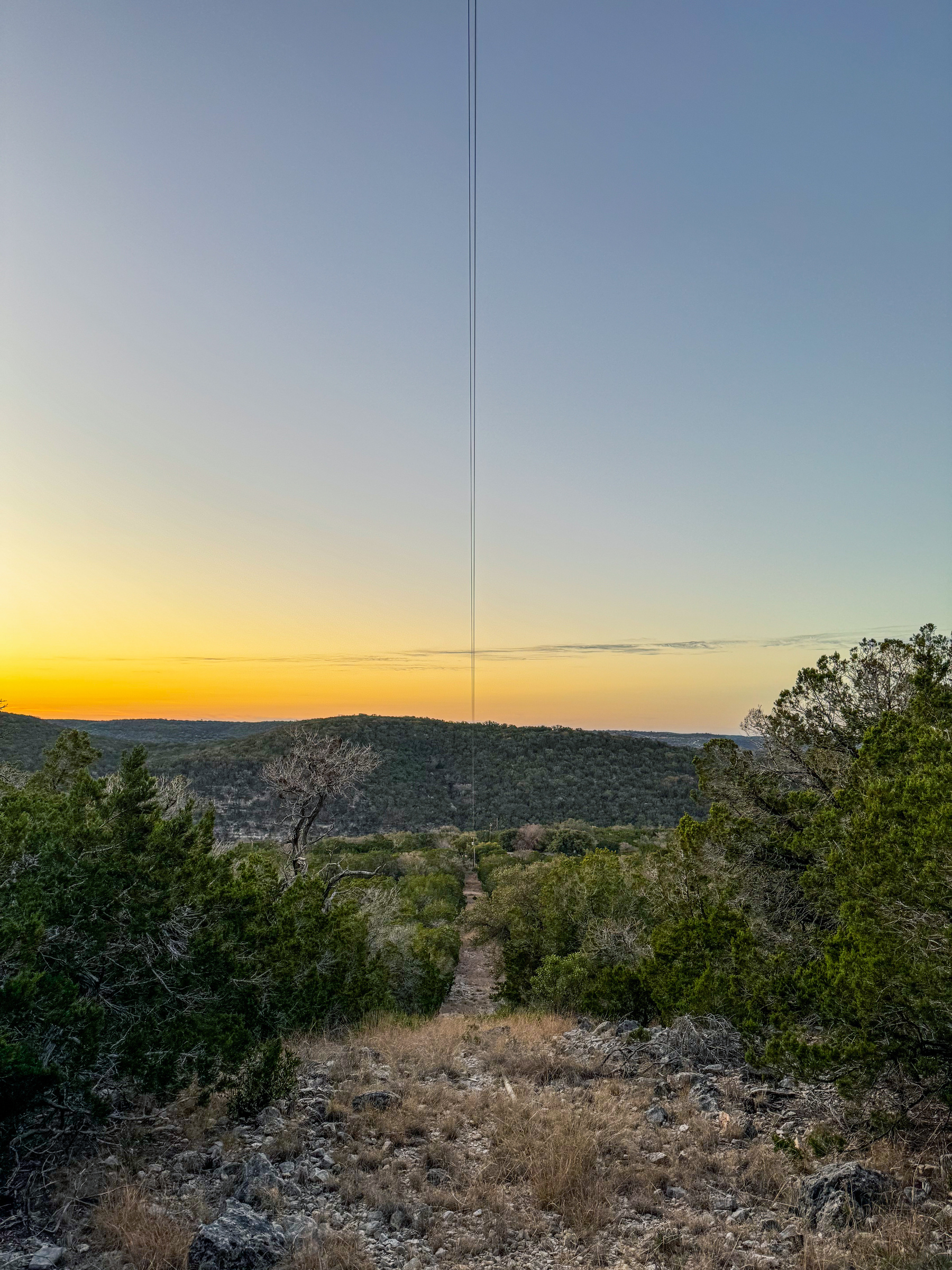
Still some wildflowers down here in the Hill Country.

writing time

on the edge

Above you see what I believe was the key moment in today’s match between Portugal and Slovenia. After having a penalty saved, astonishingly, by Jan Oblak, Cristiano Ronaldo collapsed in tears, and I mean collapsed: during the break between the two halves of extra time, his shoulders were shaking, he was inconsolable. Several teammates came up to hug him and pat him on the back, but only Palhinha gave him what he needed, which was a stern pull-up-your-socks talking-to.

Given the excessive deference Portuguese football exhibits towards Ronaldo — manifested today by allowing him to take several terrible free kicks which should have been taken by Bruno Fernandes, with Ronaldo in the box trying to get his head on the ball — Palhinha’s initiative was brave, and it may have saved the match. Without his intervention, would Ronaldo have been able to get himself together for the penalty shootout? Maybe. But I’m not sure. 

Surely Ronaldo is the most unlikeable of the truly great footballers. He has always been petulant, whiny, preening, and selfish, and has often been on the edge of losing self-control altogether. As a starlet at Manchester United, he took more dives than Greg Louganis … but eventually he realized that his behavior was counterproductive — he was not getting calls that he deserved because the refs assumed that he was diving once again — and he stopped. Just stopped. 

Ronaldo strikes me as a narcissistic asshole who wants so desperately to be great at football that he manages — with enormous difficulty — to control his bad disposition sufficiently that it doesn’t prevent greatness. His devotion to preparation is, I think, unparalleled. Consider for instance how good he is with his “off” leg — he’s scored around 175 left-footed goals in his career — and think about how many thousands of hours of practice enabled that success. His conditioning is likewise superlative: he’s 39 years old and just played 120 minutes, but of all the Portugal players he’s the one I’m least worried about being tired for the Friday match with France. 

It would have been so easy for his own temperament to destroy his career, but it didn’t. I don’t like him, I don’t like him one bit, but I have to admire him for that. I’m talking here only about his play, not about the rest of his life, but: Whether his demons are inbuilt or whether he has indulged them, they’ve been afflicting him his entire career, and yet in every essential way he has throttled them. That’s remarkable. 

All that said, I wish he’d have missed that second penalty as well, and that Slovenia had sent him home. 

P.S. Palhinha’s full name is João Maria Lobo Alves Palhares Costa Palhinha Gonçalves. 

UPDATE after the Portugal loss to France, from Jonathan Liew

In a way, it’s hard not to feel resentful of him: resentful of the way this grand, galaxy-sized occasion is ultimately reduced to a function of one man’s ego. This could have been an all-time great quarter-final, and instead a part of it was stolen: stolen ball possession, stolen attention, stolen minutes from better players who actually deserve to be there, rather than a pure anachronism trotting out simply because no one has the clout to tell him not to.

Liew points out that Ronaldo was the only Portugal player on the pitch not to console Joao Felix after the kid missed his penalty. He just turned and walked away, even though he had received consolations in the previous match. 

Siena Cathedral. (Test post.)