
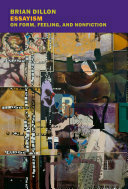
Currently reading: Essayism: On Form, Feeling, and Nonfiction by Brian Dillon 📚

A proper Texas breakfast.

moderation in consistency: fantasy edition
I have, I think, a rough model of the broader discursive-etymology of Middle Earth/Narnia — their strange hybrid of medieval/Anglo-Saxon and bourgeois 19th/20th century worldbuilding, their Arthurianism (once-and-future kingishness, merlin-y wizards, battles of good against evil), their complex relationship to allegory — and also their relationship to the tradition of Scottian historical fiction and literary antiquarianism.
This comes from the first post in Adam’s re-read of LOTR, which I am pleased to see, first because I am always glad to hear from Adam on fantasy, second because I am excited that he’s writing a book on fantasy, and third because I am currently teaching a class on fantasy which includes LOTR and I want to learn from him.
So there will be commentary! — on Adam’s posts but also on what I’m teaching. In fact I have a post on George MacDonald’s Phantastes that’s queued up for Monday. And speaking of …
Adam is right about the features that link the work of Lewis and Tolkien, but here let me just flag a major difference: they disagreed about as strongly as two writers could on the value of what we might call mythopoeic promiscuity. As I wrote in my biography of Lewis, explaining Lewis's debt to the early-modern writers in whom Tolkien had no interest:
The consistency and integrity that Tolkien believed necessary to all “sub-creation” demanded that the “real” world and the imaginary world of Faery be kept completely separate. But such was not the view of Spenser and Sidney and other “romancers” of their time. That Christian theology should “break in” to Arcadia, or to Faery, was in that era a “convention … well understood, and very useful. In such works the gods are God incognito and everyone is in on the secret. Paganism is the religion of poetry through which the author can express, at any moment, just so much or so little of his real religion as his art requires.” This is a very precise account of what Lewis himself does in Till We Have Faces and, in a different way, in Narnia. It is wrong, therefore, to suppose that the difference on this matter between Tolkien and Lewis can be described in terms of a careful, scrupulous Tolkien and a thoughtless, inattentive Lewis. Tolkien may have been a greater writer of fiction than Lewis — indeed, I feel sure that he was — but not because he had a sound theory of subcreation while Lewis was just playing with his toys. The approach Lewis took has deeper historical roots than Tolkien’s, and in following it Lewis was walking in the footsteps of great predecessors indeed.
It’s the model of Spenser and (especially) Sidney that Lewis draws on when, for instance, he brings Father Christmas into Narnia — about as flagrant a violation of consistency in world-building as could be imagined. Tolkien was horrified and attributed such jarring juxtapositions to incompetence; but Lewis knew what he was doing.
What I didn’t say in that passage was that in embracing mythopoeic promiscuity, Lewis was also following in the footsteps of his “master” MacDonald. In the fifth chapter of Phantastes we get the myth of Pygmalion, and in the sixth Anodos encounters Sir Percival; MacDonald is perfectly happy to have a wide range of mythological, legendary, and literary worlds knocking against one another. And if I were to make a defense of this procedure, I’d begin by noting that a great many myths and tales and legends are always knocking against one another in our own heads.
Not for nothing does he choose this passage about “true fairy tales” [echten Märchen] from Novalis as the epigraph to his tale:
Die ganze Natur muss wunderlich mit der ganzen Geisterwelt gemischt sein; hier tritt die Zeit der Anarchie, der Gesetzlosigkeit, Freiheit, der Naturstand der Natur, die Zeit von der Welt ein…
All of nature must be wonderfully mixed with the whole of the spirit world; here comes the time of anarchy, lawlessness, freedom, the natural state of nature, the time of the world….
Anyway, go read Adam’s post now — there is much insight in it.
P.S. The title of this post comes from this.
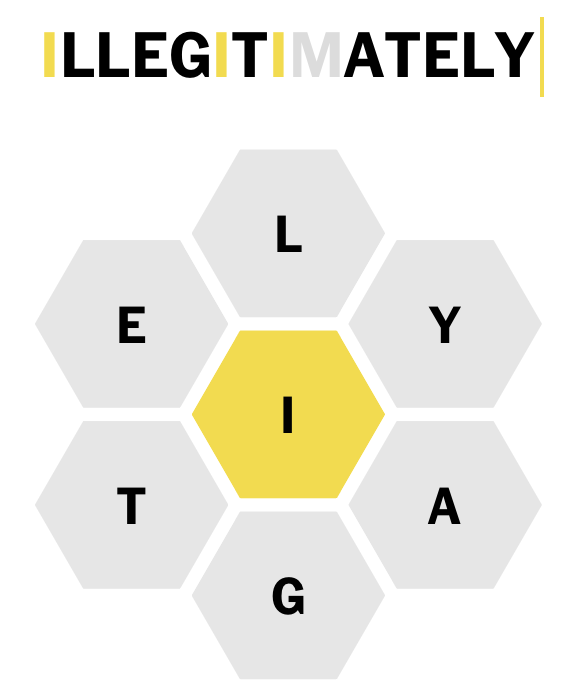
Drives me slightly nuts when I am one letter away from an enormous word.
I said to Angus this morning, “Certain elements of your behavior are irreconcilable with rational principles.” He responded by biting me on the chin.
the post-literate academy and this blog
The Post-Literate Academy - by Mary Harrington:
When it’s so difficult to imagine the academy as we know it surviving the demise of ‘deep literacy’, the prospect of a post-literate academy leaves me wondering: what will be the character of the ‘knowledge’ such an institution produces?
It’s too early to be sure, but my bet is that such ‘knowledge’ will be (indeed, already is) much more directly moral in character than the abstract, analytical, and (aspirationally at least) objectively factual ideal of ‘knowledge’ produced by the print-era university. I also think we can connect this to the profoundly religious flavour of the ‘no debate’ activism now commonplace on universities. In [an essay since paywalled], Eliza Mondegreen describes being on the receiving end of such ‘knowledge’ at a heavily protested at McGill University talk by human rights professer Robert Wintemute — a talk eventually shut down, seemingly with if not the support at least zero objection from university administrators. And it’s my contention that we should get used to it. [Here is a description of the event.]
That is: I don’t wish to add to the usual chorus of tutting at student activist mobs here, as though these could be fixed with more ‘free speech’. On the contrary: it is my gloomy contention that the more post-literate academia becomes, the more such aggressive and intransigent mob morality will become not the exception but the norm. And there will be no fixing it, because ‘free speech’ was a print-era ideal, and that’s indisputably not where we are any more.
I think this is right — it rhymes with my argument about the resurgence of what Kołakowski calls the “mythical core” of the social order.
In some ways the trend Harrington describes here, however otherwise regrettable, is a corrective to a pinched, narrow, and wholly inadequate understanding of “rational” inquiry based on principles thought by such advocates to arise from the Enlightenment. (There were several Enlightenments, no one of which is wholly reconcilable with the others.) Consider this recent essay by Steven Pinker — or, for now, just one brief passage from it:
Though each of us is blind to the flaws in our own thinking, we tend to be better at spotting the flaws in other people’s thinking, and that is a talent that institutions can put to use. An arena in which one person broaches a hypothesis and others can evaluate it makes us more rational collectively than any of us is individually.
Examples of these rationality-promoting institutions include science, with its demands for empirical testing and peer review; democratic governance, with its checks and balances and freedom of speech and the press; journalism, with its demands for editing and fact-checking; and the judiciary, with its adversarial proceedings.
This all sounds lovely, but the peer-review system is fundamentally broken; the only thing that any journalistic outlet does reliably well is to point to the ways that other journalistic outlets don’t edit or fact-check; many institutions of representative democracy (the U.S. Congress, the U.K. Parliament) have effectively abandoned their responsibilities; and the Federal judiciary is widely believed to be made up of politicians in robes.
Whether things are quite as bad as the linked stories indicate may be debated, but that the public doesn’t trust any of these institutions is unquestionable. That’s at least in part because the public knows the truth one of the great maxims of the Enlightenment (that movement that Pinker claims to be a spokesman for): “Of the crooked timber of humanity, no straight thing was ever made.” You don’t have to be a fully-paid-up member of the Critical Theory Brigade to suspect that appeals to disinterested rational inquiry are often thinly disguised schemes by certain people to retain institutional and cultural power.
But then, so also are the campaigns of what I call Left Purity Culture. I don’t know how you would decide whether our institutions — and especially our academic institutions, which I’m especially concerned with in this post and elsewhere — are worse when they adopt (a) a simplistic model of rational truth-seeking or (b) a simplistic model of myth-driven advocacy for supposed social justice. I certainly can’t decide. But my task here, on this blog, seems to me the same either way. If you don’t know what that is, I’ve described it in the following posts:
- Plurality, unity and the “Gandalf Option”
- Piety and the impiety of Denethor (see also a related post on fascist architecture)
- Why this blog is called the Homebound Symphony
And these posts also explain why this blog’s motto is “More lighting of candles, less cursing the darkness”: While some self-appointed instruments of Justice are hard at work extinguishing the candles of culture and art, while self-appointed custodians of Reason are screaming their denunciations of the destroyers, it often seems to be that there aren’t enough people cupping their hands around the candles that remain to keep them lit. So that’s my job here.
And it’s worth remembering another point. In two of those posts I quote a passage from one of Tom Stoppard’s plays commending a certain kind of trust: trust that those who come after us will pick up and carry further what we have left behind. Most of our institutions, and above all the great majority of our academic institutions, have rejected the very idea of cultural preservation and transmission. They are occupied and dominated by consumers and destroyers; and precisely the same is true of the shouting, slavering haters who call themselves conservatives. They conserve nothing; none of these people, putatively Left or putatively Right, preserve anything, nor do they build and repair.
But we have so, so many artists — writers, musicians, painters, sculptors, architects — who have left us a wonderful inheritance; and many who even today are adding to that inheritance. At the very least we have to be sure that that inheritance doesn’t stop with us. Perhaps our circumstances militate against greatness in art; but we can do our part to make greatness possible again when the times are less craven.
two views of Iain McGilchrist
Although McGilchrist is clearly arguing a case (a case that he feels needs to be accepted, if there is to be any future), his mind is profoundly capacious, capable of entertaining ideas coming from elsewhere than he is coming from. The case he is making, however, is not unheard of: it coincides with all-too-common laments about modernity, pointing to the reign of quantity, the rise of individualism, the abandonment of tradition — opinions easily dismissed by those who pride themselves on the achievements of modernity. Perhaps it is to these “cultured despisers” that McGilchrist’s case is directed — a LH case against the hegemony of the LH.
Whether that is so or not, this book is almost unique in combining extensive scientific expertise with learning characteristic of the humanities, a sensitivity to language, and an appeal to poetry as the ultimate language of truth. McGilchrist sounds like someone who knows of what he speaks. RH, he tells us, is disposed to pessimism, but this book gives grounds for at least a cautious optimism, amounting to “good thoughts in bad times.”
And so, unsurprisingly, the second volume of The Matter with Things leads us into considerations about “the sacred.” The chapter on this subject is as long as a short book in itself. It is both the natural conclusion to the argument up to this point and a springboard for further refinement of the themes of the whole project. McGilchrist has no difficulty in seeing off the high-school-debating-society arguments of fashionable atheists (and has some pertinent things to say about the imagined tension between science and religion in another appendix). He quotes with malicious relish from one or two famous names in this field, to demonstrate the intolerant and philosophically crude way in which some polemicists have foreclosed the question of what counts as knowledge or as truthful speech, and draws extensively on the traditions of “negative” theology in the Christian tradition (Meister Eckhart, Nicholas of Cusa), as well as ideas from Taoist and Buddhist cosmology, Indigenous American lore, some strands of Jewish Kabbala, and (not least) William Blake.
Whitehead is an important presence in this section of the book, chiefly because of his conviction that “process” is a fundamental category for thinking not only about the finite but also about the infinite; there is an argument for the relation between God and creation being seen as a sort of feedback loop, through which the divine is “enhanced” in some way. McGilchrist also distances himself both from the classical Christian argument about evil as “privation” (that is, as something that has no inherent substantiality but is simply the negation or erosion of what is desired as good) and from the Buddhist affirmation of nonduality (which he sees as compromising the reality of moral choice). He holds back from any identification with a particular religious tradition but is skeptical of the assimilation of spirituality to generalized well-being that seems to pervade so much contemporary talk about religiousness.
Ultimately, as he says in a forceful and eloquent epilogue, we either acknowledge God or we invent a God for ourselves. If we invent a God for ourselves, we are bound to invent that God out of ourselves, out of our own psychic resources, and so sacralize our own ambitions and anxieties, projecting on to the universe our passion for analysis of and control over every aspect of what surrounds us. This is the idolatry that is literally killing us as a species. That is why it is so urgent to rethink how we understand thinking.
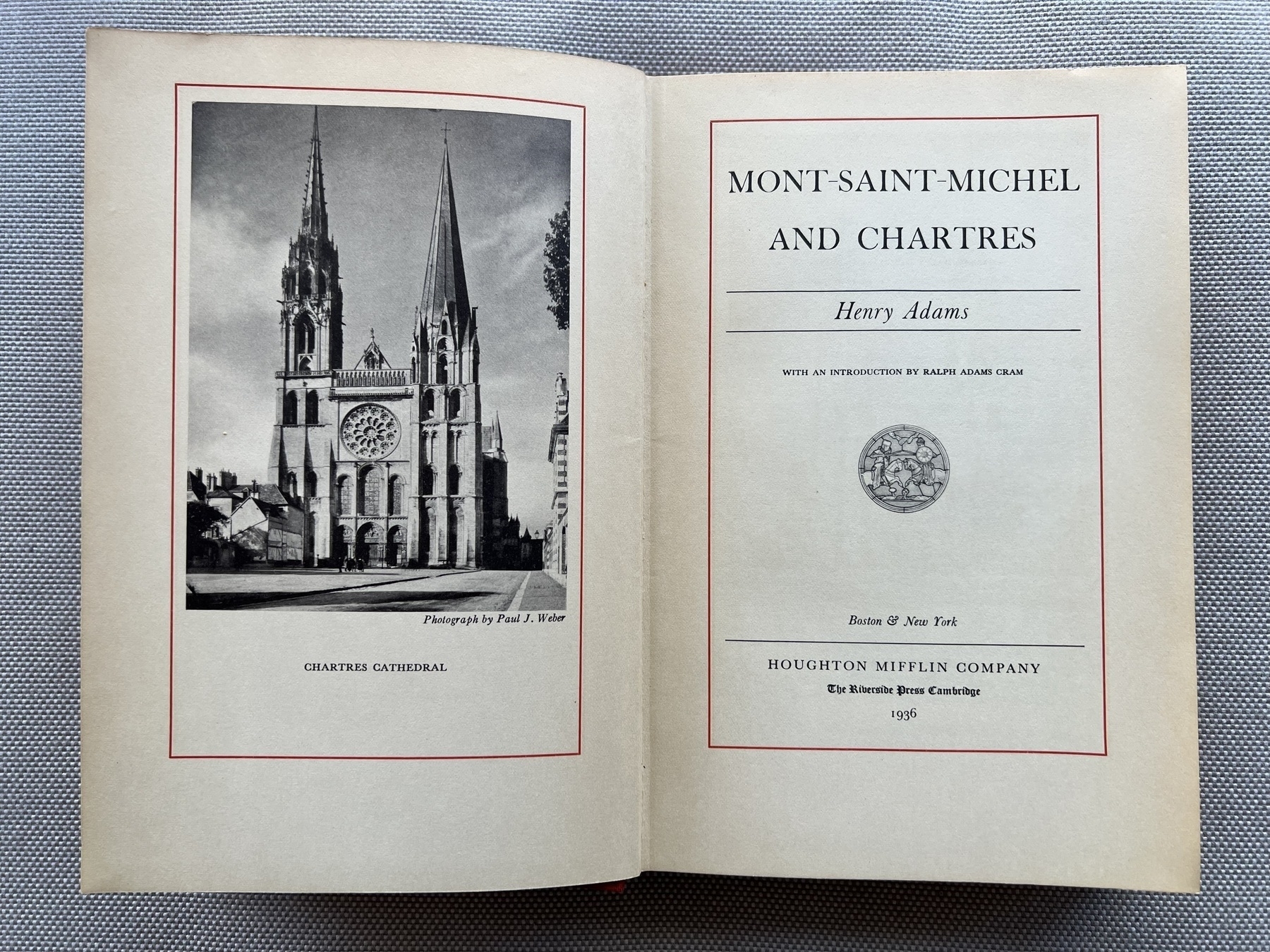
Currently reading (in one of my most treasured volumes): Mont Saint Michel and Chartres by Henry Adams 📚
Kierkegaard, from his Journals:
Christianly the emphasis does not fall so much upon to what extent or how far a person succeeds in meeting or fulfilling the requirement, if he actually is striving, as it is upon his getting an impression of the requirement in all its infinitude so that he rightly learns to be humbled and to rely upon grace.
To pare down the requirement in order to fulfill it better (as if this were earnestness, that now it can all the more easily appear that one is earnest about wanting to fulfill the requirement) — to this Christianity in its deepest essence is opposed.
No, infinite humiliation and grace, and then a striving born of gratitude — this is Christianity.
Glamour shot.



The option to kill always punishes the most vulnerable. Those who are wealthy and currently fly to a jurisdiction where the killing is legal will find options for themselves, while laws that prevent killing are there to protect those who would otherwise want to live if not for the system that tells them they are or would be a burden. Laws that allow killing entrench and reinforce a culture that values the intelligent and able-bodied while making the disabled and infirm disappear.
Those who have struggled with severe depression will tell you that one of the worst thoughts to haunt their minds is the one that says they would have been better off having never been born. When I treat patients with depression, it is my duty as their doctor to assure them, no matter what they may have done (and some of them have done very bad things), that the demonic voice in their head is not speaking the truth. They, like every other human being, are better off alive than dead. To make the opposite judgment on behalf of another person — most of whom, if they were allowed to grow up, would be able to have some opinion on whether they prefer being alive or dead — is taking the side of the suicidal voices against the God who created us all.
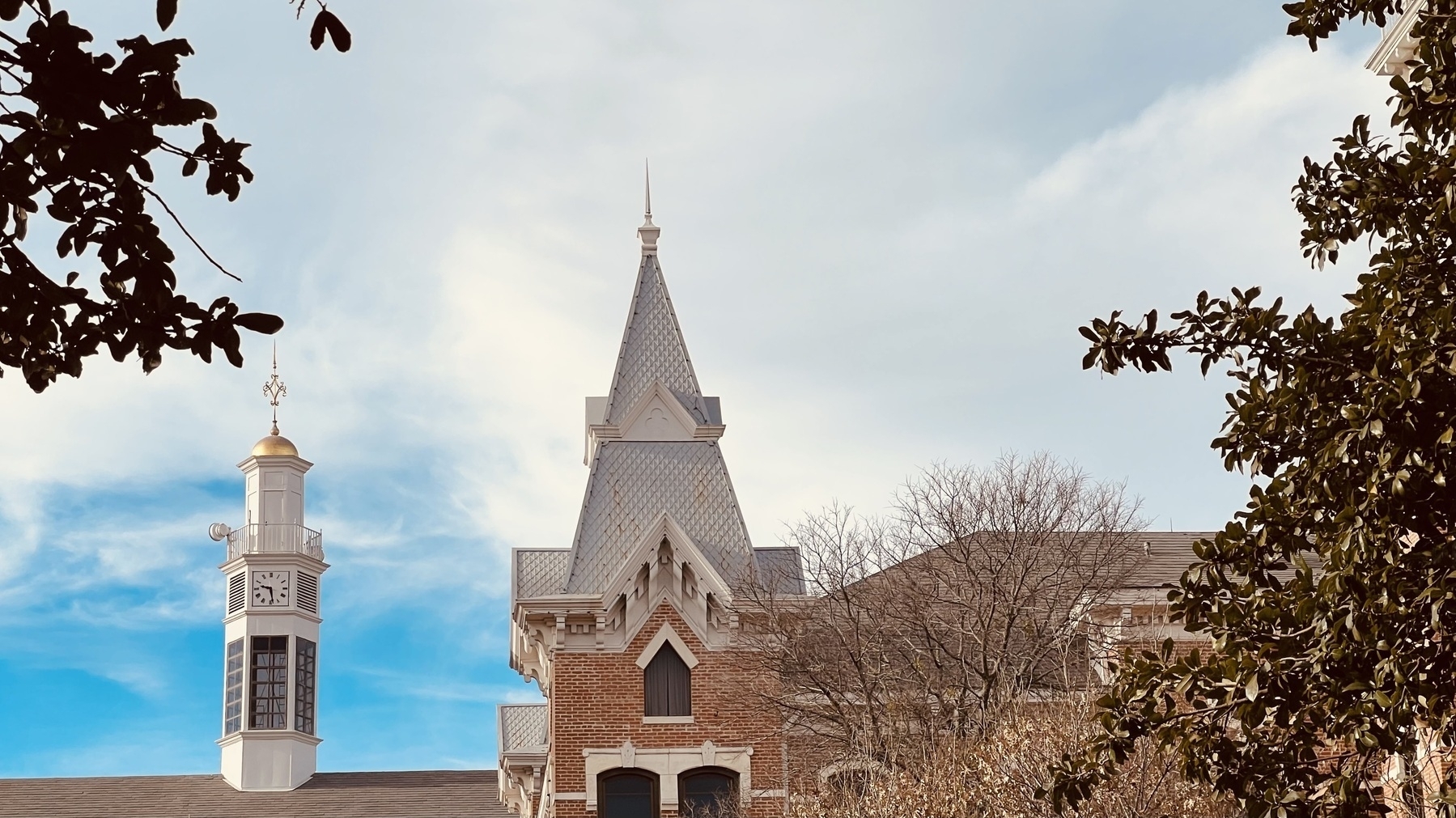
It’s good to be back on campus.

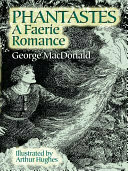
Currently reading: Phantastes by George MacDonald 📚
Pro tip: When you’re trying to get a portrait shot, it’s important that the subject remain still.