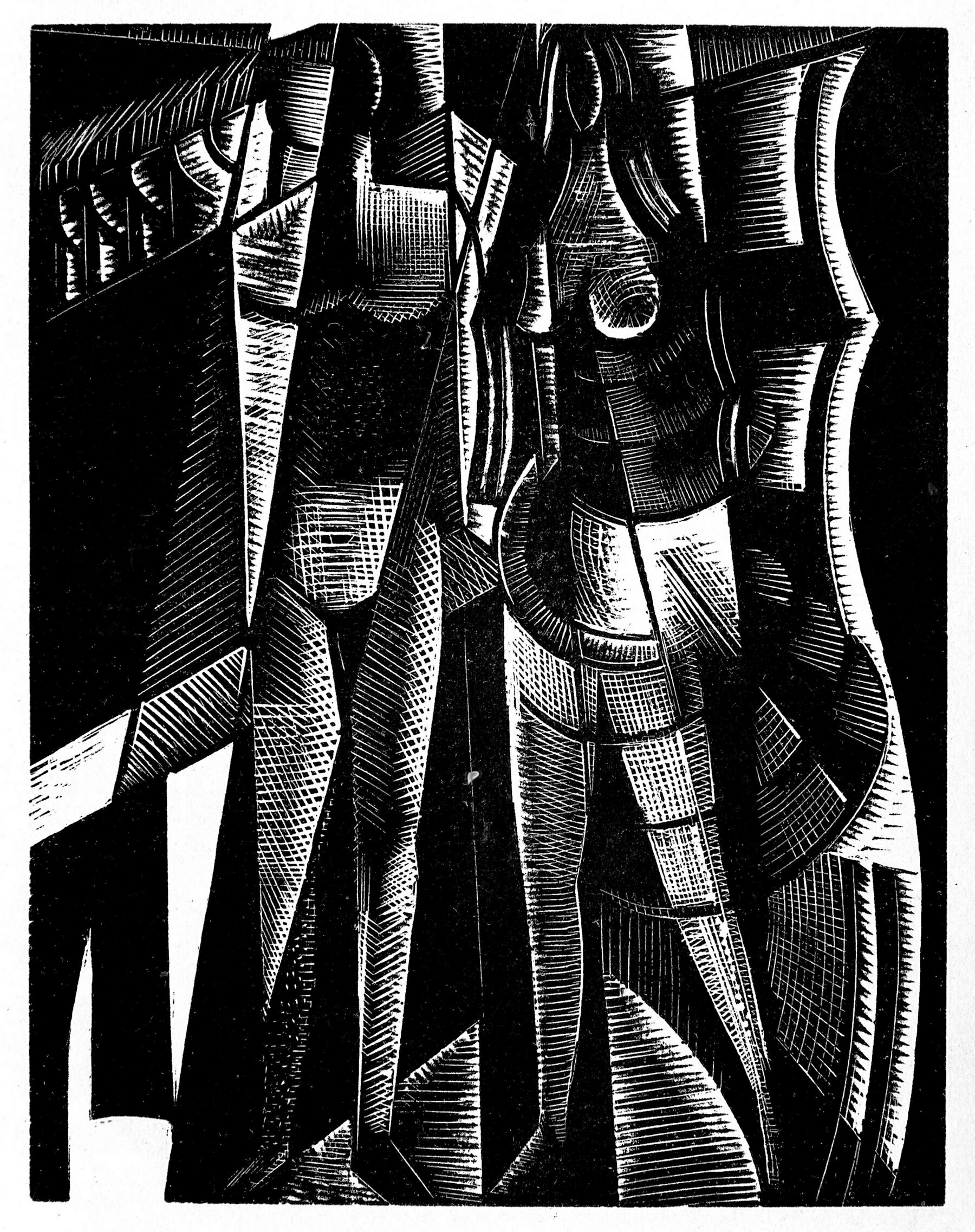
Cunning Folk: Life in the Era of Practical Magic, by Tabitha Stanmore, looks interesting. I wrote my own essay about cunning folk a few years back.
clichés, yes or no
Since the moment I learned about the concept of the “thought-terminating cliche” I’ve been seeing them everywhere I look: in televised political debates, in flouncily stencilled motivational posters, in the hashtag wisdom that clogs my social media feeds. Coined in 1961 by psychiatrist Robert Jay Lifton, the phrase describes a catchy platitude aimed at shutting down or bypassing independent thinking and questioning. I first heard about the tactic while researching a book about the language of cult leaders, but these sayings also pervade our everyday conversations: expressions such as “It is what it is”, “Boys will be boys”, “Everything happens for a reason” and “Don’t overthink it” are familiar examples.
From populist politicians to holistic wellness influencers, anyone interested in power is able to weaponise thought-terminating cliches to dismiss followers’ dissent or rationalise flawed arguments.
This seems exactly right to me. But perhaps it’s worth noting here that two years ago the Chronicle of Higher Education, of all journals, published an essay by Julie Stone Peters, a Professor of English and comparative literature at Columbia, arguing that thought-terminating clichés are super-cool because they are politically effective and because students aren’t smart enough to do any better. No, seriously:
Not all of our students will be original thinkers, nor should they all be. A world of original thinkers, all thinking wholly inimitable thoughts, could never get anything done. For that we need unoriginal thinkers, hordes of them, cloning ideas by the score and broadcasting them to every corner of our virtual world. What better device for idea-cloning than the cliché?
Note here a doozy of a false dichotomy: either applaud clichés or have a world of people with “whole inimitable thoughts.” Sure, Peters concedes, sometimes academic clichés “may go rogue” and “might explode on you.” But that’s the chance she is willing to take. The alternative — expecting students to think and trying to help them do that better — is so much more unpleasant. I have to give Peters credit for being willing to say the quiet part out loud, because this really is how a lot of professors think.
This might be a good time to remind y’all that, as William Deresiewicz writes, some interesting groups of people are abandoning universities not because they disdain the humanities and the liberal arts, but because they love them.
Mandy Brown, inspired by Deb Chachra’s brilliant new book: “Optimization presumes a kind of certainty about the circumstances one is optimizing for, but that certainty is, more often than not, illusory…. Another way to look at this is that you cannot optimize for resilience. Resilience requires a kind of elasticity, an ability to stretch and reach but then to return, to spring back into a former shape—or perhaps to shapeshift into something new if the circumstances require it. Resilience is stretchy where optimization is brittle; resilience invites change where optimization demands continuity.”
In the last few weeks, all of my weather apps have gone haywire, including ones with multiple sources of weather data. They say it’s raining when the sky is cloudless; they say it’s sunny when it’s pouring rain; current temps are off, sometimes by 15 degrees. They’ve all lost their minds at once!
Yes, authentication service, this is my device — just as it was when you asked me 45 minutes ago.
Freddie DeBoer: “For a very large swath of the human population, probably the majority, constantly forming and expressing and fighting over opinions on contentious topics is an unusual and unpleasant activity. It’s not that many people out there just don’t naturally form opinions, on art and culture and politics, the way anyone does. But to think of those opinions as something to constantly bring into a state of contention with others, to argue all the time as a matter of day-to-day life, is intimidating even for many smart and principled people. It’s hard to recall now, but there was a very recent period in which most people had no greater opportunity to share their opinions than to say them out loud at work or a bar or during the fellowship service after church. The truly motivated might stand on the street with a bullhorn or start a paper newsletter or write letters to the editor. Most people never bothered. The cacophony of opinion we live in is very new.”
William Deresiewicz: “The notion, floated now in certain quarters, that students and parents will turn from the Harvards and Yales in disgust is a fantasy. As long as elite institutions remain the principal pipeline to elite employers (and they will), the havers and strivers will crowd toward their gates. Everything else—the classes, the politics, the arts and sciences—is incidental. Which is not to say that interesting things aren’t happening in post-secondary (and post-tertiary) education. They just aren’t happening, for the most part, on campus.”
This is an old theme of mine. See e.g. this post.
Odd Man Out

Carol Reed’s Odd Man Out is a brilliant movie about … well, that’s the question. Some people say it’s a movie about the IRA, but that’s certainly wrong, and not because the name of the organization and the name of the city in which the action is set are never mentioned. This is obviously Belfast, and the organization whose members at the outset plan a heist is obviously the IRA. But within the world of the movie doesn’t matter what cause Johnny McQueen (James Mason) serves — it never matters, to the writer or director or characters or audience.
So what is it about? I think the movie explores how people try to understand the kind of story they’re in. And Reed wants to sow confusion on that score.
The movie’s look is pure noir — and as beautifully photographed a noir as you’ll ever see, by Robert Trasker, whose work here is even better than in The Third Man, which is saying a lot — and the plot seems for quite a while to come straight out of the desperate-manhunt playbook. But for the kids on the sidewalk who pretend to be Johnny McQueen, it’s a heroic-rebel-against-the-Man story. For some of the ordinary people drawn into the event, it’s a why-can’t-I-just-live-in-peace story. For the painter Lukey (Robert Newton) it’s a great-suffering-makes-great art story. For Kathleen Sullivan (Kathleen Ryan), it’s a star-crossed-lovers story. For the scavenger Shell (F. J. McCormick), it’s an opportunity-knocks-and-I-answer story. And so on down the line.
Everyone projects their own sense of the story onto Johnny, because after the first few minutes of the movie Johnny doesn’t act; he is acted upon. Wounded, sometimes unconscious, often delirious, he becomes a kind of package passed from person to person, a problem to be solved — a mirror into which people look and learn something about themselves. Whose side are they on? — a question to be asked with the understanding that in this fractured world there are always many sides.
Meanwhile, in his moments of mental clarity, Johnny tries to understand what his story is to him. And he ends in a very different place from the one in which he begins, even if the seeds of his ending are already planted by the time we first see him.