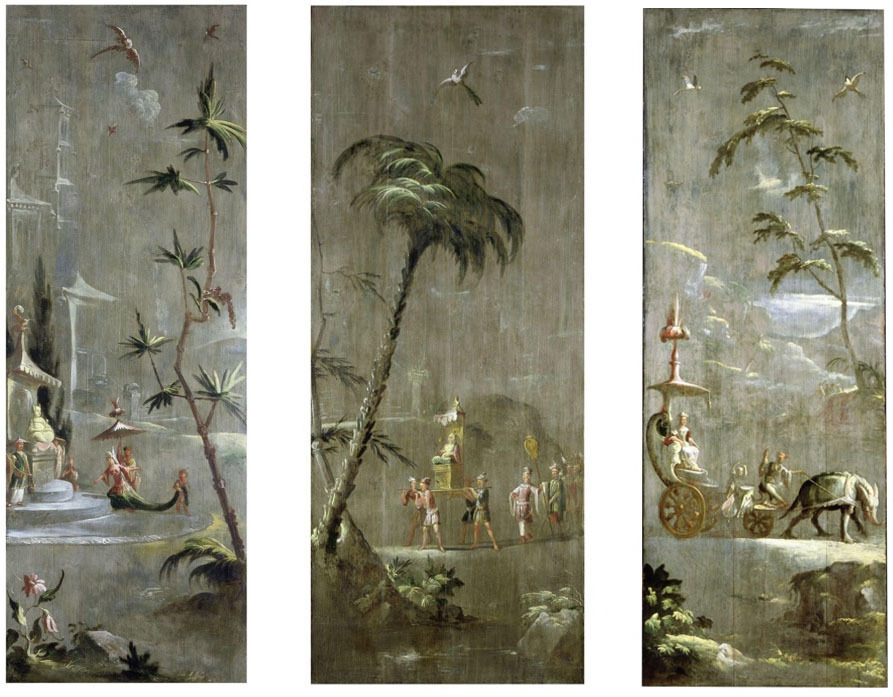
rewilding
The essay by Maria Farrell and Robin Berjon on βRewilding the Internetβ is absolutely essential β and you might know that I would think so if you read my essay from a few years back on βTending the Digital Commons.β (See also my reflections on βmanorial technocracyβ and the tag, visible at the bottom of this post, βopen web.β) Our metaphors are slightly different but our theme is the same.Β
Itβs noteworthy, I think, that those of us who care about the internet and love the best versions of it tend to think ecologically.Β
Farrell and Berjon:Β
Ecologists have re-oriented their field as a βcrisis discipline,β a field of study thatβs not just about learning things but about saving them. We technologists need to do the same. Rewilding the internet connects and grows what people are doing across regulation, standards-setting and new ways of organizing and building infrastructure, to tell a shared story of where we want to go. Itβs a shared vision with many strategies. The instruments we need to shift away from extractive technological monocultures are at hand or ready to be built.Β
Just as a diverse βpocket forestβ is the surest way to regenerate urban vegetation, a global network with multiple different ways βto internetβ is the best insurance policy for future innovation and resilience. We need to rewild the internet for the future, for our freedom to build tools and spaces, and to share knowledge, ideas and stories that havenβt been anticipated by the internetβs current overlords and cannot be contained.Β
This is precisely why this blog is on the open web rather than on Substack or any of the other walled gardens. To be sure, I can afford to do it this way, with the occasional contribution from my Buy Me a Coffee page β I have a day job and donβt depend on blogging to feed my family and pay my mortgage. If I were utterly dependent on this blog I might do things differently β but only after I had tried every way possible to make it work on the open web.Β
I really do think that the internet, in its original open form, is an amazing thing and a genuine contributor to human flourishing β but the occlusion of the open web by the big social media companies has been a disaster for our common life and for the life of the mind. My plan, and my hope, is to keep going here long after I have lost the ability to publish anywhere else. This is my home on the web and also the place where I can most fully be myself as a writer. And thatβs worth a lot.Β
Daniel Parris: “A New York Times analysis of Spotify data revealed that our most-played songs often stem from our teenage years, particularly between the ages of 13 and 16…. Indeed, YouGov survey data indicates a strong bias toward music from our teenage years, a phenomenon that is consistent across generations.” Curiously, I listen to almost nothing that I listened to in my teenage years, the one exception being Bob Dylan’s music, which was a part but not a big part of my adolescent listening. (Dylan became really central for me when I was in college, though.)
Nadine Chahine: “A typeface is a series of conversations happening simultaneously between different characters. For example, in the Latin script, the lowercase b talks to the d, talks to the p, talks to the q, and they respond. So there is this ongoing conversation between the b, d, p, and q, and then there is this other conversation happening between the m, n, and h. And then all the diagonals, like the v, the w, the x, and the y, are talking to one another as well. At some point, you realize that these conversations are all happening in the same space, and the groups start talking to one another as well. The role of the type designer is to facilitate these conversations.
Trying to get a pic of one of our roses, I am confronted by a photobomber
Start your weekend on a good note: listen to Sweet Honey in the Rock sing “Run Molly Run”
Butterflies and bees π