
Sir Jim Ratcliffe, the new part-owner running the show at Manchester United, is ending remote work for the employees there. Why? Because he thinks people in the office are more productive? Why? Because they send more emails. Yep, that’s the argument: more emails = more productivity.
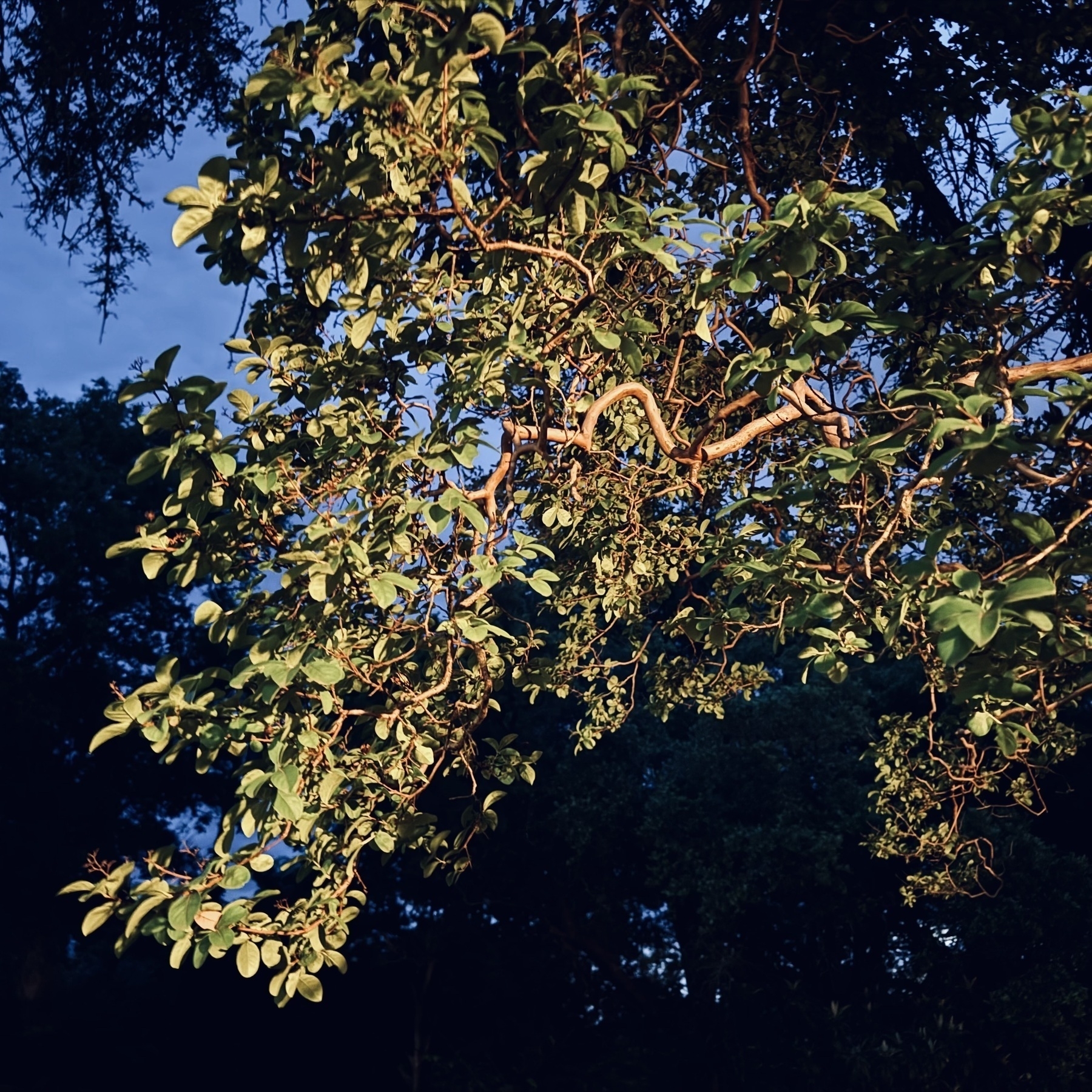
I wrote about building an attention cottage, literal or metaphorical.
the attention cottage
In the last few days I have come across, or had sent to me, anguished cries from people who have recently been dragged on social media and cannot fathom the injustice of it, and I find myself thinking: You haven’t figured this out yet? You complain about your words being taken out of context when you post them in an environment whose entire structure — as we have all known for fifteen years now — demands context collapse? How many more times do you plan to smack your head against that unyielding wall?
I wrote recently about some things that everyone knows, and here are two more things that everyone knows:
- Our attentional commons is borked, it’s FUBAR; it’s not stunned or pining for the fjords, it has ceased to be, it is bereft of life, it is an ex-commons.
- The death of the attentional commons has had dramatic and sometimes tragic consequences for every individual’s store of attentiveness.
What I want to argue today is that the attentional commons cannot be rebuilt unless and until we rebuild private and local/communal spaces of attentiveness. Consider this my response to this call for ideas about building from TNA.
What might this look like?
A handful of interesting examples come from this recent Ted Gioia post: There we see directors, actors, and other Hollywood figures buying and restoring old theaters to make shared attentional spaces that offer refuge from the ex-commons. Surely every community has something of this kind, and not necessarily theaters; old libraries, for instance, are ideal candidates for restoration as such spaces.
But maybe people won’t be willing to contribute to such restoration until they better see the value of it; and maybe they won’t see that value until they begin repairing their own personal attentional world. So maybe the place to start is not with the commons but with me — to go inside-out, as it were.
What I need, what I am trying to build, is — I coin this phrase by analogy to a memory palace — an attention cottage. This could be an actual place, like the boathouse in which E. B. White wrote:

But few of us will be so lucky. Most of us will have to build our cottage from scraps, and a good bit of it will need to be virtual. When I sit down in a chair with a book in my lap, a notebook at my side, and no screens within reach or sight, I am dwelling in my attention cottage. Sometimes even these resources can be hard to come by: In The Pleasures of Reading in an Age of Distraction I wrote about scholarly children from big noisy families who developed the skill of surrounding themselves with a “cone of silence.” You do what ya gotta do.
For the past few years my writerly attention has been focused on three artists: John Milton, Dorothy L. Sayers, and Terrence Malick. All three of them in one way or another have a lot to say about the social concerns of their own era — though while Milton wrote extravagantly confrontational political pamphlets and Sayers wrote (rather less polemically) about highly contentious social questions, Malick has approached our current common life wholly through filmmaking, and especially his three movies with contemporary settings: To the Wonder, Knight of Cups, and Song to Song. (There are contemporary scenes in The Tree of Life, but the movie ie effectively set in the past.) The key point, though, is this: Each of these artists regularly steps back from the immediate to consider permanent questions, the questions that arise from — here’s a phrase that we need to recover — the human condition.
In the Book of Common Prayer, the Collect for the fourth Sunday of Trinity runs thus:
O God, the protector of all that trust in thee, without whom nothing is strong, nothing is holy: Increase and multiply upon us thy mercy; that, thou being our ruler and guide, we may so pass through things temporal, that we finally lose not the things eternal. Grant this, O heavenly Father, for Jesus Christ’s sake our Lord. Amen.
To care only for things temporal is to lose the things eternal; but to attend rightly to things eternal is the royal road to constructive thought and action in the temporal realm. The great artists and thinkers cultivate a systolic/diastolic rhythm, tension and release, an increase and then decrease of pressure. In the latter phase they withdraw, by whatever means available to them, to their attentional cottage for refreshment and clarification — and then they can return to the pressures of the moment more effectively, and in ways non-destructive to them and to others.
But most of us, I think, get the rhythm wrong: we spend the great majority of our time in systolic mode — contracted, tensed — and only rarely enter the relaxed diastolic phase. Or, to change the metaphor: We think we should be living in the chaotic, cacophanous megalopolis and retreat to our cottage only in desperate circumstances. But the reverse is true: our attention cottage should be our home, our secure base, the place from which we set out on our adventures in contemporaneity and to which we always make our nostos.
I often think how much easier, how much more naturally healthy, life was even just a couple of decades ago, when the internet was in one room of the house, when the whole family had one computer connected to a modem that was connected to a landline, and movies arrived in the mailbox in red envelopes.

I’m trying to build my way back to that balance, through how I organize the space in which I live and how I apportion my attention. Systolic, diastolic; inhale, exhale. Balance. Almost everything I write, including my newsletter, is meant to help people rebalance their attention — to give them another piece of furniture for their attention cottage.
Angus is very content after playing in the garden hose.


Peer review in academic publishing can be frustrating, especially when frivolous scholars take the task of reviewing a manuscript as an opportunity to nurse grudges, grind axes, or police boundaries. But … I got a peer review of my Paradise Lost manuscript that was strongly critical of my treatment of one major point, and you know what? The reviewer was absolutely correct. Today I am revising in light of that criticism and the book will in the end be much better for it.
crushed again
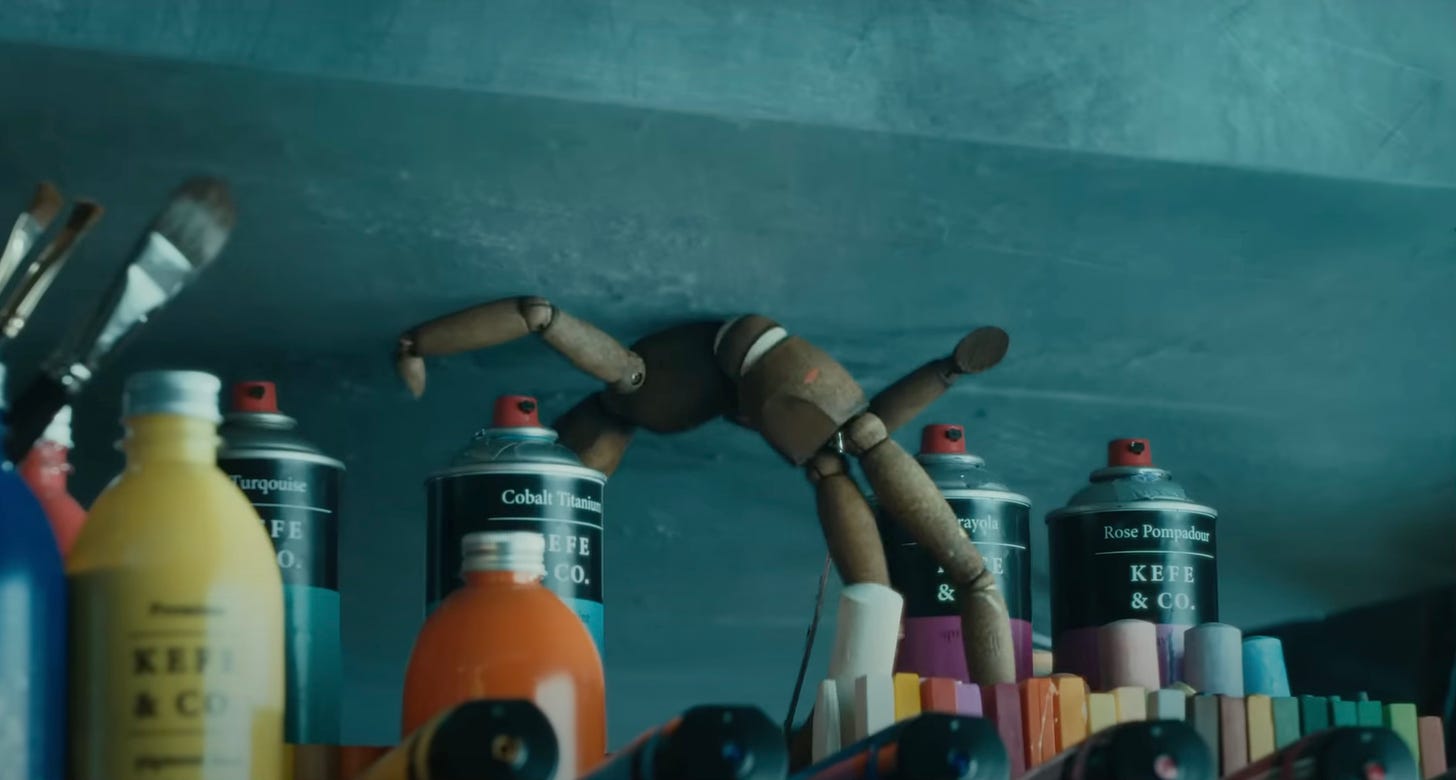
Two of the best things I’ve read in response to the horrific “Crush” commercial Apple recently put out and half-heartedly apologized for: Mark Hurst and (especially) Mike Sacasas. I have to say that I’m finding it difficult to get over this: the ad has, I feel, given me a peek into the company’s soul, and what I see is a company that despises and mocks many of the things I most love. It’s scarcely more subtle than Mark Zuckerberg shouting “DOMINATION” to conclude Facebook meetings.
Honestly, I just want to stop using Apple products altogether. But if I did, (a) that would complicate the lives of family and friends who rely on Apple; (b) since I never have managed to get on the Linux train, my practical alternatives would involve relying on companies (Google, Microsoft) that are ethically no better than Apple; and (c) I would be unable to support the work of independent Apple developers (Bare Bones, Panic, Omni, Rogue Amoeba, etc.) whose software has been enormously beneficial to me over the years.
As I’ve thought about it, I’ve realized that that third consideration is a big one for me. David Smith (known to many as Underscore) is a longtime iOS developer who wrote recently about traveling to Cupertino for the upcoming WWDC — something he’s been doing for sixteen years. When he started attending the conference, he was excited about Apple, but now … not so much:
It isn’t necessarily that Apple itself is the root of this community, but moreover (especially in those early days) they provided a focal point for like-minded developers and designers to coalesce around, which became this community. Apple aspires toward many of this community’s values, but as they have expanded their reach and scope, they feel more like the multi-trillion dollar company they in fact are. There are still countless folks within Apple who are absolutely my people, but over time, I’ve noticed that there is a growing separation between the corporation and the community.
I’ve heard a version of this sentiment from a number of Apple developers, bloggers, and power users: They used to love the things Apple made, they used to love what they could see of the company culture, but now they just enjoy the community of people who work on the same things they do. Apple has become almost incidental to that community — and indeed, it often seems that one of the strongest forces holding that community is a shared frustration with Apple’s indifference or even hostility to its developers, its increasingly problematic software, its bizarre neglect of some of its central products. For instance, no one has been a bigger booster, or more creative user, of the iPad than Federico Viticci, but just look at how frustrated he has become with iPadOS.
Does Apple really want to create a community of developers and users bound to one another largely by anger at them? Probably not. But do they care to address anyone’s concerns? Certainly not. They think they’re invulnerable. Time will tell whether they’re right about that. But for the time being I will continue to use my Apple devices, in large part because I so admire the ongoing work of those developers whom Apple seems determined to discourage.