
attention please
“Attention as a category isn’t that salient for younger folks,” Jac Mullen, a writer and a high-school teacher in New Haven, told me recently. “It takes a lot to show that how you pay attention affects the outcome — that if you focus your attention on one thing, rather than dispersing it across many things, the one thing you think is hard will become easier — but that’s a level of instruction I often find myself giving.” It’s not the students’ fault, he thinks; multitasking and its euphemism, “time management,” have become goals across the pedagogic field. The SAT was redesigned this spring to be forty-five minutes shorter, with many reading-comprehension passages trimmed to two or three sentences. Some Ivy League professors report being counselled to switch up what they’re doing every ten minutes or so to avoid falling behind their students’ churn. What appears at first to be a crisis of attention may be a narrowing of the way we interpret its value: an emergency about where — and with what goal — we look.This is really badly written, and I had to spend a good deal of my own attention trying to figure out what it’s saying. The quotation from Jac Mullen is hard to parse — I think he’s saying, “I have to try to teach my students that multitasking doesn’t really work, but it’s hard to get them to accept that point.” And if I understand that point correctly, then doesn’t the next sentence contradict it? If “multitasking and its euphemism, ‘time management,’ have become goals across the pedagogic field,” then aren’t teachers trying to teach something (multitasking) that Mullen has just (and rightly) said is impossible? Maybe that's the point, though. Maybe Heller needs to say that Mullen has problems convincing his students because all the other teachers are promoting multitasking. Also: since when is "time management a euphemism — "euphemism"? What does Heller think that word means? — for "multitasking"? I've never thought those words were synonymous. And then the following sentence, about the redesign of the SAT, has nothing to do with either multitasking or time management, so I believe some kind of transition was needed there. The most unclear sentence of all is the last one — I have no idea what it means. I don’t know what he means by “narrowing” or what the phrase “emergency about where we look” could possible denote.
What a mess!
What’s going on here? How did Heller, a professional writer, and his editors let a passage this inept make its way into print? My guess: They don’t want to say that our society is gripped by a “crisis of attention” because that’s the kind of thing that Moms and Dads and Boomers and Luddites and … well, conservatives say, so they disavow that language and try to replace it with something else, anything else. But if you look at the whole paragraph, the only conclusion you could reasonably draw is: Holy shit, we’re in the midst of a crisis of attention!
This is the last day of my Great Texts in Christian Spirituality class, and I’m having my students read this 2007 sermon by Rowan Williams – largely because, better than any other text I know, it sums up the hope I live by.
brows illustrated
Russell Lynes’s 1949 essay for Harper’s, “Highbrow, Lowbrow, Middlebrow” — about which I’ll have more to say later — features this illustration by Saul Steinberg.

I wrote about Dorothy L. Sayers as a middlebrow writer – in future posts I’ll be exploring the “brows” and asking whether that language is still useful (indeed, whether it ever was).
Sayers the middlebrow writer
Robert Graves and Alan Hodge, in The Lost Week-End (1940), their generally fascinating and informative social history of Great Britain between the world wars, make a great many Olympian pronouncements. They say, for instance, that Auden “perhaps never wrote an original line,” a claim that, to the person who has read even a handful of Auden poems, is instantly revealed as one of the most dim-witted statements in the history of literary criticism. (“Who stands, the crux left of the watershed” — oh goodness, that hoary old chestnut?) And they declare that by the 1930s “low-brow reading was now dominated by the detective novel.”
Well … if the detective novel is “low-brow reading,” then how to describe magazines devoted to movie stars or Mills & Boon romances? “Such things,” we can imagine Graves and Hodge saying in the plummiest of tones, “scarcely deserve the name of ‘reading.’” But people who read such books really are reading, and contra G&H, detective novels, in their literary ambitions and expectations, are an ideal example of middlebrow literature.
I tend to think of middlebrow writing as the kind of thing that highbrows would never write but still enjoy. Auden, for instance, whether an original poet or not, loved detective stories, as did T. S. Eliot (among many others).
Dorothy L. Sayers — my current biographical subject — strikes me as a paradigmatic middlebrow writer, possessing the intellectual equipment of the highbrow but believing implicitly in the capabilities of what Virginia Woolf condescendingly called “the common reader.” Woolf was highly aware of the deficiencies of the common reader:
The common reader, as Dr. Johnson implies, differs from the critic and the scholar. He is worse educated, and nature has not gifted him so generously. He reads for his own pleasure rather than to impart knowledge or correct the opinions of others. Above all, he is guided by an instinct to create for himself, out of whatever odds and ends he can come by, some kind of whole — a portrait of a man, a sketch of an age, a theory of the art of writing. He never ceases, as he reads, to run up some rickety and ramshackle fabric which shall give him the temporary satisfaction of looking sufficiently like the real object to allow of affection, laughter, and argument. Hasty, inaccurate, and superficial, snatching now this poem, now that scrap of old furniture without caring where he finds it or of what nature it may be so long as it serves his purpose and rounds his structure, his deficiencies as a critic are too obvious to be pointed out; but if he has, as Dr. Johnson maintained, some say in the final distribution of poetical honours, then, perhaps, it may be worth while to write down a few of the ideas and opinions which, insignificant in themselves, yet contribute to so mighty a result.Not well educated, not generously gifted, instinctively (not consciously) moved to create a whole but capable of constructing only the “rickety and ramshackle,” the common reader can only form “insignificant” ideas and opinions. Lovely.
Sayers would agree with some of this. But she did not think the ideas and opinions of the common reader insignificant; indeed, she thought them typically superior to the opinions of highbrows. More important: while Woolf takes the shortcomings of “the common reader” as givens, almost as natural phenomena like mushrooms or cloudy days, Sayers, by contrast, sees any such deficiencies as remediable — and sees such remediation as part of her responsibility as an intellectual.
Let me just make a few pronouncements of my own:
- Woolf is a truly great writer; Sayers is not.
- Woolf is a highbrow; Sayers is not, and indeed frequently makes highbrows the butt of her satire.
- Sayers in her fiction regularly shows an interest in a wide range of social classes, with their accompanying habits, inclinations, and modes of speech; Woolf is interested in none of these things: all of her characters are of the same social class.
- Sayers is far better-educated than Woolf, more learned, and has a wider intellectual capacity: Woolf could not have managed cryptograms in a novel, or forced herself to learn the biochemistry of poisons, or translated Dante and and Song of Roland … but of course Sayers couldn’t have written Mrs. Dalloway either.
I would further suggest that Sayers’s translations of Dante, and her sequence of radio plays The Man Born to be King, are classic middlebrow endeavors: attempts to render old, difficult texts and ideas comprehensible to a general audience. (A project in remediation.) I will also argue in my biography, though probably not in detail here on my blog, that her detective novels do some of the same work, as she tried in them to do what Wilkie Collins had done in the previous century: marry the story of detection with the social novel.
But wait: I haven’t defined my brows, have I? What do I mean — what should one mean — by highbrow, middlebrow, lowbrow? As it happens, that was a central question of mid-twentieth-century intellectual life — and it gave us some categories that we still use today. So I’ll be exploring that in future posts.

Leah Libresco Sargeant: “The struggles of much bigger tech companies to make their AI corrigible suggest Catholic Answers won’t have a reliably orthodox chatbot any time soon. But the problem with the project goes deeper: To imagine that a chatbot can be a catechist at all indicates a profound misunderstanding of how evangelization works. … God invites us to imitate him as sub-creators. It is a profound misuse of that invitation to build tools to take over our most human and relational tasks.”
St. Mark's Place

The Five Spot, on St. Mark’s Place in Manhattan, hosted most of the great jazz musicians of the middle part of the twentieth century — Charles Mingus, for instance:

It was also a block-and-a-half from 77 St. Mark’s Place, which is where for a long time Auden lived for about half of each year. (Leon Trotsky also lived there for a time, and a section of the street provided the image for the cover of Led Zeppelin’s Physical Graffiti.) I often find myself wondering how often Auden passed Miles Davis or John Coltrane on the street, or sat next to them at a local bar.

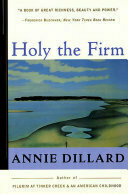
Finished reading: Holy the Firm by Annie Dillard. Teaching this today. It is, every time I read it, a dazzling and disturbing book. 📚

Finished reading: 3 Shades of Blue by James Kaplan. A brilliant book, but in its later stages immensely sad. 📚