
not giving up
One way to describe the Invitation and Repair project is to say that it’s for people who haven’t given up. One should always be hesitant to make broad social generalizations by haunting social media platforms or the websites that have become parasitical on social media — i.e., most newspapers and magazines —, but it’s clear that that world, at least, is dominated by people who have given up on some things that no healthy society ever gives up on.
People drag supposed racists or transphobes or whatever on Twitter because they have given up on achieving real social change.
Politicians strut and fret their hour on the social-media stage because they have given up on meaningful legislative work.
Partisans smear and mock those who disagree with them because they have given up on persuasion.
Journalists default to advocacy because they have given up on finding and telling the truth.
Readers and viewers of journalism seek and share misinformation because they have given up on learning the truth.
Violent thugs assault the U.S. Capitol or loot their own neighborhoods because they have given up on democracy.
All of the good things given up on require hard, patient work; none of the replacements do. They’re easy and quick; they promise immediate rewards (though whether what they in fact give amounts to “rewards” is a matter for debate). But when we invite and repair we manifest hope: we look towards a future of cooperative endeavor — cooperative discovery, cooperative healing.
The hopeful refuse mindslaughter; the hopeful join the United Front Against Bullshit.
Conservatives tell me that we’re right on the verge of a hard-left takeover of the entire country, which will inevitably put an end to democracy and personal freedom. Leftists tell me that we’re right on the verge of a Trumpist takeover of the entire country, which will inevitably put an end to democracy and personal freedom. So the only thing I know for sure is that I am about to be enslaved; I just don't know who my enslavers will be.
le mot juste
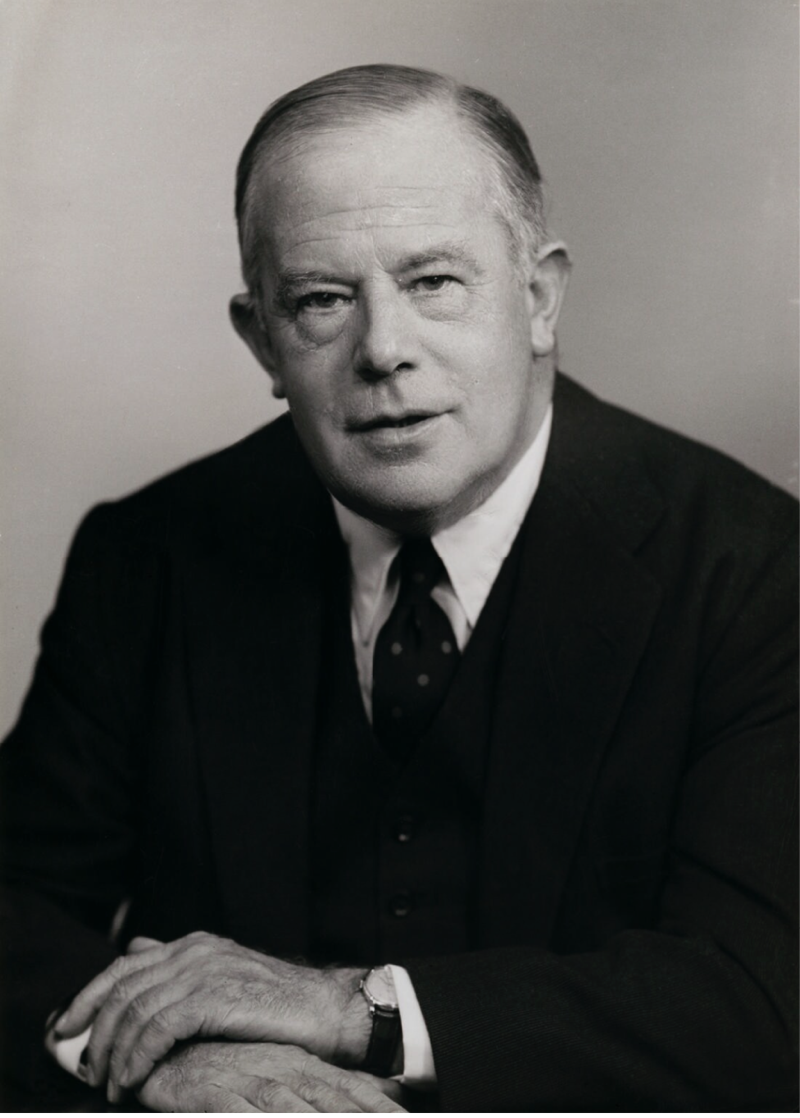
Maurice Bowra was an Oxford don legendary for his social activities, his malicious wit, and his bullhorn voice. Once, in the 1930s, he met an elegant German who was visiting England to participate in a kind of charm offensive on behalf of the Nazi regime. (This was common in those days: Hitler had people working hard to gain the approval of Oxford and Cambridge dons.) At one point in the conversation, Bowra stood up and told the man, “I know what you are. You are a Nazi.” And then he added, “I look forward one day to using your skull as an inkpot.”
I am in awe of the ingenuity Bowra manifested that day, and will keep his lapidary phrase hidden away in my bosom in case I should require it. Someone writes a slashing review of one of my books? Dear X, I look forward one day to using your skull as an inkpot. Someone cuts me off on the interstate? I lean out the window: I look forward one day to using your skull as an inkpot. It’s absolutely perfect.
Light Perpetual

And speaking of novels by friends, Francis Spufford’s Light Perpetual is now available in the U.S. I cannot recommend it to you too highly. This novel absolutely did me in — I found myself deeply invested in each of its five main characters, and at the end simultaneously heartbroken and exhilarated. Please do not miss this one.
(I find it very interesting to reflect on the peculiar commonalities between two books that on most levels are dramatically different, Light Perpetual and — see previous post — Purgatory Mount. But I can’t talk about those connections without utterly spoiling both books….)
the meaning of Purgatory

I read Adam Roberts’s Purgatory Mount in draft, and struggled to know what to make of it. I have now read its final version, and find it an exceptionally resonant and moving story – though I acknowledge that people who aren’t comfortable with Adam’s peculiarly associative intelligence (imagine his mind comprised of chess pieces, all of them knights) may find some of the narrative linkages he forges here difficult to parse. And Adam shares with certain other writers, most notably Auden and Pynchon, a tendency to cast his most serious inquiries in comic form.
As I set the book aside, I found myself thinking several thoughts:
- That culture is what we humans make together;
- That culture is memory;
- That memory is imperfect;
- That among the things we remember will always be sins and wrongs, those done to us, and those we do to others;
- That the Book of Common Prayer teaches us something utterly inevitable about “these our misdoings,” namely that “the remembrance of them is grievous unto us, the burden of them is intolerable”;
- That, therefore, much of the essential work of culture – always – is the addressing of such remembrances and such burdens; and, finally,
- That this work must often be done in extraordinarily difficult circumstances, not least because of the imperfections of memory and the imperfections of the people who remember.
Some years ago Adam and I joined with Rowan Williams and Francis Spufford for a theological conversation about Adam’s novel The Thing Itself; Purgatory Mount is also a novel that cries out for theological reflection. I hope it gets it.
The two epigraphs that Adam prepends to his story are wisely and wittily chosen, but I would like to suggest one more, from “East Coker”:
There is only the fight to recover what has been lost
And found and lost again and again: and now, under conditions
That seem unpropitious. But perhaps neither gain nor loss.
For us, there is only the trying. The rest is not our business.
Berlins

One of the best stories in Michael Ignatieff’s biography of Isaiah Berlin involves a luncheon hosted at 10 Downing Street in 1944. Berlin had been for almost the whole of the war living in the USA, socializing and schmoozing and conspiring in his inimitable fashion and then sending back briskly incisive weekly reports on American attitudes towards the war effort and towards Great Britain in general. Churchill appreciated those reports very much and was pleased to have the opportunity to meet the man who had written them.
But when he started asking his guest questions about America, he was surprised and puzzled by the vagueness and diffidence of the answers. Eventually, having gotten nowhere and feeling a bit desperate, the Prime Minister asked him what he thought was the best thing he had written.
Came the reply: “White Christmas.”
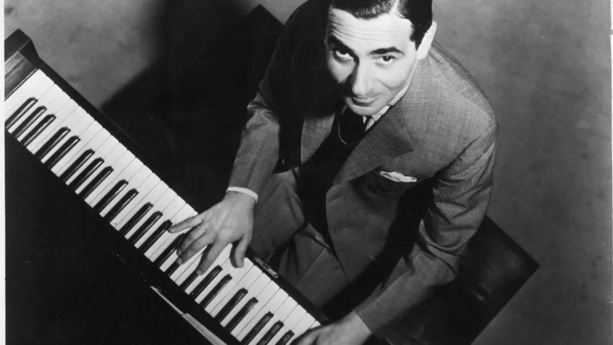
Isaiah Berlin was in Washington. The P.M.’s luncheon guest, it turned out, was Irving.

Collett's England
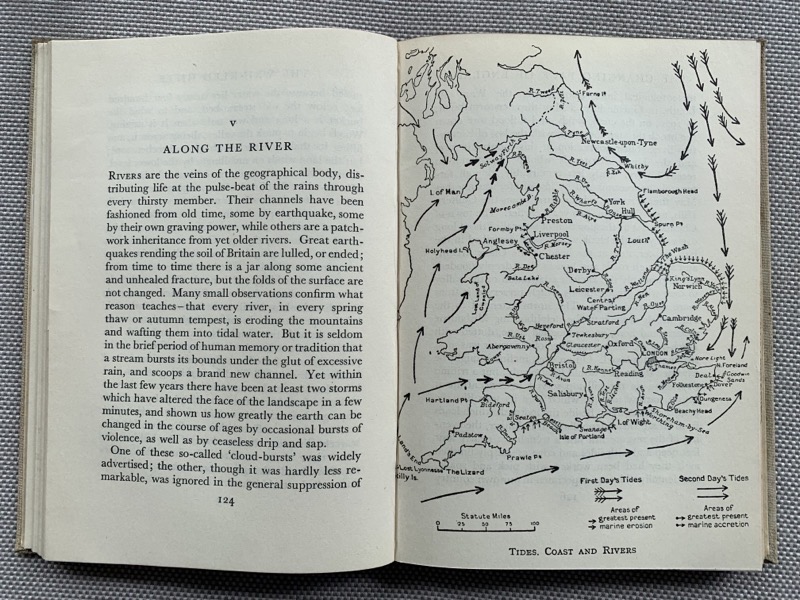
One of Auden’s favorite books was Anthony Collett’s The Changing Face of England (1926), and it’s easy to see why — it’s absolutely delightful. Here’s a passage from the chapter seen above:
It is curious to see how floods restore the ancient aspect of the valley landscape, by overflowing the modern chequer-work of fences and hedges, and showing where floods held the field before. Only new houses are flooded when Thames or Medway, or any stream of the populous half-urban valleys, breaks bounds. Bungalows become uninhabitable, swans cruise through rose-beds, but the old farmhouses stand securely dryshod, though scarcely fifty yards from the insurgent water, and perched on so slight a rise as to be invisible until the water came. Old farms and cottages were built with exact knowledge, from experience and tradition, of how far the flood would reach. New houses are plumped down into the channels by which the river disgorges, as though it would never return.
And a luminous passage from another chapter, on Epping Forest:
Yet even in England, woods with a touch of the terror of infinity still survive; and it is one of the strangest things about Epping Forest that, for all its nearness to the East End of London, and its permeation from end to end with the noise of traffic, it yields not only a hundred delightful pictures of the cheerful greenwood, but one or two of the more ancient and formidable type. From the hamlet of Baldwin's Hill, near Loughton -- red omnibuses run close behind it -- there is a view across a narrow valley to a flank of the forest rising, beech beyond beech, hornbeam beyond hornbeam, pollarded and rounded, and innumerable as sheep streaming downhill to water, which is full of the true forest sense. Those who walk in the forest soon learn that the great road to Epping and the eastern counties is never a mile away, and that the air is seldom empty of its rumour. But while the ear tells continually of London, the eye carries us far back into Shakespeare's age, and the old time beyond. Dull streets cease abruptly at the forest's edge; the bell of the muffin-man echoes on autumn afternoons among the beech-boles hacked by spotted woodpeckers. Silence falls a moment, and we hear the deer belling in the glades; it is one step from Bethnal Green into Broceliande.
In the Hebrew school, sitting on plank benches with timber-cutters' children, Isaiah received his first formal religious instruction. It was also his first experience of schooling, and to the end of his life he could still remember the words of a song he learned with the other children, about the stove in the corner that kept a poor family warm. From an old rabbi, he learned the letters of the Hebrew alphabet. The rabbi too was never forgotten. Once he paused and said, ‘Dear children, when you get older, you will realise how in every one of these letters there is Jewish blood and Jewish tears.’ When Berlin told me this story, eighty years later, in the downstairs sitting room of his home in Oxford, Headington House, for a split second his composure deserted him and he stared out across the garden. Then he looked back at me, equanimity restored, and said, ‘That is the history of the Jews.’
— Michael Ignatieff, Isaiah Berlin: A Life
re: Foucault
A brief and belated thought on Ross Douthat’s column on Foucault and conservatism: It’s worth noting that Jürgen Habermas called Foucault a “young conservative” back in 1981, a claim explicated and expanded brilliantly by Nancy Fraser in this essay from 1985. Fraser’s essay, combined with my own experience teaching Foucault to evangelical Christian undergraduates, led me to make this comment twenty-one years ago, in which I said that my students'
sympathetic openness means that they learn a lot from theory that makes them better, more acute readers and critics. And some theoretical approaches enable them to find sophisticated modes of interpretation that complement, develop, and add nuance to their Christian faith without emptying it of its power. (I have found them to be particularly engaged by Gadamer, Bakhtin, and Levinas, and by the rabbinical scrupulosity of much of Derrida's work. They also get a sinister pleasure from reading Foucault, who is after all a kind of Calvinist, only without God -- Michael Warner is right to say that if you think Foucault is suspicious of the human order, try reading Jonathan Edwards. So Foucault is in a weird way one of us.)

habituation
We all know — though we don’t think of it often enough — that through highlighting and repeating certain events, the media make them seem more common and therefore more characteristic than they really are. So while there's been a lot of talk over the past week or so about the misbehavior of fans in American stadiums — the stadiums fans have only recently been allowed to reenter — I'm not sure whether this is a real phenomenon or rather just a random set of events magnified by our love of outrage and the media’s compliant provision of opportunities for us to enjoy that love.
But I do wonder whether something is going on here. One of the most common debates about social media centers on this question: Do social media exacerbate tensions among Americans and make us more likely to act badly towards one another in person, or, conversely, do social media give us a useful outlet for our frustrations, opportunities to purge our negative emotions in such a way that we can better maintain courtesy towards our neighbors? One possibility is that we are seeing now what happens when people simply get out of the habit of being in the physical presence of other human beings and instead spend a year and a half stoking their own fears and hatreds. Maybe some people have just forgotten, literally forgotten, how to act in public. If so, let’s hope that when they get little more practice they'll do better.
excerpt from my Sent folder: mythos
About that Current Affairs essay ... I think it’s pretty much wholly wrong. It’s true that fundamentalist Christianity is insistently literal about anything in the Bible that looks like historical narrative (seven literal days of creation, yes the sun did too stand still in the sky, etc.), but even more dominant than Pentateuchal literalism in the fundamentalist mindest is a fascination with prophecy, and especially with the Book of Revelation (plus parts of Daniel and Ezekiel) as a blueprint for the End Times -- but the blueprint is legible only if its symbolism is properly deciphered. And especially in the 70s and 80s, such deciphering involved the most mythologically baroque interpretations imaginable. Precisely nobody thought that guys actually named Gog and Magog were going to show up when the parousia was near. When you claim, as Hal Lindsey did, that the the book of Daniel prophesied the European Common Market, your hermeneutical vice is not excessive literalism.
The problem with things like D&D was not that they were mythoi as opposed to logoi, but rather that they were alternative mythoi -- they were scary because they were potentially appealing in the same way that prophecy culture was supposed to be, by involving me as a kind of participant observer in a big coherent story.
This would take a long time to explain, but I think the mythos/logos contrast is far less useful for describing the pathologies of fundamentalist exegesis in particular and fundamentalist culture more broadly than Kermode’s distinction in The Sense of an Ending between fictions and myths. Not that I would expect fundamentalists (or any other interpreters of Scripture) to see their exegeses as fictive! -- but Kermode is brilliant, I think, on the ways that properly provisional narratives or explanations harden, calcify, into fixed myths.
On Memorial Day, we remember those who took up arms because they thought their civilization represented something good and worth preserving. But we increasingly take up arms for the opposite reason: because we believe this society to be corrupt, failing, doomed. We half dread the possibility of breakdown and bloodshed — and are made half-giddy by it, too.
And that is a dangerous state of affairs. Americans don’t have a well-regulated militia — we don’t have a well-regulated anything.



It has rained so much in the past month that our live oaks are getting moss on them as though we were in Louisiana.

partners
Whenever I hear someone refer to their husband, wife, spouse — even their Significant Other, a phrase from a now-distant past — as their “partner,” I think of something Wendell Berry wrote decades ago:
Marriage, in what is evidently its most popular version, is now on the one hand an intimate “relationship” involving (ideally) two successful careerists in the same bed, and on the other hand a sort of private political system in which rights and interests must be constantly asserted and defended. Marriage, in other words, has now taken the form of divorce: a prolonged and impassioned negotiation as to how things shall be divided. During their understandably temporary association, the “married” couple will typically consume a large quantity of merchandise and a large portion of each other.
“Partner” is, in the context of marriage or even long-term cohabitation, an ugly word, connoting as it does a business relationship for mutual profit, ready to be dissolved when the profits aren’t high enough. It should never be used in the context of mutual love.
UPDATE: My friend Andy Crouch has written to me in defense of the word “partner,” suggesting that it “has a wider frame of reference” than I allow, and pointing out that it’s the nearly-universal translation of koinonos in Philemon 17. This is a very good point! I’ll take this under further consideration, but for now, several thoughts:
- The word certainly had a wider referential scope in the past. If you look at the OED you discover that Milton’s Adam says "I stand / Before my Judge, either to undergoe / My self the total Crime, or to accuse / My other self, the partner of my life.” And Robert Southey 150 years later: "So forth I set … And took the partner of my life with me.”
- However, this kind of usage almost completely disappears for nearly two centuries, until it is revived largely by people looking for a word to describe committed gay and lesbian relationships, at a time when such people could not marry. But up until that time, again if the OED is any guide, the business-based meaning had for many decades almost completely displaced all others.
- Thus one could reasonably conclude that the business-based uses of the word have become so dominant that they cast a strong dark shadow over any current use of the word — which is my view. Or recent uses of the term certainly could reasonably be heard as a renewal of older, more richly human meanings — which is Andy’s view.
- So the connotative situation is definitely more complex than I acknowledge above.
- The economic overtones of the word would certainly be displaced if one were to follow Milton and Southey in making it a phrase, “the partner of my life,” or, more shortly, “life partner” — but that, I suspect, is a phrasing most people who employ the term wouldn’t want to commit to.
- Finally: I wonder if, given the connotations the word has acquired, “partner” is a good translation of koinonos, or whether an alternative needs to be considered. I notice that the 14th-century Wycliffite version of Philemon 17 has “Therefore if thou has me as a fellow, receive him as me,” which captures the idea of koinonia as a fellowship — but we don’t use “fellow” that way any more. Maybe contemporary English has no real equivalent to koinonos. That would be a situation worthy of our reflection.
the death of journalism
From Charlie Warzel’s newsletter:
Julia Marcus: I’m fairly new to Twitter but it’s felt to me that the people who are amplified in news media as experts are often the people who have large followings on Twitter, which creates this feedback loop that can build a false sense of consensus. And that makes it very difficult to put forth alternative perspectives. It’s hard to imagine how the pandemic would’ve played out without social media but it feels to me that social media contributed to an unhelpful polarization of the discussion.From Zeynep Tufekci’s newsletter:Charlie Warzel: I’ve heard public health people say that before everyone flocked to social media a lot of these scientific discussions were happening on private listservs or messageboards and in those spaces there was room for disagreement or to express a greater spectrum of doubt. It was a safe space. And then the discussion moved into the public and it was distorted. Is that true in your experience?
JM: Twitter rewards certainty. How often do you see a tweet go viral when somebody is unsure about something? And it’s an addictive process. Certainty is rewarded, high emotion is rewarded, especially anger and fear, and it’s a self-perpetuating phenomenon. When the scientific discourse largely moves onto social media it begins to degrade. I think it moved to social media because it was the easiest way to get the word out, and because so many scientists were working at home and social media provided a forum for conversations in their fields. But sometimes it has felt more like a middle school cafeteria than a scientific discussion.
Many top media outlets took this group of critics’ dismissal of a version of the lab leak hypothesis and then acted like that dismissal was universal and a scientific consensus, which it wasn’t, or was conclusive, which it couldn’t be simply because we … don’t know. We certainly didn’t have the evidence we need to be so conclusive, especially not at the time.Twitter has absolutely killed journalism. Killed it stone dead. And there’s not one journalist in a hundred who has brains enough to realize it.In addition, press reports suggested that everything that fell under the umbrella of the term ‘lab leak,’ which has been a conceptual mess, had also been dismissed, although it hadn’t been, even by some of the original opponents of that particular version.
Then, for a whole year, the coverage implied that any question or statement skeptical of the lab leak critics, broadly defined, was essentially unscientific and could only be motivated by racism. Social media sites took down posts, and even news articles that made such claims.
In the meantime, the reporters did not do the leg work to separate the pieces of the question or seek a broad range of experts. If they had, they might have realized that many experts were quiet on the topic partly because they didn’t want to die on this hill last year, and partly because many were actually eminent experts very very busy doing work on the pandemic itself. Unfortunately, many media outlets failed to do the work necessary to pull themselves out of the tight Twitter/media feedback loop that dominates so much of our media coverage.