
a small parable
Occasionally I find myself in groups populated by business people, technologists, consultants, people who work in nonprofits, practitioners of various kinds — and academics. Such groups gather to figure out how to respond to certain major social problems. Because the participants come from various professional worlds, it can sometimes be difficult to discover a common language, but one theme is always quickly settled on: It’s totally fine to talk about how useless academics are — especially academics in the humanities.
I’ve experienced this so many times over the years that I have to make a point of reminding myself of how curious it is. I mean, why invite people to a gathering only to tell them that they have no contribution to make? But I never respond to the dismissal and mockery; I just sit there and smile. I am only tempted to reply in one situation: When people say that academics “have their heads in the clouds.” Or that we humanists are always taking “the view from 50,000 feet.” That’s when I want to say: No. We’re not taking the view from 50,000 feet, we’re taking the view from ten feet underground, and from long long ago.
Once there was a man named Jack who owned a nice house. One day, though, Jack noticed that one end of the house was a little lower than it had been. You could place a ball on the floor and it would slowly roll towards that end. Jack was a practical man, so he called Neil, another practical man he knew, who worked in construction. Neil said that he could jack up that end of the house and make everything level again. Jack agreed, and Neil got to work.
Jack had a neighbor named Hugh. Hugh was interested in many things, and watched closely as Neil jacked up the low end of the house. With Jack’s permission, he looked around the basement of the house. All this made him more curious, so he walked down to the town’s Records Office and got some information about Jack’s house: when it had been built, who had built it, and what the land had been used for before. Hugh also learned a few things about the soil composition in their neighborhood and its geological character.
Hugh paid Jack a visit so he could tell Jack about all he had learned. He stood at Jack’s door with his hands full of documents and photographs, and rang the bell. But when Jack answered he told Hugh that he didn’t have time to look at documents and photographs. He had a very immediate problem: that end of his house was sinking again. In such circumstances Jack certainly couldn’t attend to Hugh’s ragbag of information and discourses about ancient history. After all, Jack was a practical man.
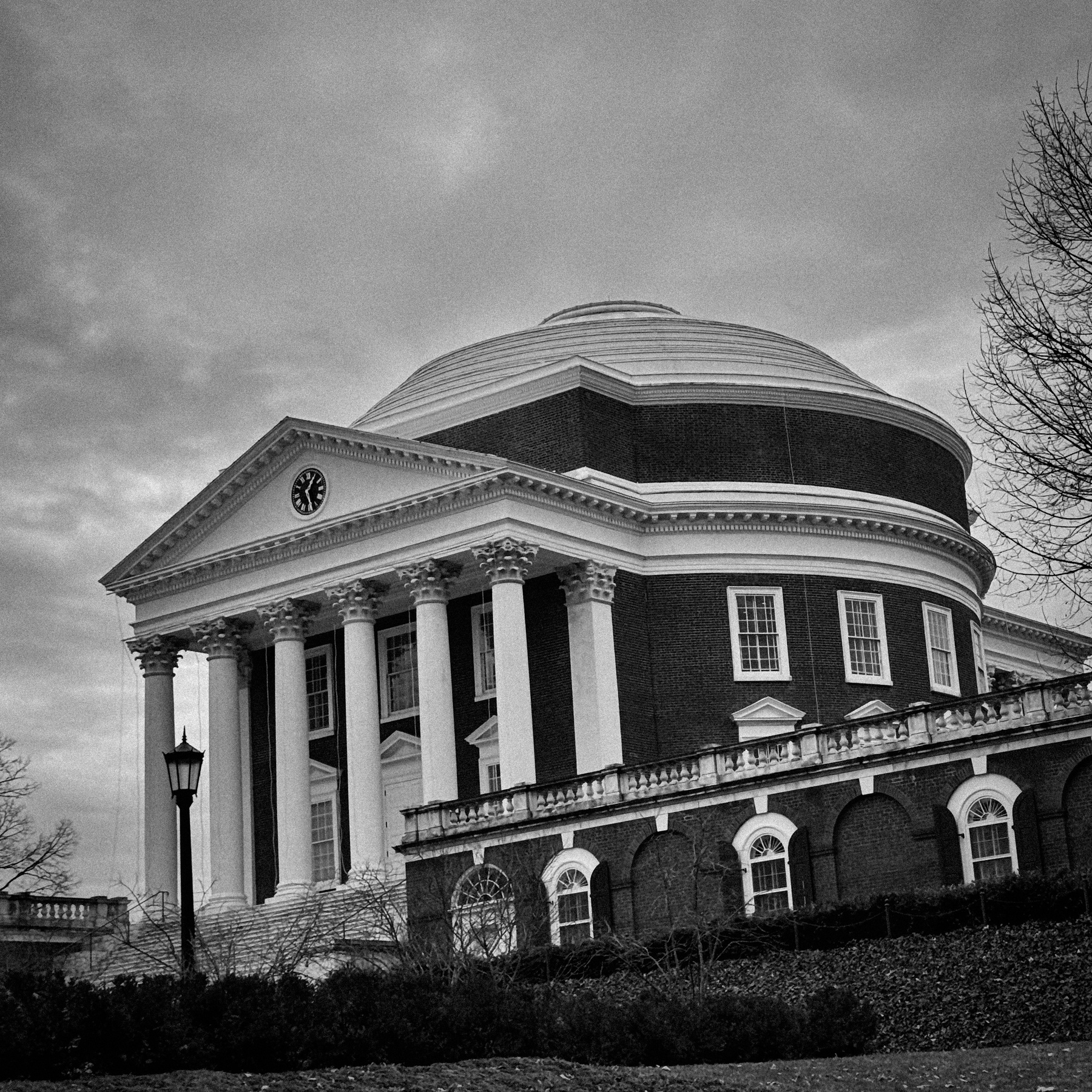
Tyler Austin Harper: “The first step is refusing to indulge in certainty, the fiction that the future is foretold. There is a perverse comfort to dystopian thinking. The conviction that catastrophe is baked in relieves us of the moral obligation to act. But as the extinction panic of the 1920s shows us, action is possible, and these panics can recede.”
a note on plagiarism
The Claudine Gay plagiarism scandal — or, depending on your point of view, “plagiarism” scandal — has me thinking about How We Write Today. John McWhorter has recently written that there really is a meaningful distinction between plagiarism and “duplicative language,” and I suppose there often is, but it’s all because of technology, innit?
That distinction arises because of what people do when they read as well as write on a computer. “Duplicative language” arises when scholars (presumably in something of a hurry) see something in a digital book or article that they want to use, copy the relevant text, and then paste it into Word with the intention of editing it later to in some sense make it their own. (Part of McWhorter’s argument is that maybe we don’t need to do that, or do it as often. I don’t think I agree, but I’ll waive the point for now.)
At least some of these issues arise from a general sense that one’s work should not contain too many long quotations, an idea that Adam Roberts has explored and questioned here. (I might disagree with Adam also, but I’ll waive that point as well as McWhorter’s.) The tendency to overquote becomes a problem when professors don’t have a lot to add to an existing scholarly conversation but need publications for tenure or promotion. In such circumstances, the bulk of any given article will likely be the collecting of other scholars’ work, and if you quote too much, it might become obvious that there’s not a lot of you in your article. So you need to rework the quotations to make the extent of your debts less obvious.
But note that all of this is a result of the pressure to publish, a pressure that people might feel especially strongly if their stronger interests are in teaching or administrating. That Claudine Gay has never written a book, and has produced only eleven journal articles in twenty years, one of those co-authored, and moreover moved quite early in her career into administration, all suggests that we’re dealing here with a person whose primary calling is not the production of scholarship. And that’s totally fine! By all accounts Gay has been an effective administrator, and Lord knows academia needs more of those. Heck, maybe Gay even has some scholarly humility, something I have heard of, occasionally.
So if you’re a person who is publishing under pressure, and not really extending the scholarly conversation in dramatic ways, and perhaps not even very excited about writing, then you’ll probably be more prone to (a) copy and paste that digital text and (b) forget later to make the necessary changes.
I don’t think I do this? I hesitate to assert too strongly, because I may be deficient in self-knowledge. But I will say this: whenever I copy and paste from some existing text, primary source or secondary, I paste it as a quotation. I never ever paste it into the body of my work. When I’m drafting an essay or article or book chapter I just don’t worry about whether I have too many quotations or whether the quotations are too long. That’s something I assess in revision.
Which makes me wonder whether some of the plagiarism (or “duplicative language") we’re now seeing so much of is a result of one small habit common to digital writing: pasting wrongly. Pasting as body text and not as quotation. Maybe this should be part of what we teach our student writers: If you think you can just drop a quotation into the body of your text and and then go back to fix it later, you’re may well be fooling yourself.
With the Mac turning 40, a question going around is: What was your first Mac? Mine was … the first Mac, in all its 128k glory. Bought (with a bank loan arranged by my mom, who worked in a bank) in early 1985. I wrote my dissertation on it; everything I have ever published was written on a Mac.
placing bets
The last four of Ted Gioia's seven hypotheses about meaningful progress:
4. The discourse on progress is controlled by technocrats, politicians and economists. But in the current moment, they are the wrong people to decide which metrics drive quality of life and human flourishing.
5. Real wisdom on human flourishing is now more likely to come from the humanities, philosophy, and the spiritual realms than technocrats and politicians. By destroying these disciplines, we actually reduce our chances at genuine advancement.
6. Things like music, books, art, family, friends, the inner life, etc. will increasingly play a larger role in quality of life (and hence progress) than gadgets and devices.
7. Over the next decade, the epicenter for meaningful progress will be the private lives of individuals and small communities. It will be driven by their wisdom, their core values, and the courage of their convictions — none of which will be supplied via virtual reality headsets or apps on their smartphones.
The ongoing existence of this here blog is based on almost exactly these assumptions. It’s a bet that people want what’s best about the world.