
blogging and the blogosphere
Robin Sloan’s reply to my last post, which was a riff on something Robin wrote … ah, you’ll figure it out. Follow the links. Robin has been very generous to me.
Children, gather around. Grandpa has a story to tell.
A long, long time ago, there was a a network within the network we call the World Wide Web, which is of course a network within the network of networks that we call the internet … anyway, this demi-network was sometimes called the blogosphere. And once, back in the first decade of the 21st century, Grandpa wrote that “the blogosphere is the friend of information but the enemy of thought.” Of all the millions of words that Grandpa has published, those are the most quoted. And Grandpa is not super happy about that.
See, the blogosphere, when Grandpa wrote those words, was dominated by sites like Andrew Sullivan’s Daily Dish, Glenn Reynolds’s Instapundit, Josh Marshall’s Talking Points Memo. The Dish shut down; TPM morphed into something larger and more complicated, as did Instapundit – though the latter is closer to its original incarnation. When these sites were at their height, fifteen years or more ago, each was basically one person pumping out responses to the most recent news all day every day. Dozens of posts per day, in some cases, and almost all of them what we would now call tweet length.
Which explains why nobody makes that kind of site any more. If you want to post in microbursts from dawn to dusk, Twitter is a superior platform.
When Grandpa wrote against the blogosphere, that kind of site is what he had in mind: a constant stream of hot takes, some of which had to be walked back later because they were offered before, and instead of, reflective consideration. You’d therefore have a better sense of what I meant in that much-quoted line if you replaced “blogosphere” with “Twitter.”
In short: Blogosphere ≠ blogging. Blogging, at least as I try to practice it here, is a different thing. What I like about blogging, and the reason I have chosen this as the venue for my thoughts on Invitation and Repair, is summed up in Austin Kleon’s post on blogging as a forgiving medium: “Blogging feels to me like a world of endless drafting, endless revisioning.”
Exactly. I post a thought; later, I return to it with an update; someone responds and I incorporate their thoughts into a new post that links to them and to the original – basically, what I am doing right now. Note also that blogging, when done in this fashion and in this spirit, is also seriously dialogical, and I think there is a close connection between a dialogue-friendly medium and a forgiving medium. More on that another time, perhaps.
In his Preface to Anarchy, State, and Utopia, Robert Nozick wrote,
One view about how to write a philosophy book holds that an author should think through all of the details of the view he presents, and its problems, polishing and refining his view to present to the world a finished, complete, and elegant whole. This is not my view. At any rate, I believe that there also is a place and a function in our ongoing intellectual life for a less complete work, containing unfinished presentations, conjectures, open questions and problems, leads, side connections, as well as a main line of argument. There is room for words on subjects other than last words.This series of blog posts is one of those “less complete works.” But that doesn’t mean that, for me anyway, it’s any less serious.
UPDATE: Another way to think about blogging, in the spirit that I’ve outlined above, is to see it as a way to open oneself to stochastic resonance.
vendoring culture
Software often has dependencies, and the bigger the codebase the more dependencies the software is likely to have. A dependency is another chunk of code, written and maintained by someone else, that you incorporate into your project in order to fulfill certain functions. Your project then becomes dependent on that external code in order to run properly, which is why it’s called a dependency.
But there is an alternative to employing dependencies, and it’s called vendoring. When you vendor someone’s code, instead of writing instructions to point to the external code, you copy that code directly into your project. Even when such an action is legal — it isn’t unless the relevant code is open-sourced or otherwise explicitly made available to you — it’s not widely done because when you vendor someone else’s code you become wholly responsible for it. If you were using that code as a dependency, then maybe you could count on the person who originally wrote it to maintain it, develop it, extend it, fix it when things go wrong; but when you vendor their code you have no access to the original, and so the running of that code becomes your problem.
On the other hand, if you’re willing to take on that responsibility then you really get to know an alien codebase and may incorporate it not only into your code but also into your thinking. A programmer named Tom MacWright says that he vendors code more often that most other programmers do for just this reason:
When I’m vendoring code - copying it into the project and making it pass my basic eslint [a JavaScript analysis tool] & testing standards, I’ll do light rewrites and refactors of new code, allowing me to get a deeper understanding of how they [sic] work and where their limits lie.So: Vendoring rather than dependencies. This leads me to a comic book.Obviously, other people’s code is their code. I didn’t do 100% of the thinking that led to it - I’m probably doing 5% of it. But absorbing that bit into my mind, instead of seeing only the external API surface, pays dividends.

Now: If you’ve been following this series of posts, you’ll have zeroed in on Robin’s key point:
For me, these are matters not primarily of judgment — who was wrong? Who continues to be wrong? Exactly how wrong are they?? — but of repair.So Robin has already said the thing that most needs to be said, but let me just add this point: What Yang has done is moral repair through vendoring code — in this case not the code of programmers but cultural code. And note that Yang has not created a dependency: he has not simply pointed to code created and maintained by someone else. He has copied that code and pasted it into his own creation, not because he admired it but because he needed to correct it. And he could only correct it by making it his own. Like Tom MacWright, he has thereby enabled for himself a better understanding of how that code works and where its limits lie. He has “absorbed it into his mind”; but his mind is more capacious and generous than what it absorbs. And that is precisely what enables the absorption.And in this case, amazingly, we have an example of what repair might look like.
In this case the code doesn’t remain 95% that of the original text and 5% Yang’s; the proportions are closer to being reversed. When the original is healthier, and stronger, the relation can be more equal and more constructively reciprocal. But even when the original code is destructive, even when it’s a kind of cultural malware, it can seed the act of repair — the act of repair that goes far beyond repair. It is a seed in the same way that a irritating piece of grit trapped within the mantle folds of an oyster eventually generates a pearl.
One down, one to go.

biographies and brands
This is a fascinating essay by my friend Charles Marsh. For me, there are two major elements of fascination, and I want to take them one at a time.
One: The experience Charles describes – mainly in the central section of his essay – of responses to his book Strange Glory from certain other Bonhoeffer scholars is eerily familiar to me as a biographer of C. S. Lewis. When my biography came out, a number of Lewis scholars wrote reviews, or wrote to me personally, to tell me that I had made terrible factual errors. My skin crawled when I heard those charges; I feared exposure of my inadequacies and subsequent humiliation; but then when with trembling fingers I grabbed my books and checked to see whether I had indeed failed so badly, I discovered that in almost every case I had not. Most of what they called factual errors on my part were simply differences of opinion or interpretation; they were so wedded to their view of Lewis that they could not see disagreement with it as anything but falsehood. In other cases they confidently corrected statements I made, but obviously did so from memory, without checking the relevant sources. From one person I got a twenty-page printout listing errors I had made, which in panic I went over with a fine-toothed comb and discovered that not one accusation of error in the entire twenty pages was accurate. (My book does of course contain errors, some of them embarrassing to me; but oddly enough, my confident critic tended to miss those.)
After a period of receiving these letters and reviews with decreasing panic, I finally came to realize that while the responses claimed to be identiying errors, they really had nothing at all to do with truth or falsehood in scholarship. They were statements by people who perceived themselves to be the faithful custodians of the C. S. Lewis brand — note the title of Charles’s essay — and to them I was an outsider to that custodianship. When they said that Jacobs makes many factual errors, they weren’t even really making a truth claim, they were uttering a spell to ward off the stranger. They were placing me outside their Inner Ring. Once I understood that this was no scholarly endeavor but rather a ritual for maintaining group purity, I stopped worrying about what they said about me.
It seems to me that Charles is in a similar situation, especially with regard to Ferdinand Schlingensiepen, whose criticisms of Strange Glory are inconsistent – he can’t seem to decide whether the flaw of Charles’s book is that it’s too creative or not creative enough – when they aren’t extravagantly petty. From my distance I can’t be sure, of course, but Schlingensiepen certainly looks like a Guardian of the Brand. Charles is outside that Inner Ring. Again and again Charles shows that the accusations of major error are incorrect – of course he made some minor ones, as we all do – but to Guardians of the Brand that will not matter. They have uttered their spell. I think Charles will simply have to content himself with having written an outstanding biography that engages with constant critical sympathy one of the major theological figures of the 20th century, and tells a fascinating story to boot.
Two: The second theme, and one I want to keep thinking about, is Charles’s observation that there are very few good biographies of theologians. This strikes me as being absolutely true, and somewhat worrisome. Too many theological biographies are, as Bethge’s biography of Bonhoeffer was, mere chronicles: useful, informative, but neither illuminating nor inspiring. I can think of a couple of others, which I shall not name here, that aspire to be something more but are dragged down by a turgid prose style. The great theologians need and deserve vivid narratives, but vividness in storytelling is not a virtue that many theologians possess. So perhaps the biographies of theologians will need to be written by non-theologians, except in those rare cases when someone like Charles can be found: learned in his field but also with writerly gifts.
There is another potential issue, related to the matter of Brands: the great theologians tend to be controversial figures — founders of schools and therefore, indirectly, of counter-schools. In relation to the inevitable disputes, the biographer must offer a mere chronicle, as noted above; or take sides (explicitly or implicitly); or find a way to fend off readers who might think that he or she is taking sides. Navigating such obstacles doesn’t often make for a well-told tale, which is why Guardians of the Brand never write good biographies. But: disputes occur in other fields too. There aren’t many philosophers more controversial than Bertrand Russell and Wittgenstein, and yet Ray Monk’s biographies of them are absolutely masterful. How wonderful it would be if Karl Barth and Hans Urs von Balthasar and John Webster and Robert Jenson all found their Ray Monk.
All this makes me want to write a biography of a theologian. Unfortunately I don’t know much about theologians.
beyond repair
In his review of Ross Douthat’s book on decadence, Patrick Deneen writes:
Classical authors accepted decay as a natural condition of the world, and certainly of human society. The last books of Plato’s Republic — usually considered a work of political utopianism — are devoted to describing an apparently inescapable process of decay, from the regime of near perfection to the most vicious form of tyranny. The course of the world is to run down. The failure of one generation to pass along its virtues is akin to the natural degradation of our genetic code and the inevitable decline and death of our bodies.
The counsel of the classical authors was to delay the decay. Preserve the virtues; slow the rot; avoid unnecessary innovation. This counsel is at the heart of the conservative disposition: the world is arrayed toward decline, not progress; and, as such, the main role of a healthy society is to stave off decay through prudent maintenance of decent and sustainable social practices. Edmund Burke and Alexis de Tocqueville were among the modern heirs of the classical tradition, albeit anomalies in an age that considered itself enlightened and sought to overthrow the old ways in favor of progress.
This is a good word of warning, because my project has to concern something more than slowing or arresting decay. Repair and maintenance are essential, but they are propadeutic to extension, development, and imaginative creation. Or ought to be, anyway.
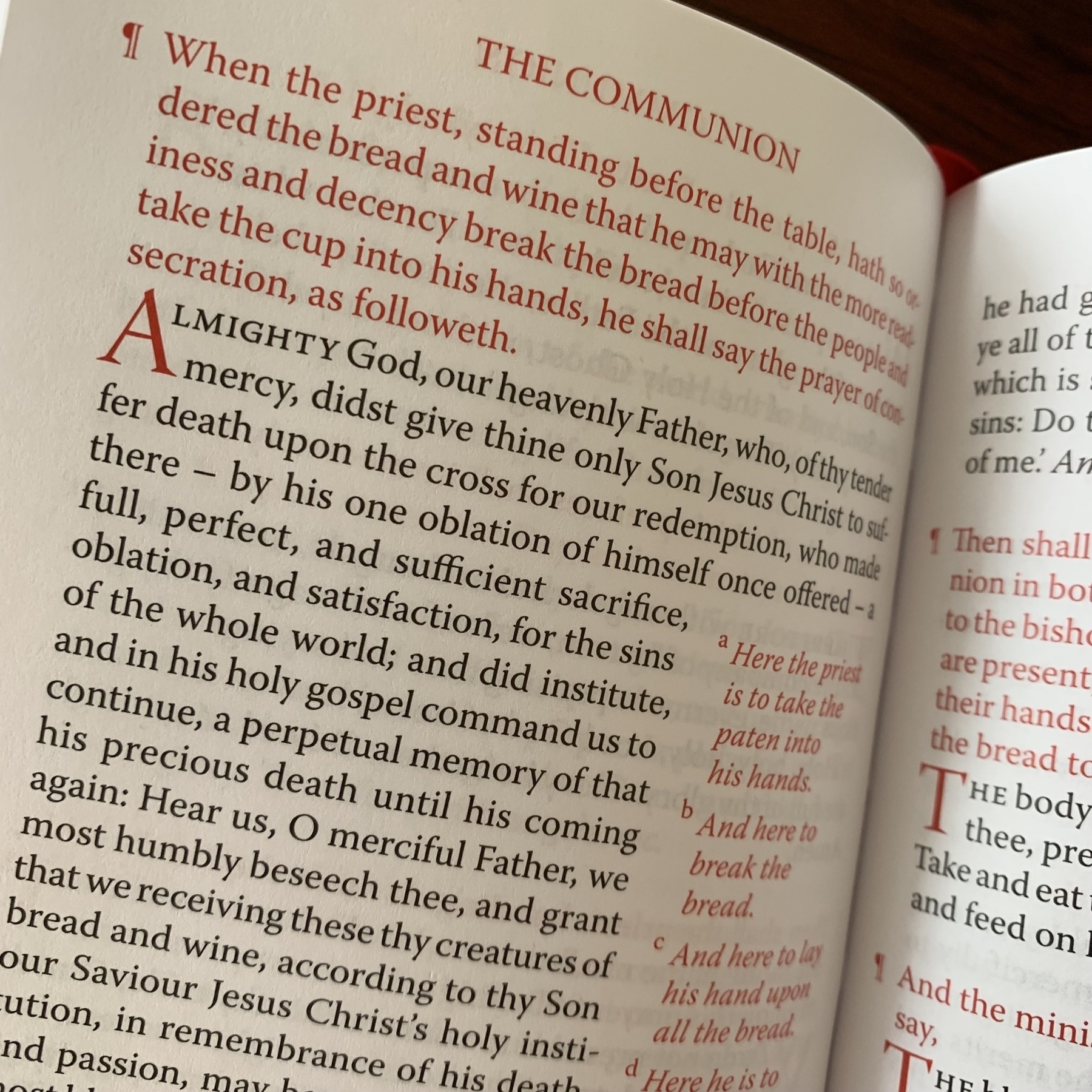
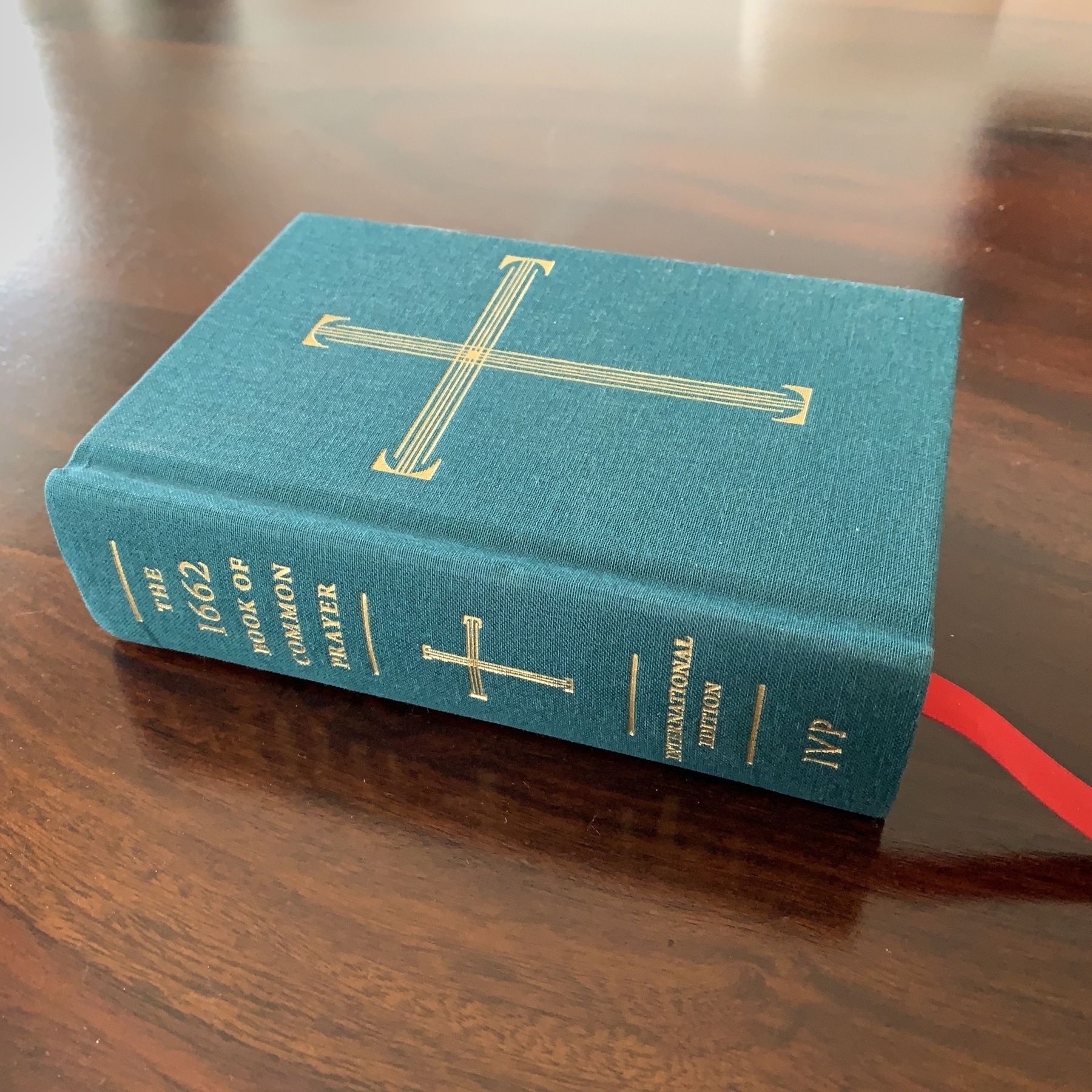
So excited about the arrival of this one.
more on invitation and repair
Rita Felski's book The Limits of Critique primarily concerns literary criticism, but its argument has a more general application, as does Bruno Latour's essay “Why Has Critique Run out of Steam?” Both scholars have been formed by an intellectual environment in which skill at critique is the definitive skill — almost the only one worth practicing. But they have also perceived the ways that critique, pursued in the absence of any positive vision of the good, degenerates into a series of rote and irritable gestures.
I want to follow Michael Oakeshott in thinking of culture, or any culture worth preserving and extending, as an invitation or series of invitations. To act culturally, to do culture, is, ideally, to welcome people into endeavors of thought and practice — to invite people into certain enabling and productive disciplines. A culture that does not spontaneously invite cooperation and the participation of outsiders does not deserve the name of culture.
But it is also quite obviously the case that our own culture is deteriorated and in many respects broken. One might critique those who have brought it into the state that it currently is in, but that is really a useless thing to do. It is much better, I think, to reflect on the ways in which the existing culture can be maintained where it is healthy and repaired where it is not.
And therefore the invitation which I wish to extend is not an invitation merely to observe and contemplate, or approve and disapprove. Rather, it is an invitation to participate in maintenance and repair.
Invitation and Repair
This is the first installment of a diffuse and ill-defined project I am calling Invitation and Repair: A Theology of Culture. I will be posting on it intermittently — very intermittently, I suspect. Just laying down a marker here, by way of a beginning.
I have long felt that the standard approaches to a theology of culture — e.g., H. Richard Niebuhr’s all-too-famous Christ and Culture — are too schematic, and that the closely allied discipline of theological anthropology tends to produce work — like David Kelsey’s much-praised Eccentric Existence — that is bloodless, abstract, detached from the human lifeworld. I am not by profession a theologian, but these matters concern me deeply and I want to explore them. Thus: Invitation and Repair.
For the “repair” part, see this post on “broken world thinking”; for the “invitation” part, see this post on Michael Oakeshott’s definition of “culture.” My initial touchstones for the shaping of this project are:
- Steven Jackson’s essay “Rethinking Repair”
- Sharon Mattern’s essay “Maintenance and Care”
- The fiction of Ursula K. Le Guin
- The fiction of Thomas Pynchon
- My recent reflections on “cosmotechnics” and Daoism
- My thoughts from some years ago on anthropocene theology
On that last topic specifically, I tried to write a book — indeed, I wrote 80,000 words of a book. But I am not happy with what I wrote. I could re-write it, but I have decided that it was not framed properly. And that happened in part because I did not know enough to frame it properly.
The process of learning enough is going to be long, and I cannot foresee the path I will need to take to get where I want to be. So after much reflection, I have decided that the way to get there is by planting a new bed in my blog garden. I have resisted doing this because I would like for this to be a book someday, and I know that many publishers are reluctant to publish something that appears, in whole or even in large part, on the open web. And a part of me would like for this project to end up in book form because I want other scholars to cite it, and they are unlikely to cite a personal blog.
But you know what? Screw it. I need to take my time and develop the necessary ideas properly. If these thoughts never develop in such a way that I can turn them into a book, so be it. If they do so develop and nobody wants to publish it, so be it. (I’ll just make various digital versions.) The point, at this stage in my career, after fifteen published books, is not the publication, it’s the thinking. So let the thinking, in public, commence.
It will be slow at first and chaotic probably always. But I suspect that certain themes will, over the longue-ish durée, emerge.

This story reminds me of an experience I had in Manhattan a few years ago. I was walking crosstown, and there was a young woman in front of me texting frantically as she walked. With her head down, she drifted to her left and into the oncoming pedestrians, near-collision with whom startled her into moving back to the right again. I walked behind her for three crosstown (i.e. long) blocks and if my count is correct she executed this drift-startle-correct maneuver thirty-five times. Never once did it occur to her to step aside to text standing still, or even to pay more attention to where she was going. She just crashed into person after person after person.
I was 100% sure that this little tree had died in the recent big freeze, but here we are!

the new heretics
Last July I wrote that we were just a few weeks away from a #BoycottSubstack hashtag, and while things have moved a little more slowly than I thought they would, they’re moving in the direction I predicted. The increasing volume and shrillness of the attacks on Substack are a direct result of frustration and anger by people who work for magazines and newspapers that some of the most widely read Substack writers are producing journalism.
Most people who write for newspapers and magazines, especially those who call themselves “reporters,” don’t do journalism anymore; they practice what Andrey Mir calls postjournalism:
Postjournalism is journalism that sells the audience to the public by soliciting donations in the form of subscription. Classical journalism pretended to be objective; it strived to depict the world-as-it-is. Postjournalism is openly normative; it imposes the world-as-it-should-be.Glenn Greenwald has written brilliantly about the wrath of the postjournalists here. Greenwald is a prickly character, to be sure, and hasn’t been reluctant to make enemies. But about this matter he is correct, and profoundly so:Similar to propaganda, postjournalism openly promotes an ideological view. What distinguishes it from propaganda, however, is that postjournalism mixes open ideological intentions with a hidden business imperative required for the media to survive. Postjournalism is not the product of a choice but is the consequence of the change in the media business model. […]
The media practicing postjournalism produce nothing else but the donating audience through the manufacture of its anger. Their agenda production entails no consumption. Nobody learns news from this agenda. It does not even have any impact on the assumed audience. Real propaganda involves the proliferation of ideas and values. However, postjournalism cannot do even that. Those whom it is supposed to reach and convert are already trapped in the same agenda bubble.
Do you see how these online journalists have been taught to think about themselves and the world? Do you see the bottomless sense of entitlement and self-regard and fragility that defines who they are and how they behave? They specialize in trying to ruin people’s reputations and wreck their lives — not just other journalists but private citizens — but the minute someone objects to their journalism or what they say or do, they summon a team of teachers, psychologists, therapy dogs, digital police officers and tech executives to demand that their critics be silenced and their anguish be treated. They really do believe that the world should be organized so as to authorize them to attack whoever they want, while banning anyone who criticizes them when they do it.The anger of the postjournalists at the Substack journalists like Greenwald, Andrew Sullivan, and Matt Taibbi is the anger of those who have abandoned their historic role, and the ethical constraints associated with it, and do not want to be confronted by anyone who declines to make that move. People like Glenn Greenwald practiced journalism before the postjournalism movement fully took hold, and they are continuing to practice journalism now. This is an intolerable offense to the postjournalists.
I think a closely analogous situation obtains in the relationship between the Bible teacher Beth Moore and the Southern Baptist Convention. Beth Moore continues to hold the views that she held before Donald Trump came on the scene, and has never seen any reason why the rise of Donald Trump should cause her to abandon the biblical standards by which she has tried to govern her life, and by which she has expected other Christians to try to govern theirs. Just as the postjournalists changed course and despise those who have not changed with them, so also many leaders of the SBC shifted from their traditional conviction that “character counts” in order to enable rank idolatry, and cannot forgive people like Beth Moore for not shifting with them.*
I’m old enough to remember when heresy was understood to be deviation from long-establish beliefs and practices. But in a social-media environment that issues new commandments every fortnight or so, the heretics now are the ones who don’t deviate when told to do so. And they are hated with particular intensity because they are a living, breathing reproach to their colleagues’ complete lack of ethical standards.



the wait
This piece by Don McNeil (which in a sane world would have appeared in the New York Times, but that’s another story) is a sobering reflection on just how chaotically incompetent the vaccine roll-out is here in America. People are getting vaccinated, to be sure — my wife being one of them, thanks be to God, because she has a medical condition that would make contracting covid-19 very dangerous indeed to her. But it’s happening in a way that seems almost random. As McNeil points out, being a frat boy appears to be a qualification for getting vaccinated; but I, teacher of frat boys, don’t have a snowball’s chance in a Texas summer of getting the jab. I’ve been teaching students in person for almost an entire academic year, and that doesn’t factor into anyone’s calculations. I fully expect to be the last person in America to be vaccinated against covid-19 — I mean, assuming that I don’t get the disease itself.
UPDATE:

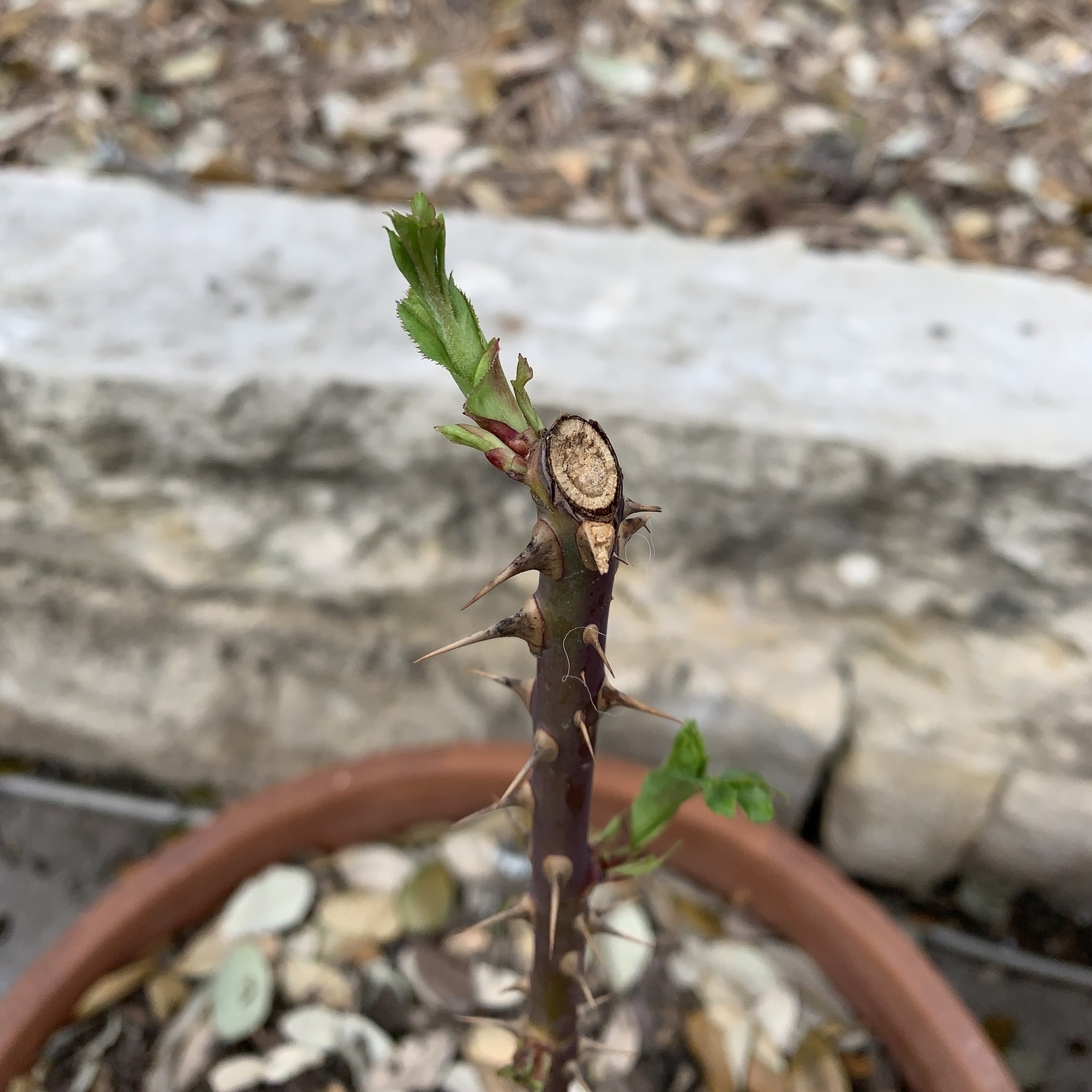
Not everything was killed in our Big Freeze (but I fear a lot was).
premises
There’s a great story about the famous wit Sydney Smith. He was walking with a friend through one of the narrow “closes” of Edinburgh, and looked up to see two women, one leaning from a window on the left side of the close and one leaning from a window on the right side, screaming wrathfully at each other. “Those women will never agree,” Smith remarked to his friend. “They are arguing from different premises.”
I have a new post up at the Hedgehog Review on the contours of some of our current disagreements and the places at which our premises converge, or might be seen to converge. The most famous advocates of free speech are rarely, if ever, absolutists; people who deny that “cancel culture“ exists often acknowledge that the rush to judgment and rage for punishment can get out of control. Twitter and that minor adjunct of Twitter that some people still call “journalism” like to portray all disagreement as stemming from radically “different premises”; but what if we occupy similar and contiguous premises and simply differ on the most prudent and useful way to negotiate them? Our condition then might not be as bad as I sometimes fear and as the more hateful among us often hope. There are useful conversations to be had if we want them.
indoctrination
I don’t blame people for getting alarmed by stories like this one from Bari Weiss. But there’s one question that I think everyone reading such stories should ask: Will the students believe what they are taught?
There’s plenty to be worried about in any case: the intellectual bankruptcy, the moral callousness, the preening self-righteousness of such schools’ leaders; their substitution of indoctrination for education. But much of the alarm, in some circles sheer panic, arises from the unconfronted assumption that such indoctrination works. Does it?
I don’t know, but I have my doubts. I suspect that such a system is less likely to produce True Woke Believers than to produce young people who are thoroughly cynical about education and about the dishonesty and hypocrisy of educators. And that might be a worse outcome.
syllables
I read once that Jorge Luis Borges and Pablo Neruda, an Argentinian and a Chilean, a conservative and a Communist, formed a bond over the one thing they agreed on: English is the best language in which to write poetry because it has so many one-syllable words. How those native Spanish speakers envied all the one-syllable Anglo-Saxon words!
I wrote a post a while back about the power of the monosyllabic, and I have a new example: “Seemed the Better Way,” from Leonard Cohen’s final album. (Yeah, I quoted the title song recently — I’m obsessed with the record right now.)
Here are the lyrics:
Seemed the better way
When first I heard him speak
Now it's much too late
To turn the other cheekSounded like the truth
Seemed the better way
Sounded like the truth
But it's not the truth todayI wonder what it was
I wonder what it meant
First he touched on love
Then he touched on deathSounded like the truth
Seemed the better way
Sounded like the truth
But it's not the truth todayI better hold my tongue
I better take my place
Lift this glass of blood
Try to say the grace
Ninety-six words, thirteen of which have two syllables; the rest are monosyllabic. Another way to count, removing repetition: The song uses fifty-one different words, four of which have two syllables. The spareness and simplicity of the language match the spareness and simplicity of the music: