

“The Arrival,” photograph by Carol Munder.
Legal Sauce for the Legal Goose
From an an interview with Jill Lepore:
I’m working on a long book about the history of attempts to amend the Constitution. And on the one hand, we have a Constitution that has a provision that allows for generativity and invention and adjustment and improvement and alteration and remedy and making amends, and all of these wonderful, beautiful ideas that we associate with the idea of the future. And yet, we live in a world where we can’t actually use that provision because our politics are so overridden with the idea of the past. Consider the Supreme Court’s history-and-tradition test, under which we can’t do anything that doesn’t derive from the past. The week that we’re speaking, the Supreme Court is hearing oral arguments on the question of whether people who have restraining orders against them due to domestic abuse can be prohibited from buying or owning weapons, and the test that the Supreme Court uses is to ask: “Was there an analogous law like that in 1787?” That is plainly nuts. In that sense, we are held hostage by the dead.
This is a mess. Lepore means not “history and tradition,” but “text, history, and tradition” (THT for short) — see e.g. this article. (THT may or may not be a coherent model of interpretation. One complication, raised by some legal hermeneuts, is whether “history” and “tradition” are always compatible: sometimes legal tradition can be shown to be indifferent to or ignorant of the relevant history. But we won’t get into that here.) In a far more important error she is confusing the THT standard of interpretation with a different one, originalism: “Was there an analogous law like that in 1787?” is not a THT question but a question about original meaning. Originalists don’t care much about how their judicial predecessors have interpreted the law. They care primarily about what the text’s original public meaning was. They think that that should be the essential interpretative canon. (Originalism can sometimes be in tension with textualism, but that’s another matter to ignore for now.)
So Lepore is writing "a long book about the history of attempts to amend the Constitution” but doesn’t have even the most elementary knowledge of the rival schools of legal interpretation. We just have to hope that she learns as she goes along.
But let’s continue by posing a hypothetical. Suppose Donald Trump becomes President again; suppose also that he has a majority in the House and Senate. In light of what he says is an unprecedented influx of dangerous illegal immigrants, Trump declares a State of Emergency and invokes the Alien Enemies Act. (That might have its own interesting legal consequences, but let’s set those aside for now.) Then Congress, with the President’s support, passes a law deeming criticism of the President’s policies in this time of Emergency a form of sedition, to be punished appropriately. The law is challenged and the Supreme Court rules that the law violates the First Amendment’s protections of freedom of the press. Some of the justices employ THT principles to articulate their case, and some of them use originalist canons, but they agree on the decision.
“That is plainly nuts,” Trump then says. “We’re being held hostage by the past. We’re looking to achieve generativity and invention and adjustment and improvement and alteration and remedy and making amends, and the Courts are getting in our way!”
And Jill Lepore would have to agree, wouldn’t she?
The answer is: No, of course she wouldn’t agree. Because, we would learn, many of the legal protections that Lepore admires, reveres, and relies on were also made in the past. Indeed, any existing law is by definition the product neither of the future nor the present but the past. If existing laws prevented her from being arrested and tried for sedition with (say) her New Yorker articles used as evidence against her, she would not feel that anyone was being “held hostage by the past,” but rather that the Founders, in making the Bill of Rights, had shown remarkable foresight, wisdom, and commitment to freedom.
So Lepore’s actual position is not “We should not be held hostage by the past,” because that would be to say that we should not have any laws. What she means is something more like this: “It should be easier for us to change the laws to get what we want.” But — the eternal question returns — who are “we”? And it’s obvious that by “we” Lepore means “people who share my politics.” Which would be fine if people who share Lepore’s politics are the only people who will ever be elected to political office in this country. But they aren’t. If we ever get a MAGA President and a MAGA Congress, and they set out to implement their vision of “generativity and invention and adjustment and improvement and alteration and remedy and making amends” — another word for “making amends” is “retribution” — then you can bet that Lepore would be one of the first people insisting that those political ambitions be forcibly restrained by law, i.e., that they be “held hostage to the past.”
I suspect that Lepore was formed in an environment in which leftish people like her wanted change, which is good, while people on the right wanted sameness, which is bad. She hasn’t adjusted her thinking to the rise of MAGA populism, which wants change as much as she does, and feels the restraint of existing law and legal interpretation as much as she does. They just want different changes than the ones she prefers. MAGAworld ain’t conservative.
Basically what I’m saying is: Jill Lepore hasn’t thought this through. She hasn’t thought it through because — here again she is like her MAGA counterparts — she lives in an intellectual monoculture. And one bad consequence of living in an intellectual monoculture is that it makes you incurious. THT, originalism, whatever, it’s all the same to people who want the same changes and don’t like having their desires thwarted.
People whose political desires are thwarted by judges are always quick to declare the legal system illegitimate. Today it’s leftists who think the Supreme Court lacks legitimacy, but in the Clinton era it was the right that felt that way — and in both cases the feeling arose directly and uncomplicatedly from disliking judicial outcomes. But there’s a lot more to the evaluation of the judiciary than looking at outcomes. It would be nice if a distinguished historian writing a book about attempts to amend the Constitution knew that.
P.S. The domestic-abuser-weapon-ownership case that Lepore mentions is United States v. Rahimi. I think that this situation should be and will be decided in the way that Lepore prefers, but if you read some of the material I’ve linked to you’ll discover why the question has made it all the way to SCOTUS. “Why is this even a thing?” is usually an exclamation rather than a question, but if you really ask you can learn a bit.
BBEdit 15, in addition to getting several interesting new features, has undergone some slight but really quite pleasant adjustments to its appearance.

Currently reading: The Spirit of Early Christian Thought by Robert Louis Wilken. This will be my third complete reading of this great book. 📚
The Mouth of Orcus, in the Gardens of Bomarzo.


Yet another really nice one from Adrian Vila.
Mark Hurst: Marc Andreessen is right – love doesn’t scale.
Bertolucci

Some years ago I read an article about sociopathy – I don’t remember the author or where it appeared, but I do recall the description of a boy who began to show signs of sociopathy from an early age. Once, as he and his parents gathering with family and friends at a house that had a swimming pool, a younger cousin, a toddler or barely older, fell into the pool at a moment when no one was paying attention – just this boy. As the toddler flailed helplessly in the water, the boy watched. He didn’t try to help, or even call for help; he just watched. Eventually an adult noticed, and rescued the small one. When the boy was asked why he didn’t do anything but watch a child drowning, he replied that he had wanted to see what happened.
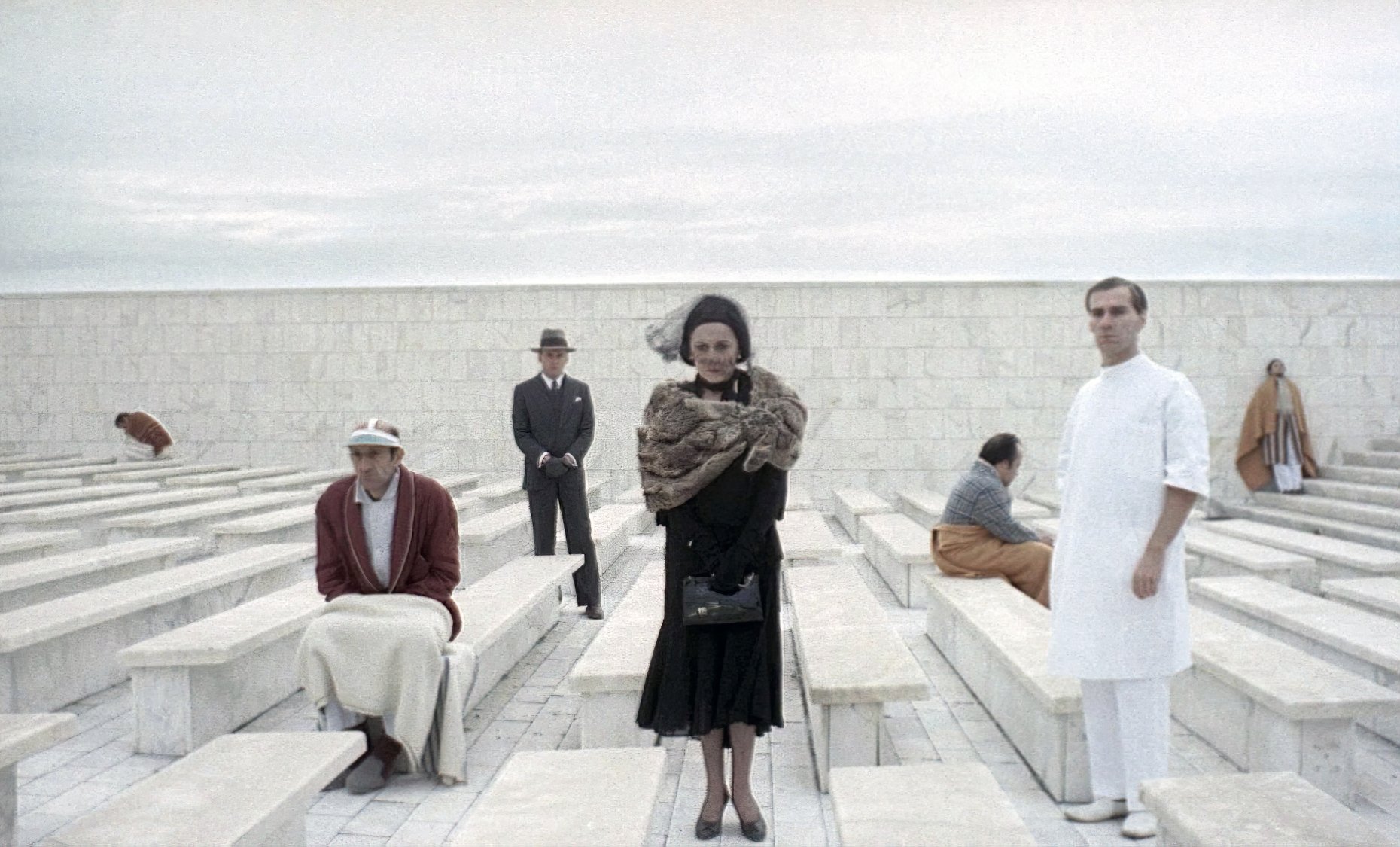
I think about that boy when I watch the films of Bernardo Bertolucci. Maybe that’s not fair; it’s hard to say. Dramatic films are just that, dramatic – their makers do not provide authorial commentary on the action. They portray, we judge. So I am not saying that Bertolucci was a sociopath; I am instead saying that his movies feel to me that he’s asking me not to empathize, but to watch. And because his images are so compelling, it’s hard not to watch.
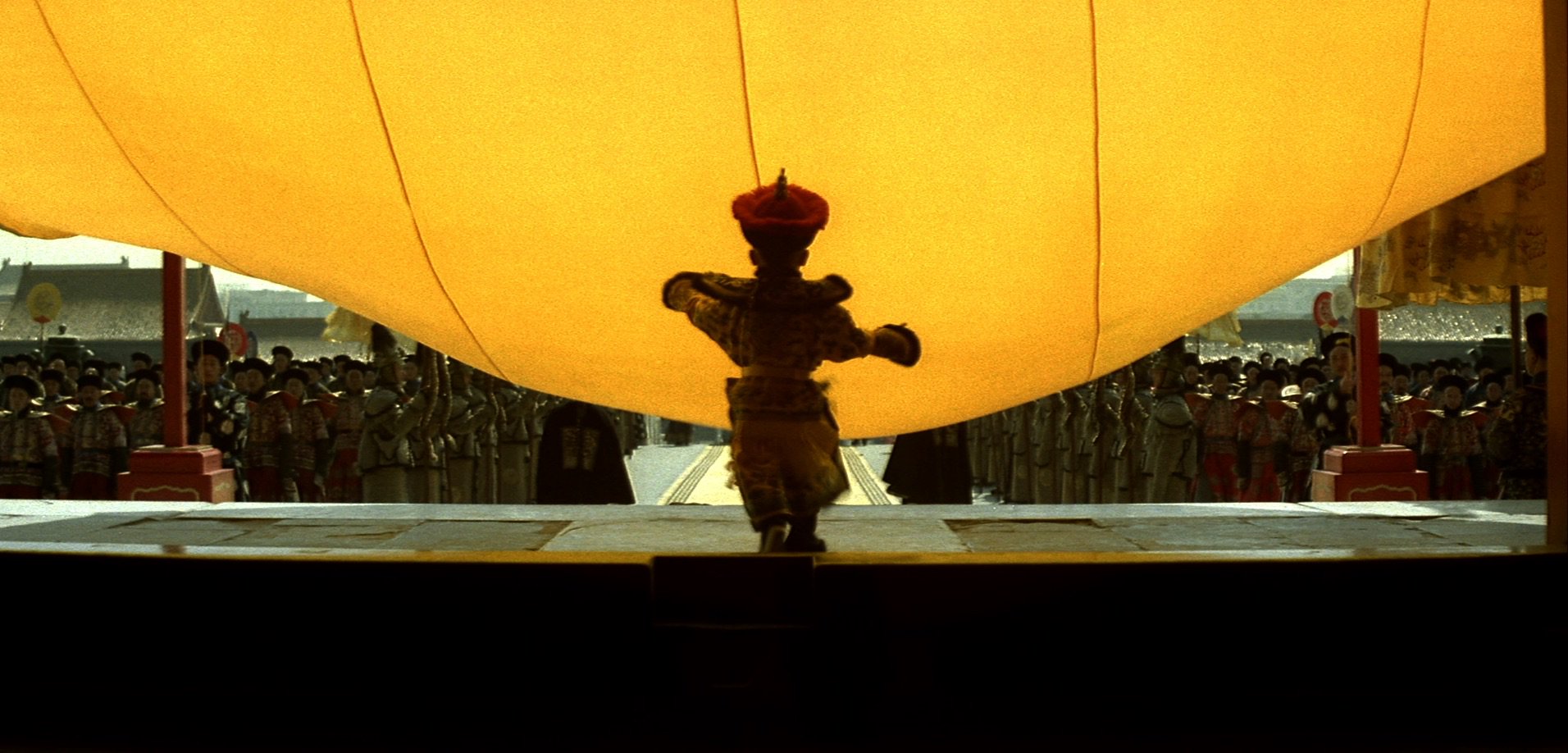
Like Antonioni, Bertolucci tends to make movies about lost souls. But when I’m watching L’Avventura or La Notte, I feel that the director has compassion for these souls in their lostness, and is inviting, even encouraging, me to have compassion for them also. By contrast, Bertolucci seems to be setting up his camera at the end of the pool and simply pointing it at the drowning child.

I wrote a mid-season report on Arsenal. ⚽️