
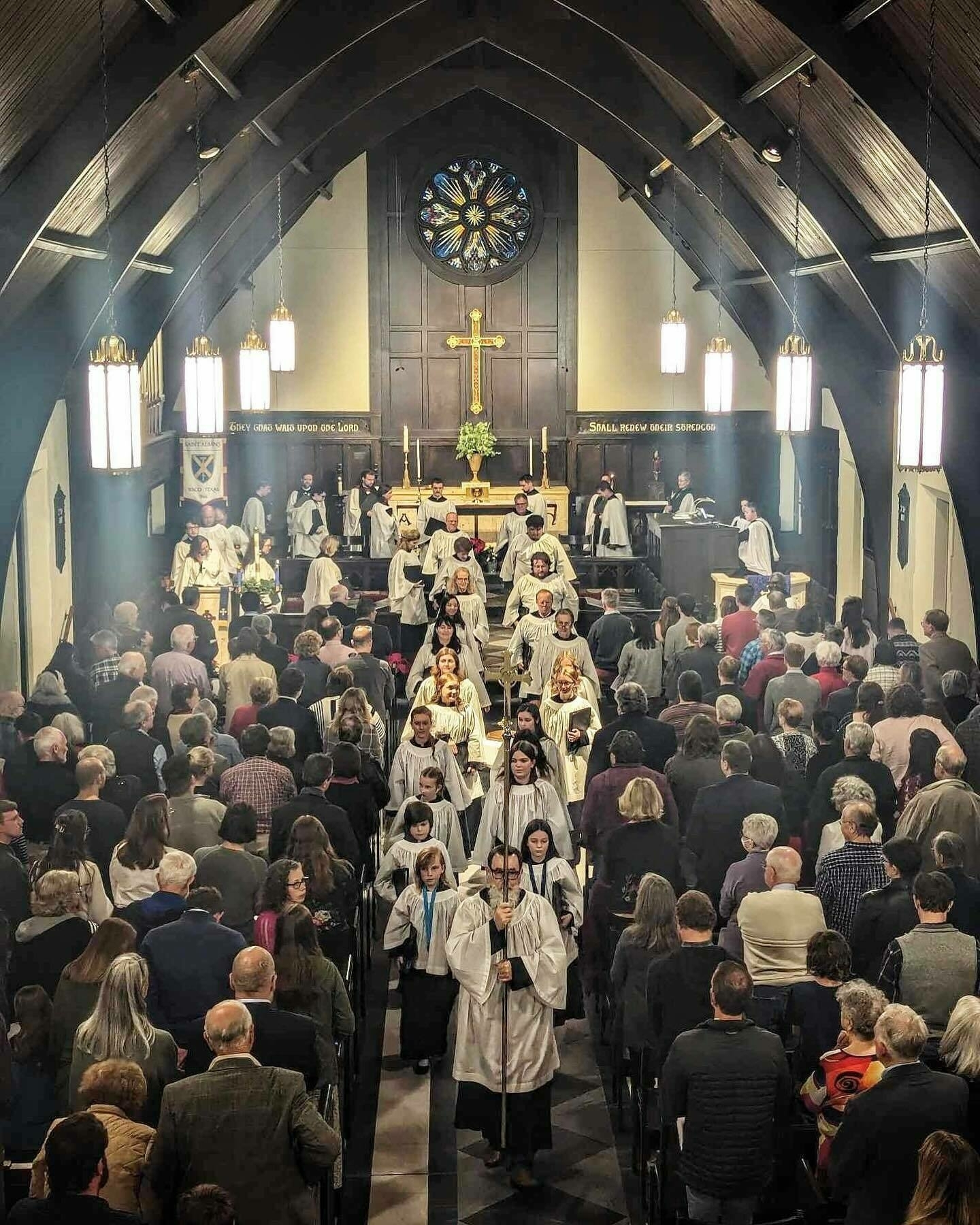
Last night at St. Alban’s, we had an utterly wonderful service of Nine Lessons and Carols. The history of the service — it’s relatively new as these things go — is fascinating.
Charlie Warzel: “A shift away from a knowable internet might feel like a return to something smaller and purer. An internet with no discernable monoculture may feel, especially to those who’ve been continuously plugged into trending topics and viral culture, like a relief. But this new era of the internet is also one that entrenches tech giants and any forthcoming emergent platforms as the sole gatekeepers when it comes to tracking the way that information travels. We already know them to be unreliable narrators and poor stewards, but on a fragmented internet, where recommendation algorithms beat out the older follower model, we rely on these corporations to give us a sense of scale. This might sound overdramatic, but without an innate sense of what other people are doing, we might be losing a way to measure and evaluate ourselves. We’re left shadowboxing one another and arguing in the dark about problems, the size of which we can’t identify.”
I wrote about library catalogs, analog and digital.
Expectation.

Pope Francis Allows Priests to Bless Same-Sex Couples - The New York Times:
But the new rule made clear that a blessing of a same-sex couple was not the same as a marriage sacrament, a formal ceremonial rite. It also stressed that it was not blessing the relationship, and that, to avoid confusion, blessings should not be imparted during or connected to the ceremony of a civil or same-sex union, or when there are “any clothing, gestures or words that are proper to a wedding.”
What does it mean to bless a couple without blessing that couple’s relationship? Millions of words will be expended in the coming months to try to explain this, but I can guarantee that none of them will make sense. The Pope has put his church in a completely untenable, incoherent, radically unstable position. From here it will have to go back to the traditional teaching or ahead to something wholly unprecedented. And I can’t imagine a retreat, not by this Pope.
Francis has not spoken ex cathedra here — this is not like, for instance, Munificentissimus Deus. But it’s a big thing, and if the incoherence is rectified by further acceptance of same-sex unions, then some really fancy theological dancing will have to be performed to avoid having to admit that the historic dogma on sex and marriage was simply wrong. And if a future Pope walks this back, then a similarly complicated dance will have to be done to reconcile the repudiation of Francis’s teaching with the dogma that the Pope is guided and directed by the Holy Spirit even when making ordinary — not ex cathedra — arguments and policies. It’s hard to see how historic Catholic teaching on marriage and historic Catholic teaching on papal authority can emerge unscathed from this.
Is Francis now the most consequential pope in the history of Roman Catholicism? I am inclined to say Yes.
cost-benefit
Carolyn Dever, writing about the ransomware attack on the British Library:
We’re past the days of card catalogs, alas: the modern library has long since converted to digital recordkeeping. What this means is that readers request books electronically, and the institution charts those books’ locations electronically, too. If I wanted to see what I had been working on last summer or a decade ago, I could look up my own user record to confirm. Well, I can’t do this right now, but researchers have taken this capacity for granted for a long time. If librarians wanted to see who’d laid hands on a certain volume of Michael Field’s diary, or on the manuscripts or earliest published work of Chaucer, Shakespeare, Shelley, Keats, the Brontës, George Eliot, Virginia Woolf, and so many more writers familiar today and others languishing, awaiting rediscovery, presumably they could, with a simple request within a digital file. Most importantly, if I wanted to request to see a specific book, I could look it up electronically, and then ask the librarians to find the physical copy.
Until Halloween, 2023, that is.
How ironic that the most quaintly analog form of research possible, using physical books in a physical library, has been devastated by the hijacking of a digital system. I am experiencing this irony as especially bitter this morning, having arrived at desk 1086 with my list of tasks, hoping against hope that the crisis had resolved. It hadn’t. I hope it will someday soon.
The books and manuscripts are there, the staff are there, the scholars are there — but the research can’t be done, because without the digital cataloging system there’s no way to access the materials.
There was a period in the Nineties (mainly), when libraries were gradually converting their systems from analog to digital, when you could use either system — though there were always warnings that not everything had been entered into the computer databases. Then, later, the warnings were that newer acquisitions were not to be found in the card catalog.
I had very mixed feelings about all this. In the mid-Nineties I was regularly using telnet to scan the holdings of libraries around the world, and that seemed miraculous to me. (In those years I led several summer study programs that were housed at St. Anne’s College, Oxford, and I could find out in advance which of the books I needed were available at St. Anne’s, at the other Oxford colleges, and at the Bodleian — though access to the Bodleian was hard for outsiders to get in those days.) On the other hand, I loved looking through card catalogs for the same reason I loved browsing the stacks: serendipity. I accepted the end of the card-catalog system, but with regrets.
In every library I regularly used, for some years after the system had gone fully digital the cabinets holding the cards stayed around. There had always been, sitting on those cabinets, pencils and sheets of paper on which you could write the call numbers you needed, but those had been taken away — oddly, because you could use them in exactly the same way you did before to find older books. But we were all being nudged towards the computer terminals. Eventually the cabinets were taken away and replaced by comfy chairs. The smaller cabinets are now widely available on eBay.
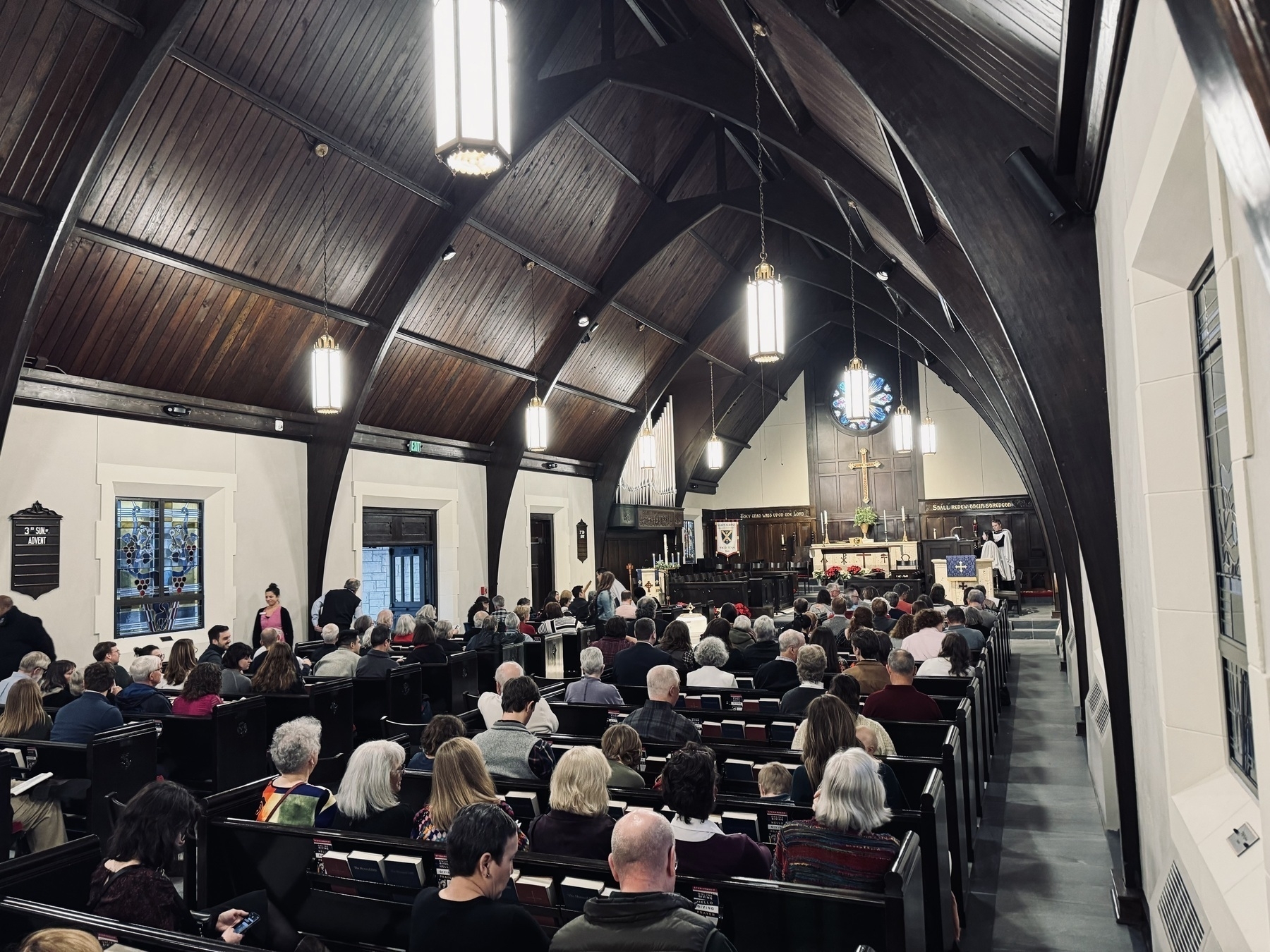
Twenty minutes early for the Festival of Nine Lessons and Carols and the house is already mostly full. We’re almost in the back row.


A battle between Sean Dyche’s current and former clubs should be called the Diet of Worms. (Niche, I know.) ⚽️