
Despite its very different political-economic DNA, the blogosphere has become enshittified as clearly as Facebook, Google, or Amazon. Not just at the level of aging software, but at the level of the aging people who inhabit it, maintain it, and continue to churn out content on it, though at a rapidly decelerating rate. And it’s hard to blame any particular party in the picture. The technical decisions that lead to the sort of messy problem that afflicted this site can’t be attributed to malice, objectionable politics, or billionaires behaving badly. They’re within the band of ordinary technology management decisions I see all over the place in my consulting work. Humans are just not good at building complex technologies that mature to a graceful immortality. The WordPress-based blogosphere is at the outer limit of complexity we are capable of getting to.
As someone committed to blogging, I worry about this — especially the “aging people who maintain it” problem. When people who blog, or even who once blogged, retire, will engineers from the post-blogging social-media era think that a platform like this is worth saving?
David French: “I’d argue that the more politically engaged you are, the harder it is to avoid bespoke realities. The most politically engaged of us are going to spend a disproportionate amount of our spare time perusing political media, much of it online. And each algorithm will notice our political preferences and try to feed us content that matches those preferences.”
I wrote about what strikes me as a very odd comment by Scott Alexander.
I wrote about what, until I can find a better term, I’m calling conceptual Marxism.
Scott Alexander suggesting the criteria that make someone an Effective Altruist:
1. Aim to donate some fixed and considered amount of your income (traditionally 10%) to charity, or get a job in a charitable field.
2. Think really hard about what charities are most important, using something like consequentialist reasoning (where eg donating to a fancy college endowment seems less good than saving the lives of starving children). Treat this problem with the level of seriousness that people use when they really care about something, like a hedge fundie deciding what stocks to buy, or a basketball coach making a draft pick. Preferably do some napkin math, just like the hedge fundie and basketball coach would. Check with other people to see if your assessments agree.
3. ACTUALLY DO THESE THINGS! DON'T JUST WRITE ESSAYS SAYING THEY'RE "OBVIOUS" BUT THEN NOT DO THEM!
Alexander then says, “I think most of the people who do all three of these would self-identify as effective altruists.” I don’t know how we’d go about measuring that, but I know a great many people who do all three of these things and none of them call themselves effective altruists; I suspect that very few of them have ever heard the term “Effective Altruism.” (For instance, I have been involved in many debates within churches about what charitable organizations to support, and those have invariably been serious conversations that involve, among other things, close scrutiny not just of those organizations’ mission statements but also of their financial reports.) Like many people who either live in Silicon Valley or dwell in the penumbra of its culture, Alexander has no idea how tiny his bubble is; nor is he aware of how many thoughtful givers to charity there are in the world.
works for me
I find this interesting: John Gruber reports that more of his listeners on The Talk Show use Overcast than Apple Podcasts. I used to love Overcast, but about three years ago it simply stopped playing podcasts in the queue. No matter what was in the queue or how I had added it, Overcast played the current podcast and then stopped. So I had to abandon it for Apple Podcasts.
By the way, I’m mentioning this here rather than on micro.blog because of a Law of Social Media Life: Every time a person reports that an app or a device isn’t working for them, people reply to say “Works for me.” Which is strange, if you think about it. I mean, if someone writes “I broke my leg yesterday,” people don’t reply “My leg is just fine.”
conceptual Marxism
In most respects, the concerns of Marx & Engels are very different than those of today’s Left, but in certain other respects their work, especially in the Communist Manifesto, provide a template for almost all Leftist thought. There are three especially important ways in which they provide such a template.
One: M & E write,
The history of all hitherto existing society is the history of class struggles.
Freeman and slave, patrician and plebeian, lord and serf, guild-master and journeyman, in a word, oppressor and oppressed, stood in constant opposition to one another, carried on an uninterrupted, now hidden, now open fight, a fight that each time ended, either in a revolutionary reconstitution of society at large, or in the common ruin of the contending classes.
The key phrase: “in a word, oppressor and oppressed.” The essential point is not that there are different social classes, but that the differentiation is always (a) binary and (b) morally asymmetrical. One class oppresses the other. There are no negotiations, no balance of powers, no possibility of collaboration or reconciliation. Moreover, “the history of class struggles” is the only history – it’s not the main event, it’s the one event. Nothing else matters; nothing else exists.
Two: Oppressors do nothing but oppress. It is their only form of action. Thus, “The bourgeoisie has torn away from the family its sentimental veil, and has reduced the family relation to a mere money relation.” Oppressors do not – indeed cannot – love children. They can only exploit and oppress children, both theirs and the children of others. It is not possible for the oppressor class to have virtues.
Three: Communism, as Marx & Engels articulate it, is anti-humanistic. That is to say, they have no category of “the human.” As Edmund Wilson points out in To the Finland Station, their contemporaries the Communist League (also known as the League of the Just) adopted the motto “All Men Are Brothers.” This idea Marx & Engels strenuously repudiate. “Workers of the world, unite!” – and unite against your class enemies, with whom you cannot be reconciled, whom you must utterly destroy. A version of genocide – class being the marker of gens – is baked into the system.
At the outset I said that these principles effectively constitute the modern Left. But they constitute the modern populist Right as well. Replace “bourgeoisie” with “coastal elites” and the “deep state”; replace “workers of the world, unite” with Trump’s “I am your retribution” and J. D. Vance’s “Our people hate the right people.” Different targets, same logic. It’s conceptual Marxism — a conceptual order that gets extracted from the political-economic specifics of the argument and then is redeployed.
(This is also, not incidentally, how Judenhass works: Jew and gentile are “oppressor and oppressed”; it is not possible for Jews to have virtues; genocide is baked into the system.)
The single most significant political division in the Western world today is between those who deploy this logic and those who don’t; between, in other words, Manichaeans and Humanists. The only two parties that matter.
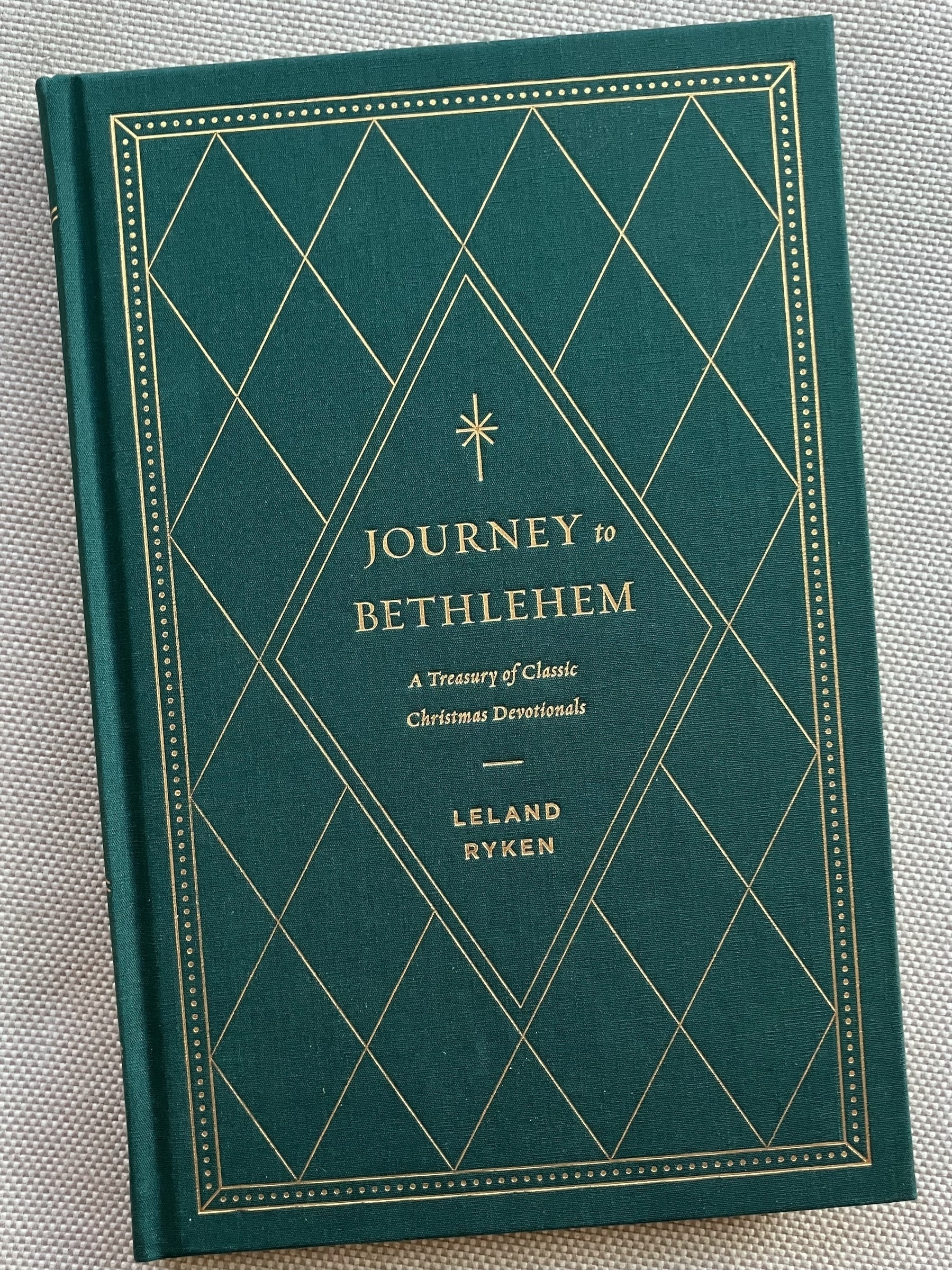
A lovely collection of Christmas writings, edited by my colleague-of-many-years Lee Ryken.
Bob Dylan is playing geographically appropriate covers.
I’ve spent the past couple of weeks talking to teachers about their experiences with online grade books like Schoology and Infinite Campus, and many of their anecdotes were similar to what Miller shared: anxious kids checking their grades throughout the day, snowplow parents berating their children and questioning teachers about every grade they considered unacceptable, and harried middle and high school teachers, some of whom teach more than 100 kids on a given day, dealing with an untenable stream of additional communication.
Mitch Foss, who was a classroom teacher in Colorado for 19 years, told me that when he posted grades, he would hear from kids almost instantly via email or text. Sometimes they’d be waiting outside his classroom door to talk about their scores. “You might get emails from parents questioning the grade, wanting an explanation, and that’s for every single thing,” even assignments that had little bearing on students’ overall marks, “which can be overwhelming.”
This sounds like the Hell that would be designed specifically for me.