
getting a new Mac up and running
Things I do when I get a new Mac, more or less in order:
- install Homebrew
- use Homebrew to install pandoc
- install BBedit
- install MacTex
- type this into the terminal:
defaults write com.barebones.bbedit FullScreenWindowsHogScreen -bool NO - type this into the terminal:
defaults write com.apple.dock single-app -bool true(followed bykillall Dock) - enable Night Shift
- install TextExpander
- install Alfred
- install Hazeover
- install Hazel
Everything else can wait; once I have the above in place — plus of course syncing all my existing TextExpander snippets — I can do almost everything I really need to do on a computer, with maximum focus and speed.
intersections
Re: “intersectionality”: Intersections can diminish as well as intensify. Take Kamala Harris as an example. A woman and a minority (a Jamaican father and an Indian mother): the intersection of these theoretically increases her cultural marginalization. But wait: both of her parents were also academics at elite universities, first as students and later as faculty and researchers. Such an economic and cultural placement forms a vector that, intersecting with others, diminishes Harris’s marginalization. (One could go into her story in more detail: for instance, her parents divorced when she was quite young — that adds another vector of social force that should be accounted for. One could also go into anyone else’s story in such detail, if one is interested in a full accounting of a person’s social placement. A big “If,” these days.)
People who fancy themselves theorists of intersectionality are only interested in intensifications: intensifications whether of privilege (white + male + heterosexual) or of marginalization (black + female + homosexual). The diminishments are just as real; but they’re not as useful. At least for those who, while they may like their gender identities on a spectrum, like their political narratives binary.
the right side
Ben Shapiro’s book, The Right Side of History: How Reason and Moral Purpose Made the West Great, relies heavily on the Miltonian conceit that the use of Reason alone, absent God’s moral law and universal will, dooms us to live in the abyss. And, like Milton, Shapiro’s attempt to demonstrate that secular civilization needs to rekindle the Judeo-Christian teachings upon which it is based, inadvertently shows us why we were right to leave them behind in the first place.
— Jared Marcel Pollan. “We.”
The third thing I do when I get a new computer.

The second thing I do when I get a new computer.

The first thing I do when I get a new computer.

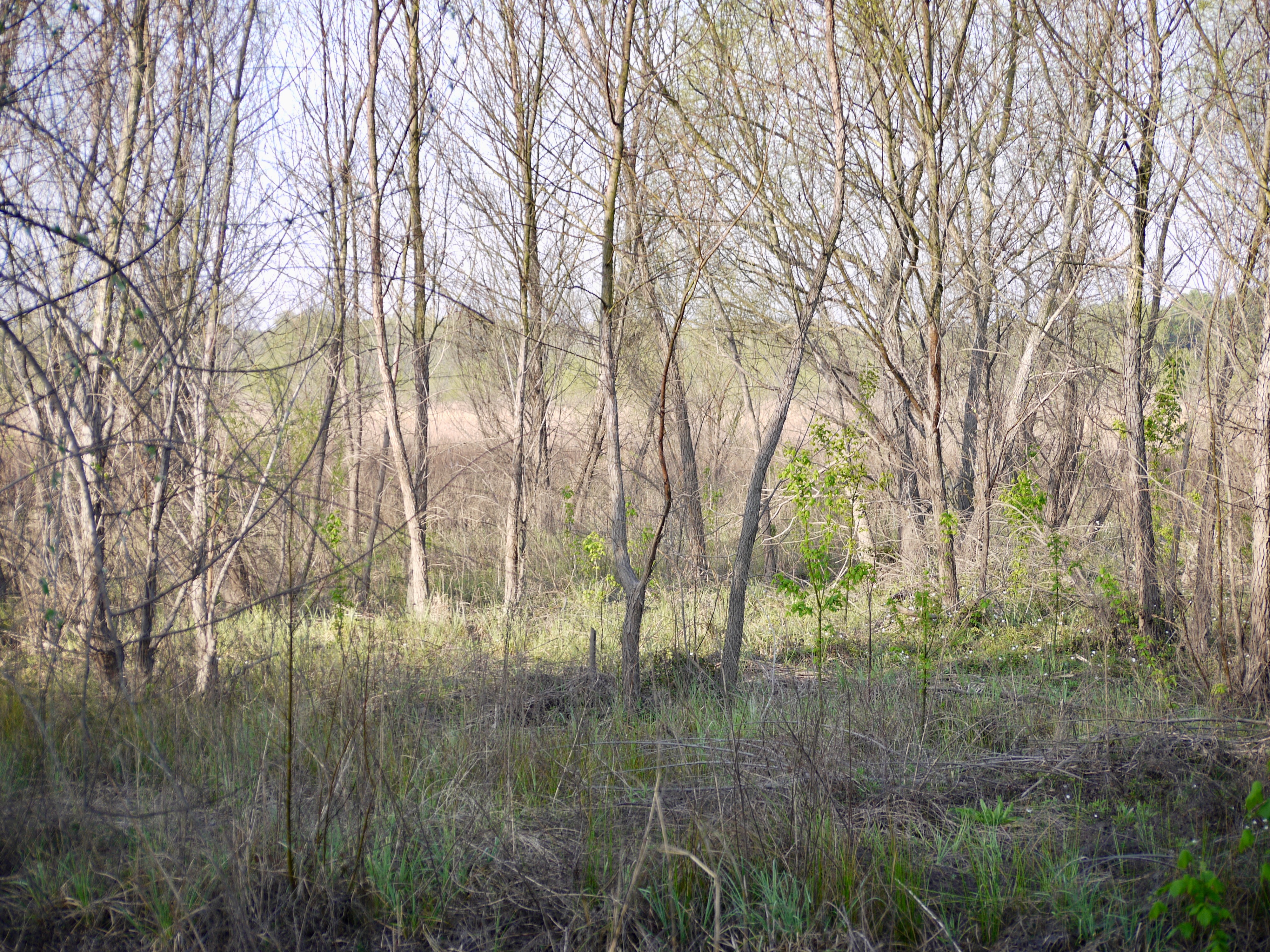

Lovely morning at Lake Waco Wetlands — though the wetlands are still waking up to springtime.

when political prophecy fails
In his column today, Ross Douthat writes:
A good many members of the opposition to Donald Trump — a mix of serious journalists, cable television hosts, pop culture personalities, erstwhile government officials, professional activists and politicians — have been invested in what appears to be exactly the kind of conspiracy-laced alternative reality that they believed themselves to be resisting.Will there be “a retreat from this alternative reality”? I don’t see why there would be, or why Ross thinks there will be. Similarly, listening on my morning walk to the National Review Editors podcast, I heard all the members of that distinguished panel agree that the release of the Mueller report will be very bad news for, a big black eye for, the media, and I thought: Really?With the apparent “no collusion” conclusion to the Robert Mueller investigation, there will now be a retreat from this alternative reality to more defensible terrain — the terrain where Trump is a sordid figure who admires despots and surrounded himself with hacks and two-bit crooks while his campaign was buoyed by a foreign power’s hack of his opponent.
I mean, I’m sure a handful — more likely, a hand half-full — of journalists and media talking heads will say they got ahead of the story, but I’d be shocked if it were more than that. More likely scenario: the Rachel Maddows and Jonathan Chaits and Stacey Abramses of the world
(1) will say “We won’t really know anything until we see the full Mueller report”;
and if the entire report isn’t released
(2) will insist that whatever has been redacted contains the key to the whole mystery, and that it remains overwhelmingly likely that Trump and his entourage are guilty of collusion with the Russians and other high crimes and misdemeanors;
and if the entire report is released
(3a) will find something, anything, in it that, they insist, confirms their worst suspicions,
or, if the full report gives them nothing,
(3b) will say that Mueller was scared into silence or is part of the con.
And their followers and enablers will cheer them on. In short, I can imagine no circumstances in which the people most committed to the Trump-and-the-Russkies narrative would acknowledge that they got it wrong. And the people who trusted them before will continue to trust them, while the people who didn’t trust them before will continue not to trust them.
Changing your views because you realize you got the facts wrong? Or because you realize that you “theorized in advance of the facts,” as Sherlock Holmes warned you not to do? In American politics today that’s not how it works. To understand why, take some time to read a book — a book I explore fairly extensively in my How to Think — called When Prophecy Fails. It was published in 1956, but it tells you much of what you need to know about how politically invested people behave in 2019.
Apple News vs. RSS
What Michael Tsai says about Apple News is correct:
I continue to find Apple News to be disappointing. It’s like Apple reinvented the RSS reader with less privacy (everything goes through an Apple tracking URL) and a worse user experience (less control over fonts, text that isn’t selectable, no searching within or across stories). So the idea of content that must be accessed from the app — and likely can’t even be opened in Safari — is not attractive to me.Those are among the reasons I deleted Apple News from my iOS devices — Apple won’t let you delete it from the Mac — some time ago. But I downloaded it again yesterday and signed up for the trial subscription to News+ just to check out developments. I found that the problems Tsai mentions are still there, along with what is for me the single greatest deterrent to using Apple News: Apple’s insistence on feeding you clickbaity stories, especially about celebrities, no matter how many times and in how many ways you try to indicate that you don’t want to see them.
When you sign up for News+, you get a list of suggested magazine content in a sidebar, and can click/tap a Like button to get stuff from that magazine or a not-Like button to … well, to do what? Because when I tapped the not-Like button next to Vanity Fair I still got stories from Vanity Fair in my feed. And I found this to be true of several other magazines as well.
Apple is taking a Facebook-like approach to News: “No, you don’t tell us what you want, we tell you what you want.” So I canceled my subscription after about an hour.
Here’s a cool fact for you all to keep in mind: Guess what you see when you look at your RSS reader? Exactly what you chose to subscribe to. Neither less nor more.

I look like I’m singing “Old Man River.”
cost-benefit ratios
Now that Apple has announced its next-generation AirPods, I see that I can get a charging pad that will charge the charging case that will charge the earbuds that allow me to play audio on my phone.
It seems to me that we’ve reached a point in consumer electronics at which the cost/benefit ratios are all out of whack. Indeed it is convenient to have wireless earbuds — or it would be if the number of devices that need charging weren’t proliferating. Moreover, the battery life of the AirPods is continually declining, something that can be “fixed” only by buying another set of AirPods. I don’t like the tradeoffs here. When I use my wired earbuds, it’s true that I have to deal with the wire, but it’s also true that they always work. They work on a wide range of devices, and they don’t decline in usability over time. (Though by eliminating the headphone jack from their phones Apple has made it more difficult for people to have one set of [wired] headphones to use in every situation. Which I think is an asshole move.)
Or consider wireless charging of phones: It sounds cool, but because the charging is so slow experts recommend that you keep a wired charger around for when you’re in a hurry. Or, alternatively, you could just not buy a wireless charger and accept the additional eight-tenths of a second it takes to plug your phone into a cord.
A similar logic applies to the “smart home”: when I finally thought about the amount of time that I have spent trying to get smart lightbulbs to work, and then trying to get them up and running again after a power outage, I realized that the infinitesimal savings of time and energy they provided made them a net drain on my life. Get up and flip a switch on the wall! It’s not hard!
And now I’m reading about people who are struggling with the inability to reboot their shoes. It’s not that these products don’t offer benefits, but that the benefits are tiny in comparison to the investment of time/energy/money that you have to make in order to get them and keep them working. I think I’l continue to opt out of most of them.
a legal clarification
Let me expand on something I wrote in yesterday’s post: Copyright law is not relevant to the legal situation of Francis Spufford’s new Narnia novel. What matters is trademark law.
To illustrate: Many of Edgar Rice Burroughs’s books, including many of his Tarzan books, are now in the public domain. But people are not publishing Tarzan novels. Why not? Because Edgar Rice Burroughs Inc. has trademarked “Tarzan” (and several other names) and will sue your pants off if you try to publish a Tarzan book without paying them what they think it’s worth.
Fifteen years from now copyright will expire on C. S. Lewis’s Narnia novels and they will come into the public domain. At that point anyone will be able to publish them, just as anyone today can publish a Charles Dickens novel. People will be able to edit and adapt them, making Susan Queen of Narnia and having Peter be the one who turns his back on Aslan, if they want. But they won’t be free to publish new Narnia novels because “Narnia” and its appurtenances are trademarked by C S Lewis PTE, and that won’t change in 2034.
Come to think of it, it’s possible that C S Lewis PTE will try to use its trademark to prevent, or at least control, publication of public domain books; which might even work, in some court or other. What happens when copyright law points in one direction and trademark law in another? If Disney holds a trademark on Mickey Mouse but Steamboat Willie is in the public domain, what does that mean for some auteur who wants to incorporate the film into a new film, a new work of art, from which she hopes to make money? As restrictive as copyright can be, it expires; trademarks, if they are defended, do not.
These issues have yet to be sorted out in court. But If we want to make books like The Stone Table possible, we need to revise not copyright law but trademark law.
in memoriam
Send me out into another life
lord because this one is growing faint
I do not think it goes all the way
— W. S. Merwin, “Words from a Totem Animal”
a return to Narnia
(I had the privilege of reading Francis Spufford’s The Stone Table in draft, with what I believe the enthusiasts call “dawning wonder,” and also with increasing frustration at a copyright regime that made it unlikely to be published. So a few months ago I wrote the essay you see below. After some reflection I decided not to publish it; but now that the word is out about The Stone Table, I’m posting it here.)
One of the best works of fiction I have read in the past several years was written by the acclaimed English writer Francis Spufford — and no, I do not refer to his award-winning novel Golden Hill, though indeed I loved that book too. The story I’m referring to is called The Stone Table, and before you Google it or look for it on Amazon, please understand that you will not find it. And that’s because of intellectual property law.
For Spufford’s book is set in Narnia, the fictional world created by C. S. Lewis. The Stone Table features characters who appear in other Narnia books: most notably, two children named Polly Plummer and Digory Kirke and the great lion Aslan. The seven Narnia books that Lewis wrote have already come into the public domain in some countries, and may even do so in the United States — though those of us who have seen the law extend copyright again and again may be pardoned for doubting that it will ever happen. But Spufford has written a new Narnia story, so copyright law doesn’t affect his: what matters is that the world of Narnia is a registered trademark of C. S. Lewis (PTE.) Ltd. — and trademarks, if they are consistently used and defended against infringement, last forever. (This is why so many companies will sue for trademark infringement even in apparently trivial cases: they’re afraid that if they don’t they’ll be accused of having abandoned their copyright.) Moreover, trademarks are often international in their scope.
So as long as there is money to be made from Narnia™, then books like The Stone Table cannot be published and sold without the express consent of C. S. Lewis (PTE.) Ltd.
Now, in many cases trademark holders are more than happy to give — or rather, sell — such consent. Certainly Middle-Earth Enterprises, the company that now holds the rights to Hobbit- and Lord of the Rings-related material, rights that Tolkien himself sold to United Artists in 1969, was pleased to make it possible for us to recreate Helm’s Deep in Lego. For instance. But the remainder of Tolkien’s writings are copyrighted, and several trademarks held, by Tolkien’s estate, which has sometimes led to confusing legal struggles: Wait, Tolkien is suing Middle-Earth? And Middle-Earth is suing him back?
And these different parties have not always had the same interests. Tolkien’s son Christopher, who directed the estate before his resignation in 2017 at the age of 93, did not like Peter Jackson’s adaptation of The Lord of the Rings, would certainly have prevented the filming of The Hobbit if he could have, and would have been unlikely ever to approve a film or television version of his father’s vast legendarium, The Silmarillion — even though such a project could greatly enrich the Tolkien Estate’s coffers. Who knows what will happen now that the Estate is in other hands? But Christopher always had a strong sense of the character and purpose of his father’s work, and did not want that character and purpose to be violated. Money is not everything.
A very similar attitude seems to drive the C. S. Lewis estate, and especially Lewis’s stepson, Douglas Gresham. When I was working on my biography of Lewis — in the year or so preceding the release of the film version of The Lion, the Witch, and the Wardrobe, with which it was meant to coincide — a shadow of anxiety always hovered over the project, because no one knew exactly what Gresham would think of it. He couldn’t have stopped it from being published, but he certainly could have withheld the estate’s cooperation from my publisher, HarperOne, and made life more difficult and considerably less lucrative for them. That would have (de facto if not de jure) meant the quashing of my biography. I am certain that my editor, the shrewd and resourceful Mickey Maudlin, had to do some delicate negotiating both with Gresham, who wanted his stepfather’s memory properly honored, and with me, who wanted to be left alone to write the book I wanted to write. But Mickey played his cards very close to his vest, so I am not sure to this day how awkward those negotiations got.
Last year Mickey and I had a conversation about a new book, a collection of Lewis’s writings about reading. Lewis wrote very eloquently about the theory and practice of reading, and as his biographer and the author of a book about reading I might seem to be a good candidate to select and annotate his thoughts on the subject. But again approval of the estate was required; and approval, for reasons not wholly clear to me, was not granted.
It’s enough to make me long for estates driven by a list for filthy lucre. For, though I admire the determination of Christopher Tolkien and Douglas Gresham, and other directors of those estates, to be faithful custodians of rich and wonderful imaginative worlds, I am not convinced that they can legitimately offer the final, unquestionable verdict about what does in fact honor Lewis’s and Tolkien’s writings. Great writers — and I believe both Lewis and Tolkien to have been great writers — tend to have more comprehensive minds than those charged with their estates’ care. This is why I have for so long admired Edward Mendelson, W. H. Auden’s literary executor, who has for decades now offered unfailing support to scholars working on Auden, even when those scholars have views about Auden radically different than his own. Mendelson grasps what many literary executors and estates do not: that, just because Auden is a writer whose greatness is not reducible to a single point of view, it is better to be overly generous than overly restrictive.
The world will not much miss the book on Lewis and reading that I would have made. But The Stone Table deserves a very wide readership indeed. Spufford has suppressed his own distinctive and eloquent style and made himself a ventriloquist of Lewis: to read the story is really and truly to return to the Narnia millions of readers love. And this is not merely a matter of style: Spufford’s story is thematically and even theologically Lewisian. It is a marvelous and utterly delightful tale, as wise as it is thrilling. I so wish you could read it.
interim tech report
Over the past year I’ve been making some significant changes to certain elements of my technological life — significant, but incremental and slow. I have tried not to change too many things at once, because when I’ve tried that in the past it has never worked out for me. Here’s a summary of my progress:
- I deleted my Instagram account. (I have not had a Facebook account since 2007.)
- I deactivated my Twitter account. I haven’t yet deleted it — I still wonder whether I might find a use for it some day. But I am not on Twitter and do not miss it, so deletion remains a possibility.
- I have been using a Micro.blog account for short posts. The community there is almost wholly pleasant, but I have had just enough tense exchanges to make me wary. I feel that all of us have learned our social-media habits from Twitter and Facebook and it may take us a little time to become fully decent again.
- I started a newsletter.
- I have almost completely eliminated reading daily news, which, for me, has primarily meant deleting news sites from my RSS reader.
- I have shifted instead to reading more weekly and monthly magazines, especially in print, but sometimes on the Kindle. My new favorite magazine is The Economist — at which I looked askance for many years because I thought it a key mouthpiece of the neoliberal order, which it kinda is, but overall it’s a great magazine. I begin by reading the summary of the week’s news, and then turn with particular interest to reports from parts of the world that I wouldn't ordinarily think about. It does a lot to put American kerfuffles into meaningful context.
- I am moving more and more of my data out of the cloud, and am moving back towards regular backups to hard drives, supplemented by key files stored in Apple’s iCloud. I have pared back my use of Google Docs and Dropbox to the bare nub, and may well delete my Dropbox account altogether in the coming months.
- I have moved all my online calendars from Google to iCloud, have moved my personal email from Gmail back to Fastmail — despite some problems I had with Fastmail last year, I am giving them another chance — and have deleted Google Maps from all my devices. (That last one is tough, because in my experience Apple Maps continues to be significantly inferior.) I have also moved to DuckDuckGo as my default, and since the move only, search engine. You can see where this is headed. Within a year I would like to have my Google account deleted.
I want to go back to the analog system of task management that I had been using for a couple of years previous to this one. I am happiest and most focused when I track my responsibilities in a notebook, but last year I found myself, during a period of particular stress, nearly dropping a few balls, and that led me back to my favorite digital task manager, Things. Things is a beautiful and exceptionally well-designed app — those are two different things, by the way: some apps are beautiful without being well-designed, and vice versa — but I don’t want to get too dependent on it, because….
Mainly I want to eliminate day-to-day use of a smartphone. I don’t imagine that I can do without one altogether — they’re too valuable when traveling and in other special circumstances. But for my everyday life I want to get back to a dumbphone like the one I was using three years ago — before it stopped working with my network and the iPhone dragged me back in. (There’s a new and updated version of the Punkt.) I want a life in which I have only one internet-connected device, and that device is my laptop, and my laptop spends a lot of time in a bag.
success robots
I go to schools a lot, have taught at universities and seen a ton of great kids and professors who’ve really sacrificed themselves to teach. A few years ago I worked for a few months at an Ivy League school. I expected a lot of questions about politics, history and literature. But that is not what the students were really interested in. What they were interested in — it was almost my first question, and it never abated — was networking. They wanted to know how you network. At first I was surprised: “I don’t know, that wasn’t on my mind, I think it all comes down to the work.” Then I’d ask: “Why don’t you just make friends instead?” By the end I was saying, “It’s a mistake to see people as commodities, as things you can use! Concentrate on the work!” They’d get impatient. They knew there was a secret to getting ahead, that it was networking, and that I was cruelly withholding successful strategies.