
Viva Italia!


J R R Tolkien died fifty years ago today. A while back I wrote an imaginary conversation between him and W H Auden, who died later the same month.
It’s true, we are living in the 21st century — at least according to the calendar. But in terms of our creative culture, we’re still in the 1900s. Like heirs to a dwindling fortune, we’re living off the legacy of dead people — true visionaries who flourished between the years 1901 (when Arthur Conan Doyle published his most fully realized Sherlock Holmes book, The Hound of the Baskervilles) and 1999 (when The Sopranos made its debut on HBO).
The whole post is excellent, full of evidence and appropriate detail – it’s not just a rant.
Joseph Epstein: “With Meatless Tuesday in mind, I wonder if the country wouldn’t do well to declare Trumpless Thursday. This would entail an agreement on the part of all media — television, radio and print — not to run any items about Donald Trump, show his face on screen or in photographs on Thursday of every week. The country would be given a weekly 24-hour rest from Trump talk.”
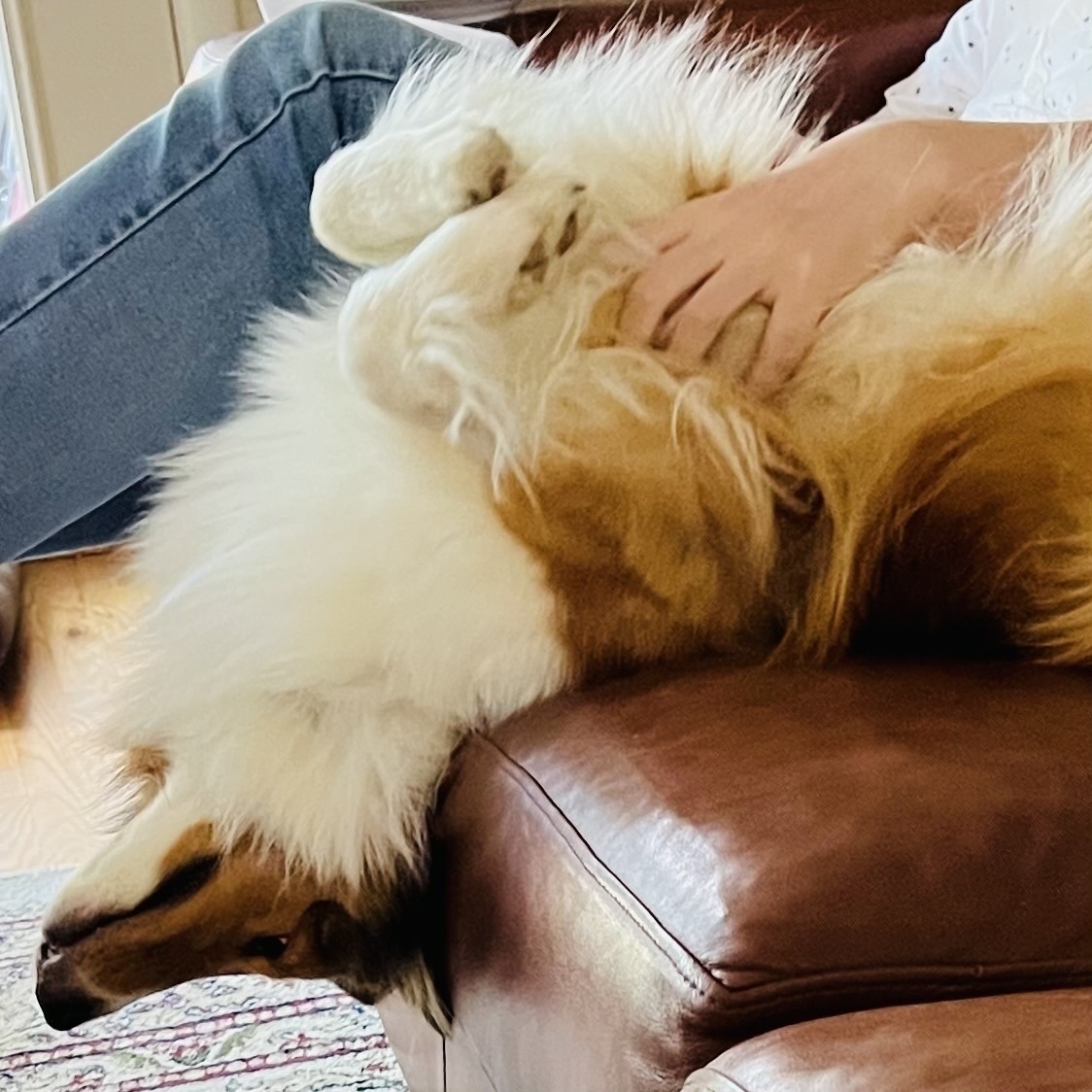
Some of you may think I post too many photos of Angus, but believe me, if I go a couple of days without posting one, I hear from people who miss him.

an exercise in branding
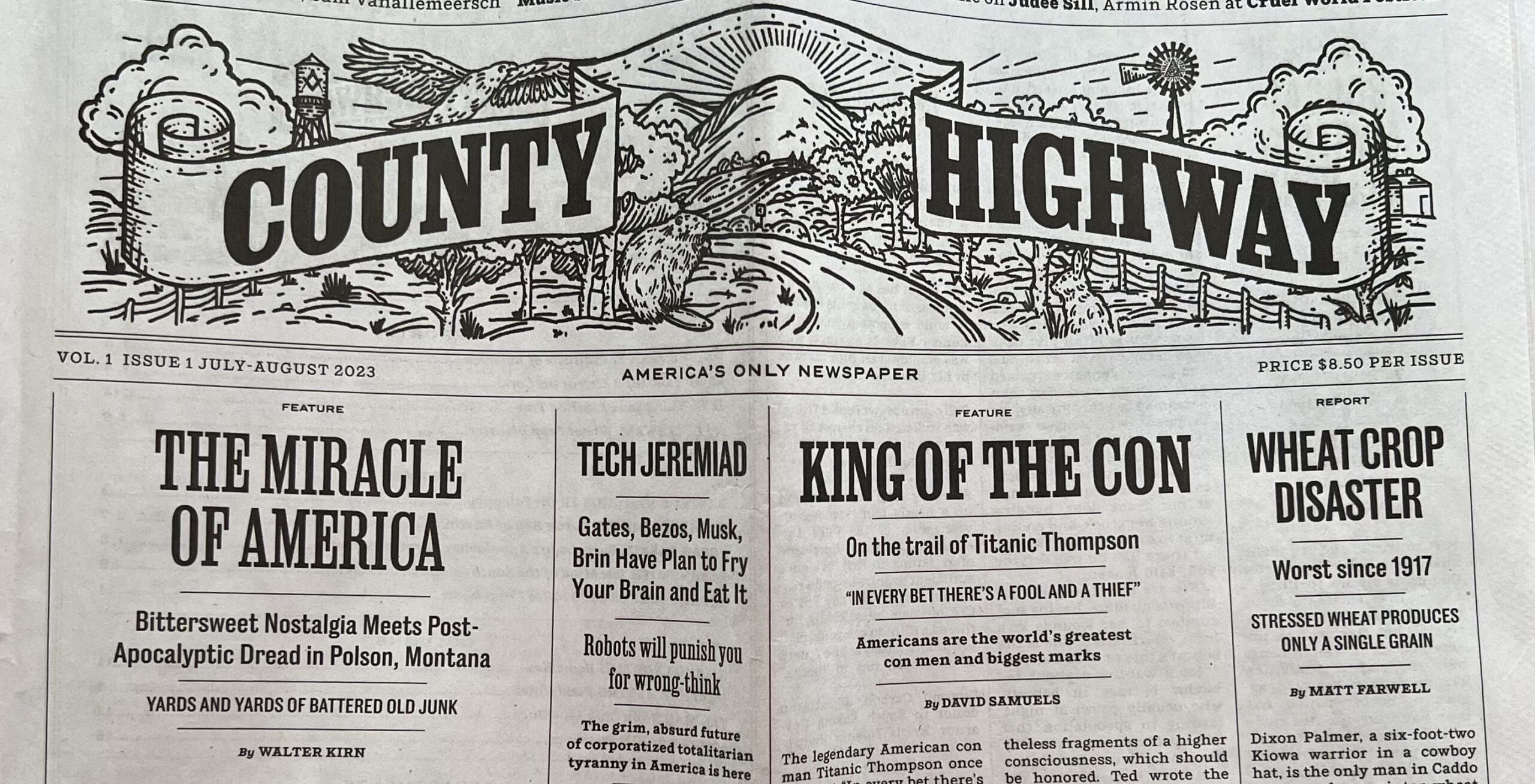
I decided to take a flyer on this — and am kinda wishing I didn’t. It’s fun to get a newspaper in the mail, and I like the look; the parodies of the way headlines were written 125 years ago (several layers deep) are well-done, though they’re imitating what Harry Smith did better in his famous Anthology of American Folk Music:

(That’s a photo of my copy.)
The problem is that in this first issue the writing is largely indifferent, and once I saw the puff piece on RFK Jr. I knew that this is an exercise in branding — and trolling — more than a serious attempt to finding a new (old) way of doing journalism.

Yeah, I get it, you want to own those smug coastal elites. And that’s fine, I guess; but I’m not interested in subsidizing it. I’ve read some excellent writing from David Samuels, but this really is a puff piece, and any responsible editor would’ve asked Samuels to tone down the worshipful rhetoric or at least to ask some serious questions. Unfortunately, Samuels is the editor, or one of them, along with Walter Kirn. Other pieces (some of them also by writers I’ve enjoyed in the past) lack clear structure, or are poorly paced, or succumb to sentimentality and cliché. Maybe things will get better, but I’m not exactly looking forward to the next issue.
An old man’s simple prayer, from Bruce Cockburn.