I wrote about the sad story of The Band.
once brothers
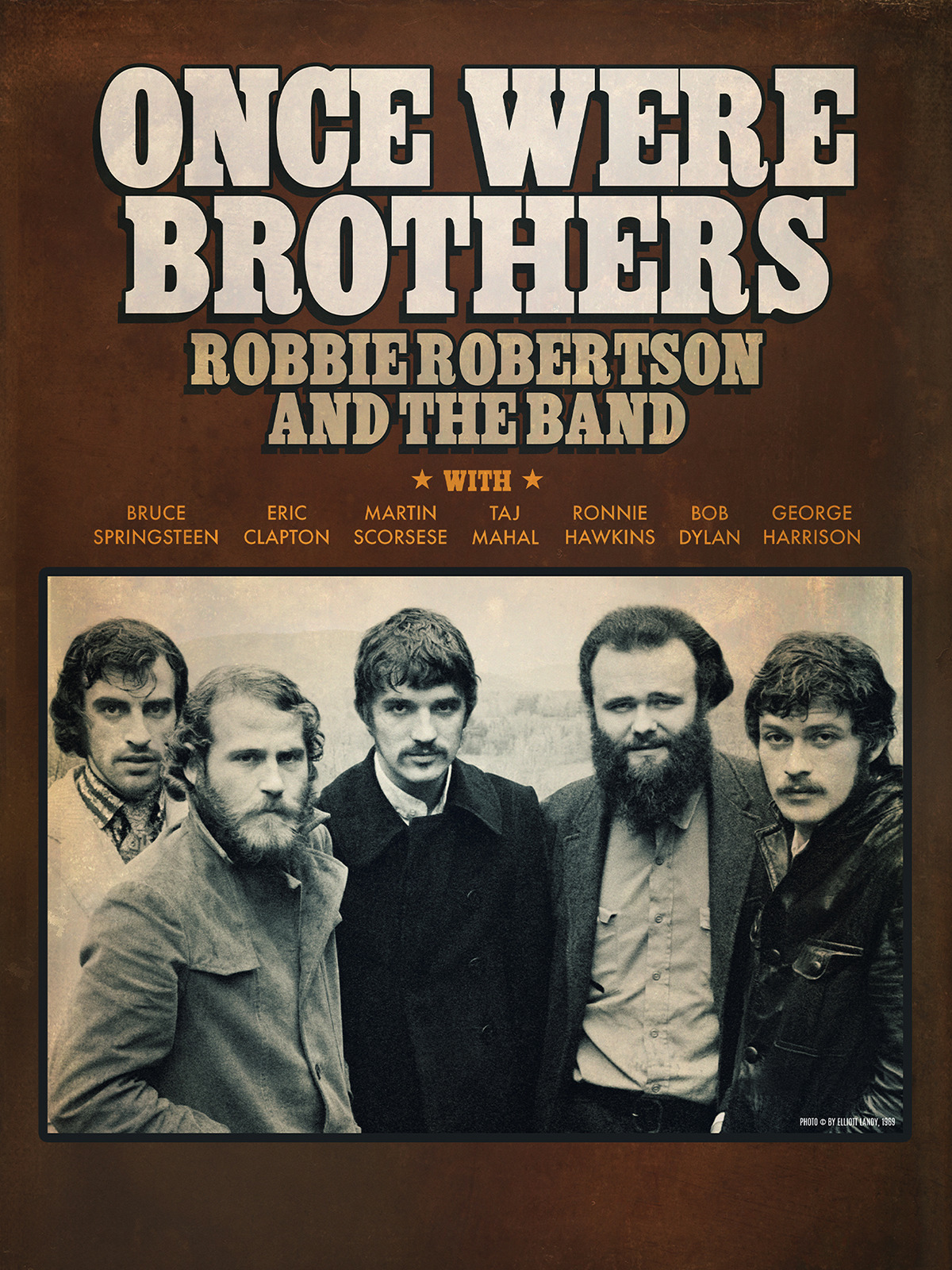
The fascinating and deeply sad documentary Once Were Brothers concerns the career of The Band — primarily as seen through the eyes of Robbie Robertson. Levon Helm, dead lone before the documentary was made, would have told a rather different story, and for damn sure wouldn’t have subtitled the movie “Robbie Robertson and The Band.” For Levon they were always The Band, five equal partners. But that’s a debate for another day.
In the documentary, the one song that gets the most attention is “The Weight.” And for good reason. It was a step forward for Robertson as a songwriter – there’s a touching moment when he describes playing it for Dylan and notes how proud Dylan was of him. You can tell that that pride meant a lot to Robbie. But it was also a step forward for The Band. In an old interview clip Richard Manuel says that in making that song “we found a vocal thing that we didn’t know we had,” and he’s surely talking primarily about the harmonies on that song, especially the rising “and-and-and” at the end of each chorus. (There’s a great passage in Mystery Train where Greil Marcus recalls living in San Francisco when Music from Big Pink was released: "The day after the record hit the stores you could hear people on the street singing the chorus to ‘The Weight’; before long, the music became part of the fabric of daily life.”)
Elsewhere in the documentary Bruce Springsteen marvels at the presence in a single group of three singers as extraordinary as Manuel, Levon, and Rick Danko; and George Harrison muses on the boon to a songwriter of being able to compose for such singers, knowing that any given song might be a better fit for one than for the others. But the three voices complemented one another so beautifully, with Danko as an absolute master of bluegrass-style high harmony singing, Levon somewhere in the middle, and Manuel able to go high or low as the situation demanded. (One of the amazing things about “The Weight” is that, right in the middle of the song, Danko picks up the lead vocal from Levon — and it sounds fantastic.)
So “The Weight” was the moment The Band discovered what it could do in songwriting and singing, and maybe arranging as well. Soon after recording Music from Big Pink Danko broke his neck in a car accident and was immobile for quite some time, so instead of going on tour the guys continued to hang out in Woodstock and made another record: The Band, or, as it’s commonly known, the Brown Album. And this is when they put into practice everything they learned when making their first album; this is when they came into their inheritance.
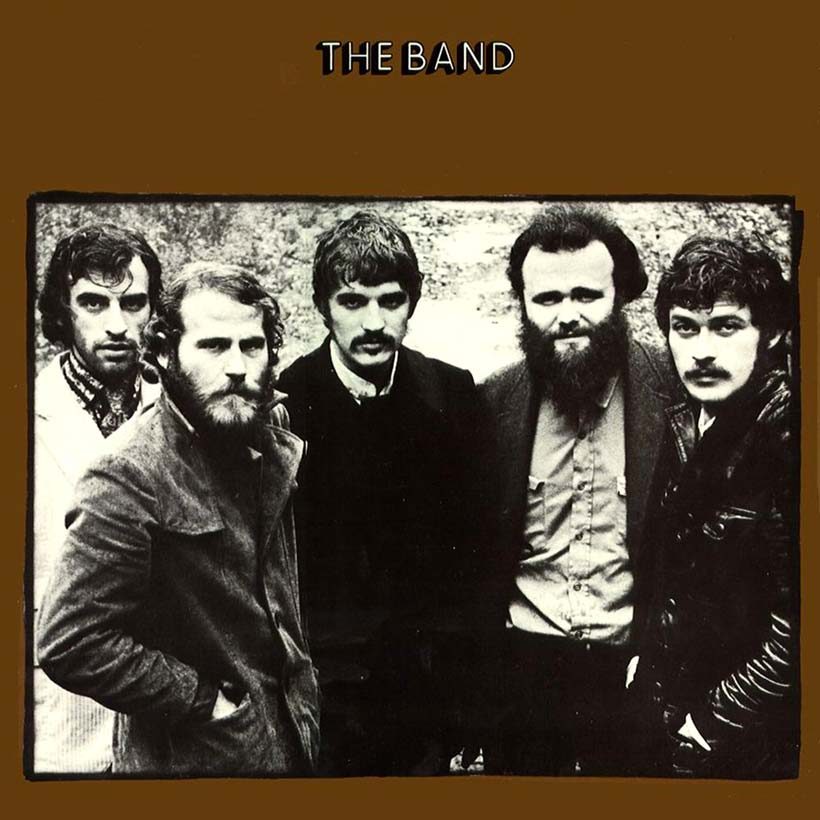
It’s an astonishing record, in my view one of the half-dozen best in the history of rock music. Not one song is anything less than superb — and that makes it different than any of their other albums, including Big Pink, all of which are very much hit-and-miss. Nothing else they ever did comes close to this masterpiece.
I have occasionally referred to a distinction made by Bill James in his work on evaluating the quality of baseball players: career value vs. peak value. How do you compare a player like (for example) Eddie Murray, who was a superb if not absolutely great player for a very long time, with Pete Reiser, who was transcendently great but (because of injuries) only for a short time? Similarly: The Band’s career value can’t compare with that of U2 – but no rock group’s peak value has ever been higher.
Did it have to be that way? Did they just have it in them to make one great album? Sometimes that’s all a group, or a musician, has. But I think they were so deeply immersed in what Dylan used to call “historical-traditional music” that they could have and should have produced much more excellent work. Drugs did them in, frankly, and in an especially ugly way.
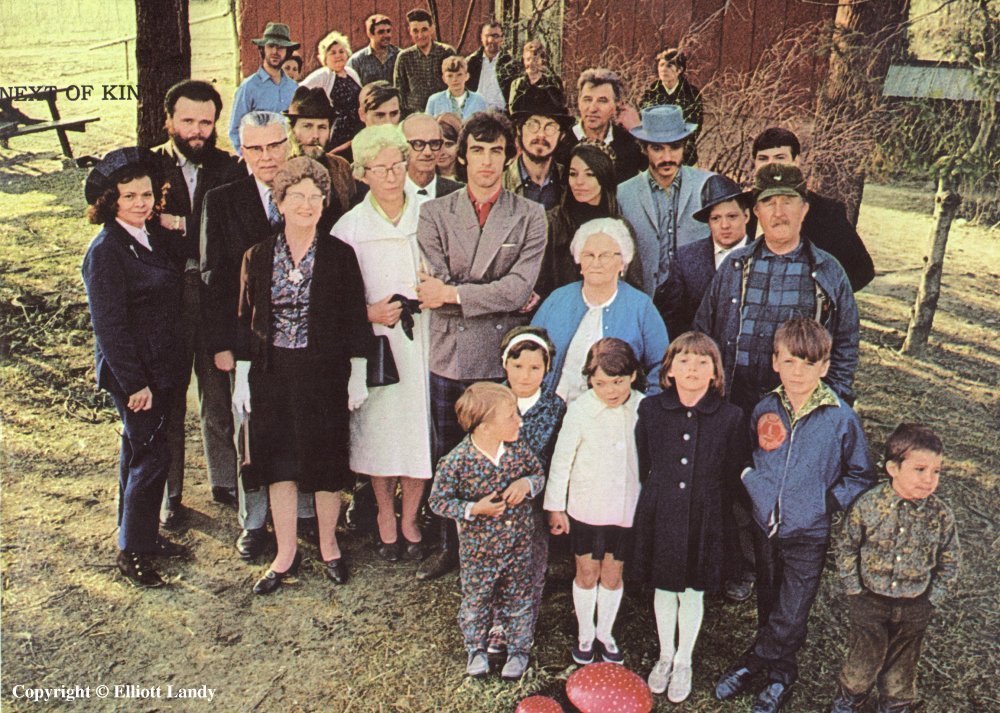
In Once Were Brothers we hear from the wonderful photographer Elliot Landy, who did so much to document life in Woodstock in those days. What struck him is how “grounded” the members of The Band were, how “gracious” — the way country people are gracious, he said. He was taken with their evident love for one another, and — here I think of something Robbie said somewhere else, that “We were rebelling against the rebellion” — their determination to put a photo of their families in the album gatefold.
Yet they came to hate one another, or something close to hate. When two guys (Robbie and Garth Hudson) are coming to work every morning while the other three are in bed till mid-afternoon, sleeping off the previous night’s festivities … well, that’s not a recipe for fellow-feeling. Robbie loved Richard Manuel – everybody seems to have loved him – but when Manuel insisted on driving while dead drunk, with Robbie’s wife Dominique in the car, and then crashed it…. “Richard could’ve killed my wife,” Robbie says in the documentary — not angrily, but, the point is, that’s not something you easily forget, easily set aside. And there were many such events in Woodstock in those days.
My suspicion is this: if they had stayed off the drugs, or even kept their use to a reasonable level, then I think we would have gotten much more great music from The Band. And then maybe some guys who really loved one another would have had friendships to sustain them in their later years. As I say, it’s a deeply sad story.
“The Internet has become the ultimate narrowcasting vehicle: everyone from UFO buffs to New York Yankee fans has a Website (or dozen) to call his own,” the journalist Richard Zoglin wrote in 1996. “A dot-com in every pot.”
Major conversation platforms like Twitter and Threads, by contrast, emphasize a different goal for realizing the Internet’s potential: aggregating as many of its potential connections as possible into a single service. Whereas the potential-connection mind-set fosters small groups that gather in their own bespoke corners of cyberspace, the supporters of aggregation aim to link as many people as possible into the same widespread digital conversations. We’ve gone from Zoglin’s dot-com in every pot to the social-media age’s vision of every pot being filled with slop from the same platforms.
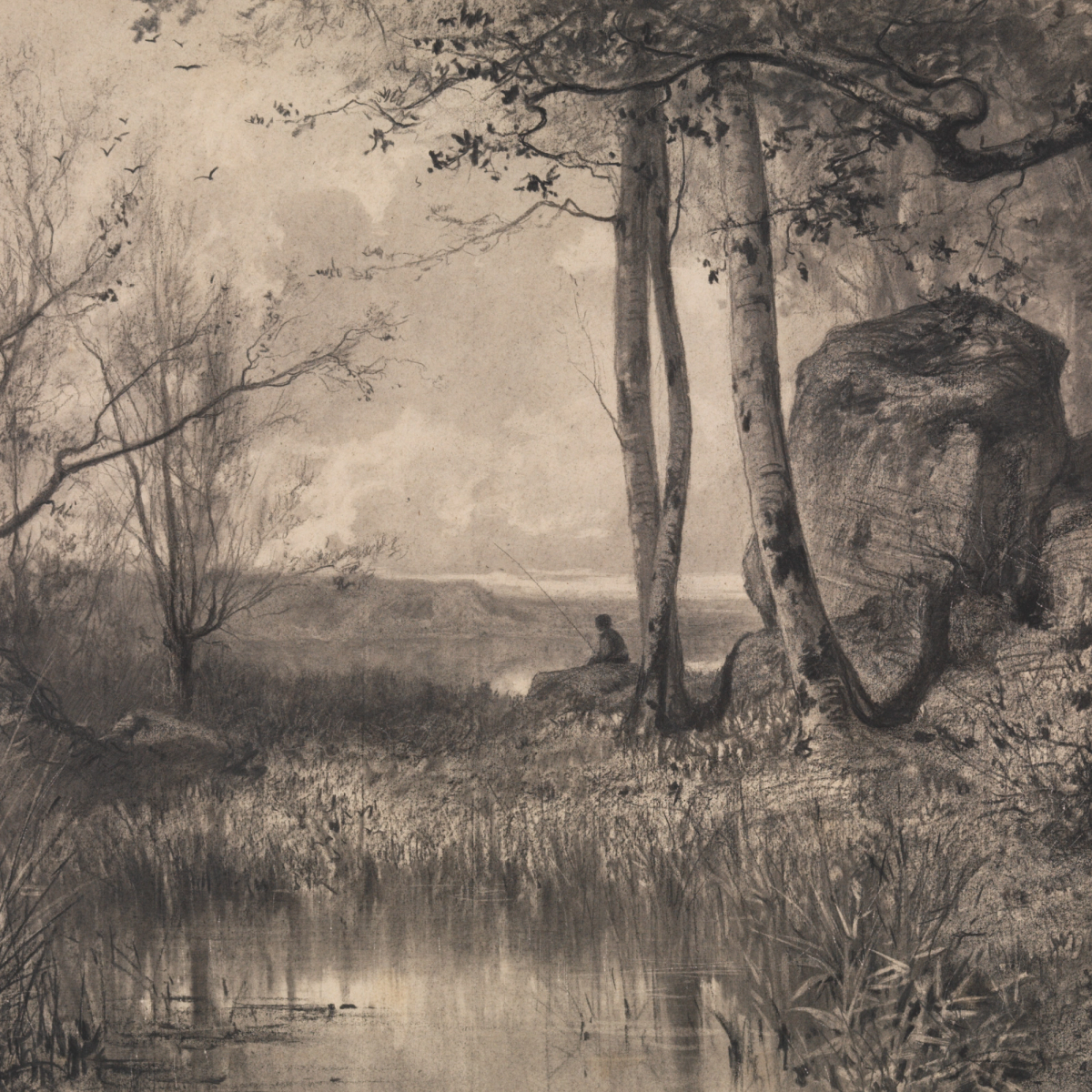
Adolphe Appian, from a wonderful exhibition of drawings at the Met.
One paragraph from me, at the Hog Blog: This is the way your mind ends.
I love this: Fred Sanders finds an often-cited obviously-bogus quotation by St. Augustine and shows that … um … it’s actually not bogus at all. Totally authentic.
The Scriptural BCP
The Scriptural Book of Common Prayer is a wonderful resource that does its job a little too well. That job is to lead readers to the biblical sources that underlie almost every phrase in the prayer book. But some biblical sources are more important than others.
The famous first line of the Collect for Purity is: “Almighty God, unto whom all hearts be open, all desires known, and from whom no secrets are hid….” At the Scriptural BCP page, if you click on that line, here’s what you get:
Gen 17:1 When Abram was ninety-nine years old, the Lord appeared to Abram, and said to him, "I am God Almighty; walk before me, and be blameless.
1 Sam 2:3 Talk no more so very proudly, let not arrogance come from your mouth; for the Lord is a God of knowledge, and by him actions are weighed.
1 Kings 8:39 then hear in heaven your dwelling place, forgive, act, and render to all whose hearts you know--according to all their ways, for only you know what is in every human heart—
1 Chron 28:9 "And you, my son Solomon, know the God of your father, and serve him with single mind and willing heart; for the Lord searches every mind, and understands every plan and thought. If you seek him, he will be found by you; but if you forsake him, he will abandon you forever.
Job 42.4 'Hear, and I will speak; I will question you, and you declare to me.’
Ps 38:9 O Lord, all my longing is known to you; my sighing is not hidden from you.
Ps 44:21 would not God discover this? For he knows the secrets of the heart.
Ps 139:1-4 O Lord, you have searched me and known me. You know when I sit down and when I rise up; you discern my thoughts from far away. You search out my path and my lying down, and are acquainted with all my ways. Even before a word is on my tongue, O Lord, you know it completely.
Jer 17:10 I the Lord test the mind and search the heart, to give to all according to their ways, according to the fruit of their doings.
Ezek 11:5 Then the spirit of the Lord fell upon me, and he said to me, "Say, Thus says the Lord: This is what you think, O house of Israel; I know the things that come into your mind.
Matt 12:25 He knew what they were thinking and said to them, "Every kingdom divided against itself is laid waste, and no city or house divided against itself will stand.
John 2:24-25 But Jesus on his part would not entrust himself to them, because he knew all people and needed no one to testify about anyone; for he himself knew what was in everyone.
1 Cor 3:20 and again, "The Lord knows the thoughts of the wise, that they are futile.”
Heb 4:13 And before him no creature is hidden, but all are naked and laid bare to the eyes of the one to whom we must render an account.
Rev 3:1 "And to the angel of the church in Sardis write: These are the words of him who has the seven spirits of God and the seven stars: "I know your works; you have a name of being alive, but you are dead.
Rev 3:8 "I know your works. Look, I have set before you an open door, which no one is able to shut. I know that you have but little power, and yet you have kept my word and have not denied my name.
Rev 3:15 "I know your works; you are neither cold nor hot. I wish that you were either cold or hot.
Acts 1:24 Then they prayed and said, "Lord, you know everyone's heart. Show us which one of these two you have chosen.”
Just having so many sources listed is daunting. And some of them, like the passage from Job, seem unrelated to the collect, while others (1 Samuel 2:3, and the passages from Revelation, which are about our works, not our heart) are only tangentially related at most. I think all this might be more useful — especially for people new to the prayer book, or new to the Bible — if the references were confined to the essential ones.
Nevertheless: a wonderful resource, and a testament to how skillfully and sensitively Thomas Cranmer and the other authors of the prayer book wove the words of Scripture into their liturgies.
I had been drafting a piece on the old prison work song “Ain’t No More Cane on the Brazos” — and then I discovered that someone already wrote it. The author, a guy named Dave Byrne who died in 2015, seems to have published just a handful of essays — really fine ones.
Fleet Street, December 2019

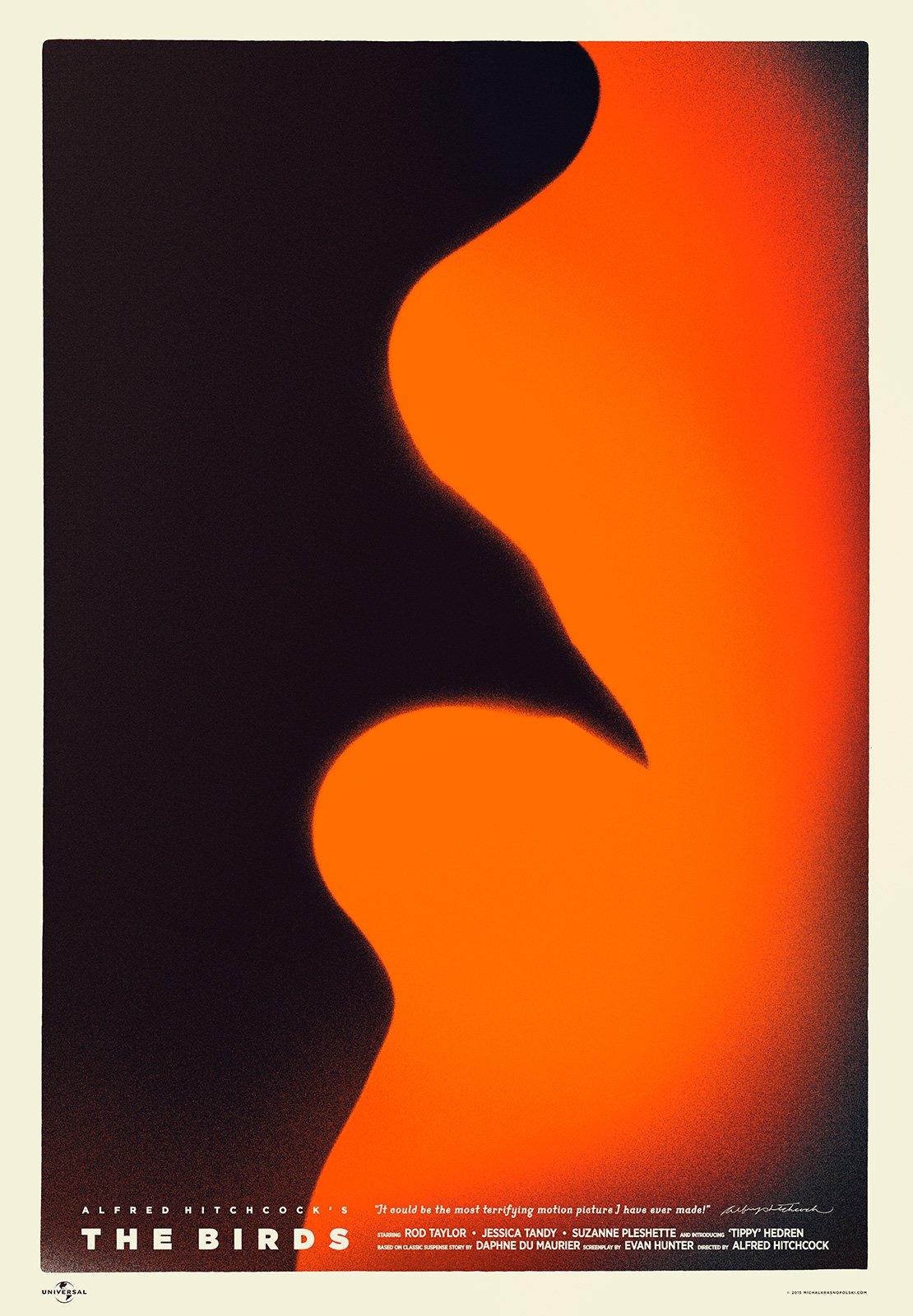
I love the genre of “alternative movie posters,” and Michael Krasnopolski’s are great.