
Albert Borgmann – perhaps the most important philosopher of technology in our time – has died. Perhaps this is a good opportunity for a re-read of his essential books, Technology and the Character of Contemporary Life: A Philosophical Inquiry (1984) and Holding onto Reality: The Nature of Information at the Turn of the Millennium (1999).
Erik Hoel: “So if someone regularly talks about IQs significantly above 140 like these were actual measurable and reliable numbers that have a real-world effect, know that they are talking about a fantasy. And if they make claims that various historical figures possessed such numbers, then they’re talking unscientific nonsense. If they’re bragging about themselves, well. . . it’s like someone talking about their astrological sign. Stratospheric IQs are about as real as leprechauns, unicorns, mermaids — they’re fun to tell tales about, but the evidence for them being a repeatedly measurable phenomenon that matters in any meaningful sense of the word is zip, zero, zilch.”

If you could really plug an AI’s intellectual knowledge into its motivational system, and get it to be motivated by doing things humans want and approve of, to the full extent of its knowledge of what those things are3 - then I think that would solve alignment. A superintelligence would understand ethics very well, so it would have very ethical behavior.
Setting aside the whole language of “motivation,” which I think wildly inappropriate in this context, I would ask Alexander a question: Are professors of ethics, who “understand ethics very well,” the most ethical people?
The idea that behaving ethically is a function or consequence of understanding is grossly misbegotten. Many sociopaths understand ethics very well; their knowledge of what is generally believed to be good behavior is essential to their powers of manipulation. There is no correlation between understanding ethics and living virtuously.
Spending some time with Ol’ Blue Eyes 🎵

WSJ: “In one study, Dr. Strayer and colleagues compared two groups of people strolling an arboretum. One group chatted on their phones. The others had their devices taken away. After the walk, the people who didn’t carry their phones were in a much more calm and rested state than the chatters, researchers found.” This has been my experience too. When I stopped taking my phone on my walks they became more restorative; and birds are more delightful to listen to than podcasts.

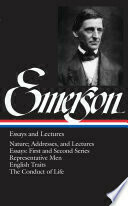
Currently reading: Ralph Waldo Emerson: Essays and Lectures by Ralph Waldo Emerson 📚
locating intellectuals
In his great book The Spirit of Early Christian Thought, Robert Wilken writes:
In an age in which thinkers of all kinds, even poets, are creatures of the academy, it is well to remember that most of the writers considered in this book were bishops who presided regularly at the celebration of the Eucharist, the church's communal offering to God, and at the annual reception of catechumens in the church through baptism at Easter. The bishop also preached several times a week and could be seen of a Wednesday or Friday or Saturday as well as on Sunday seated before the Christian community expounding the Sacred Scriptures. Some of the most precious sources for early Christian thought are sermons taken down in shorthand as they were being preached in the ancient basilicas. In them the bishop speaks as successor of the apostles to a community that looks to him as teacher and guide. For intellectuals of this sort, even when they were writing learned tomes in the solitude of their studies, there was always a living community before their eyes. Faithfulness, not originality, was the mark of a good teacher.
This reminds me that his his biography of Lesslie Newbigin, Geoffrey Wainwright comments that the bishop-theologian was once a common type of Christian intellectual, indeed in some senses the characteristic type — but that is no longer the case:
Christian theology is more immediately a practical than a speculative discipline, and such speculation as it harbors stands ultimately in the service of right worship, right confession of Christ, and right living. Right practice demands, of course, critical and constructive reflection, and the best Christian theology takes place in the interplay between reflection and practice. That is why honor is traditionally given to those practical thinkers and preachers who are designated “Fathers of the Church.” Most of them were bishops who, in the early centuries of Christianity, supervised the teaching of catechumens, delivered homilies in the liturgical assembly, oversaw the spiritual and moral life of their communities, gathered in council when needed to clarify and determine the faith, and took charge of the mission to the world as evangelistic opportunities arose. A figure of comparable stature and range in the ecumenical twentieth century was Lesslie Newbigin.
I have often written about the ways in which the modern university is built on perverse incentives, and, putting that together with these comments on bishops, I am mulling over two questions:
- Should Christians look primarily to scholars and thinkers outside the academy for theological leadership?
- Should our society in general look primarily to scholars and thinkers outside the academy for intellectual leadership?
Or, more concisely: Where are the thinkers who always have “a living community before their eyes”?