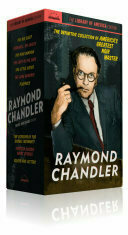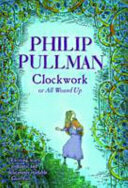
Finished reading: Murray Talks Music: Albert Murray on Jazz and Blues by Albert Murray. I read this over a period of months, pausing to listen to the music Murray talks about. It’s a feast. 📚

adjustments

As many of my readers will know, I am continually fiddling around with my online presence, to such a degree that I try my own patience. The one element that’s fixed is my newsletter, which (IMHO) has a clear identity and purpose. I always know when something I’ve come across will be a fit for the newsletter. 

Deciding how to use my micro.blog page has been a bit more of a challenge, but in recent months I have settled on what strikes me as a good approach: It’s a kind of journal, with photos and links to what I’m reading and listening to. And that’s all. 

Everything else goes here — but what should that “everything else” be? As I’ve been mulling this over, I’ve come to two conclusions: 

  1. I share too much nasty stuff. I’ve become like those Geico raccoons: “This is terrible, you gotta try it.” No more of that. You can find plenty to alarm and disgust you elsewhere. I need to remember my own tagline for this blog. That doesn’t mean that I won’t write about unpleasant topics, but … 
  2. Whether pleasant or unpleasant, the stuff I share — if it’s worth sharing at all — needs more commentary than I typically give it. So I’m going to try to post less often but in more detail. Maybe only a couple of posts per week, but I want them to be more like essays that offhand comments. 

Let’s see how well I keep my resolutions! 

UPDATE: A reader has rightly questioned my comment about “nasty stuff.” Not the best phrase for what I mean, which is “current events that call for critique or denunciation.” So many people are already in the critique-and-denunciation game, I don’t need to add to their number. (That said, my next major post will be, um, a critique and denunciation. Oh well.) 

Listening to Complete Mozart Piano Trios

Bernard of Clairvaux: “It is not necessary for you to cross the seas, nor to pierce the clouds, nor to climb mountains to meet your God. It is not a lengthy road that is set before you; you have only to enter into yourself to find him.”

Teens on screens: Life online for children and young adults revealed - Ofcom:

This year also saw the rise of ‘split-screening’. Split-screen social media posts allow children to watch more than one short-form video simultaneously, on a single-screen, side-by-side or stacked on top of one another. This appears to be a progression of the ‘multi-screening’ behaviours seen in previous research waves, where children reported difficulties focusing on one screen-based activity at a time. 

Distinctions needed here: There is a difference between genuinely watching “more than one short-form video simultaneously” and merely having more than one short-form video on one’s screen at a given time. I seriously doubt that it is possible for any human being to watch two videos at the same time; the best we can do, I suspect, is to switch rapidly between two videos, and a good deal of research indicates that we’re not good at doing even that. Every time our attention switches to one information source we cease to attend to the other. 

Finished reading: The Earthsea Quartet by Ursula K. Le Guin. What a joy to revisit these glorious books. 📚

Freddie deBoer:

This is a very basic point, but I find that it’s consistently under-discussed: to close achievement gaps like the racial achievement gap, not only must Black and Hispanic students learn more, white and Asian students must learn less than they do. Closing any gap has to entail the poorly-performing students not just learning but learning at a sufficiently faster pace than the high-performing students that the gap closes. This is not a minor point! American students of all races have been improving over time. But gaps have persisted because… students of all races have been improving over time. As long as white and Asian students learn as much as Black and Hispanic, the gap cannot close. This is so obvious it feels like it should go without saying, but the point is frequently obscured, for a couple of reasons. First, because “every kid can learn” is a more pleasing and simplistic narrative than “kids from disadvantaged subpopulations can not only learn but can learn sufficiently to close large gaps against competitors who are still learning more themselves.” Second, because the problem suggests a solution that is politically untenable, to put it mildly — to close gaps, we need to prevent the students who are ahead from learning at all. 

I think there are a great many people on the so-called left who would be glad to accept that deal. Close the gap by any means necessary. There’s no necessary connection between wanting equality of outcomes and wanting better outcomes. 

Our new baby dogwood is looking good.