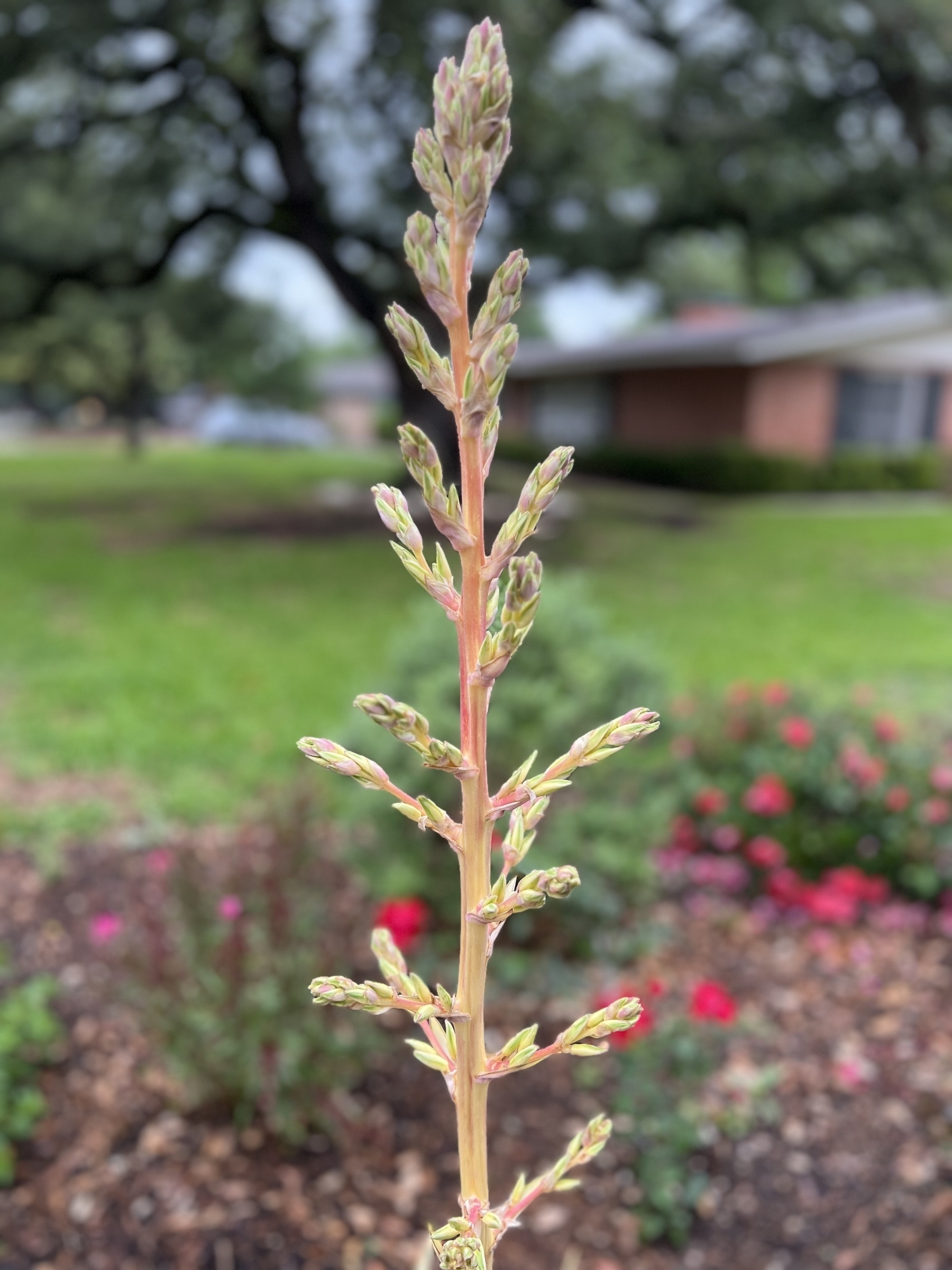
[caption id="" align=“aligncenter” width=“2400”] Owens Salvage, Wellington, Texas[/caption]

Cassiodorus College

For a few years, starting around a decade ago, I blogged at The American Conservative. Sometime in the not-too-distant past, they memory-holed all my posts — without bothering to inform me that they’d be doing so. Classy move, folks! Anyway, I might occasionally re-post stuff I wrote there — assuming I can find the drafts on my hard drive. (If I were desperate to retrieve anything, which I’m not, I could of course eventually find it with the Wayback Machine.) Here’s one to accompany my School for Scale idea. 


I think the world needs a quirky and extremely rich venture capitalist to fund my great project, Cassiodorus College. Tag line: Where the New Liberal Arts Meet the Old. Foundational courses will include:

Memorization and Recitation. An introduction to mnemomics, both through modern techniques and history. Books assigned will include The Art of Memory by Frances Yates and The Memory Palace of Matteo Ricci by Jonathan Spence. Attention will be given to memorizing long poems, long speeches, meaningful numerical sequences, and nonsense.

Reading: Natural and Formal Languages. An exploration of the very different skills required to read natural languages and formal languages, especially computer programming languages. A key question will be: Why is computer code easier to write than to read, while natural language is generally the other way around. Attention will be given to the neuroscience of reading but also to the conditions under which reading can be intensely pleasurable.

Composition: Natural and Formal Languages. A course devoted to the exploration of three compositional modes: writing English essays, writing computer code, and the mediating experience of writing English essays while using markup languages, primarily HTML and LaTeX. The first part of this course will begin by having students spend extended periods hand-writing memorable poetry and prose in commonplace books, alternating that with typing into a terminal code examples from Donald Knuth’s Art of Computer Programming. Only very gradually will they progress to writing their own essays and their own code.

The Visual Display of Quantitative Information. Stolen directly from Edward Tufte, whose books will be our texts. However, we will also explore the ways in which the various software tools available for making graphs, charts, and the like constrain our organizational and display choices. We will also give attention to the principles of excellent design, including the design of text.

Mathematical Reasoning and Rhetoric. An introduction to mathematics as a mode of thinking and a subsequent exploration of how the best principles of mathematical reasoning are routinely defied when numbers are presented to the public. Tufte is useful here too, for example, on how faulty presentation of data can lead to disasters.

Care of Plants and Animals. An idea stolen from W. H. Auden, who said that in his “daydream College for Bards” every would-be poet should tend a vegetable garden and care for a domestic pet. A great idea not just for bards. 

Please get in touch if you’re filthy rich and want to bankroll this glorious endeavor. 

Some of the trees around here started turning in November, others in December, and a few are turning right now. Climate change has got to be confusing for trees.

Jesus 4: Eyewitnesses

Stepping back for a bit of semi-scholarly context. It won’t happen again, I promise.

Senator Ben Sasse says that the real divide in America is between Pluralists and Zealots; I made the same case two years ago but called the parties Humanists and Manichaeans

Interesting crop of works and makers entering the public domain this year.

the home's sacred fire

Screenshot 2022 12 27 at 12 04 35 PM

In this book, Ralph Cudworth makes the following fascinating argument: 

Now the Tabernacle or Temple being thus a House for God to dwell in visibly, to make up the Notion of Dwelling or Habitation complete, there must be all things suitable to a House belonging to it. Hence in the Holy Place there must be a Table and a Candlestick, because this was the ordinary Furniture of a Room …  A Table and a Candlestick … suit the Notion of a Dwelling House. The Table must have its Dishes, and Spoons, and Bowls, and Covers, belonging to it, though they were never used, and always be furnished with Bread upon it. The Candlestick must have its Lamps continually burning. 

There must be a Continuall Fire kept, in this House of God’s, upon the Altar, as the Focus of it. 

Cudworth cites the Hebrew of Isaiah 31:9 — KJV: “the LORD, whose fire is in Zion, and his furnace in Jerusalem” — and renders it into Latin: Qui habet ignem suum in Sion, et focum suum in Jerusalem, or, “Whose fire is in Zion, and his hearth in Jerusalem.”

(I may be getting too deep into the weeds here, but: Cudworth’s rendering differs from the Vulgate, which has: cujus ignis est in Sion et caminus ejus in Jerusalem. Apparently caminus — which is a straight theft from the Greek κάμῑνος — can also mean “hearth” but is more likely to be used to describe a furnace, an oven, or a kiln. It’s only focus, as far as I can tell, that bears the familial associations.) 

It’s noteworthy that the Hebrew word that the KJV translates as “furnace” and Cudworth as focus is rendered in the Septuagint as οἰκείους — from the root οἶκος, meaning “household” or “home.” The LORD, whose fire is in Zion, and his household in Jerusalem

But now, as Christians have always said, through his sacrifice Jesus has himself become the Temple. (See Hebrews 10.) The place of sacrifice has been transformed into a place of feasting — as Paul says in 1 Timothy 3, the ἐκκλησία Θεοῦ (the assembly or church of God) is also the οἴκῳ Θεοῦ (the household of God) — and the focus, the central hearth, of that household is the altar. 

I love this notion of the church’s altar as the hearth of the Lord’s House, the place where we gather to warm ourselves and to receive nourishment — the focus of our worship in a distinctively familial and homely sense. 

Albert Borgmann talks about the relationship between focal practices and focal things — “things” being a poor choice of words here, because he means something more like “what or whom those practices centrally attend to.” When two people get married they are the central figures in the practice the old Prayer Book calls The Solemnization of Matrimony, but they aren’t things. I don’t know why Borgmann doesn’t just talk about focal practices and foci, but that’s what I will do: Participation in a service of Holy Communion is a focal practice whose focus is in one sense the altar — but in another and deeper sense Jesus Christ himself. 

Dominic Sandbrook:

There’s no way our podcast, presented by two white Oxbridge-educated middle-aged men, would be commissioned by the BBC these days. Instead of just letting us talk, they would bring in some alleged comedian to make it ‘accessible’ to younger audiences.

And not a single week would pass without the appearance of some ultra-woke U.S. academic to lecture us about slavery or to flagellate us about the imagined sins of the British Empire.

The great irony is that while the average age of Radio 4 listeners is 56, more than half of our listeners are under 34. So if the BBC want to know what’s happened to its younger audience, the answer is that they have signed up to The Rest Is History.

That’s about the size of it.

IMG 0090

When did this practice of writing accusatory and dictatorial headlines begin? It’s universal now. It must get clicks, but why would people want to read stories whose headlines accuse them of error and demand that they change their ways? I never read stories that are headlined in this way.