

The Jellyfish Tribe - by Paul Kingsnorth:
The growing loss of faith across the West in our institutions, leaders and representatives in recent years is like nothing else I’ve seen in my lifetime. When, I wonder, did that contract begin to expire? Maybe in 2003, when the lies with which the US and UK launched the Iraq war were so blatant that even those telling them seemed unconvinced. Or perhaps when the near-collapse of the global economy in 2008 brought the real impact of Machine globalisation, which had long been felt in the poor parts of the world, home to people in the West. Or maybe in 2016, when Brexit happened and Donald Trump happened and European ‘populism’ happened, and suddenly liberal globalism was under attack in its heartlands. From then on, we learned that populism was fascism and elected presidents were Russian agents and nationhood was white supremacy and free speech was ‘hate speech’, and while we were still trying to work through all that, along came covid and we all fell into the rabbit hole forever.
just purchased

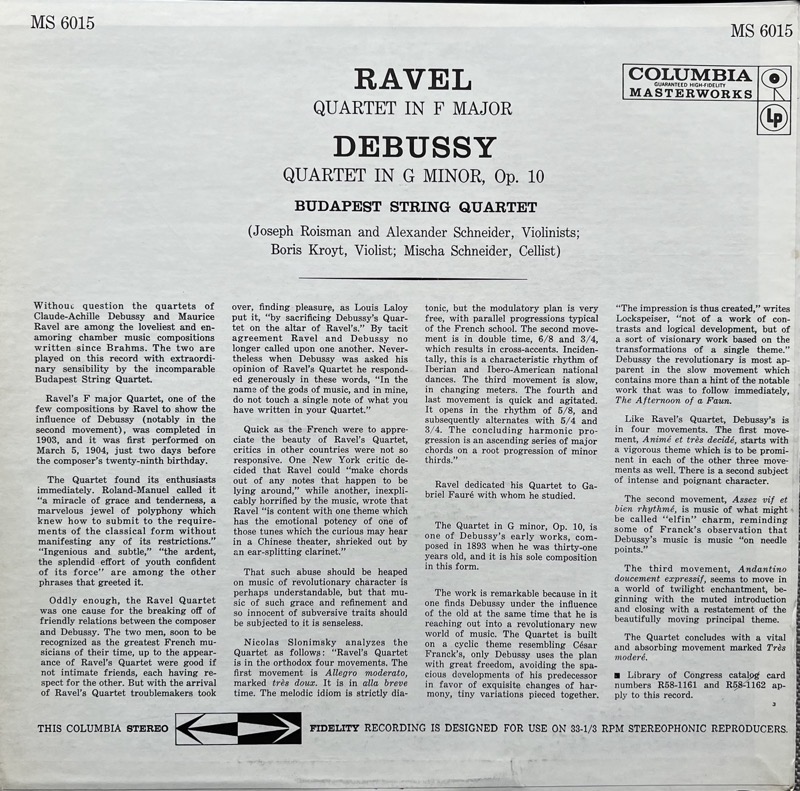


An excellent find, in excellent condition, and for eight bucks! Also a neat little window into classical music culture ca. 1972.

I get the security concerns that have prompted the move to passkeys, but the new strategy forces us to have our smartphones on us at all times. For someone like me who wants to carry my smartphone less and less, this is a major frustration.

I’m still reading Reporting World War II: The 75th Anniversary Edition: A Library of America Boxed Set – what an extraordinary anthology of journalism, including photojournalism. The books feature a good chronology of the war and a series of useful maps. It’s a strangely immersive experience. 📚
humanism renewed
I often see quoted a line by Carl Schmitt:
The concept of humanity is an especially useful ideological instrument of imperialist expansion, and in its ethical-humanitarian form it is a specific vehicle of economic imperialism. Here one is reminded of a somewhat modified expression of Proudhon’s: whoever invokes humanity wants to cheat.
But I don’t think we can understand Schmitt’s point by quoting that sentence alone; we also need to quote the one that follows it:
To confiscate the word humanity, to invoke and monopolize such a term probably has certain incalculable effects, such as denying the enemy the quality of being human and declaring him to be an outlaw of humanity; and a war can thereby be driven to the most extreme inhumanity.
If you only quote the first sentence, then you have a version of a famous but inevitably misattributed line: “When I hear the word ‘culture’ I reach for my gun.” But Schmitt is not dismissing the very concept of “humanity”; he is making a more complicated (though still cynical) point. “Humanity” and “humanism” are “ideological instruments”: they can be and often are used as levers of power, as means by which one may gain dominance over one’s political enemies. The danger lies not in the very notion of humanity but rather in the ways that that notion is susceptible to being monopolized and weaponized by parties in power. That Schmitt does not want to do away with the notion altogether may be seen in his condemning accusation of “inhumanity.”
Given the enormous damage the reign of identity politics has inflicted on our common weal, our ability to live in peace together, what we need, I believe, is serious work to restore and renew the concept and practice of humanism. My recent essay “A Humanism of the Abyss” is a step in that direction. This is a matter I will return to — and, also, see the tag for my earlier reflections on the topic.
Stanford Law School Dean Jenny S. Martinez:
I want to set expectations clearly going forward: our commitment to diversity, equity, and inclusion is not going to take the form of having the school administration announce institutional positions on a wide range of current social and political issues, make frequent institutional statements about current news events, or exclude or condemn speakers who hold views on social and political issues with whom some or even many in our community disagree. I believe that focus on these types of actions as the hallmark of an “inclusive” environment can lead to creating and enforcing an institutional orthodoxy that is not only at odds with our core commitment to academic freedom, but also that would create an echo chamber that ill prepares students to go out into and act as effective advocates in a society that disagrees about many important issues. Some students might feel that some points should not be up for argument and therefore that they should not bear the responsibility of arguing them (or even hearing arguments about them), but however appealing that position might be in some other context, it is incompatible with the training that must be delivered in a law school. Law students are entering a profession in which their job is to make arguments on behalf of clients whose very lives may depend on their professional skill. Just as doctors in training must learn to face suffering and death and respond in their professional role, lawyers in training must learn to confront injustice or views they don’t agree with and respond as attorneys.
Law is a mediating device for difference. It therefore reflects all the heat of controversy, all the pain and suffering, and all the deeply felt moral urgency of our differences in position, power, and cherished principles. Knowing all of this, I believe we cannot function as a law school from the premise that appears to have animated the disruption of Judge Duncan’s remarks -- that speakers, texts, or ideas believed by some to be harmful inflict a new impermissible harm justifying a heckler’s veto simply because they are present on this campus, raised in legally protected speech, and made an object of inquiry. Naming perceived harm, exploring it, and debating solutions with people who disagree about the nature and fact of the harm or the correct solutions are the very essence of legal work. Lively, candid, civil, and evidence-based discourse in disagreement is not just positive for our community, constituted as it is in difference, it is a professional duty. Observance of this duty matters most, not least, when we are convinced that others haven’t.
I think Dean Martinez has navigated this mine field about as well as it could be navigated, and in the process has made some vital salient points about the nature of legal education — and of true education more generally.