Re: this explicit deepening of Pope Francis’s hostility to trad Catholics, let me call attention to something I wrote two years ago

Fn9IGWdWYAIPn9W

Grayson Perry, detail from Print for a Politician (click to see larger image) 

the classics are all right

Re: the recent kerfuffle over the vandalism of Roald Dahl’s books, Walter Kirn tweeted “I ran into two used book stores today and grabbed classics like I was saving them from a fire.” In fact “the classics” are fine — they’re in the public domain and thanks to endeavors like Project Gutenberg and the Internet Archive they are unlikely to be disappeared or bowdlerized. If you’re worried about them, just download the ones you most care about and do what you can, when the supersensitives come with their digital X-Acto knives and their infinite smugness, to let people know how to access the originals.

Likewise, living authors are safe: the supersensitives can demand changes to their works but they don’t have to agree. And if they do agree, well, that’s their business. (But if they agree against the prickings of their conscience, shame on them.) 

No, the supersensitives have a rather narrow target: dead writers whose works are still in copyright. Those are the ones vulnerable to vandalism — by those who control the copyright. 

his harshest critic

I recently re-read Ruskin’s The Seven Lamps of Architecture, in the third edition of 1880. Ruskin had originally published the book in 1849, when he was 30 years old, and though it had proved quite popular, later in life Ruskin was reluctant to authorize a new edition. His reason? He hated the book.

He finally gave in, but insisted to the publisher that he be given the opportunity to annotate it. The resulting ongoing ill-tempered commentary is very entertaining. 

Even when he liked what he had written, he could be cynical. For instance, he approved of the glorious and justly famous passage in which he repudiates the tearing down of old buildings: 

Of more wanton or ignorant ravage it is vain to speak; my words will not reach those who commit them, and yet, be it heard or not, I must not leave the truth unstated, that it is again no question of expediency or feeling whether we shall preserve the buildings of past times or not. We have no right whatever to touch them. They are not ours. They belong partly to those who built them, and partly to all the generations of mankind who are to follow us. The dead have still their right in them: that which they laboured for, the praise of achievement or the expression of religious feeling, or whatsoever else it might be which in those buildings they intended to be permanent, we have no right to obliterate. What we have ourselves built, we are at liberty to throw down; but what other men gave their strength and wealth and life to accomplish, their right over does not pass away with their death; still less is the right to the use of what they have left vested in us only. It belongs to all their successors. It may hereafter be a subject of sorrow, or a cause of injury, to millions, that we have consulted our present convenience by casting down such buildings as we choose to dispense with. That sorrow, that loss, we have no right to inflict. 

On the phrase "my words will not reach those who commit them” the older Ruskin wrote, “No, indeed! — any more wasted words than mine throughout life, or bread cast on more bitter waters, I never heard of. This closing paragraph of the sixth chapter is the best, I think, in the book, — and the vainest.” 

But he is rarely as kind to himself. Of a passage on the Gothic architecture of Venice he noted, “I have written many passages that are one-sided or incomplete; and which therefore are misleading if read without their contexts or development. But I know of no other paragraph in any of my books so definitely false as this.” And one of the funniest moments comes in response to a passage about neo-Gothic architecture, which was just getting started in 1849: 

The stirring which has taken place in our architectural aims and interests within these few years, is thought by many to be full of promise: I trust it is, but it has a sickly look to me. 

Ruskin’s comment in 1880: 

I am glad to see I had so much sense, thus early; — if only I had had just a little more, and stopped talking, how much life — of the vividest — I might have saved from expending itself in useless sputter, and kept for careful pencil work! I might have had every bit of St. Mark’s and Ravenna drawn by this time. What good this wretched rant of a book can do still, since people ask for it, let them make of it; but I don’t see what it’s to be. 

This wretched rant of a book — why didn’t I practice drawing instead? 

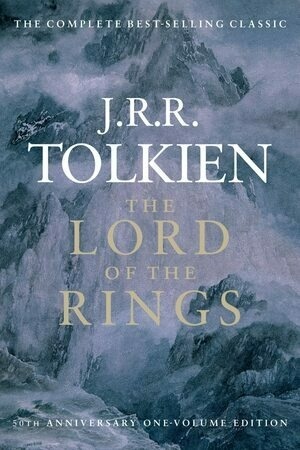
Currently reading: The Lord of the Rings by J.R.R. Tolkien 📚 (I’ve heard good things, but we’ll see 😉 )

Albert Murray and me

From my new essay for Comment on Albert Murray’s “blues idiom”: 

For white North American Christians who perceive themselves as marginalized, disparaged, despised, maybe even persecuted — well, a road map for that territory is all around us, in the experience of black Americans, especially as formulated by the great Albert Murray. And I think Murray would have been glad to see his work applied in this way: he thought, and said all the time, that the lessons of the blues idiom are universal human lessons. “When the Negro musician or dancer swings the blues, he is ... making an affirmative and hence exemplary and heroic response to that which André Malraux describes as la condition humaine.” 

The essay is behind a paywall for another month — unless you subscribe to Comment, of course. (Nudge nudge wink wink.) By the way, I love the artwork the editors and designers chose to illustrate the essay, e.g.: 

IMG 1508

FpVnAtZXgAA6pu0 jpg large

Claude Monet, The Museum at Le Havre

Finished reading: The Seven Lamps of Architecture by John Ruskin. Back to it for the first time in some years — what a crazy and wonderful book. 📚