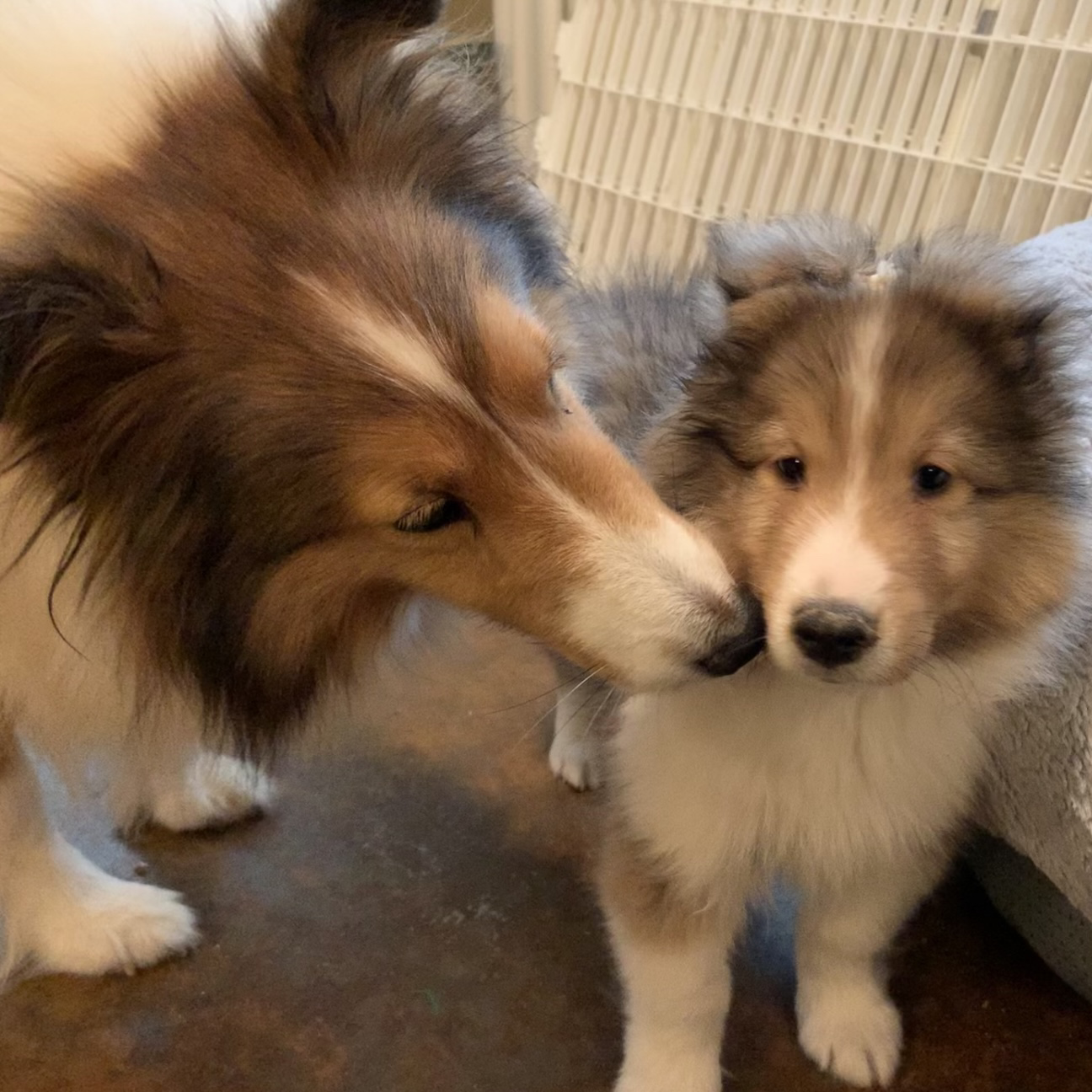
Christmas Eve lunch with my dear ones. ❤️

the friendliness of objects
Repair [at an earlier stage of our culture] was not so much a habit as an honoured custom. People respected the past of damaged things, restored them as though healing a child and looked on their handiwork with satisfaction. In the act of repair the object was made anew, to occupy the social position of the broken one. Worn shoes went to the anvil, holed socks and unravelled sleeves to the darning last — that peculiar mushroom-shaped object which stood always ready on the mantelpiece.
The custom of repair was not confined to the home. Every town, every village, had its cobbler, its carpenter, its wheelwright and its smith. In each community people supported repairers, who in tum supported things. And our surnames testify to the honour in which their occupations were held. But to where have they repaired, these people who guaranteed the friendliness of objects? With great difficulty you may still find a cobbler — but for the price of his work you could probably buy a new pair of shoes. For the cost of 15 digital watches you may sometimes find a person who will fix the mainspring of your grandfather's timepiece.
The truth is that repair, like every serious social activity, has its ethos, and when that ethos is lost, no amount of slap-dash labour can make up for it. The person who repairs must love the broken object, and must love also the process of repair and all that pertains to it.
I am greatly taken by the way Scruton frames the work of repair here, especially the idea that the impulse to repair arises from and is sustained by love — and that the particular form of love at work here is friendship. By repairing the things of this world we exhibit friendship towards them — and they become friends to us in return.
People need things, and things need people.
The critical moment of their mutual support is the moment of breakdown. Suddenly, the object on which everything depended — the car, the boiler, the drain, or the dinner suit — is unusable, and you contemplate its betrayal in helpless unbelief. It is some time before you overcome your self-pity enough to recognise that its need is greater than yours.
We get angry at broken things, and want to throw them out — and this impulse often governs us even when the broken thing is not a car or a drain but democracy or education. (Maybe democracy and education are not objects but rather hyperobjects.) But what if we were to think not that our education has betrayed us but rather that its need is greater than ours? What if we were to think that towards even something so vast and complex we have the obligations of friendship? And, if we meet those obligations, perhaps we could even enjoy the benefits of friendship.
Ross Douthat’s Advent-themed newsletter quotes Auden and, um, me – so you know it’s something special!
I’d like a version of Spelling Bee in which the only acceptable words are proper names from Tolkien’s legendarium.

Currently reading 📚

The difficulty of Donne's work had in it a stark moral imperative: pay attention. It was what Donne most demanded of his audience: attention. It was, he knew, the world's most mercurial resource. The command is in a passage in Donne's sermon: ‘Now was there ever any man seen to sleep in the cart, between Newgate and Tyburn? Between the prison, and the place of execution, does any man sleep? And we sleep all the way; from the womb to the grave we are never thoroughly awake.’ Awake, is Donne's cry. Attention, for Donne, was everything: attention paid to our mortality, and to the precise ways in which beauty cuts through us, attention to the softness of skin and the majesty of hands and feet and mouths. Attention to attention itself, in order to fully appreciate its power: Our creatures are our thoughts, he wrote, ‘creatures that are born Giants: that reach from East to West, from earth to Heaven, that do not only bestride all the sea and land, but span the sun and firmament at once: my thoughts reach all, comprehend all.’ We exceed ourselves: it's thus that a human is super-infinite.
What happens when engineers stop thinking of their interests as fundamentally aligned with the companies' owners and management, and develop their own class consciousness? Tech companies are not pursuing automation purely out of intellectual interest; they are trying to solve looming labor problems that can no longer be ignored.
All of this is the backdrop for these companies moving away from human customers and human workers, towards AI solutions, invisible infrastructure, and business, government, or military contracts. The ideal for a tech company in 2023 is either docile humans ready to consume what they've been given, or better still, no humans at all.
Good to read this in conjunction with Ted Gioia’s post “Has TikTok Already Peaked?”
There appears to be a circle of mutual support between political correctness, technocratic administration, and the bloated educational machinery. Because smartness (as indicated by educational credentials) confers title to rule in a technocratic regime, the ruling class adopts a distinctly cognitivist view: virtue does not consist of anything you do or don’t do, it consists of having the correct opinions. This is attractive, as one may then exempt oneself from the high-minded policies one inflicts upon everyone else. For example, the state schools are turned into laboratories of grievance-based social engineering, with generally disastrous effects, but you send your own children to expensive private schools. You can de-legitimise the police out of a professed concern for black people, and the explosion of murder will be confined to black parts of the city you never see, and journalists are not interested in. In this way, you can be magnanimous while avoiding the moral pollution and that comes from noticing reality.
I keep thinking about this piece Matt wrote two years ago, especially its conclusion: "If the ideal of a de-moralised public sphere was a signature aspiration of liberal secularism, it seems we have entered a post-secular age. Populism happened because it became widely noticed that we have transitioned from a liberal society to something that more closely resembles a corrupt theocracy.”
Angus and his mama, Gypsy.