
A good overview of the value of deep reading.
From a lovely profile of Will Arbery by Chloé Cooper Jones:
One of the first stories Arbery ever told me was how, even as a child, he longed to protect [his sister] Julia’s nuanced way of speaking. When he was away at camp, and then later, as a young adult in college, he would receive letters and emails from Julia and could tell when they had been edited, her language standardized by someone else. But Arbery loved the particular cadence, rhythms and arrangements of her sentences and did not want them changed.
In the program note for “Corsicana,” Arbery says that he wrote the play thinking about the dances Julia makes up, the songs she sings in private, the art she makes that belongs only to her. “I’ve been thinking about the way Julia sings ‘O Holy Night,’ making everyone shut up and listen and watch her, and then getting too nervous to start. So we all have to sing it together, trudging through the notes until we reach the time-to-shine part — ‘fall on your knees, oh hear the angels’ voices’ — and that’s when her voice rises unmistakably above all of ours, and she finishes the song, and suddenly there’s a new thing in the air above our heads and we all get quiet.”
I have some thoughts on Arbery’s play “Heroes of the Fourth Turning” in this essay.
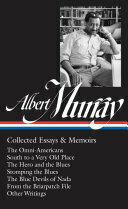
Currently reading: Albert Murray: Collected Essays & Memoirs by Albert Murray 📚
low anthropology
In my new essay on anarchism, I describe myself as “a person with an exceptionally low anthropology” — and if you want to know what I mean by that, here’s more from David Zahl.
Nothing like listening to the Welsh sing their anthem. 🏴

I’ve been predicting U.S. 0-0 Wales, but the power of Weston McKennie’s hair is (against my will) raising my hopes.

After seeing that shambolic defending by Iran, I might have to reconsider my prediction that the U.S. will finish behind them…. ⚽️
The Church universal also has a set of overlapping responsibilities, but how these responsibilities are translated into the work of individual churches is a tension of its own. Local churches are first obligated to their own members, to preach, worship, disciple, and administer the sacraments. Adding anything beyond this to any individual church is tying on a burden too great to bear. Yet the Body of Christ spread across the world is also responsible for sending messengers of the Gospel to places that have not yet heard it, meeting the needs of the poor (local and distant), and advocating for justice in whatever society they find themselves in. (I would draw primarily from Isaiah 58 as the source of the lattermost impetus.) The Body of Christ also has an obligation to be in communication with itself such that the hand can know if the eye is suffering and then do something about it.
This task might seem impossible, but the power of the Holy Spirit among God’s people allows us to order ourselves according to the moral obligations we have to one another and to the world. We seek in prayer to know which people in need we ought to be in proximity to, and we obey accordingly as we embark on whichever road to Jericho we are called to. Some may physically remain wherever they are; others may move across town, across the country, or across the world. The wealth of believers, once yielded to the direction of the Holy Spirit, also has centripetal and centrifugal forces acting upon it but should in general go to where there is the greatest need and the least knowledge of the Gospel.
A long, complex essay, incisive and provocative. Every thoughtful Christian should read it. I hope to comment more fully later.
It feels like a theme park. There’s always been this ridiculous corporate circus, but generally it intersects with a real sense of joy, and you monetise the joy. Here, there’s no joy, just monetising. You feel that this is a place that should in no world be staging this, until you realise: the World Cup is not a festival of football, it’s a travelling city state, a TV show sold to people who can pay the most money. You want a World Cup? This is what a World Cup is.