
The rain did a lot for this fella.

What the iPhone software does with very low light (don’t be deceived by the sky in the background, this was taken in a pitch-black night) sometimes looks like rotoscope animation.

Maya Jasanoff's idea that “The new king now has an opportunity to make a real historical impact by scaling back royal pomp and updating Britain’s monarchy to be more like those of Scandinavia” — because Colonialism! — is (a) the platonic ideal of an NYT opinion piece and (b) a perfect illustration of Clement Atlee’s comment that "the intelligentsia … can be trusted to take the wrong view on any subject.” The pomp of the British monarchy is the point; the ceremony is the substance — for good reasons and bad. When the ceremony is discarded the monarchy will be too. And rightly so.

I told them a while back that this is a word, but they obviously didn’t listen. Anti-liturgical bias at the NYT!


Currently reading: The Whalebone Theatre by Joanna Quinn 📚
Elizabeth II: a constant queen whose failings were rare: “She possessed, apparently, the unique skill of being able to position a tiara on her head perfectly without a mirror.” No, not unique — I too have this skill, though I have had fewer opportunities to exercise it than the late Queen did. Sad.
God Save the Queen
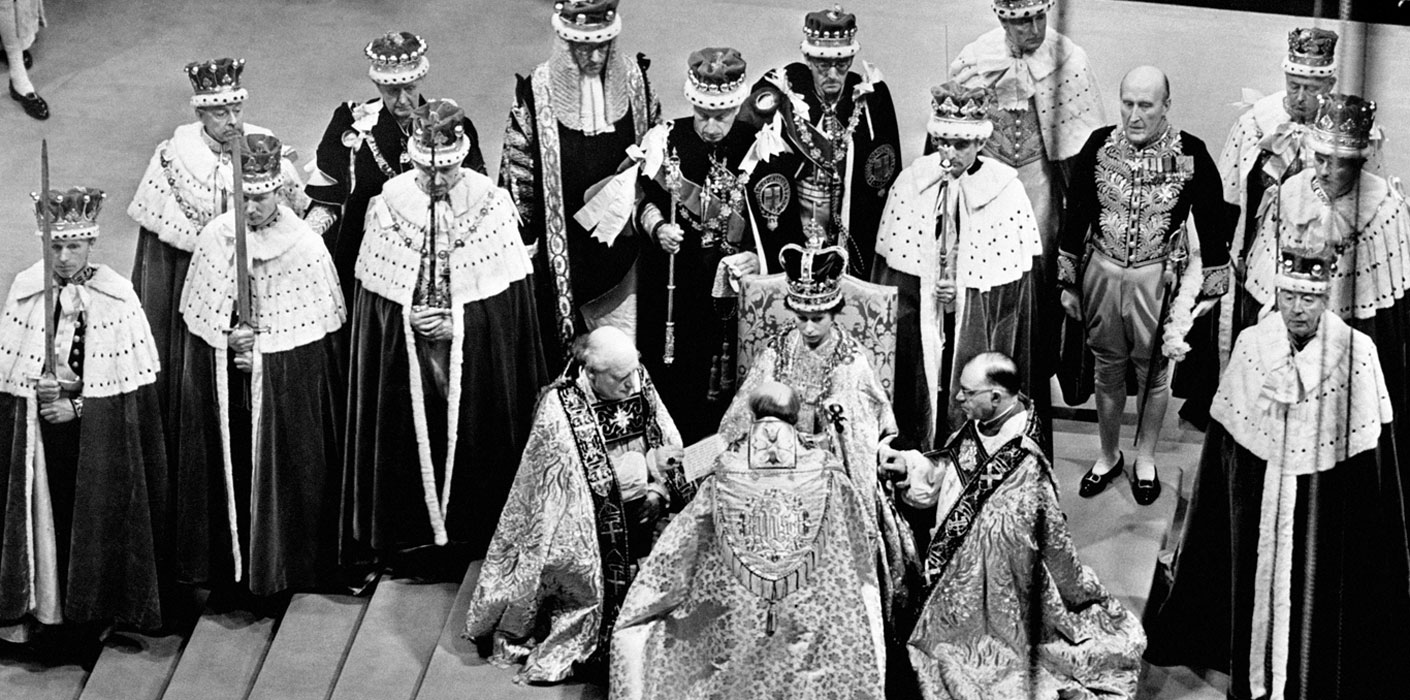
It is a truth universally acknowledged that if we do not suffer from our ancestors’ sins, then we have no need of their virtues. This truth has about as much validity as the one I’m riffing on, but it is if anything more firmly believed. To our great loss.
The late Queen Elizabeth II played the hand she was dealt about as well as it could possibly have been played, and this required her to exercise virtues that few of our public figures today even know exist: dutifulness; reliability; silence; dignity; fidelity; devotion to God, family, and nation. We shall not look upon her like again; her death marks the end of a certain world. Its excellences, as well as its shortcomings, are worthy of our remembrance.
This may perhaps be a good time to listen to the small but sumptuous motet that Ralph Vaughan Williams composed for the Queen’s coronation:
I know this kind of thing is totally normal now — one of the most characteristic ways for journalists to use Twitter — but let’s be clear what it’s saying: I already know what the thesis of my story will be, so please write if you can confirm my thesis. He doesn’t want to hear from anyone who might offer an alternative account to the one he has already settled on.
The Woman Who Became a Company:
Since corporations can claim trade secrets, [Jennifer Lyn] Morone decided to resist pervasive data capture by incorporating herself, so that the company, JLM Inc., contains the intellectual property and activities of the human Morone. If a corporation can be a person, perhaps a person could be a corporation and so protect their data! The articles of incorporation enable Morone’s data to qualify as intellectual property and thus purport to offer protections from the data marketplace. The human Morone’s privacy is possible because it is the product and trade secret of the company, JLM Inc., which is incorporated in the state of Delaware. With its own Court of Chancery that hears cases involving corporate law, Delaware’s legal structure is favorable to business. The state also does not collect corporate taxes from those that do business outside the state or tax “intangible assets” — like data. […]
As JLM Inc., Morone has an obligation to refuse the terms and agreements that permit apps and websites to share data with their parent tech companies, alongside third and fourth parties. She must protect the secret formula of who she is so that she can sell it, making it a challenge for her to participate in many of the interactive information streams common to the 21st century. She can’t use apps, websites with cookies, or most search engines. They track her and collect data about her. That data is the property of JLM Inc. and so she must not engage these services. The problem with maintaining the marketplace as the point of reference for data governance is how it reinforces exploitative practices that don’t have clear, long-term safeguards for participants. Morone’s experience shows that the corporation doesn’t provide a solution to the extractive practices of these apps, platforms, and sites for a human who wants to live, work, or socialize today.
Everything about this story is deeply sad.