
When we are caked with the mud of political struggle, and tired of Pyrrhic victories that seed new hatreds, and frightened by our own capacity for contempt, the way of life set out by Jesus comes like a clear bell that rings above our strife. It defies cynicism, apathy, despair and all ideologies that dream of dominance. It promises that every day, if we choose, can be the first day of a new and noble manner of living. Its most difficult duties can feel much like purpose and joy. And even our halting, halfhearted attempts at faithfulness are counted by God as victories.
God's call to us while not simplifying our existence does ennoble it. It is the invitation to a life marked by meaning. And even when, as mortality dictates, we walk the path we had feared to tread, it can be a pilgrimage, in which all is lost, and all is found.
Before such a consummation, Christians seeking social influence should do so not by joining interest groups that fight for their narrow rights and certainly not those animated by hatred, fear, phobias, vengeance or violence. Rather, they should seek to be ambassadors of a kingdom of hope, mercy, justice and grace. This is a high calling and a test that most of us (myself included) are always finding new ways to fail. But it is the revolutionary ideal set by Jesus of Nazareth, who still speaks across the sea of years.
Listening to: Mingus Ah Um by Charles Mingus ♫
There’ll always be an …

The-Sick-Soul-of-Europe Parties
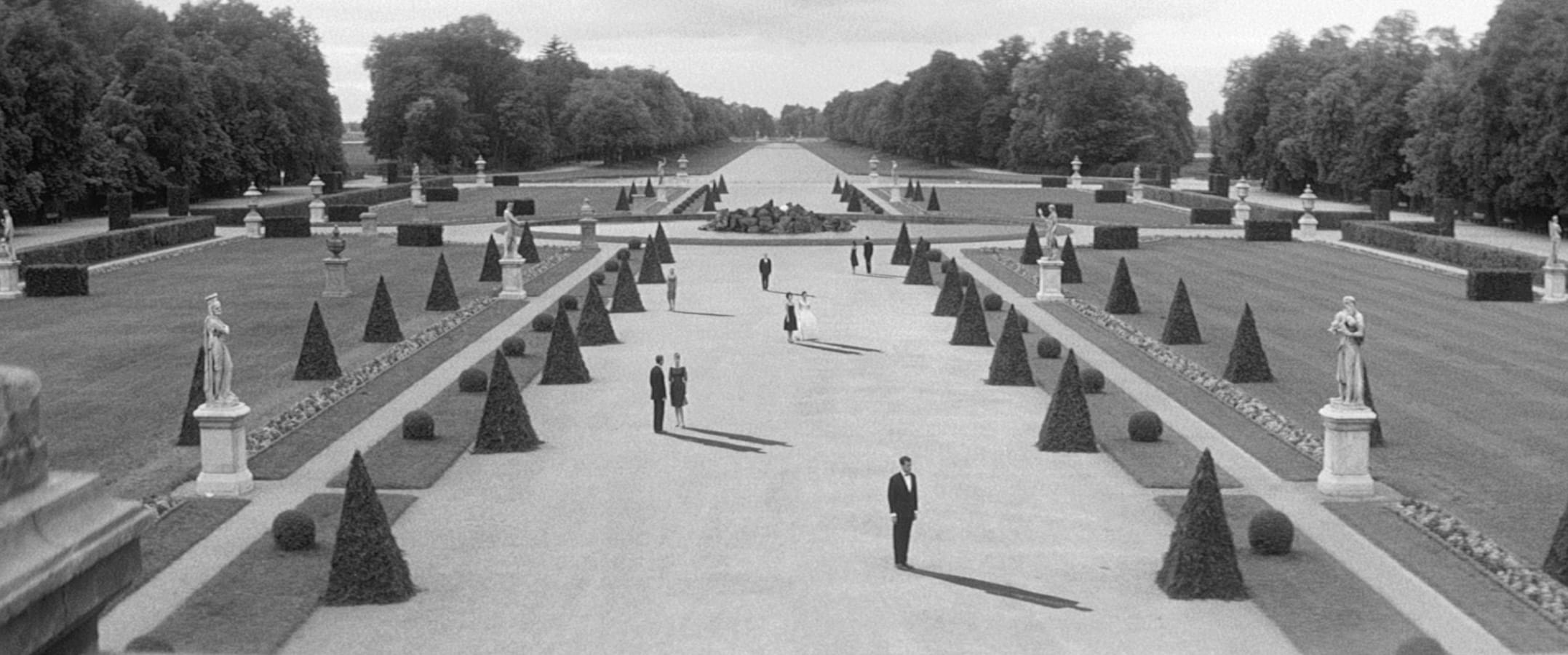
In 1963 Pauline Kael — a freelance essayist, five years before her gig at the New Yorker — published an essay in the Massachusetts Review about some then-recent and then-widely-discussed European films. It’s a very interesting and (I think) convincing essay, animated by the strong views about what movies ought to be that would later make Kael notorious, but without the laying-down-the-law tone that makes so much of her later writing frustrating to read. She wasn’t yet “Pauline Kael of the New Yorker,” she was just another writer in a relatively obscure literary quarterly. Here’s how it starts:
La Notte and Marienbad are moving in a new filmic direction: they are so introverted, so interior that I think the question must be asked, is there something new and deep in them, or are they simply empty? When they are called abstract, is that just a fancy term for empty? La Notte is supposed to be a study in the failure of communication, but what new perceptions of this problem do we get by watching people on the screen who can't communicate if we are never given any insight into what they would have to say if they could talk to each other?
I think she is asking precisely the right questions here and leading her reader towards the right answers. The problem is not so much that these films are pretentious — though Lord knows they are — but that they are empty. They are empereurs sans vêtements.
Later:
In La Notte we are people for whom life has lost all meaning, but we are given no insight into why. They're so damned inert about their situation that I wind up wanting to throw stones at people who live in glass houses. At a performance of Chekhov's Three Sisters, only a boob asks, "Well, why don't they go to Moscow?" We can see why they don't. Chekhov showed us why these particular women didn't do what they said they longed to do. But in movies like La Notte or Marienbad, or, to some degree, La Dolce Vita the men and women are not illuminated or ridiculed — they are set in an atmosphere from which the possibilities of joy, satisfaction, and even simple pleasures are eliminated. The mood of the protagonists, if we can call them that, is lassitude; there is almost no conflict, only a bit of struggling — perhaps squirming is more accurate — amid the unvoiced acceptance of defeat. They are the post-analytic set — they have done everything, they have been to Moscow and everywhere else, and it's all dust and ashes: they are beyond hope or conviction or dedication. It's easy enough to say “They are alienated; therefore, they exist,” but unless we know what they are alienated from, their alienation is meaningless — an empty pose. And that is just what alienation is in these films — an empty pose; the figures are cardboard intellectuals — the middle-class view of sterile artists. Steiner's party from La Dolce Vita is still going on in La Notte, just as the gathering of bored aristocrats in La Dolce Vita is still going on in Marienbad.
Of the three films, Last Year at Marienbad is the most visually interesting, and visual interest is the only kind there can be in movies of this sort. But the interest doesn’t last long. This three-minute video essay about the film tells you all you need to know about it, I think.
Karl could have ended up in a kind of intellectual dead-end: she despised the emptiness of so much New European Cinema, and loved the rough vigor of Old Hollywood … but the world of movies is always mainly about the new, and Old Hollywood was clearly dying. (The amount of absolute trash that the studios cranked out through most of the Sixties is astonishing.) As Mark Harris shows in his brilliant book Pictures at a Revolution: Five Movies and the Birth of the New Hollywood, in 1967 — the year of Bonnie and Clyde and The Graduate — the great pivot happened. And it was her essay in praise of Bonnie and Clyde that landed Kael her job at the New Yorker.
Watching Eurobasket this morning (which is awesome) and I just saw a European sports website identifying Luka Doncic as a player for “Maverick Dallas” – by analogy with Dynamo Kiev or Lokomotiv Moscow, I suppose. So that’s what I’m calling the team from now on: MAVERICK DALLAS.

Currently reading: Mike Nichols: A Life by Mark Harris 📚
wait, what?
I started telling people what a terrific writer Brian Phillips is back in 2008, when he wasn’t yet even a gleam in Bill Simmons’s eye, and since then I’ve written for his old site The Run of Play, we’ve eaten lunch together in Harvard Square, and once we joined forces to confront an enraged lunatic photographer on Flickr. When you’ve been through the wars like that, it forms a bond, you know? So I’m as proud as a slightly obnoxious big brother to learn that he’s a fantastic podcaster too.
I have enjoyed this whole series, but now that we’re at Dennis Bergkamp … well. My feelings about Dennis Bergkamp are strong. Watch the YouTube clips Brian has lined up there, and you’ll see why.

I’m going to make one point about that goal against Argentina — the ostensible subject of Brian’s episode — and then a more general point. Brian describes the goal well: the long, long pass from Frank de Boer; Bergkamp’s leaping first touch that kills the ball; the subtle pullback from the right side of his body to the left that sends Roberto Ayala flying. But then there’s the shot itself. Bergkamp can’t take the time to shape his body to take a proper shot, with either foot; all he has time for is a toepoke, a quick insouciant flick of the ball that looks a little like a dancer doing the can-can. And yet the ball just arrows into the roof of the net. The first touch and the pullback came from masterful technical skill; that shot from sheer imagination.
Thus my more general point: As Brian hints, Bergkamp’s distinctive style of play was simply made for YouTube, because all of Bergkamp’s greatest plays leave you saying, Wait … what? What did I just see? Let me rewind that.
Consider the two examples Brian gives near the end of that post (which transcribes the episode). On that assist to Freddie Ljungberg vs. Juventus the commentator doesn’t even mention the pass, because I don’t think he has any idea what has just happened. And to be fair, it’s almost impossible to see on a first viewing. You have to run it back and look again, because it’s that imagination again, that Bergkampian sublime. If you’re commenting on the match you just end up saying “Terrific goal from Ljungberg!” or the like — because the actual finish is something that happened in the world of space-time as we know it. The pass, by contrast, happens somewhere else.
The famous Newcastle goal is even weirder. I’ve seen it a hundred times, and every time I see it I say, “Wait … what?” What precisely did he just do? Also, how did he ever think of that? “Ah, when the ball gets to me I’ll just flick it to my right and behind me, while simultaneously pivoting to my left, so that the ball and I will meet in an enveloping pincer movement that will leave the defender and keeper helpless!” As Brian says: Ladies and gentlemen, Dennis Bergkamp!
But I want to look at one more, this one:
Again, the perfect first touch, followed by a little private game of keepy-uppy, and then the clinical finish. But what I love most about this is the reaction of the defender, who had been right there, who had been in perfect position, who had done his job … and yet look at what happened. As the ball goes into the net his hands fly up to his head: “Wait … what??”

Letter from Martin Luther King Jr. to Clarence Jordan and the people of Koinonia Farm in Georgia; from a fine reflection on Jordan by Starlette Thomas.
The original Yale Book of Quotations (2006), on which this new edition is closely based, was always a spunkier affair than the Oxford Dictionary. It had the North American bias implied by its title.
As opposed to books with “Oxford” in the title, which of course have no bias at all.
Stanley Fish, How Milton Works:
To those in whose breast it lodges, the holy is everywhere evident as the first principle of both seeing and doing. If you regard the world as God’s book before you ever take a particular look at it, any look you take will reveal, even as it generates, traces of his presence. If, on the other hand, the reality and omnipresence of God is not a basic premise of your consciousness, nothing you see will point to it and no amount of evidence will add up to it. You will miss it entirely, as Mammon [in Paradise Lost] does when all he can see in the soil and minerals of hell is material for a home-improvement project, one that will make up for the loss of heaven: “Nor want we skill or art, from whence to raise / Magnificence; and what can Heav’n show more?” He’s not kidding; he really means it. As far as he can see (a colloquialism I want to take very seriously), there is nothing more to see than the phenomena his art and skill will be able to produce; and those phenomena will bring heaven back to him because he never knew what it was in the first place…. Had he truly known heaven, he could not have moved away from it, for it would have been “a heaven within” (as it is for Abdiel, whose physical removal to the North leaves him unchanged in his essence); and were he now to know it by realizing what he had lost and could not replace by feats of construction, he would no longer have lost it, for its reality would be animating him even in exile and he would be in the position the Elder Brother imagines for his virtuous sister: “He that has light within his own clear breast / May sit i’th’ center, and enjoy bright day” (Comus, 381–382).