

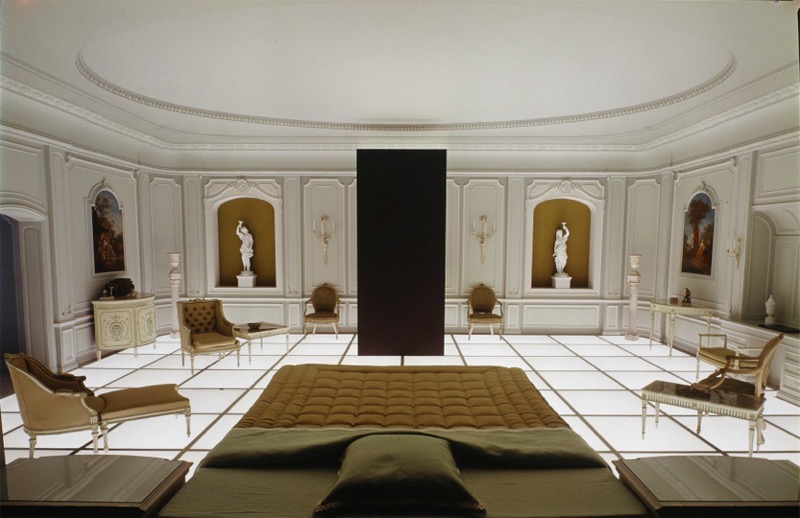
He drew a deep breath. ‘Well, I’m back,’ he said.
lost causes and places of hope
Better late than never, Ezra — props to you for finally coming around. But not many of your generation will. Indeed, for policy if not for personal purposes, we should probably treat everyone over thirty as a lost cause. They've been sucked into the black hole of social media and we won’t see them in the real world again. (“Never trust anyone over thirty,” we were told all those decades ago, and now I’m saying “Never hope for anyone over thirty.” In each case there are exceptions, though maybe not enough to bother with.) The key thing, then, is to save the coming generations from the conflagration, and Yuval Levin has a proposal for achieving that.
liberals believe
Stanley Fish, from How Milton Works:
Liberals believe that knowledge of an object (be it a piece of data, a person, a concept) is one thing and evaluation of it is another, so that it makes perfect sense to say, as Satan does, I know what the good is — I just choose another path (as if knowledge and inclination could be severed from each other and opposed). Liberals believe that facts (of history, justice, science) are independent of the knower, and that it is the knower's obligation to approach the task of knowing with as few preconceptions as possible so that the understanding he finally achieves is impersonal rather than a reflection of his antecedently held views and preferences; one must come to any situation calling for a decision (about what to think or what to say or what to do) with an open mind, a mind prepared to jettison its most cherished convictions should the evidence tell against them. Liberals believe that evidence lies about in the world waiting to be gathered and then arranged in patterns it itself suggests. Liberals believe that if we are sufficiently careful in our gathering of evidence (careful, that is, to keep ourselves and our desires out of the process) the truth will will finally emerge in a form everyone (whose mind is open) acknowledge. Liberals believe that when the truth to be determined is the meaning (political, moral, legal) of an action, the previous history of the actor — whether he has in the past been a good or bad man — is largely irrelevant and that we should look only to the shape of the present circumstances when assessing him. And because liberals believe in all of the above, they believe in the efficacy of procedures — scientific, parliamentary, judicial — designed to protect us from the overhasty judgments we make when we allow our commitments and allegiances to blind us. Liberals believe that the most important of these procedures is the machinery of rationality, of those laws of logic attached to to no agenda or vision, but sufficiently general in their scope as provide a normative perspective from the vantage point of which any agenda or vision can be assessed and, if necessary, corrected. Liberals believe that communication and persuasion take place (or should take place) in the context of that rationality and that it is possible to bring anyone — except, perhaps, the mentally impaired — to a clear understanding, so long as he or she is willing to set aside or bracket all biases and preconceptions.
Milton believes none of these things.
heads up
I’ve got a number of brief quote-posts queued up for the next week, and a couple of slightly longer ones, but I won’t be around. I’m off Monday for a brief writing retreat, to see if I can finish a complete draft of my “biography” of Paradise Lost … which has been fun to write but also immensely challenging. It occurred to me the other day that if I had to rewrite the book using nothing I have used so far — none of the facts about Milton’s life, none of the quotations from Paradise Lost, none of the references to later readers and writers — I could easily do it. That’s how much material there is to draw on. And I have to keep the whole thing to 50,000 words!

There’s a self-regarding preciousness to much of Donald Judd’s work — and to the whole town of Marfa — that I don’t care for, but he also did some truly major work and I hope the Chinati Foundation reaches its financial goals. The most interesting installation there, I think, is Robert Irwin’s massive study in light and shade.
Taylor Dotson, “Unsustainable Alarmism”:
Consider alarmism in the climate debate. Presenting climate change in catastrophic terms has allowed activists to discredit anyone who doubts worst-case climate scenarios as “denialists.” While crusading against denialism might seem like a strategy for achieving a consensus about the problem’s seriousness, it often ends up undermining the very conditions that make public deliberation possible. As Matthew Nisbet has argued, the “denialist” label is a way of “controlling who has the authority to speak on the subject.” When expressions of personal alarm become a litmus test for who has a reasonable understanding of the problem, alarmists naturally have sole authority. The effect, as Nisbet writes, is a “culture where protecting one’s own identity, group, and preferred storyline takes priority over constructive consideration of knowledge and evidence.”
I like the concept of alarm as a finite resource. There are a lot of people out there who seem to believe that what I have called “the absolutizing of fright” is sustainable forever. When everything is a world-ending disaster, then nothing is. It’s very difficult for us to weigh our problems accurately when all day every day we’re being told that something/everything is the WORST.
(And by something/everything I don’t mean the Todd Rundgren album Something/Anything, which in fact is the BEST.)
The Contingency of Listening - by Damon Krukowski:
Albums are mixed in order to be reproduced. When that process truly was 100% analog – the last of my own records made that way was Galaxie 500’s second album, in 1989 – the master tape was deliberately mixed with more high end than desired, because it was predictable that some of that would be lost in the reproduction process toward pressed records.
In other words, the original master tape is not how those analog albums were meant to sound. The record is.
There is a further irony as we add digital into the picture. Digital reproduction does not alter the master the way that analog does. For many commercial CDs, the final product actually is the original master, and vice-versa. Even when a digital master is higher resolution than CDs can reproduce, it is still possible to listen to them via computers without any degradation at all.
When CDs first came out, many of them sounded awful in part for this very transparency – they were duplicating analog master tapes more or less directly, rather than interpreting how they were meant to sound at the end of the process for reproducing records. Digital was blamed for those “harsh” CDs - but that is also simply how some analog master tapes can sound.
Fascinating!
another friendly reminder
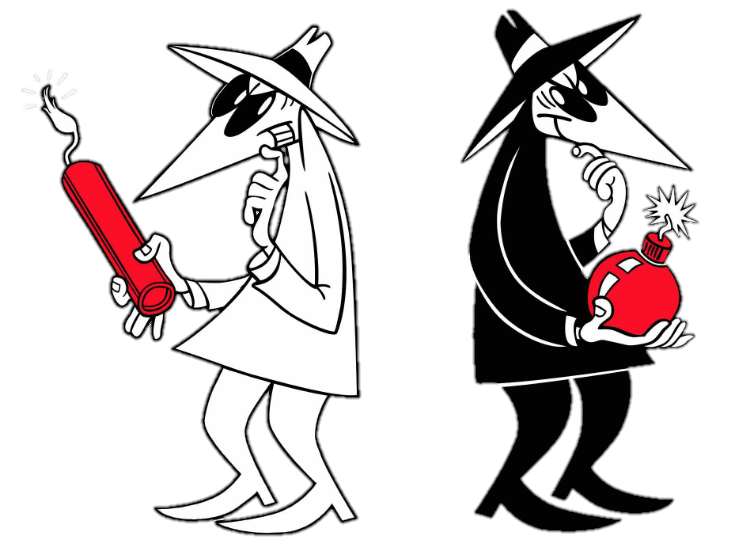
Here’s the good news: Most Americans are not hateful conspiracy-theorists who want to destroy their wrongthinking neighbors.
Here’s the bad news: The hateful conspiracy-theorists who want to destroy their wrongthinking neighbors dominate social media – they’re on it all the time. They toil not, neither do they spin, but they never stop posting and tweeting and reposting and retweeting and shitposting and shittweeting.
And here’s more bad news: the professional media make bank by showcasing the hateful conspiracy-theorists who want to destroy their wrongthinking neighbors – and they too never stop their destructive work. There is a malice there that does not sleep.
But – finally – here’s more good news:
- You can stop reading Twitter and Facebook, you can stop watching TV “news,” you can stop listening to loudmouthed podcasters.
- You can change your news consumption to a weekly cycle rather than a daily – or hourly – one.
- You can spend more time with monthly or quarterly periodicals; you can read books — even old books.
- You can also listen to music, ideally music not served up to you algorithmically. Buy one CD or vinyl record per month and listen to it all the way through, multiple times. Retrain your attention.
- Go outside as often as you can, ideally without devices. Work in the yard, or just walk around. Pause occasionally to take a few deep breaths. When you come back in, do not head straight for your device; instead, make a cup of tea, straighten your shelves, or pray.
We can do this!