

capability and collaboration
In her book Creating Capabilities Martha Nussbaum writes,
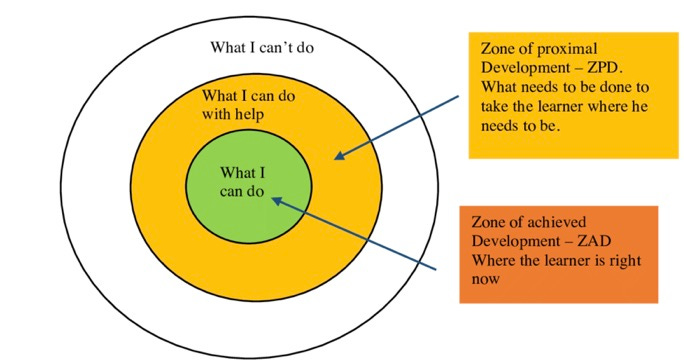
What are capabilities? They are the answers to the question, “What is this person able to do and to be?” In other words, they are what [Amartya] Sen calls “substantial freedoms,” a set of (usually interrelated) opportunities to choose and to act. In one standard formulation by Sen, “a person’s ‘capability’ refers to the alternative combinations of functionings that are feasible for her to achieve. Capability is thus a kind of freedom: the substantive freedom to achieve alternative functioning combinations.” In other words, they are not just abilities residing inside a person but also the freedoms or opportunities created by a combination of personal abilities and the political, social, and economic environment.When elaborating the capabilities approach, Nussbaum — I think this is fair to say — generally writes as though individual autonomy is the proper moral ideal. But in light of recent posts, I wonder if we might ask what capabilities emerge only in the context of a bet on mutuality. Capabilities, mine and yours alike, that only become available when we formulate and test prototypes together. See this chart from Sara Hendren.
ASIDE
Prototyping is iterative, but not all iterative activities are prototypes. Blogging, as I conceive of it, is iterative, in that it returns repeatedly to certain themes, trying to explore them more adequately. But previous iterations are never discarded; they remain part of the project. A blog is more like a palimpsest than a prototype.As I hinted earlier, these thoughts run against my grain. I’ve team-taught a number of times over the years, but the norm for me is designing and running my own class; the norm for me is imagining and writing my own essays and books. There are always collaborative elements in this work — I look at what other faculty teaching the same classes do, I learn from my students what works and what doesn’t (every instantiation of a course is a prototype), I receive and respond to feedback from editors. But I don’t think about those collaborative elements often enough, I don’t keep them in the front of my mind, and so I am insufficiently attentive to the possibilities of collaboration.
A big part of my interest in anarchism — see the tag at the foot of this post — stems from my sense that certain distinctive human goods emerge only when we allow order to emerge from voluntary collaboration.
You’re never too old to learn … I hope.
Just playing around here … embedding a video in a post didn’t seem to work on all browsers, but maybe if I just link to the video? (Yep, that works – but embedding would be cooler.)


Currently reading: Space Odyssey: Stanley Kubrick, Arthur C. Clarke, and the Making of a Masterpiece by Michael Benson 📚

P. Frankenstein & Sons made a lot of things, including the space suits worn by the astronauts in 2001: A Space Odyssey.

Via my son.
the invitation to critique
A while back, I wrote this:
To make promises, to stand by one's words, to be answerable for them, is to open oneself to blame. That’s legitimately frightening. But if the cost is high, so is the benefit: To be answerable for one’s words is to escape the ineffectual, and to find “the inner connection of the constituent elements of a person.” To move from the linguistically and morally empty world of Projection — in which you can blithely forecast the destruction of whole fields of human activity and the hopes they hold — to the meaning-saturated world of Promise is to risk much. But if Bakhtin is right, you’re betting on the integrity of your own personhood; and if Berry is right, you’re binding yourself to someone else’s future. The promise for which you are truly answerable is a bet on mutuality.
I’m casting my mind back to this because of some thoughts that keep rising up in the aftermath of my recent Laity Lodge retreat with Sara Hendren.
One of the points Sara emphasized in her talks was how Olin College of Engineering, where she teaches, spends a lot of time teaching its students the practice of prototyping. As Sara defines and explains that practice, it really does look to me like a “bet on mutuality,” in this sense: To build a prototype and expose it to critique is to make yourself very vulnerable. (Sara mentioned an exercise Olin does in which it has its students build games, and then invites fourth-graders in to judge the games. “Is this fun?” She said that when those terrifying 10-year-olds arrive, some of her students’ hands are shaking.) But you invite people in because you know that you can’t do the thing you want to do without their honest response.
The form this particular bet on mutuality takes could be called a hopeful invitation to a constructive feedback loop. That is, you hope that your critics will give responses that will genuinely help you improve your prototype; and they hope that you will try to improve your project in ways that take their critique seriously. And so on, iteration by iteration. Sara has written of critique and repair, and I have written of invitation and repair, but look what we have here: the invitation to critique as a first step in the process of repair.
An obvious point, now that I think about it, but then, I often take some time to achieve the obvious.
When this thought came to me, I realized that I had dealt with it, implicitly, in one of my own talks at Laity. I had contrasted Bob Davey — a man who desperately wanted to restore an old church in Norfolk, England — with Justo Martinez — a man who wanted to build a new church near Madrid, Spain. Brother Justo strove for decades not just to build the church, but also to do it alone — he neither sought nor welcomed assistance of any kind, and often claimed to have achieved by himself tasks that he simply couldn’t have achieved without help. He treated others as impediments and threats. By contrast, Davey worked very hard on restoring that little Norfolk church, but he also sought help of every kind along the way. He gave up complete control of the project in order to draw friends and strangers into his endeavor. His motto seems to have been that great phrase from Wordsworth: “what we have loved, / Others will love, and we will teach them how.” He made a bet on mutuality.
That surely meant having to hear other people tell him “You’re doing it wrong” — something Justo, it seems, couldn’t bear to hear. But if we want to repair the world, or any part of our little corner of it, we’ve got not just to accept but invite that possibility. We have to discipline ourselves to welcome it. And we have to encourage those others to stick with us through multiple iterations of whatever we’re prototyping.
What this might look like through my kind of work … well, I’m just beginning to figure that out. But it’s got to start with doing hard things with friends.

the missing middle
Pop Culture Has Become an Oligopoly - by Adam Mastroianni:
In every corner of pop culture — movies, TV, music, books, and video games — a smaller and smaller cartel of superstars is claiming a larger and larger share of the market. What used to be winners-take-some has grown into winners-take-most and is now verging on winners-take-all. The (very silly) word for this oligopoly, like a monopoly but with a few players instead of just one.
Remember when we were looking forward to the era of the Long Tail? Nah, that didn’t happen. At least not in the way predicted. We do, praise God, have unprecedented access to art, books, music, movies — but we often get to choose between the colorless tasteless mega-productions of the oligopoly or very small things made at the cultural and economic margins.
This works out differently in different art forms, and I want to think more about the details. But it does seem to me that there’s a kind of squeezing-out of the middle. The midlist author is disappearing — heck, in another time and place I might well have been a midlist author, but I could never sell enough books in the current environment to make a living. Also, it seems that only a few bands — good old-fashioned guitar/keyboards/bass/drum bands — can afford to tour any more, and most of those are comprised of people over sixty. Younger musicians tend to work solo or duo, or form short-term collaborations, and thick musical textures tend to be developed (when they’re developed all) through digital instrumentation rather than through people learning how to play together. The new economics of art has been hard on all musical genres, but especially, I think, on jazz. Which was struggling anyway.
Obviously you can’t generalize too grossly here; the situation in the visual arts is rather different. But in many art forms, it seems to me, we have the massive-in-scale and massive-in-popularity and small-in-scale and small-in-popularity — and not much in between.