
by the numbers
Here in Waco, as in many parts of the country, COVID–19 cases and hospitalizations are spiking. I live a few blocks from Baylor Scott & White Hillcrest Medical Center, which is pretty full now, and do you know what percentage of those currently hospitalized there are vaccinated? Two percent. That’s it. Those who have refused to be vaccinated make up ninety-eight percent of the hospitalized.
gratitude
From an essay of mine about Terrence Malick:
In 1978, the year I turned twenty, I was a film buff — a cinephile, a cinéaste. Though this was long before the coming of VHS tapes and Blockbuster, and though I lived in Birmingham, Alabama, my learned nerdiness wasn’t as dramatic an achievement as one might think. Local colleges and universities all had regular film series with cheap or free admission. More important, I took a course at the University of Alabama at Birmingham on film in the sound era, taught by an astonishingly knowledgeable man named Abe Fawal, who chose films less for their fame than for what they could show us about the technical development of the medium. An older friend of mine who moved in Birmingham’s arty circles listened to me wax ecstatic about the class and then asked if I knew that Fawal had been an assistant director of
Lawrence of Arabia
. I did not believe this tale, but later discovered that
.
I was sorry to learn, recently, that Abe Fawal died last year at the age of 87. God rest his soul.
As the years have gone by I have been increasingly aware of how remarkable his class was, and how influential it was on my later life. I don’t remember all the movies we watched in that class, but you may get some sense of the range when I tell you that the first one was Gold Diggers of 1933 —

— and a later one was Carl Dreyer’s Ordet:
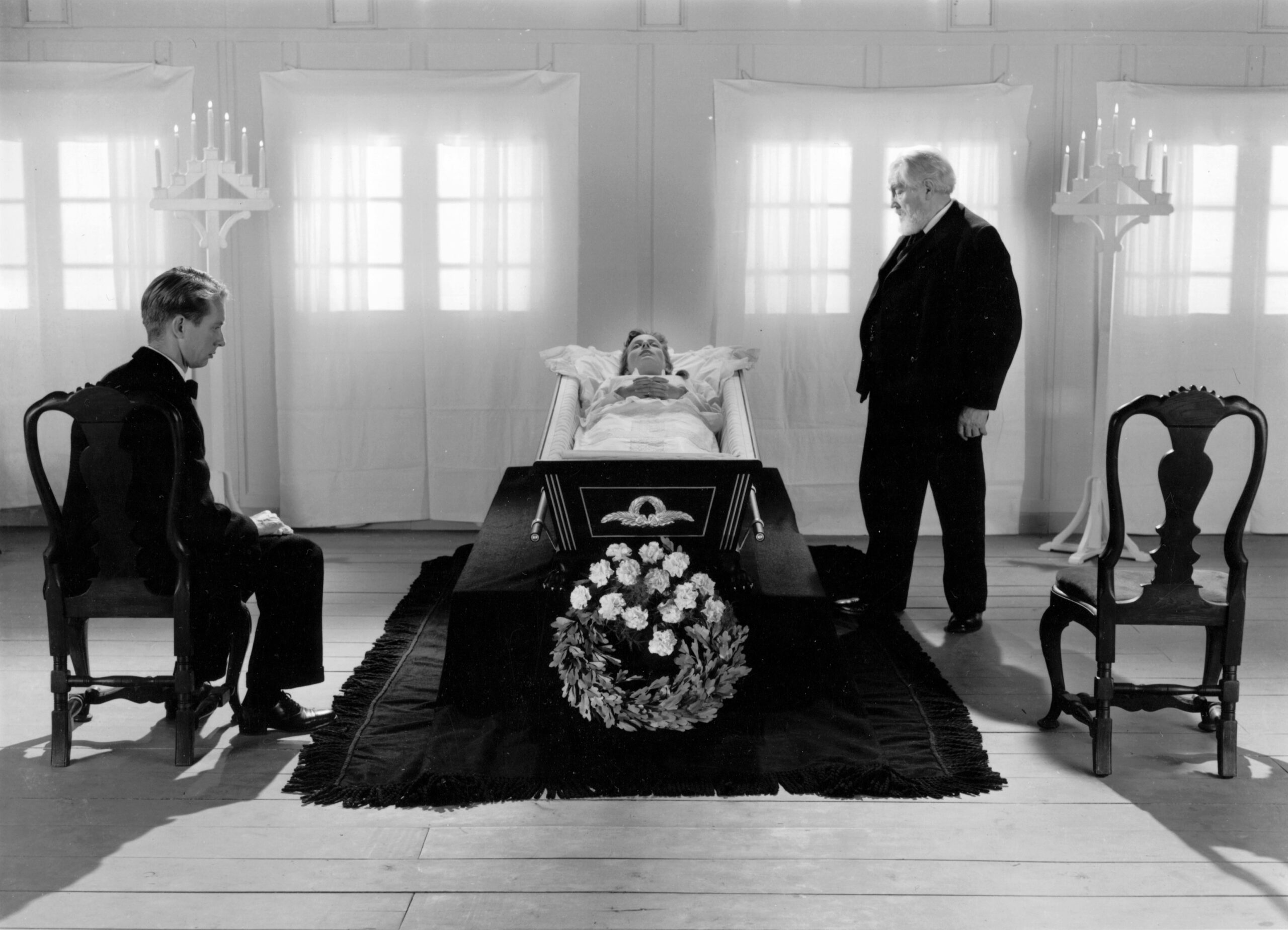
It was just one amazing experience after another, and gave me an exceptionally vivid sense of the sheer variety of filmmaking techniques and styles, of the ways to tell a story in cinema; of the kinds of stories one might tell.
I don’t watch a lot of contemporary films, but in Dr. Fawal’s class I developed a lasting fascination with the history of cinema. It was fed early on by ongoing film series at his alma mater, Birmingham-Southern College, where I saw my first films by Renoir, Fellini, Kurosawa, Ozu, Satyajit Ray, Truffaut, Resnais, Bresson, De Sica, Howard Hawks, Preston Sturges … so, so much that still forms my understanding and love of film today. I wouldn’t be surprised to learn that Dr. Fawal had inaugurated that film series at BSC.
All that said, Dr. Fawal was a modest man, and didn’t show us, or even talk about, Lawrence of Arabia. But that would’ve been a treat.
When I read this story, I had one immediate thought: Facebook will close the loophole that allows Oculus purchasers to get customer service. They really are the worst big corporation in American history. The damage that they have done to our social order is incalculable, and they compound that by their absolute contempt for their users — because, of course, as has often been said, the users are not the customers. It’s usually said that the users are the product, but they aren’t even that: they’re the conduit for the product, which is data. Facebook’s attitude towards users who have problems is precisely the same as the attitude of a factory dairy farm towards cows that cease to give milk.
Millennium Park, Chicago


Milo again
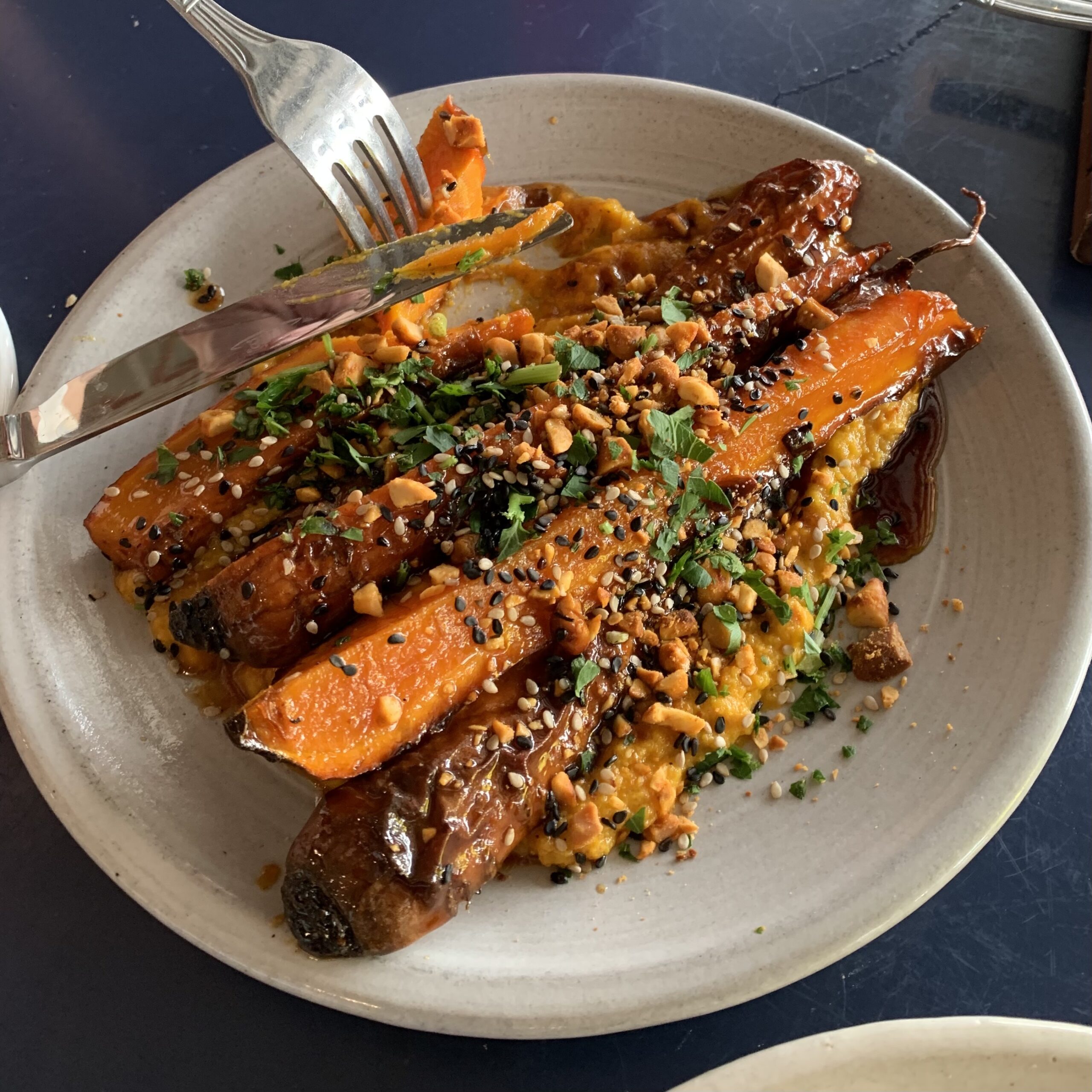
I’ve written before in praise of our wonderful local restaurant Milo, but we haven’t been able to visit during the pandemic (just ordered to-go a few times). Last night Teri and I were there for dinner — a special occasion! — and it was great to see that chef Corey McEntyre and his crew are still creating wonderful stuff. Their creativity with vegetables is especially noteworthy. These charred carrots were amazing:
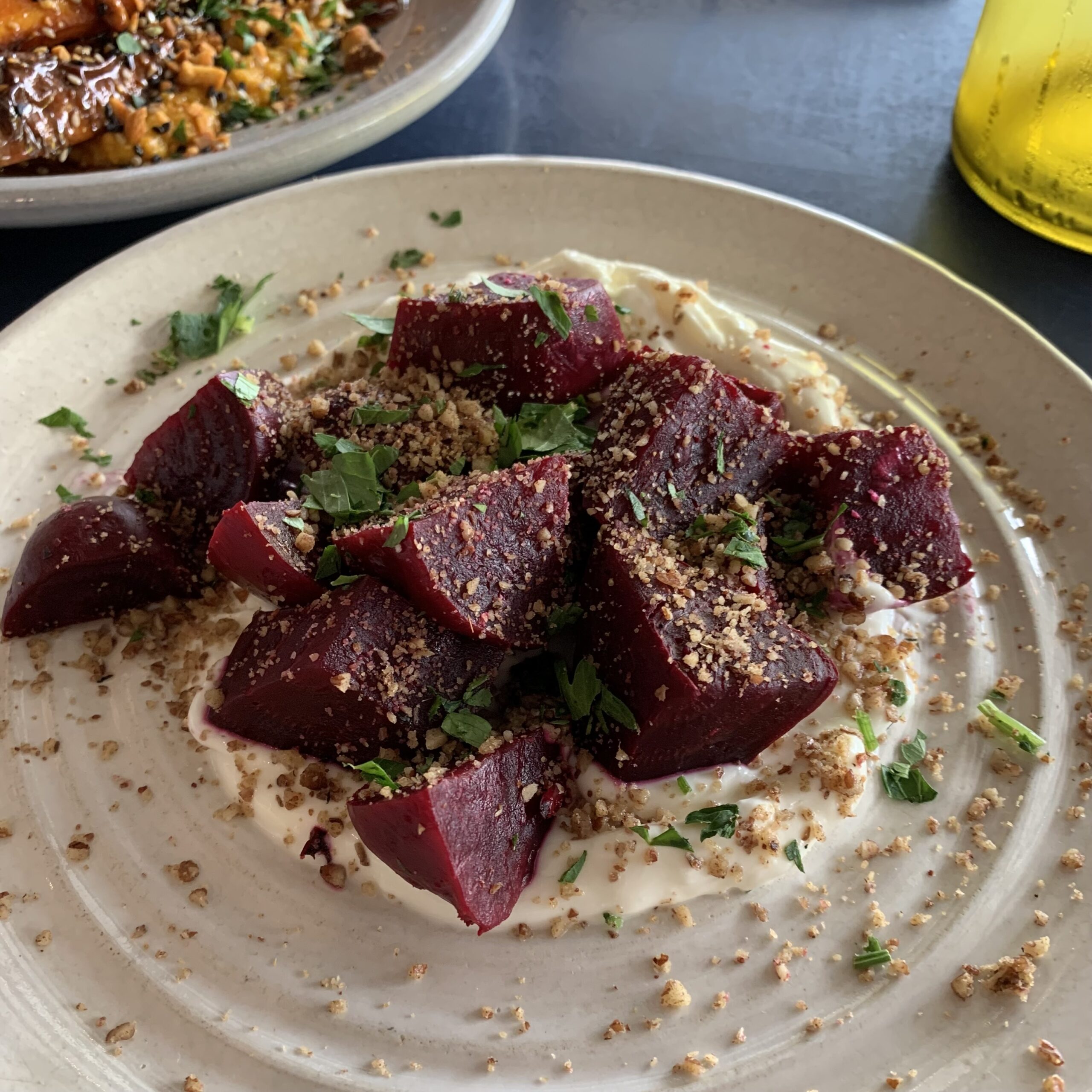
Ditto the roasted beets on yogurt with spicy peanuts crumbled on top:
And a salad of thinly-sliced summer squash with greens, wonderfully dressed and topped with shaved parmesan:

If you come to Waco, you gotta visit Milo!
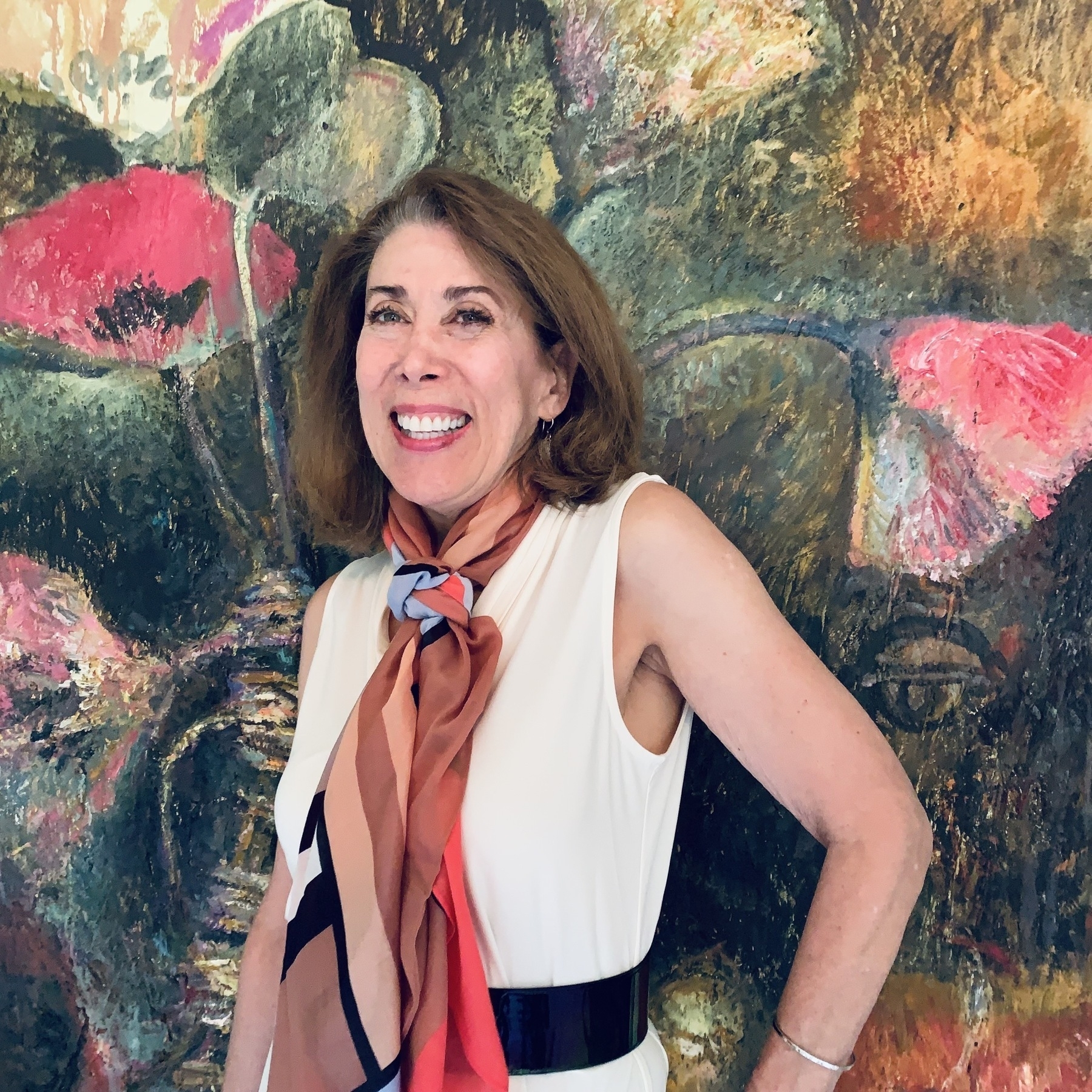
Forty-one years ago today this wonderful woman married me. I still can’t believe it.

As a follow-up to my recent posts on vaccination — one and two — I just want to say that it’s especially nice to see people in high-risk groups getting vaccinated.
unknown unknowns
In the first printing of my biography of the Book of Common Prayer, I say that Thomas Cranmer was a Fellow of Jesus College, Oxford. This is incorrect. It was Jesus College, Cambridge.
Now, I knew perfectly well that Cranmer was a Cambridge man. I just had a brain fart when I put him in Oxford. But the error has still nagged at me. I keep thinking: Would I have done that if I were English? That is, would the difference between Oxford and Cambridge be so vivid in an English person’s mind, especially an educated English person, that such a brain fart would be impossible? Or was it just a brain fart? Maybe in other circumstances I could with equal ease write that, say, Clarence Thomas’s J.D. is from Harvard or that FDR attended Yale.
I can’t be sure. But the whole episode has made me more aware of all the things natives of a country know that foreigners, even affectionate and well-informed foreigners, have no clue about. My Cranmer error has had me musing about the fact that, while my academic speciality is 20th-century British literature, I may be completely, blissfully (or not so blissfully) ignorant about all sorts of matters concerning the world my writers grew up in that would be obvious to natives of their country.
Indeed I know I have such blanks in my knowledge. When I produced a critical edition of Auden’s long poem The Age of Anxiety, I annotated this passage:
Listen courteously to us
Four reformers who have founded — why not? —
The Gung-Ho Group, the Ganymede Club
For homesick young angels, the Arctic League
Of Tropical Fish, the Tomboy Fund
For Blushing Brides and the Bide-a-wees
Of Sans-Souci, assembled again
For a Think-Fest …
Here’s what I wrote:
These titles are only partly explicable but are meant to suggest, ironically, that the four new acquaintances are the sort of people who would create social organizations devoted to good cheer and moral improvement. Ganymede was a beautiful young mortal who was abducted by Zeus to serve as the gods’ cupbearer; Auden may also have remembered the Junior Ganymede Club frequented by Jeeves and his fellow valets in the novels of P. G. Wodehouse. “Bide-a-wee” is a Scots phrase meaning “stay a while.” “Sans-souci” means “without care.”
None of this is wrong … but: that excellent writer (and biographer of Auden) Richard Davenport-Hines wrote me to say that
Sans Souci (in addition to being Frederick the Great’s summer palace at Potsdam) was together with Bide-a-Wee a common name, snobbishly mocked, given to cheap bungalows at down-market English seaside resorts to which lower-middle-class people might retire after a working life as a bank-teller, clerk in a town hall, supervisor in a small workshop, station-master on a small railroad, etc. This would be an immediate association to English readers of the 1940s, or to anyone of my generation.
I wanted to smack myself for forgetting, or neglecting, Frederick’s summer palace, but that other stuff? I had no idea. And that is extremely distressing to me.
Which leads me to my recently completed summer reading project:

Five thousand nine hundred and seventy-nine pages later, I know so much more than I did about the social history of postwar Britain: random people of brief notoriety, appliances, food products, radio and TV shows, catchphrases etc. etc. The dark question remaining, though, is: How much of it will I be able to remember?
Indeed: Will I even realize, when coming across an item unfamiliar to me, that I could look it up in these books? I am often haunted by a shrewd point C. S. Lewis makes in his Studies in Words: sometimes words change their meanings in ways that don’t call themselves to our attention. Using the current meanings of those words, we can make sense of old sentences — just not the sense that the authors intended, or that readers of their era would have readily identified.
Still, I am making progress, and Sandbrook’s books, while perhaps less scholarly than Kynaston’s in some respects, are wonderfully well-written and perfectly paced. They were a joy to read.
There’s one more problem, though. Sandbrook’s project is ongoing — he wants to keep drawing closer to the present day. But …
- The first book in the series appeared in 2005 and covers seven years in 892 pages;
- The second book in the series appeared in 2006 and covers six years in 954 pages;
- The third book in the series appeared in 2010 and covers four years in 755 pages;
- The fourth book in the series appeared in 2012 and covers five years in 970 pages;
- The fifth book in the series appeared in 2019 and covers three years in 940 pages.
At that rate of progression I will be long dead by the time Sandbrook gets to Tony Blair.
An Italian born in Texas named Jacobs has just won an Olympic gold medal … this Italophile Texan named Jacobs is verklempt.