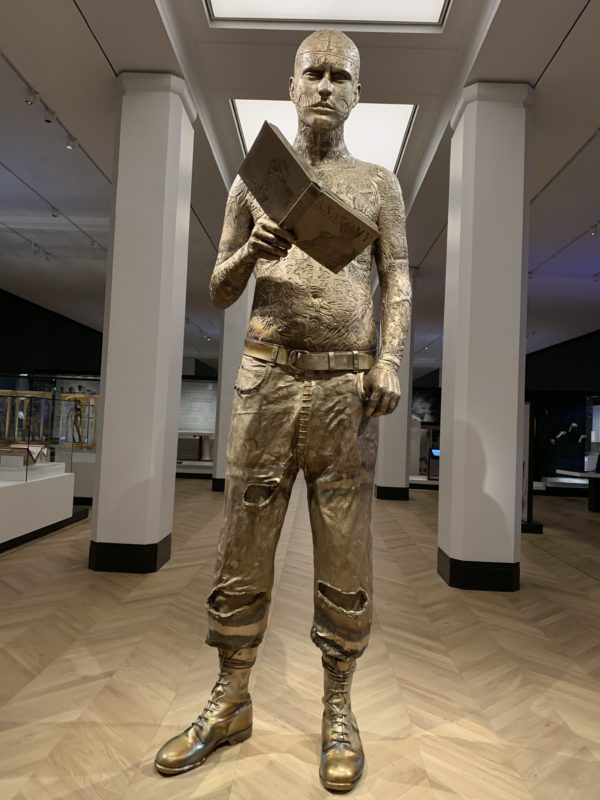
knowwedge is what bwings us togeddah today

I’ve explained before why I believe generational thinking to be more harmful than helpful. But people who are addicted to generational thinking have a disproportionate share in our political discourse. They might think that older heads are wiser heads, or they might think that we need an infusion of youthful energy, but they agree that you can tell a lot about a politician by noting his or her age. I don’t believe it. Being young  doesn’t make you a hobbit, nor being old a wizard. (Anyway, that’s just Peter Jackson sucking up to a demographic whose money he craves.) Others say that what matters is race, or class, or sex, or sexual orientation, and while those markers may be more meaningful than age, none of them is especially important either.

You know what matters? Knowwedge Knowledge. If you’re running for office, I couldn’t care less how old you are — unless you’re over 80, in which case actuarial issues kick in. What I care about is this: What do you know? Can you summon to mind the general outlines of the Constitution of the United States? Are you aware of any distinctive, or especially controversial, laws of the state you live in? If you were to be elected to office, can you make a reasonable guess at the legal and political issues that are likely to confront you, and how they are affected by existing laws? Do you understand that there’s no “hate speech” exception to the First Amendment? Do you understand how Facebook makes money? Do you grasp why a rogue employee can’t tinker with Google’s algorithms to punish conservatives? Have you seen, and do you comprehend, the evidence for anthropogenic climate changeWhat do you know? 

People sometimes refer to the Trump administration as an idiocracy: rule by the idiotic. I  don’t think that’s quite right, first because Trump has a certain serpentine cunning, but also because the idiot, etymologically, is the private person, the person in his own world. Idiots don’t run for office, neither do they vote.

Others call the current regime a kakistocracy: rule by the worst. It’s a reasonable designation. The more I have thought about it the more convinced I have become that Americans elected as their President the single most comprehensively disqualified public figure for the job: a man disqualified by temperament, by character, by inexperience, by vulnerability to blackmail — and by sheer ignorance.

And it’s that last point that makes me want to call the current regime by a different name: it is, I think, an agnoiocracy — rule by the ignorant. Rule by know-nothings. Most of the people who voted for Trump are not as crassly venal as he is, but they tend to be equally ignorant. It was their ignorance (or denial — it amounts to the same thing) of the facts of our political order that made them think that Trump could be a successful president, and their ignorance of Trump’s non-televised history that made them think that he could be trusted to keep any promise that is not in his direct interest to keep.

When children are small they make messes, and they do so because they’re ignorant. It’s not their fault: they haven’t been around very long, they don’t have a lot of experience with cause and effect. So they pour orange juice on the carpet, and take Sharpies to the walls — leaving messes for their parents and other guardians to clean up.

Our infantile agnoiocracy — and I include in it the legislative as well as the executive branch, and Democrats as well as Republicans — is making enormous messes that later on we’ll all have to clean up, if we can. And that’s why, from now on, when I’m looking at people running for office, the chief question I’ll be asking will not involve their positions on issues. I’ll ask: What do you know? Have you sufficiently remedied your natural ignorance that you are unlikely to make messes as big as the ones we’re now faced with?

But watching all the flailing and floundering and whining and fit-pitching of our political elite has had another effect on me: it has made me increasingly sympathetic to arguments, like Jason Brennan’s, for the replacement of democracy by some kind of epistocracy. The only thing holding me back: the people responsible for creating the epistocracy are the members of our current agnoiocracy. I envision a Central Committee of this nation’s intellectual elite featuring Jared and Ivanka Kushner, Sarah Huckabee Sanders, and Laura Ingraham.

it's all very simple

First, insist in a very loud voice that you are a vigorous supporter of religious freedom. 

Second, add the following: “But of course I’m no supporter of bigotry.” 

Third, describe every religious opinion you don’t share as bigotry. 

Represent

Visitors

before coffee

newsletter news

A note for those of you who don’t look at my micro.blog: I have deleted my TinyLetter account and moved my newsletter to buttondown.email. If you have already subscribed through TinyLetter, you should also be subscribed to the new one. If you have not subscribed, you may do so here

Knuth, Lutheran

This is a nice — not a great, but a nice — profile of one of my heroes, Donald Knuth, but it does have an odd little moment: 

Dr. Knuth lives in Stanford, and allowed for a Sunday visitor. That he spared an entire day was exceptional — usually his availability is “modulo nap time,” a sacred daily ritual from 1 p.m. to 4 p.m. He started early, at Palo Alto’s First Lutheran Church, where he delivered a Sunday school lesson to a standing-room-only crowd. Driving home, he got philosophical about mathematics. 

Hmmm, isn’t that interesting? Knuth is the deepest and most wide-ranging of computer scientists; plus, “many consider Dr. Knuth's work on the TeX computer typesetting system to be the greatest contribution to typography since Gutenberg”; and he’s a Sunday-school teacher? Might it not be worth our time to explore that a little bit? Apparently not. 

But if you, unlike the NYT, wanted to explore these matters, then you might take a look at the book of calligraphy and commentary that Knuth put together called 3:16: Bible Texts Illuminated; or, if you’re really interested, listen to or read his lectures on religion and computer science, Things a Computer Scientist Rarely Talks About

the late history of modernism

first outline of some ideas to be developed later

The long-standard account of literary modernism posits a kind of Heroic Age of High Modernism marked by a series of titanic masterpieces by writers of fiction — Joyce, Proust, Mann — and large bodies of revolutionary poetic work by Yeats, Eliot, Pound, Rilke, and so on. One might add to this the writers of smaller fictions who serve as a kind of bridge linking the poets and the epic chroniclers: Woolf, Kafka, and so on. The goal of these writers, again in the standard account, is to produce what Wallace Stevens called “supreme fictions”: comprehensive accounts of experience by which experience might be grasped. The unnamed singer in Stevens’s “The Idea of Order at Key West” might be seen as the model and aspiration of all the High Modernists.

In this account, the heroic age effectively concludes with the publication of Mann’s The Magic Mountain in 1924, or at the latest with the appearance of Woolf’s To the Lighthouse in 1927. Yes, there are a few stragglers: Yeats’s late poetry, Finnegans Wake, Beckett’s Waiting for Godot and Endgame, Pound’s endlessly unfinished Cantos — perhaps Eliot’s Four Quartets, though those might better be seen as a repudiation of modernism than a fulfillment of it. But by the late 1920s the torch was being passed to a next generation, a passing that may be said to begin with the (private) publication of Auden’s first small book of poems in 1928, and may be said to end with he death of Samuel Beckett in 1989.

I’d like to argue that even if this standard narrative bears a lot of truth, something else happens that has not been widely noticed: the shifting of the ambitions of High Modernism into genres other than the novel, the epic, the lyric. Here are the last great High Modernist masterpieces and their genres:

  • Rebecca West, Black Lamb and Grey Falcon (1941, historical travelogue)
  • Erich Auerbach, Mimesis: Dargestellte Wirklichkeit in der abendländischen Literatur (1946, literary history)
  • David Jones, Anathemata (1952, fragmented collage)
  • Claude Levi-Strauss, Tristes Tropiques (1955, memoir)
  • Hugh Kenner, The Pound Era (1971, literary/art criticism)

I really do think that The Pound Era is the last achievement of High Modernism, and not the least in that company. It’s a really great book. Kenner’s day job as an English professor misleads us: he should be thought of not (or not primarily) in the context of academic literary criticism, but rather as a writer, like the writers he writes about.

The way in which literary history and criticism can extend and develop modernism is suggested by Colin Burrow, in his introduction to a recent reissue of Ernst Robert Curtius’s European Literature and the Latin Middle Ages:

This particular book certainly is a world. European Literature and the Latin Middle Ages belongs with Frank Kermode’s Sense of an Ending and Erich Auerbach’s Mimesis as one of the three most inspiring works of literary criticism written in the twentieth century. All three of these works demonstrate a kind of literary criticism that involves looking for the large patterns and histories behind a wide range of texts, and which requires the critic to work across large swathes of time and national boundaries. All three books also combine that breadth of vision with the philologist’s microscopic concern for detail.

As will be clear, I think Burrow ought to add The Pound Era to his list, but I like the list, and I like what he says about the particular kind of greatness those books embody. Those authors’ ambitions, and the skills that underwrite such ambitions, are closely related to those than enabled Ulysses, the Cantos, and the longer poems of Stevens. (The Sense of an Ending, as Kermode freely admits, is Stevens modulated into critical prose.)

But why did High Modernism end in 1971? why have there not been further pursuits of its distinctive ambitions? Kenner himself makes a fascinating suggestion, though it is only a suggestion, in his book The Mechanic Muse: “Technology alters our sense of what the mind does, what are its domains, how characterized and bounded.”

In this book he associates the work of some of the great modernists with particular technologies: Eliot with the telephone and its “disembodied voices,” Pound with the typewriter and its techniques of spacing, Joyce with the print shop (and especially, though not exclusively, that of the newspaper). “There’s a real connection, in short, between literary Modernism and what Richard Cork has called The Second Machine Age: the age, say 1880 to 1930, that saw machines come clanking out of remote drear places (Manchester, Birmingham) to storm the capitals and shape life there.”

Telephone Switchboard Operators in the Past  27

What the telephone, the typewriter, and the print shop in the early 20th century have in common, says Kenner, is that they are socially transformative but also transparent — you can watch them and see, at least generally, how they work.

Feng2

What starts happening in the middle of the century, in the aftermath of Turing’s work on computable numbers and Claude Shannon’s contributions to information theory, is the disembodiment of information, its removal to an impenetrable, unobservable digitally-generated world. And Kenner sees this transformation encoded in the work of Beckett, for whose characters information, or what wants to be information, is increasingly detached from all material contexts, social and technological alike. Thus, says Kenner in an especially brilliant moment, you can take a sentence our of a Beckett novel and readily turn it into computer code, in this case Pascal:

IMG 3726

(In candor, Kenner admits that while this is “reasonably idiomatic Pascal, … if you’re fluent in the language you’ll have noticed that it doesn’t give the computer anything to do.” Which perhaps makes it even more Beckettesque.)

At the outset of the book, Kenner notes that

High Modernism did not outlast transparent technology. Beckett, its last master, already carries it into the intangible realm of information theory. And Beckett, it’s become commonplace to say, is a bridge to the so-called Post-Modern. That is: to our present world of enigmatic “text,” or foregrounded codes and redundancies, of microchips through which what moves may be less interesting than the process of moving it elegantly. All of that absorbs, in Silicon Valley and at MIT, intelligence of a rarified order. It’s another subject.

A subject Kenner does not take up in The Mechanic Muse, or indeed elsewhere. But what a prodigious suggestion! One might anticipate an argument going something like this:

In an especially beautiful poem, Richard Wilbur speaks of Creation as a manifold word in which we read ourselves: “What should we be without / The dolphin’s arc, the dove’s return, // These things in which we have seen ourselves and spoken?” But what if this is true of our technologies as well? What if we require, in order to stimulate deep reflection, technologies that are transparent to us, or at least translucent? It is already widely understood that the opacity of our technological order has socio-political consequences — see, for instance, this reflection by James Bridle on "the wider, networked effects of individual and corporate actions accelerated by opaque, technologically augmented complexity” — but what if it has imaginative consequences as well, that is, what if it depletes imagination altogether? In that case, then what we write produce “may be less interesting” than the code that makes the transmission of our writing possible. In that case the next book for us to read will be Vikram Chandra’s Geek Sublime

But Kenner — a man shaped and formed by older tools but preternaturally attentive to newer ones — did not live to make that argument. And I am not inclined to make it myself, in large part because I have been instructed by David Edgerton that old technologies, old technological environments, do not simply go away when new ones arrive. But still, I might hazard a thesis like this: As people grow more fully immersed in opaque technologies, their work becomes progressively less interesting than the work of (a) those whose work remains responsive to transparent technologies and (b) those who created the opaque technologies. 

But the question remains: might it be for people to contract and order their technological environments in such a way that the ambitions of High Modernism might be living ones for them? I’m not sure. But this much I do know: If there are such people, few very, if any, of us know who they are.


CODA: In the very last of the hundreds and hundreds of letters, one thousand eight hundred pages of letters, gathered in this two-volume set, Hugh Kenner types to Guy Davenport: “Are you still non-tech, or have you by any chance an e-mail address by now?”

Current status