
confuser
I wrote recently about software that’s hostile to users who lack an ideally functioning sensorium, but software can also be hostile to users who lack an ideal knowledge base. Often I find myself looking through the preferences for an app, with checkboxes or toggle switches, and see next to those options terse descriptions that make no sense to me. I don’t know whether to check the box or not because I don’t know what my choice will do. This happens when the makers of software assume that all of their users will know most of what they know about their software, or at least about that particular category of software.
I could illustrate this point with some examples, but I really don’t want to. Making software is hard — especially for independent developers who have limited staff and limited budgets, and most of the software I own comes from such developers. (All of the software I love comes from such developers.) I have no interest in shaming people who may well be scrambling to debug or update their code and have no leftover time for communicating more clearly with their less-than-perfect users. But if any software developers want to get better at this kind of thing, they could learn a thing or two from Shirt Pocket, the makers of SuperDuper.
SuperDuper — the official name concludes with an exclamation point but I ain’t doing that — is a fantastic tool for backing up your hard drive and making it bootable, so if you ever find that your computer won’t start up you can do so from the backup disk. I’ve owned SuperDuper for fourteen years and have used it countless times for keeping my data safe.
When you’re ready to copy your hard drive, this is what you see:

Now, SuperDuper does all this because it’s an extremely powerful app — you have just given it permission to do things with all of your data, and making the wrong decision about all your data could be catastrophic — so a developer might say that you don’t need to be this explicit in apps, or preferences within apps, that have far lower stakes.
But why not do it? Why not try to make using your app more comfortable for users who don’t fully understand how your app works? Sure, full descriptions take up more room in your Preferences window, but that’s a soluble design problem. And full descriptions give those users more confidence. They make us think that you’re on our side.
As I said, I don’t want to shame anyone. But I took the time earlier this week to send emails to a couple of developers, explaining how uncertain I am about some of their preferences. “I think checking this box will do X, but I’m not sure — maybe it’ll do Z instead.” They haven’t replied.
I’m very pleased that my eminent colleague Philip Jenkins is working on a book about the relationship between fertility rates and religious belief — two things that are closely connected but in ways we don’t yet fully understand.
monosyllabic
At the excellent Futility Closet I learn of a nineteenth-century fellow who wrote a sermon entirely in words of one syllable:
He who wrote the Psalm in which our text is found, had great cause to both bless and praise God; for he had been brought from a low state to be a great king in a great land; had been made wise to rule the land in the fear and truth of God; and all his foes were, at the time he wrote, at peace with him. Though he had been poor, he was now rich in this world’s goods; though his youth had been spent in the care of sheep, he now wore a crown; and though it had been his lot for a long time to hear the din of war and strife, peace now dwelt round the throne, and the land had rest.
That’s quite good, is it not? See also William Barnes’s book of speech-craft.
And: this stanza from one of the greatest of Auden’s poems, “The Shield of Achilles”:
The mass and majesty of this world, all That carries weight and always weighs the same Lay in the hands of others; they were small And could not hope for help and no help came: What their foes like to do was done, their shame Was all the worst could wish; they lost their pride And died as men before their bodies died.
Sixty-three words: one of three syllables, four of two syllables, all the others of one syllable each (including thirty-seven of them in a row). The words trudge at the pace of a terrible dirge.
Reading this story, I find myself remembering that a few years ago my wife sat next to Bart Starr on a Southwest flight. They chatted the whole trip, and several times he said, “I wish you could meet my wife. You’d love her. She’s so wonderful.”
unsure
I don’t often on this blog write from a position of professional expertise. Mainly I’m writing about things I’m not expert in, but am interested in, and am trying to think through. I post these thoughts here not because I have anything to teach anyone but because posting them to the interwebs requires me to form my thoughts with a at least a little more care and precision than they would have if they were rattling around in my brain pan. And maybe they’ll help a handful of people who, like me, are trying to figure a few things out. Which leads me to….
A great many people think they’re interested in politics when they’re only interested in news. I have in recent years grown more and more interested in politics and economics, which is to say, the whole long history of all the ways in which we human beings have tried to live together without killing one another but instead, perhaps, finding some arena of mutual benefit. I think our current obsession with news makes it far harder for us to think about politics, so I have stepped away from the daily grind of “And Now This!” to try to inquire into the principles of political economy, and politics more generally.
I don’t see any of these matters as First Things. For some people they are. For some people the ownership of firearms is not a good that may be weighed against other goods, and in that weighing perhaps found wanting, but a primal indicator of Freedom — not to be negotiated away at any price. For others inequality is not one factor among many in political economy but rather the Original Sin of our common life, and as such must be eradicated no matter how high the price. There is no political or economic consideration that rises to that level, for me. I try, instead, to think empirically about what conduces to our common welfare, and what does not. If I thought that communism did that better than other systems of political economy, I’d be a communist.
The big problem for people like me who want to look at these matters empirically is this: almost everyone who writes with expertise about political economy is a True Believer in something, and that often determines how the stories get told. For instance, Thomas Piketty’s famous book is called Capital in the Twenty-First Century, but right from the first paragraph of the book he explains that what he’s concerned with is “the distribution of wealth” and more specifically the unjust distribution of wealth. But that is only part of the story of capital and capitalism. As I commented in that post I link to above, Deirdre McCloskey thinks that wealth creation is the fundamental problem of economics and the history of economics. Piketty shows no interest in that. It’s hard for me not to think that Piketty ignores wealth creation because that would disrupt the clean lines of his story, while McCloskey largely dismisses the agitations created by inequality because that would disrupt the clean lines of her story. Though at least McCloskey has responded to Piketty’s argument, in an essay that strikes me as generous and charitable even though severely critical.
But here’s what bugs me: Can you imagine McCloskey saying, “Having read Piketty’s book, I now see that the argument I made in the two thousand pages of my Bourgeois Trilogy is fundamentally flawed, and I need quite thoroughly to reconsider my position”? I can’t. Can you imagine Piketty saying, “Now that I’ve read McCloskey’s trilogy I see that the Euro-neoliberalism that I’ve been committed to my whole career is fundamentally flawed, and I need to learn to embrace the creative powers of the free market”? Me neither. You’re not even going to hear a scholar say, “The evidence cuts both ways, but I think the preponderance of evidence is on my side.” That’s not how academic life works. That’s not how human life works, generally.
So the experts stake out their positions and defend them to the death, leaving the rest of us to try to sort out the evidence. But that sorting is hard work, and not many will willingly take it on, when it’s so much easier to pick a side and stick with it. Evan Davis of the Spectator thinks that maybe 1% of us will be willing to be confused about Piketty v. McCloskey. That estimate might be on the high side.
inequality
If you listen to politicians on the left, and especially those who call themselves socialists, describe what’s wrong with our country, the word that comes most frequently to their lips is inequality. “The Top 1 Percent’s Share of Income from Wealth Has Been Rising for Decades,” we learn, and this, surely, is a prime driver of the recent increase in support for socialism.
But Deirdre McCloskey claims in her book The Bourgeois Virtues that
The amount of goods and services produced and consumed by the average person on the planet has risen since 1800 by a factor of about eight and a half. I say “about.” If the factor were four or five, or ten or twelve, the conclusion would be the same: liberal capitalism has succeeded. And like liberal democracy, its success continues. In these latter days the fact should delight and amaze us. Never had such a thing happened. Count it in your head: eight and a half times more actual food and clothing and housing and education and travel and books for the average human being - even though there were six times more of them [than there were 200 years ago].And in the third volume of her trilogy, she provides even better news:
Hear again that last, astonishing fact, discovered by economic historians over the past few decades. It is: in the two centuries after 1800 the trade-tested goods and services available to the average person in Sweden or Taiwan rose by a factor of 30 or 100. Not 100 percent, understand — a mere doubling — but in its highest estimate a factor of 100, nearly 10,000 percent, and at least a factor of 30, or 2,900 percent. The Great Enrichment of the past two centuries has dwarfed any of the previous and temporary enrichments. Explaining it is the central scientific task of economics and economic history, and it matters for any other sort of social science or recent history.One could argue that the data McCloskey cites ought to settle the question of whether capitalism is preferable to socialism. Obviously capitalism — or what she prefers to call “technological and institutional betterment at a frenetic pace, tested by unforced exchange among all the parties involved” — has worked wonders. If I am, say, ten times better off than my ancestors were, why should I care if there are other people who are a thousand times better off?
But the fact of the matter is that people do care. Human beings are exceptionally sensitive to such differentials — but not skilled at knowing what they are. In general, people think that they occupy a lower place on the economic ladder than they actually do, estimate their country’s unemployment rate as much higher than it is, and believe inequality to be greater than it is. And these perceptions matter politically, even when they’re wrong, or based on very partial evidence, because of the passion that inequality prompts in people.
Scott Alexander summarizes part of the argument of a recent book by Peter Turchin and Sergey Nefedov called Secular Cycles:
One thing that strikes me about T&N’s cycles is the ideological component. They describe how, during a growth phase, everyone is optimistic and patriotic, secure in the knowledge that there is enough for everybody. During the stagflation phase, inequality increases, but concern about inequality increases even more, zero-sum thinking predominates, and social trust craters (both because people are actually defecting, and because it’s in lots of people’s interest to play up the degree to which people are defecting). By the crisis phase, partisanship is much stronger than patriotism and radicals are talking openly about how violence is ethically obligatory.I’m inclined to believe that there’s something to this “secular cycles” theory, largely because it so nicely rhymes with Anthony Burgess’s Pelphase/Interphase/Gusphase model of history, and because there’s a lot of evidence that having money as such doesn’t make people happier but having more than our neighbors does. I don’t know precisely what weight we should give to inequality when we’re thinking about political arrangements, but it seems that a great many people rate it exceptionally highly and would prefer to reduce the gap that separates them from richer people, even at the cost of lowering their absolute standard of living.
So what counts as political wisdom in that situation? Beats me.
Slightly worried as I ask myself just how much bigger this thing can get….

Latka
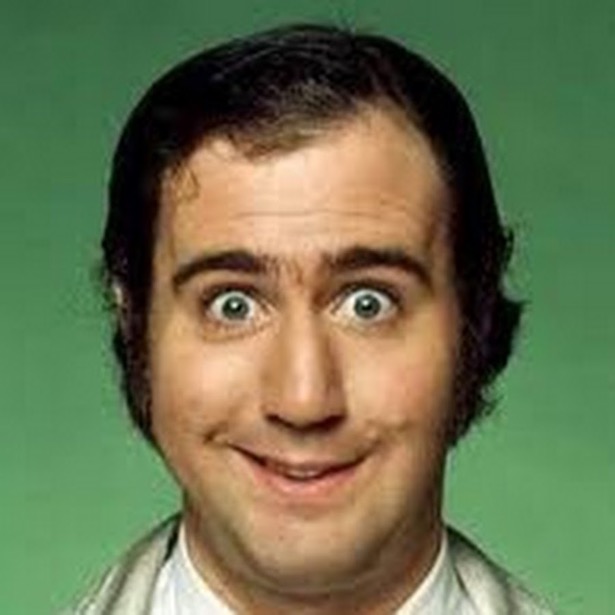
In the old sitcom Taxi Andy Kaufman plays Latka Gravas, a mechanic, an immigrant with a funny high-pitched voice. And then at one point Latka starts to transform himself into someone else — into Latka’s idea of a cool guy, a successful guy. He gradually loses his eastern European accent, and his voice drops an octave. To the people he works with he sounds like a lounge lizard, or a parody of a lounge lizard: a guy who reads the articles in Playboy as a guide for self-improvement. He says that his name isn’t Latka Gravas. His name is Vic Ferrari.
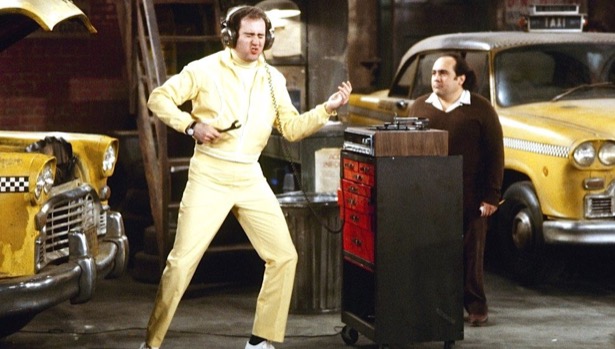
It doesn’t go well. Vic scornfully repudiates Alex and the rest of the crew. He says that everybody liked him when he was the foreign guy with the funny voice, when he was shy, silly, dopey Latka, a figure of fun, a clown. Nobody respected him then. Of course they want that guy back, someone they can all laugh at. Of course that’s who they’d prefer him to be.
Alex, being the mensch that he is, takes all this in, and acknowledges that there is truth in it. People did laugh at Latka, they did treat him as the comical foreigner, and they shouldn’t have done that. All that (ruefully) acknowledged, Alex still wants to make a point. “I liked Latka,” he says. “But I don’t like you.”
what can’t be changed
Many outlets have reported in recent days that Facebook is testing the removal of Likes from posts. Let’s say they do eventually implement this feature. If so, then the first question is whether it will be opt-in or opt-out. That is, will Likes show unless you choose not to show them, or will they be hidden unless you choose to show them?
My guess is that, in either case, and despite the many calls by tech journalists for changing the way Facebook works, most Facebook users will want to keep counting Likes. We need to remember that there are over two billion Facebook users, and hundreds of millions of them have undergone years of operant conditioning: they have been trained to seek Likes, to rejoice in Likes, to be made miserable by the absence of Likes. Many of them have returned thousands and thousands of times to Facebook to check their count of Likes, refreshing their browser tab even when they don’t need to. The habit of measuring their personal value by Likes is so deeply ingrained that it is difficult to see how a significant number of them will break it. Or even really want to.
I don’t think we reckon with this phenomenon often enough, or seriously enough. The major social-media companies have been conducting for the past decade an implementation of B. K. Skinner’s principles more massive than anything we can truly imagine. They have found ways to get billions of people to volunteer for the experiments and devote sometimes hours a day to pursuing them. Operant conditioning at this level works. And its effects are difficult to undo.
One way to see this: often when people get sick of Facebook or Twitter or Instagram and find some other online venue, they simply bring with them to their new location the habits they learned in the previous ones: the snark of Twitter, the rants of Facebook, the posturing of Instagram. It’s like the old line about travel: wherever you go, there you are. It’s hard enough for people to leave Facebook or Instagram or Twitter behind; what’s almost impossible to leave behind is the person that those sites’ algorithmic behaviorism turned you into.
terror and history
This excellent post by my colleague Philip Jenkins reminds us of an earlier era — just 25 years ago! — when America was worried about right-wing terrorists. As I have often pointed out — see here and here — it’s not just the distant past we’ve forgotten, it’s the very recent past. And that forgetfulness makes it very difficult for us to come up with appropriate and proportionate responses to our current problems.