This is going to be hard to believe, but these pastries from @milowaco taste just as good as they look.

race and ethnicity in the Potterverse
Race and ethnicity are pretty weird in the Potterverse because of the peculiar ways that fictional world overlaps with our own. This weirdness emerges frequently in Fantastic Beasts: The Crimes of Grindelwald, as my friend Adam Roberts recently commented to me. What follows is an expansion of my response to Adam.
Consider Lela Lestrange: a member of a family notorious for its obsession with purity of wizarding blood, and yet also a mixed-race woman. If you were reading her story in a book, you’d be able to focus on her pure-blood status; watching her in a movie, you are continually reminded of the color of her skin and how it differs from that of the very white Scamander boys who love her.
Or think of Nagini: a Maledictus, a woman under a curse that transforms her into a snake, a woman (we are told) from Indonesia — and who is played in the film by a South Korean actress. That she is a Maledictus is the only thing that matters in the context of the story; but that may not be the only thing that viewers see.
Strangest of all, note this scene: a group of Aurors from various Ministries of Magic find themselves in the midst of a rally led by Gerrit Grindelwald. There is also among them one Muggle, Jacob Kowalski, and one might think that he would be especially frightened and endangered, since Grindelwald’s message is implicitly anti-Muggle. (Grindelwald keeps saying that he doesn’t hate Muggles, that he only wants wizards to live freely in the open — to have Lebensraum, one might say — but come on.) Yet when the camera looks away from Grindelwald, it tends to linger on the anxious face of one of our lead characters, Tina. Why is she so anxious?
The immediate and obvious reason is that she is an Auror, and Grindelwald has just announced to the crowd that there are Aurors among them. (This leads one witch to pull her wand threateningly on someone she perceives to be an Auror, which leads in turn to his killing her — an event which suits Grindelwald’s purposes very nicely, because it allows him to portray his movement as a peaceable one, its members constantly under threat from the violent policing of the magical world’s official bodies.) So Tina could well be fearful that the crowd will turn on her.
Might there be another reason for her to fear? Well, the sleuths of Potter fandom have discovered that she is a half-blood. (Their primary evidence: this.) Does that make her vulnerable among Grindelwald’s supporters? Maybe not: so far he has not sounded the pure-blood clarion the way Voldemort will later do — at least, not that I recall. His emphasis is strongly on the Magic-Muggle dichotomy. So maybe half-blood status doesn’t matter. Yet.
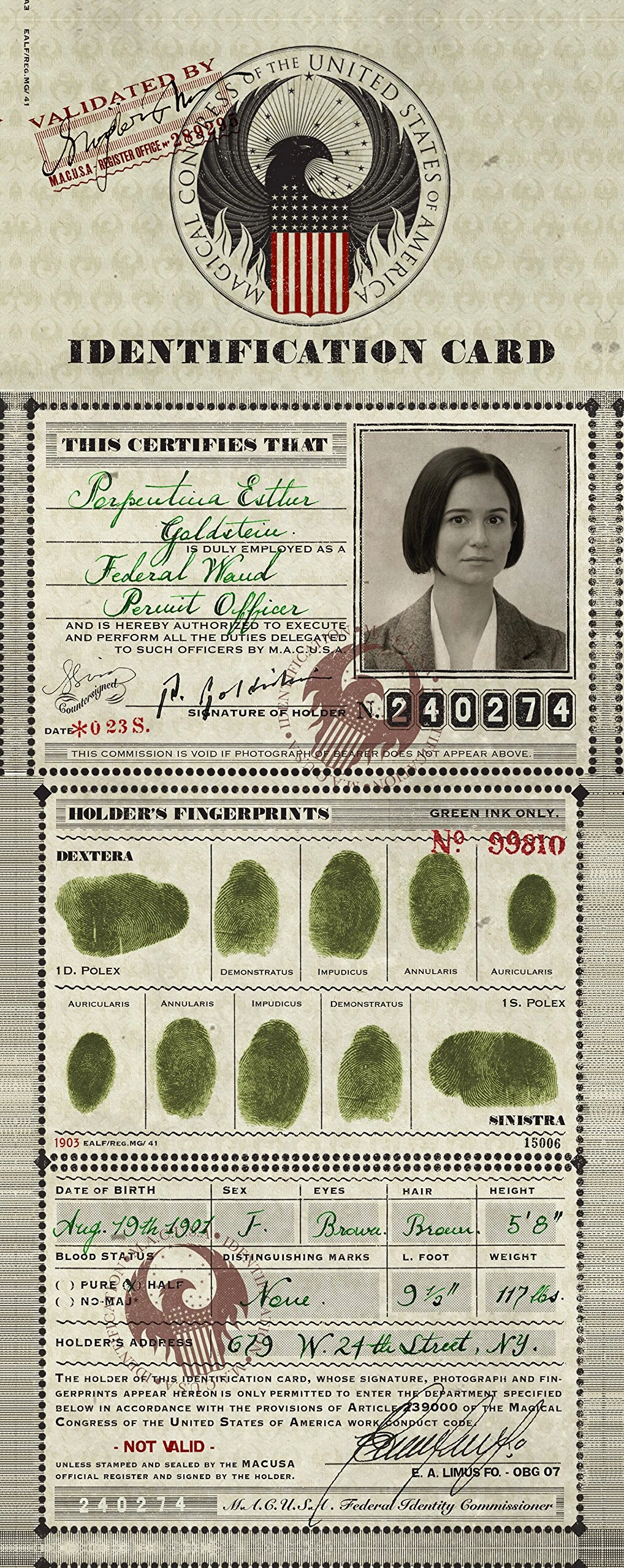
But then there’s this: Tina’s full name is Porpentina Goldstein, something that’s very hard to forget when she stands in a crowd of people who follow the extravagantly Aryan Grindelwald. Does being Jewish matter in the wizarding world? Do the various prejudices and racial identifications that do such powerful work in our Muggle world have any purchase among the magical? The general tone and tenor of the Potterverse would suggest not, but at moments like these….
Adam Roberts also recently pointed me to a series of poets by Phil Edwards on Rowling’s worldmaking. Edwards posits a rough taxonomy of fantasy worlds — the nuts-and-bolts, the numinous, and the satirical/polemical — and suggests that the Potterverse is “a hazy amalgam of all three, covered by repeated register-switching between them.” This seems right to me, and it helps to explain why the racial logic of our social order keeps floating in and out of view. It’s a rather disorienting phenomenon.
To some extent this kind of thing happens in all Fantasy — thus the permanent tendency of readers to see The Lord of the Rings as an allegory of the Second World War, and thus also Tolkien’s endless frustration with that reading. In Edwards’s terms, Tolkien had, he thought, done enough nuts-and-bolts work to rescue his story from such easy analogies. But Rowling seems positively to court such allegorical readings — only to swerve away from them later.
the call to maintenance
I’m full of ideas after reading this amazing essay by Shannon Mattern, “Maintenance and Care: Fixing a Broken World”:
In many academic disciplines and professional practices — architecture, urban studies, labor history, development economics, and the information sciences, just to name a few — maintenance has taken on new resonance as a theoretical framework, an ethos, a methodology, and a political cause. This is an exciting area of inquiry precisely because the lines between scholarship and practice are blurred. To study maintenance is itself an act of maintenance. To fill in the gaps in this literature, to draw connections among different disciplines, is an act of repair or, simply, of taking care — connecting threads, mending holes, amplifying quiet voices.Mattern links to the site of The Maintainers, who set themselves in ironic opposition to “the innovators”:
“Innovation” has become a staple of analysis in popular histories – such as Walter Isaacson’s recent book, The Innovators: How a Group of Hackers, Geniuses, and Geeks Created the Digital Revolution.This converges with David Edgerton’s marvelous book The Shock of the Old, with its account of how familiar technologies get continually renewed and repurposed, but also resonates with the great call of Tikkun olam: the repair, the renewal, the maintenance, of the world.The Maintainers is a global, interdisciplinary research network that takes a different approach, one whose conceptual starting point was a playful proposal for a counter-volume to Isaacson’s that could be titled The Maintainers: How a Group of Bureaucrats, Standards Engineers, and Introverts Made Technologies That Kind of Work Most of the Time.
As a Christian and a professor of humanities, I find all this especially intriguing because it offers a subtle but vital correction to more familiar ideas of “conserving” or “upholding” a tradition. Traditions, seen from the perspective of a Maintainer, need active caring for. They must be kept in constant repair. To put them away in glass cases is to render them useless, so they must be taken out and used, but that exposes them to wear and tear to which the Maintainer must always be sensitive. They must be actively tended to, like an internal combustion engine, or a garden. There’s a whole Theory of Life here. Or my life, anyway.

what I hear in church
The Episcopal Church, on the other hand, couldn’t trick me with promises of divinely ordained succession or sharply define anything that happened in any given sacrament. I appreciated the humility about what we could know and the sense of contingency. Everything could have been different, but this is how things turned out. The Book of Common Prayer was beautiful, its language homely in the most exalted meaning of the term. It was human-sized.— B. D. McClay. If that’s what I had learned in Anglican churches — that I shouldn’t trouble God, that there’s nothing to touch and nothing to consult, that I shouldn’t or can’t reach toward a God who reaches toward me (or maybe doesn’t), that if I crossed “some bright red line” my sins would be mine to bear, without the hope of forgiveness — then I might well be a Catholic too. Certainly I wouldn’t be an Anglican.But alongside this humility, there was something else, a kind of stiff-necked quality — attractive at the human scale but less so when applied to the divine. Don’t trouble God, he’s busy and has other things to do; no hysterical weeping, no over-the-top saints, nothing to touch, nothing to consult. Mary, when she’s present, stays decently off to the side. Instead of reaching over the gap toward a God who reaches back to you, you quietly stay in your place.
And if you cross over some bright red line, that’s it. Your sins are yours to bear. There’s nothing else that can be done for you. Assessing what you’ve done and what to do about it are up to you. Up to you to figure out when you’d done enough. But you won’t ever do enough, and you’ll never be forgiven. And why, with all the advantages afforded to you, and with the harm you will always have done, should you be?
But when I go to church, I (with the rest of the congregation) ask for God’s forgiveness, and then the priest says these words to me:
Almighty God, our heavenly Father, who in his great mercy has promised forgiveness of sins to all those who with heartfelt repentance and true faith turn unto him: have mercy on you, pardon and deliver you from all your sins, confirm and strengthen you in all goodness, and bring you to everlasting life, through Jesus Christ our Lord. Amen.And then that priest says to me the Comfortable Words, which conclude with this sentence from St. John: “If any man sin, we have an Advocate with the Father, Jesus Christ the righteous; and he is the perfect offering for our sins, and not for ours only, but for the sins of the whole world.” And that’s what I count on.
To any churches out there that proclaimed the message that B. D. McClay heard, and that brought her so much pain: great is your sin.
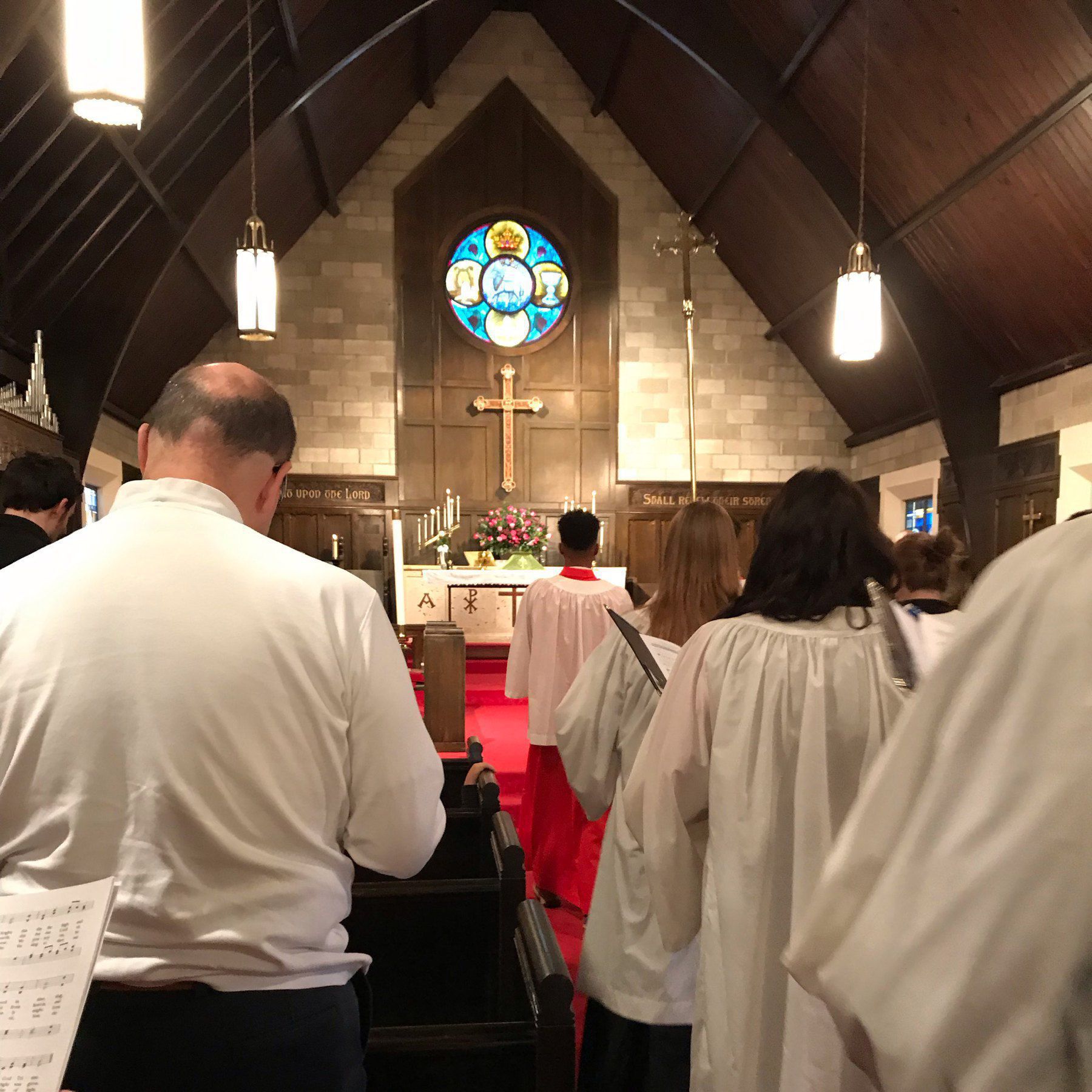
I love pretty much everything about Anglican worship, but I have a special fondness for the procession.


Tim Larsen on John Stuart Mill
My friend Tim Larsen has written an absolutely fascinating brief biography of John Stuart Mill. (It appears in the Oxford Spiritual Lives series, of which Tim is also the editor.) Everyone knows that Mill had little time for or interest in religion, and that his father James Mill, aide-de-camp to that great enemy of faith Jeremy Bentham, was even more hostile than JSM himself. Given JSM’s secular and rationalist upbringing, it cannot be surprising that, as he put it, “I looked upon the modern exactly as I did upon the ancient religion, as something which in no way concerned me. It did not seem to me more strange that English people should believe what I did not, than that the men I read of in Herodotus should have done so.”
However, as Tim shows convincingly, this statement is seriously misleading to the point of being simply untrue. The same must be said for the familiar family story. James Mill was a licensed preacher and had turned to the life of a writer and public intellectual only after failing to get the kind of pastoral position he thought he was qualified for — a fact he carefully hid from his children — and probably didn’t become a complete unbeliever until he was in his mid-forties, by which point JSM was already a ten-year-old, or older, prodigy. James’s wife Harriet was a Christian, each of their nine children was baptized in the Church of England, and probably only two of them (JSM and his youngest sibling George Grote) departed in any significant way from standard-issue Victorian religion. JSM grew up learning not only the Bible but the worship of the Church of England. Nothing about that religion was strange to him.
Moreover, Tim also demonstrates that throughout the course of his life JSM held to a minimal but stable theology, which he summarizes thus:
Even from a scientific point of view and without any intuitive sense or direct experience of the divine, there is still sufficient evidence to warrant the conclusion that God probably exists; God is good, but not omnipotent; the life and sayings of Christ are admirable and deserve our reverence; the immortality of the soul or an afterlife are possible but not certain; humanity’s task is to co-labour with God to subdue evil and make the world a better place; the affirmations in the previous points such as that God exists and is good cannot be proven, but it is still a reasonable act to appropriate these religious convictions imaginatively not he basis of hope.(One of the most interesting parts of Tim’s book is his exploration of the potent role “hope” played in Mill’s moral and intellectual lexicon.) There is much more than I might comment on, especially Mill’s alliances with evangelical Christians in his campaign for the rights of women — his rationalist friends were generally cold to this idea — and the interestingly varied religious beliefs of his family, but I will just strongly suggest that you read the book. Its subtitle is “A Secular Life,” and JSM’s life was indeed secular, but not in a modern sense. As Tim puts it, in the Victorian era, even for atheists “the sea of faith was full and all around.”
Not really what I expected when searching for “Christian calendar” …

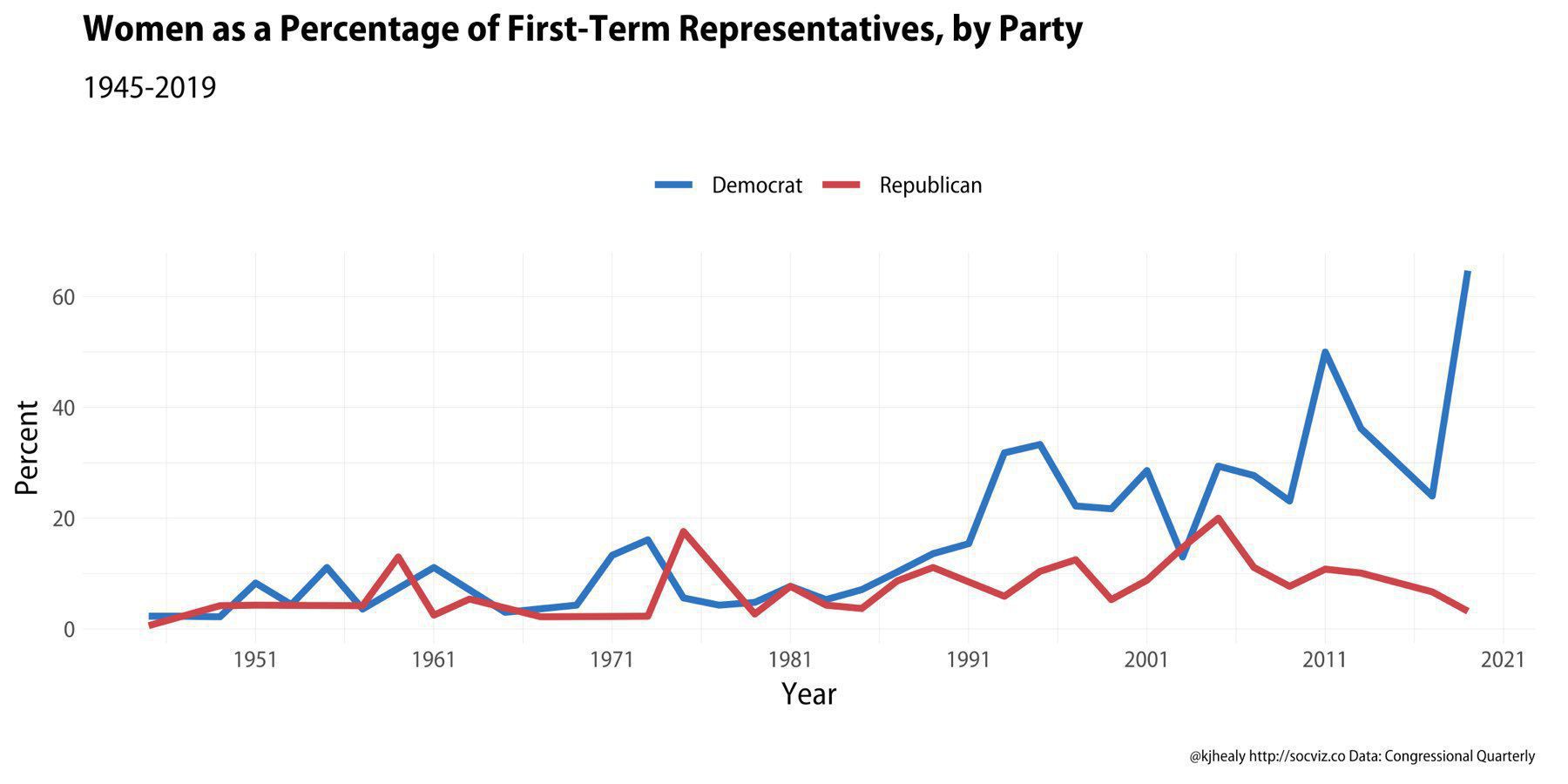
Interesting data from Kieran Healy.