
By me: Blow-Up: A Parable
I’m pleased to say that I will be editing another volume in the Auden Critical Editions series: the 1951 collection Nones.

So pleased to see Philip Hensher’s rave review of Francis Spufford’s Nonesuch. I had the privilege of reading Nonesuch during the process of composition, and let me tell you, it’s everything Hensher says it is. What a book.
See also Andrew Motion’s review in the TLS: “These themes converge on a similar point. They all concern the possibility of transfiguration – the likelihood that apparently stable forms, stable feelings and stable concepts, including everything from love to money to time itself, are less predictable than people like to think. Is this Francis Spufford’s way of arguing the merits of unprovable faith in non-human interventions (he has written a book about his own Christianity) while also entertaining his readers with a jolly romp? Possibly. In all events, the distinction of his book is that it conveys by all manner of means the pleasures of finding the unexpected within the predictable.”
Can’t imagine a better Lenten endeavor than to read and reflect on Matt Milliner’s close encounter of the chatbot kind.
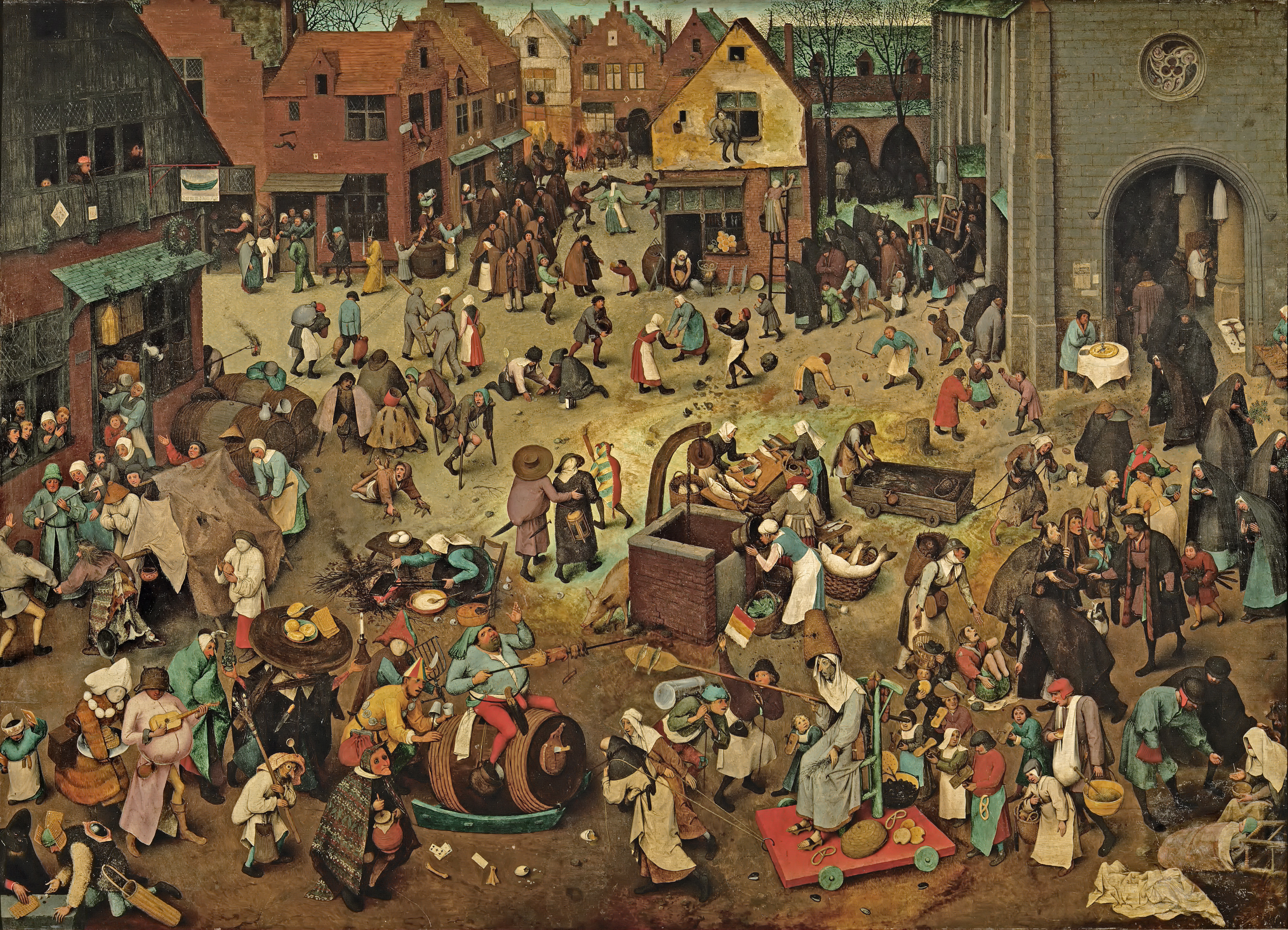
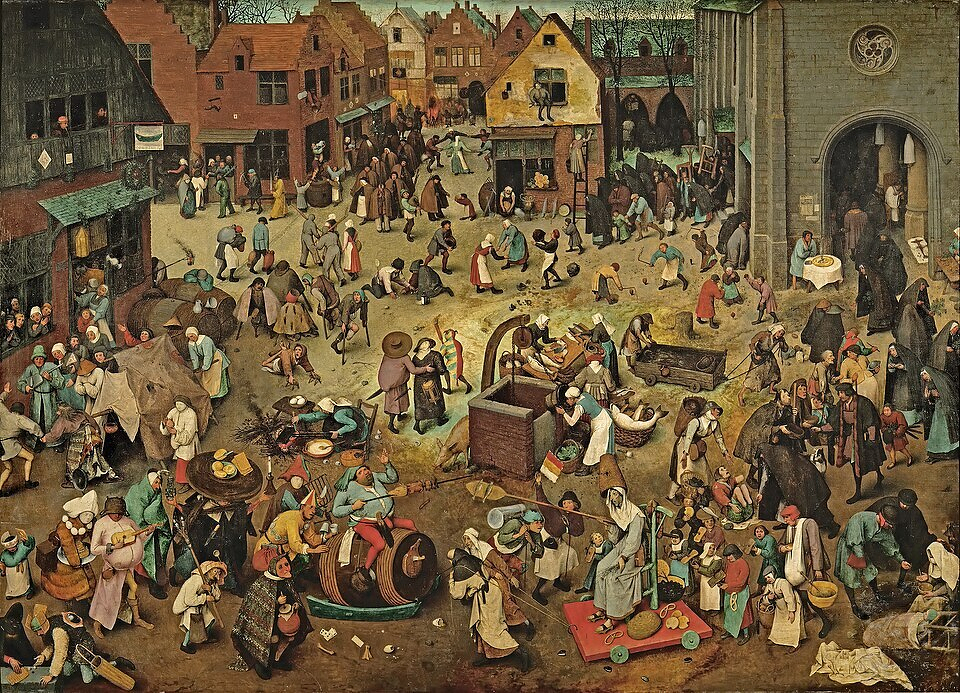
Pieter Bruegel the Elder, The Fight Between Carnival and Lent. Very large version here. As Auden reminds us, one of the most noteworthy elements of these crowded Bruegel paintings is the depiction of people going about their own business, completely oblivious to whatever theme or topic the painting is supposed to be depicting.

Currently reading: Why I Am Not an Atheist: The Confessions of a Skeptical Believer by Christopher Beha 📚
Mary Elizabeth Groom’s engravings from the 1937 Golden Cockerel Press edition of Milton’s Paradise Lost:

Last week I announced to my BMAC supporters that I’ll be severely curtailing my Big Blog for the foreseeable future, but I’ve discovered that I have a few drafts of essays — nearly finished or else complete but with no obvious home — that I could post. So one of those went up today: it’s on making movies and making war. I wrote it after reading Dan Wang’s Breakneck.
I’m grateful to Amanda Patchin for this generous review of my Paradise Lost biography.
Thinking of buying this house — I mean, how much could it cost?