
on not being excluded from a stupid narrative
I wrote recently about not writing about politics, but I have been reminded this morning that such avoidance is more easily vowed than accomplished — and not because I’m tempted to crawl back into those fetid waters, but rather because the waters keep rising and contaminating the previously safe, dry ground.
Example: yesterday President Trump gave a bland, vacuous speech about Western values, the achievements of the West, blah blah blah — the kind of speech that politicians give all the time and that could have been given (with very few modifications) by Barack Obama — and now, as Rod Dreher points out, leftish people are freaking out over the secret alt-right dog-whistly meanings of the speech. Which means that if I want to comment here about the book I am currently reading, those comments — and probably the book itself — will be understood within the context of this ever-spreading and increasingly idiotic partisan wrangling.
Near the end of the post, Rod writes, “If standing against this kind of liberal insanity means I have to stand with Donald Trump, well, okay, I’ll stand with Donald Trump. I won’t like it, but at least Donald Trump doesn’t hate his own civilization.” Y’all know I love Rod, but I’m going to part company with him on this one. Donald Trump indeed does hate his civilization — or, more accurately, he despises it. He just doesn’t say he does. Like pitch, he defiles what he touches, and people obsessed by his every word, people whose hatred of him controls their minds, simply spread the defilement. It does not seem to occur to Trump’s most vocal denouncers that they are aiding and abetting his lust to own the world’s mindspace — and so helping him clinch his biggest real estate deal ever. His haters are his unpaid apprentices.
I will not choose between Trump and his haters. There are better ways to live, and the vital questions raised by the complex history (and even more complex inheritance) of the Western world extend far beyond this moment in electoral politics. Therefore “I would very much like to be excluded from this narrative, one I have never asked to be a part of.” But exclusion from the narrative is much more easily wished-for than achieved.
Chief Justice John Roberts to the graduates of ninth grade
Now commencement speakers are also expected to give some advice. They give grand advice, and they give some useful tips. The most common grand advice they give is for you to be yourself. It is an odd piece of advice to give people dressed identically, but you should — you should be yourself. But you should understand what that means. Unless you are perfect, it does not mean don’t make any changes. In a certain sense, you should not be yourself. You should try to become something better. People say ‘be yourself’ because they want you to resist the impulse to conform to what others want you to be. But you can’t be yourself if you don't learn who are, and you can’t learn who you are unless you think about it.Full transcript here. I’ve never seen a better commencement speech.
the weakness of religion
I am by most measures a pretty deeply committed Christian. I am quite active in my church; I teach at a Christian college; I have written extensively in support of Christian ideas and belief. Yet when I ask myself how much of what I do and think is driven by my religious beliefs, the honest answer is “not so much.” The books I read, the food I eat, the music I listen to, my hobbies and interests, the thoughts that occupy my mind throughout the greater part of every day – these are, if truth be told, far less indebted to my Christianity than to my status as a middle-aged, middle-class American man.Of course, I can’t universalize my own experience – but that experience does give me pause when people talk about the immense power of religion to make people do extraordinary things. When people say that they are acting out of religious conviction, I tend to be skeptical; I tend to wonder whether they’re not acting as I usually do, out of motives and impulses over which I could paint a thin religious veneer but which are really not religious at all.
Most of today’s leading critics of religion are remarkably trusting in these matters. Card-carrying members of the intelligentsia like [Christopher] Hitchens, Richard Dawkins and Sam Harris would surely be doubtful, even incredulous, if a politician who had illegally seized power claimed that his motives for doing so were purely patriotic; or if a CEO of a drug company explained a sudden drop in prices by professing her undying compassion for those unable to afford her company’s products. Discerning a difference between people’s professed aims and their real aims is just what intellectuals do.
Yet when someone does something nasty and claims to have done it in the name of religion, our leading atheists suddenly become paragons of credulity: If Osama bin Laden claims to be carrying out his program of terrorism in the name of Allah and for the cause of Islam, then what grounds have we to doubt him? It’s not like anyone would lie about something like that as a strategy for justifying the unjustifiable, is it?
— Me, nine years ago. I still hold this view.
Lake Waco Wetlands


These wetlands aren’t on the lake as such, but are just off one inlet of it. They are remarkably beautiful and very little-known, even here in Waco. Click on the photos for larger versions.
against epistocracy
Only those narrow few who benefit from today’s system of elite rule could possibly see such rule as a good thing, or contemplate its further entrenchment. For the rest of us, the old cliché about democracy being the worst form of government except for all the others remains as true as ever. It is certainly preferable to epistocracy and oligarchy, which empower the most arrogant and least self-aware segment of society to make decisions about the lives of those whom they do not understand or care about. However dysfunctional our democracies may get, it will remain true that the people least qualified for power are those who are most convinced that they should have it.
an image
After Henrik Ibsen became a great man, a great artist, one of the most famous people in Europe, fans and scholars made their way to the places in Norway where he grew up to seek reminiscences. Michael Meyer, in his massive biography of Ibsen, records that one woman from Ibsen’s home town of Skien recalled seeing him, when he was a small boy, walking to school in the mornings, and what she remembered above all was that he often wore a red woolen cap. The snow on the banks of the path he walked would typically block the boy from sight, so that all she could see, from the window of her house, was the vivid color of the cap bouncing above the whiteness. Ibsen became the greatest dramatist of the nineteenth century, but to this woman he would always be, first and last, a small boy with a bright red cap on his head, walking to school through the snowy streets of a small Norwegian town.
why copy editors matter
The ugly secret of newspapers is that copy editors do a great deal of what non-journalism people think reporters or other editors, with fancier titles, do. They have for generations caught typos; deleted potentially horrifying factual errors; made 20 inches of bloated copy into a tight, bright, and juicy 12; noticed inconsistencies in a narrative and put a reporter on the phone to walk through fixing them; pushed back against the use of empty political jargon; made sure the photos matched the story; made sure stories get to the point before readers become bored; and done what is easily one of the most important jobs of all—crafting the headlines that make people read the stories.
[caption id="" align=“alignnone” width=“690”]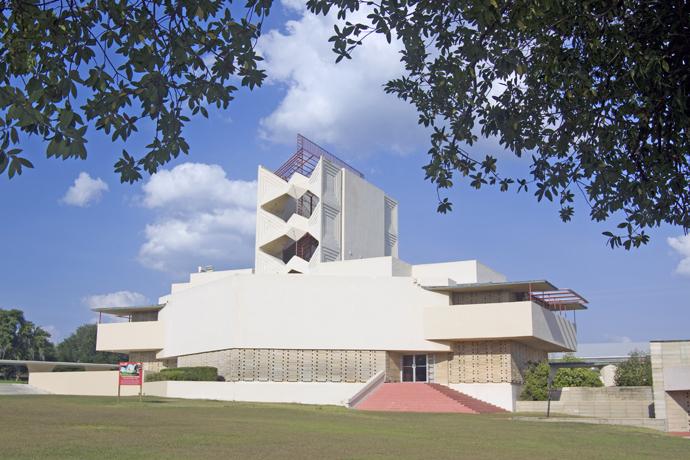 Pfeiffer Chapel at Florida Southern College, designed by Frank Lloyd Wright[/caption]
The Burial of the Dead
The Christian church has another narrative, but we must teach it to ourselves over and over repeatedly, or the world will run away with it altogether. For at least fifty years, the majority of clergy in the majority of congregations have allowed the church's teaching about death and funerals to deteriorate, and have let the traditional burial service slip away in favor of any number of generic, syncretistic intrusions. Returning to the power of the Christian gospel in life and in death is not only an affirmation; as such, it is a form of resistance to the story that the secular spiritualists are telling us. My husband and I are preparing to put our funeral wishes on file with the church from which we will be buried. The list will include such things as the presence of the body in the church (covered with the church's funeral pall), real pallbearers (not undertakers), a significant sermon about death and resurrection, strong hymns, no "eulogies," and the conspicuous absence of the phrase "a celebration of the life of..." on the front page of the program. In the Book of Common Prayer, the service is called "The Burial of the Dead." If that is too stark, a fine alternative is "A Service of Witness to the Resurrection."
revolutionary products
When Jobs announced the device, he called it “a revolutionary product”, one of those that comes along and “changes everything”. In many ways he was right. Merchant describes it as an agent of “civilisation-scale transformation”, the first universally desired, portable technology since clothes. But by the end of the book he backs away from this a bit. A welcome note of humility comes from an engineer who helped build the software: he points out that devices tend only to dazzle in their moment: “My wife is a painter. She does oil painting. When she does something, it’s there forever. Technology – in 20 years, who’s going to care about an iPhone?”— Jacob Mikanoswki. I suppose that depends on what you mean by “care about an iPhone”: in 20 years iPhones as such may not exist, but I suspect that most people will care very much about the always-connected way of life that the iPhone first made feasible and attractive. In the same way, if in the future every word of text is produced and distributed digitally, no one will care about the printing press; they may not even know what a printing press is; but they will care very much about the world the printing press first made possible. (I’m not saying that the iPhone as an invention is as important as the printing press. I’m also not saying that it won’t be.)