

John Fuller
This is a really lovely profile of the poet and critic John Fuller, whom I admire greatly in both of his roles, on the occasion of his eightieth birthday. When I was working on my critical edition of Auden’s poem The Age of Anxiety, I of course heavily consulted Fuller’s magisterial commentary on Auden — and then when I was working through the Auden manuscripts at the Harry Ransom Humanities Center at the University of Texas, I would sometimes find in the folders and notebooks small handwritten notes by Fuller, correcting some mistaken attribution or pointing out some further piece of information. When working in those archives he had taken the time and trouble to make things easier for those who would come after him — an extraordinary act of scholarly generosity.
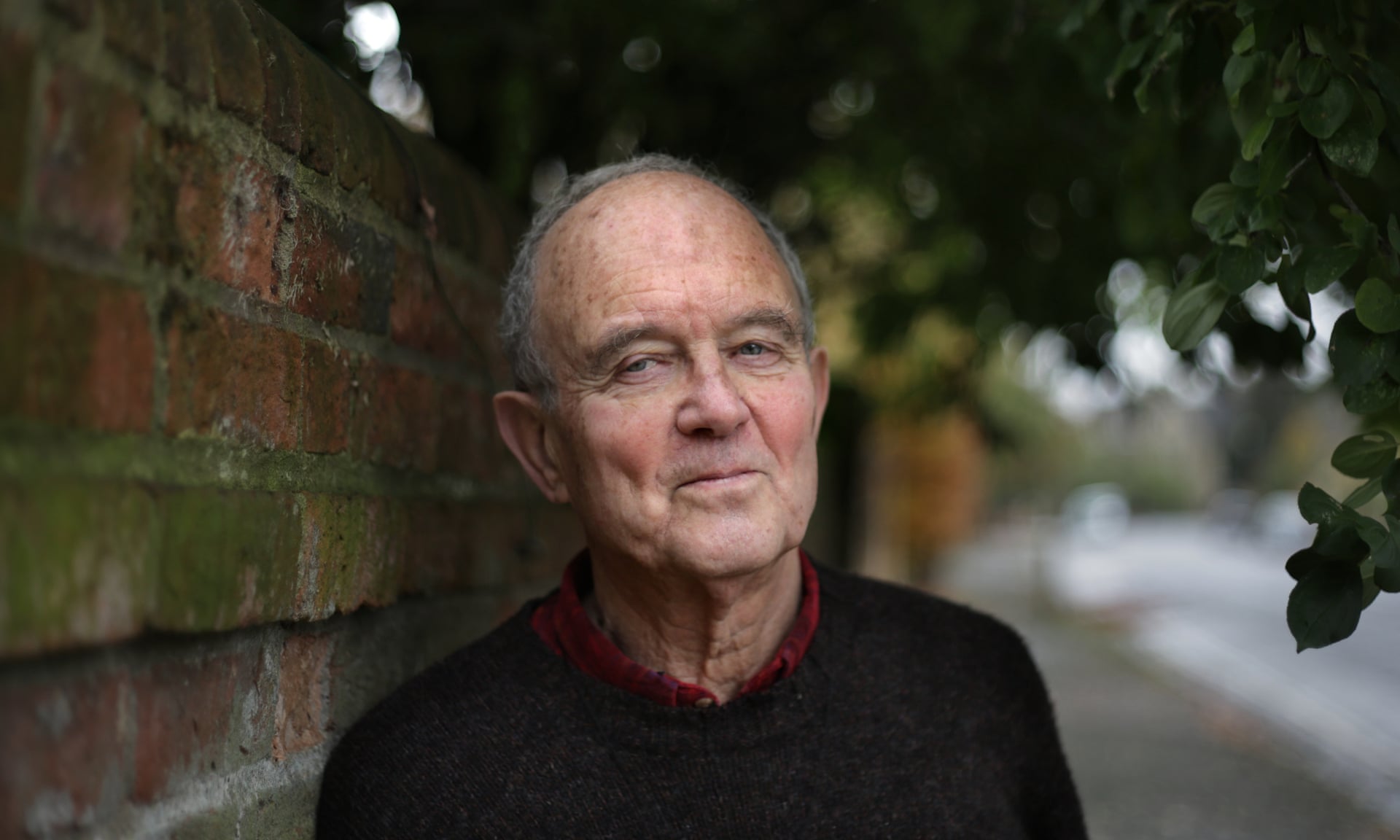
And then, when the edition came out, I received a gracious letter from Fuller. In a gently apologetic tone, he explained that, though he had been asked to review the book, he could not, as he had retired from reviewing. But he wanted me to know that he thought I had done an excellent job and that he had learned a good bit about the poem from my introduction and notes. For a few days I was quite swollen with pride about that.
The profile concludes with these lovely lines from Fuller’s new book:
Lucent the points of burning air. To sit On terraces is to not want to go So long as the flames glow. No, not one bit. Reluctance is a struggle: burning slow, Or hoping to be suddenly relit Like those renewing birthday candles. Though Birthdays have been and gone, and few will come Again, still, think of this: there may be some.
There may be some, indeed; and I hope for Mr. Fuller more than a few. He is a gentleman and a scholar and, of course, a poet.

turf
The message is clear. The only web site that you can trust to last and have your interests at heart is the web site with your name on it.
the limits of pluralism
Much of the history of religion in America has been written to emphasize the triumph of pluralism. Perhaps rightly so. That has meant, however, that those who have never conceded the premise that all or most religions, or even most Christian denominations, are more or less equal, have not been taken as seriously in our histories as they might. Even today there are vast numbers of Americans who, although committed to live at peace with other religious groups, believe it is a matter of eternal life or death to convert members of those groups to their own faith. Like it or not, such evangelistic religion has been and continues to be a major part of the experiences of many ordinary Americans. The dynamics of such religious experience need to be understood if one is to understand large tracts of American culture. Indeed, the tensions between religious exclusivism and pluralism are among the leading unresolved issues shaping the 21st century world.
– George Marsden, Jonathan Edwards: A Life
my Premier League mid-season awards
- Goalkeeper: David de Gea
- Central defender: David Luiz (can't believe I'm saying this)
- Fullback/wingback: James Milner
- Defensive midfielder: N'Golo Kanté
- Attacking midfielder: Kevin de Bruyne
- Forward: Alexis Sanchez
- Striker: Diego Costa
- Manager: Antonio Conte
reading Perlstein
Here’s a typical passage from Rick Perlstein’s The Invisible Bridge — and apologies in advance for being too lazy to type it out. This one concerns American POWs in Vietnam:

I want to focus on two phrases here: “cruel oriental despots” and “stout-hearted men.” Notice that Perlstein isn’t quoting anyone here. If any of the POWs actually referred to their captors as cruel oriental despots or to themselves as stout-hearted men, Perlstein doesn’t say so. And if you go to Perlstein’s web site and check out his notes for the book, nothing he links to contains such language. Yet no one reading this paragraph could possibly think that this is Perlstein’s own description of either the POWs or their captors. So how would we describe what Perlstein is doing here?
Two pages later, he writes, “Plenty of ordinary Americans … could point out, in the face of the orgy of jingoistic discourse about an enemy whose cruelty knew no bounds, that however ugly the treatment of American POWs might have been, the treatment of prisoners by our South Vietnamese allies was exponentially worse.” Here again let me call attention to two phrases: “point out” — not argue, not claim, but point out, which you can only do when something is true and real — and “might have been.” American POWs might have been treated badly, but that their enemies’ treatment was “exponentially worse” is one of those obvious things that one can simply point out.
But how were the American POWs treated? Interestingly, Perlstein never (as far as I can see) says a single word about what actually happened to them. He describes, and even includes a photograph of, mistreatment of North Vietnamese prisoners, in an 850-page book he can’t spare a sentence even to describe what the American POWs said happened to them — even though many of them, most famously John McCain, have spoken and written about their experiences.
Why this curious absence? Perhaps because if such information were included some readers might not agree that “the treatment of prisoners by our South Vietnamese allies was exponentially worse” — and therefore the Manichaean simplicity of Perlstein’s narrative would be endangered. Put together his refusal to tell the American POWs’ stories with his references to “cruel oriental despots” versus “stout-hearted men” and a narrative emerges: Nothing especially bad happened to American POWs in Vietnam, but they came back telling a hubristic, racist story about their moral superiority to those “orientals,” and the equally racist and hubristic American public of course ate it up like candy.
Does Perlstein say that? He makes sure he does not. He just constructs his narrative in such a way that no other inference can possibly be drawn. Presumably he thinks of this as plausible deniability.
I made it about halfway through The Invisible Bridge before giving up. I genuinely don’t mind that he thinks that the liberals of the 1970s were Just Plain Right About Everything and the conservatives were Just Plain Wrong — it’s not like I’m unused to reading writers who think that way — but I really do mind a writer so relentlessly and ineptly cooking his evidentiary books, so clearly terrified that some reader might come to a different conclusion than the one he wants us to reach. Perlstein is a profoundly dishonest writer and his book is truly terrible.
The Glass House, fogged
[caption id=“attachment_29714” align=“aligncenter” width=“592”] by Fujiko Nakaya[/caption]