
excerpt from discussions on the Twitter HQ Slack channel
A: We’re still getting hammered in the press — well, everywhere really — for all the abuse some of our users take. Do we have any new ideas about how to fix that?
B. I’ve got this idea for adding a kind of news feed, we can call it … hang on … yeah, let’s call it “Moments”
A. “Moments”?
B. Right. “Moments”
A. And this will help us deal with the abuse problem how?
B. If we put it where the Notifications tab used to be people will click on it like all. the. time
A. Okay, but …
C. You know this “140 character” thing has been an albatross around our necks for EVER
A. Hang on, can we get back to the issue I was raising?
C. I mean, one hundred and forty? Why not, like, TEN THOUSAND
B. LOL
D. LOL
E. ROTFL
E. We’re totally doing this
For What It’s Worth: A Review of the Wu-Tang Clan’s “Once Upon a Time in Shaolin” | Dan Cohen

A wonderfully thought-provoking meditation on uniqueness, value, scarcity, the work of art in the age of mechanical reproducibility, and similar themes. Should be read, I think, in conjunction with the story reported here and here.
Gill Sans
[caption id=“attachment_15584” align=“aligncenter” width=“672”]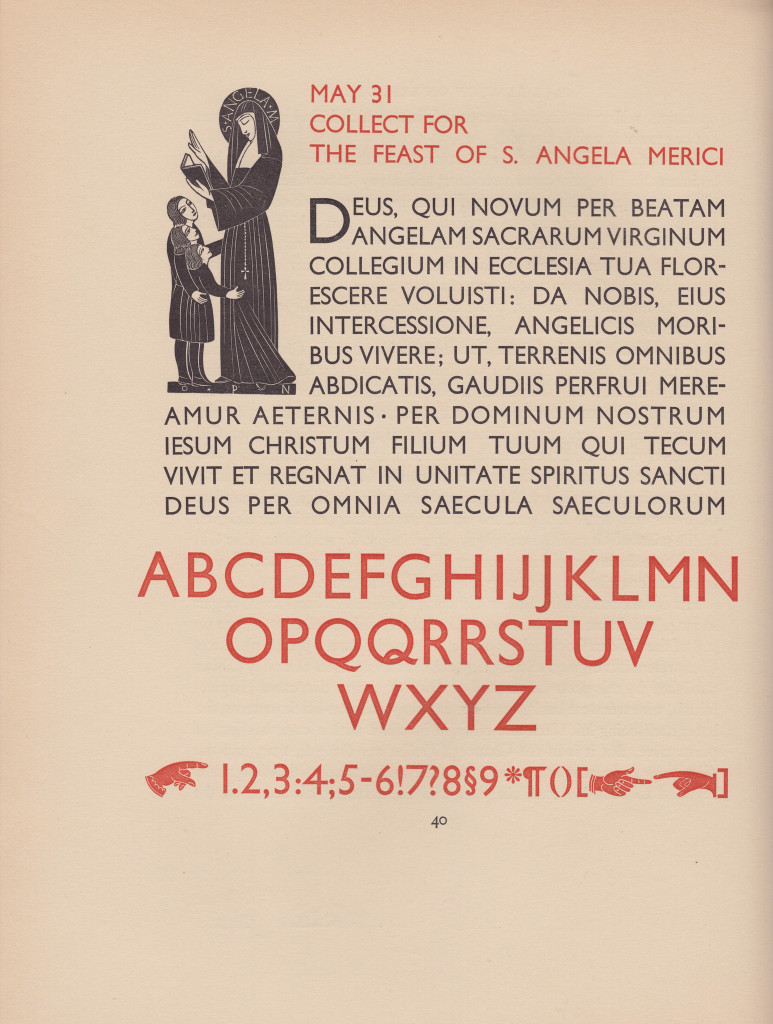 Sample page of Gill Sans, via Flickr user Mikey[/caption]
Agatha Christie's "And Then There Were N-word"
It has been published and adapted as Ten Little Indians and Ten Little Soldier Boys (though also, I have to say, sometimes republished under its original offensive title, right up to the 1970s), and naturally the option is available to me to discuss the text under one or other of these euphemistic names.But the offensiveness of using the original title needs to be balanced against the greater need not to airbrush away the immanent low-level racism of the culture out of which these novels were created. To render the racism of the past invisible is to empower the racism of today by inoculating it against history.
A New Role for Comments on Chronicle.com
Our default expectation is not that we’ll try to give every comment an airing; it’s that we’ll highlight worthwhile material. What counts as worthwhile material? That’s a judgment call, of course, and we’ll be making many such calls. We’re seeking to promote comments that are civil, informed, readable, issue-driven, and relevant to the article at hand.
— here. Percentage of comments that will meet all five of those criteria: .001.
Dusty sings "So Much Love"
[embed]youtu.be/H71YMS0Dj…[/embed]
Why don’t people go around telling one another about this song? Like, all day, every day? This is Dusty Springfield with a fabulous Memphis session band singing an amazing Carole King song. Do you understand? Listen to this. Tell your friends.
Fayetteville councilman calms church gunman
Wright said the man, who has not been identified by police yet, was carrying the rifle without a clip in one hand and a loaded ammunition clip in the other hand. But, Wright said, he didn't know if the rifle had a round of ammunition in it.— Story hereWright stepped down quickly from the pulpit when he saw the man, who appeared to be in his late 20s. The man continued moving toward the front of the church, pointing the rifle into the air. The two met, near the front of the sanctuary.“Can I help you?’’ the pastor asked the man.
Wright, who is a 57-year-old retired soldier, said the man’s answer determined his next action.
“If he was belligerent, I was going to tackle him,” said Wright, who is 6-foot-2 and 230 pounds. But the stranger was calm, and Wright took the weapon from him. He then patted him down, and the pastor summoned four strong deacons to embrace the disarmed man, in an effort to make him feel welcome. Wright then prayed for the man, who fell to his knees and began crying.
The man was then invited to sit on the front pew, and Wright resumed the Watch Night service. During the altar call at the conclusion, the man came forward and asked for salvation.
“He gave his life to Christ,” Wright said in an interview Saturday with The Fayetteville Observer.
The Gospel of Life
Today is the Feast of Saints Basil & Gregory Nazianzen, which reminds me that some years ago I wanted to write a book for the church that took the Cappadocians as our models. I never got beyond the proposal, in part because the editors I talked to weren’t enthusiastic; my idea seemed neither fish nor fowl, too churchy for an intellectual audience and too intellectual for a churchy audience. So I set the idea aside and am not likely, now, to return to it. In lieu of that I’m posting the proposal here.
Heroes. One of my heroes is Paul Farmer. Farmer is a physician who teaches at Harvard, co-edits a journal called Health and Human Rights, and leads an organization he founded called Partners in Health. That last role leads him to spend much of his time in Haiti, Rwanda, and other parts of the world where health care for the poor has traditionally been poor or nonexistent. For a couple of decades now Paul Farmer has done as much as anyone in the world to save the lives of people whom the world in general thinks not worth saving. And key to his devotion is his lifelong Catholic Christian faith.
I have other heroes. Some of them work for Care Net, an organization founded in 1975 by evangelical Christians to provide pregnant women with alternatives to abortion — and to provide counseling and compassionate attention to women who have had abortions. The people of Care Net also share the good news of the Christian gospel with the women whom they serve.
I have at times been in groups of people who know and respect the work of Care Net, but if in those contexts I mention my admiration for the work of Paul Farmer and Partners in Health, I am liable to get some suspicious looks. Paul Farmer’s theology is on the liberal end of the spectrum, as are his politics: for instance, he is a vocal admirer of the Cuban government’s health care system. He has had a book written about him by Tracy Kidder, also a political liberal and a thoroughly secular writer; Sixty Minutes, even, has done an admiring segment on him. He’s the liberal elite’s ideal do-gooder. What does that have to do with Christianity?
In other groups, people join enthusiastically in my praise for Paul Farmer — but become nervous when I mention my admiration for Care Net. They hear of an organization trying to provide women with alternatives to abortion and they think of large photographs of bloody fetuses held aloft by abortion-clinic protestors; they think of reactionaries who want to control women’s bodies and keep them barefoot and pregnant; they think of a conservative evangelical church in thrall to the Republican Party. If they saw the institutional history Care Net provides on its website they would be even more worried: “Care Net was influenced by the evangelical leadership of former U.S. Surgeon General Dr. C. Everett Koop and Christian apologist, Dr. Francis Schaeffer.”
And yet both Partners in Health and Care Net are pursuing the Biblical mandate to care for the weakest and most helpless among us. In so many ways they are doing the same work, and even are dedicated to the same goal — the preservation and healing of the lives of people made in the image of God. Why must we see them in opposition to each other? (And for all I know they may even see themselves in opposition to each other.) Such an attitude is simply tragic.
And the cause of the tragedy is this: that the categories of American politics determine the way that many American Christians think about ministry, mission, and service. The talking points and platform statements of the two major political parties provide the guidelines that many Christians use to judge things of the Gospel. Simply put, many American Christians have been intellectually formed by our political debates — especially as they are digested and interpreted on television news programs — far more than by immersion in Scripture or the great movements and figures of Christian tradition.
There have of course been attempts to bridge this political gap, primarily through Catholic social teaching. The late Joseph Cardinal Bernadin of Chicago was particularly associated with the notion of the “seamless garment” of life, the necessarily interwoven character of all attempts to promote human survival and human flourishing. Others have adopted the phrase “consistent life ethic” to indicate much the same emphasis. But often these voices have been ignored because they have been perceived as coming from a particular “side” in the already-existing political debate. (Similar criticisms have been directed against Jim Wallis’s God’s Politics: many a reviewer has commented that God’s politics seems to be indistinguishable from that of recent Democratic Party platforms.) Moreover, these movements tend to be grounded very specifically in Catholic theology, in ways that can be daunting or confusing for people who do not know that tradition well.
What is needed at this moment is a way of approaching these immensely complex yet utterly essential issues that evades our usual and comfortable political categories. We need to be taken out of our own time and place, so that we might see what a real Gospel of Life looks like to Christians who didn’t look much like us, think much like us, or live much like us. We need to travel to Cappadocia during the time of the Church Fathers. There we will find one family who, among themselves, practiced the Gospel of Life in all its fullness.
The Cappadocians. Cappadocia is a region in what is now central Turkey. In the time with which we are concerned, it was an economically and culturally vibrant place. To the north is the district of Pontus and the Black Sea. To the west are the shores of Asia Minor, then dotted with great cities — Ephesus particularly well known to us because of Paul’s visit and letter to the churches there. Due south one would have found Tarsus, Paul’s home town, whose great Mediterranean harbor was even then silting up and landlocking it. To the southeast is Palestine. In the late Roman world, Cappadocia was a great crossroads.
Sometime around the year 270, probably in the Pontus region, a woman was born named Macrina. Later she married — we don’t know her husband’s name — and had children. She was a faithful Christian, which it was not good to be in that time and place, for in the year 303, when Macrina’s son Basil would have been around eight years old, the Roman Emperor Diocletian and his colleagues Maximian, Galerius, and Constantius began issuing a series of repressive edicts aimed directly at the Christians of the empire. Eusebius, the great historian of the early church, who was around forty when the persecutions began, described the situation in this way:
This was the nineteenth year of the reign of Diocletian, in March, when the feast of the Saviour’s passion was near at hand, and royal edicts were published everywhere commanding that the churches should be razed to the ground, the Scriptures destroyed by fire, those who held positions of honor degraded, and the household servants, if they persisted in the Christian profession, be deprived of their liberty.And such was the first decree against us. But issuing other decrees not long after, the Emperor commanded that all the rulers of the churches in every place should be first put in prison and afterwards compelled by every device to offer sacrifice [to the old Roman gods]. Elsewhere in the Empire, particularly in the far west and north, these edicts were enforced half-heartedly or not at all; but in Cappadocia and Pontus the officials pursued Christians with real, and frightening, enthusiasm. Macrina and her family fled into the countryside, probably to the shores of the Black Sea, and waited out the persecutions.
The attempts to suppress Christianity waned over the next few years and were officially ended in 313, when Constantine the Great and his co-emperor Licinius issued the Edict of Milan, which guaranteed religious freedom for Christians. Pontus and Cappadocia were safe again, and Macrina raised her children in the Pontine city of Neocaeserea. Later her son Basil would marry a devout Christian woman named Emmelia — her father had been martyred in the persecutions — and move to Ceasarea, which would become the center of this family’s life. Basil established himself as a teacher of rhetoric and, more important, a lay teacher of the Christian faith, celebrated throughout the city for his wisdom and piety.
Basil the Elder, as he came to be known, and Emmelia went on to have ten children. We know the names of five of them: Macrina, Basil, Gregory, Naucratius, and Peter. We know those five names because all of them became recognized as saints of the church — as did Basil the Elder, Emmelia, and the matriarch Macrina the Elder.
Let us pause to contemplate this for a moment: one family; three generations; eight saints.
What did these people do to earn such lasting fame and praise? Here I will offer just a brief account:
- Macrina the Elder was canonized for her faithfulness in time of persecution;
- Basil the Elder for his powerful and influential teaching;
- Emmelia largely for the extraordinary family she raised, though she may also have had an active role in the ministries of some of her children;
- Macrina the Younger for her teaching of her younger siblings, and as the founder of a community for widows, abandoned women, and orphans;
- Basil, later Basil the Great, for his work as priest, bishop, scholar, defender of Trinitarian orthodoxy, champion of the poor and hungry, and founder of the Basileion, the first Christian hospital;
- Gregory, later Gregory of Nyssa, for much the same work as his older brother Basil did, though on slightly less titanic a scale;
- Naucratius, for his holy life as a hermit and as a servant of, especially, the elderly poor;
- Peter, later Peter of Sebaste, for his work as priest, monk, bishop, defender of Trinitarian orthodoxy, and as partner with his sister Macrina on behalf of the poor.
It’s all really quite overwhelming, and, when related in detail (as this book will do), deeply moving and encouraging. What’s especially noteworthy for anyone interested in the Gospel of Life is how seamless the family’s garment of service is. This can be seen with particular clarity in the career of Basil, who moved so easily from advocating for the poor in the pulpit to building the first hospital to combatting Arianism and other heresies of the time. It was one Gospel to him — and, I think, to the rest of his family — one unified model of human flourishing in Christ.
In order to understand why the way of life offered by this single Cappadocian family is so important an example for us, we might turn to the thirty-fourth chapter of the book of the prophet Ezekiel. Here Ezekiel is lamenting the circumstances that led to the collapse of Israel and the carrying off of its people, including Ezekiel himself, into captivity in Babylon. The fault, he says — or the Lord says through him — lies with the “shepherds,” the elders of Israel. The Lord denounces the shepherds thus:
The weak you have not strengthened, the sick you have not healed, the injured you have not bound up, the strayed you have not brought back, the lost you have not sought, and with force and harshness you have ruled them. So they were scattered, because there was no shepherd, and they became food for all the wild beasts. . . . My sheep were scattered over all the face of the earth, with none to search or seek for them.
Several things are noteworthy about this passage: the powerful condemnation of sins of omission, for which most of us tend to excuse ourselves; the opposition of ruling “in force and harshness” — domination — to compassionate care; and especially the bringing together of very different forms of suffering.
There are five categories of sufferers in this passage: the weak, the sick, the injured, the strayed, and the lost. It’s pretty clear that the first three apply in equally literal ways to sheep and to people: the Lord is accusing the elders of Israel of neglecting the physical sufferings of the people. But the remaining two categories have an equally clear metaphorical meaning when applied to people, as they do throughout the prophets (“All we like sheep have gone astray”). The Lord clearly says that the elders of the nation have neglected the spiritual as well as the physical needs of the people — they have been shamefully negligent across the board, obsessed instead with maintaining their own power to rule.
The behavior of the shepherds of Israel is a lamentable inversion, then, of the gospel that our Cappadocian family practiced. What the shepherds “did not” the Cappadocians did, like the two groups Jesus contrasts to each other (“those on his right” and “those on his left”) in Matthew 25, a passage that strongly echoes Ezekiel 34. It is by striving to see ourselves in these two distant mirrors — and not by situating ourselves or others on today’s American political map — that we 21st-century Christians can find our proper roles in Christ’s Kingdom, can find the genuine Gospel of Life.
I plan to narrate the story of this great Cappadocian family immediately after the book’s introduction (which will say in more detail many of the things I say in the opening paragraphs of this proposal). The family’s story is a powerful one, and will provide a host of examples that I can draw on throughout the book.
The Image of God. The next stage will start from a question: What was the biblical-theological model that our Cappadocian family was living out? What were their key principles, their core convictions? (Note that for us, as for Basil and his fellow Catholic bishops, sound orthodox theology and reverence for Scripture are indispensable to our lives in the Kingdom, and properly inseparable from the kind of work usually called “social ministry” or “compassionate ministry” — as though it is neither social nor compassionate to preach to all the story of Christ crucified.) My answer will follow a sequence of propositions that follow from the belief that all of us are made in the image of God. As Gregory of Nazianzus said in his great sermon “On the Love of the Poor,” “Do not despise those who are stretched out on the ground as if they merit no respect…. They bear the countenance of our Savior.”
- To be made in the image of God is to have dominion over creation.
- To be made in the image of God is to be in communion with God and with one another.
- Because we are fallen beings, the image of God is defaced in us, but it is not erased. We still show it imperfectly.
- We sin against the image of God in our neighbors when we fail to see that “they bear the countenance of our Savior,” and try to exert dominion over them instead of embracing communion.
- To follow Christ, to live in him and be conformed to his image, is to have the image of God in us restored.
- We are made in the image of God and yet — sometimes because of sin and sometimes because of the variety of created beings — we are all in some sense weak.
- The Biblical picture of God centers on his compassion for all forms of human weakness.
- Insofar as we are conformed to the image of Christ, we too will exhibit that compassion for weakness.
- And we will do so all the more because we too experience weakness and hope that people who are stronger will have compassion on us.
- To be in communion with one another is to give and receive help appropriate to our weakness — to be blessed through giving and receiving compassionate love.
- To be in communion with one another is to acknowledge that we are many members (organs) of the body of Christ and will therefore pursue different aspects of the one Gospel of Life.
- We are not the primary agents in the economy of love: as the Lord says later in Ezekiel 34, “I myself will be the shepherd of my sheep, and I myself will make them lie down, declares the Lord God. I will seek the lost, and I will bring back the strayed, and I will bind up the injured, and I will strengthen the weak, and the fat and the strong I will destroy. I will feed them in justice.”
The unpacking of those propositions, and their relation to one another, will occupy more than half of this book.
What to do? The last major stage of the argument will simply ask “What do we do now?” The answer will involve five categories of action:
- Discern the weak among us;
- Identify the different forms of weakness;
- Know our own weaknesses;
- Pray to see the image of God in all other human beings;
- Trust in the strength of the “great shepherd of the sheep” (Hebrews 13).
With our hearts encouraged by the example of one great ancient family, and our minds fortified by the theological principles they embraced, and our wills committed to the necessary forms of action, we twenty-first century Christians will be prepared to live out the real, the full, Gospel of Life.
The Gospel of the Trees
Before I decided to turn it into a website, I had an idea for a book to be called The Gospel of the Trees. I just came across the map I made when I was planning the book. It should be read from bottom to top, sort of like a tree rising from its roots.

two quotations from Saul Bellow's <b>Herzog</b>
One:
But how was he to describe this lesson? The description might begin with his wild internal disorder, or even with the fact that he was quivering. And why? Because he let the entire world press upon him. For instance? Well, for instance, what it means to be a man. In a city. In a century. In transition. In a mass. Transformed by science. Under organized power. Subject to tremendous controls. In a condition caused by mechanization. After the late failure of radical hopes. In a society that was no community and devalued the person. Owing to the multiplied power of numbers which made the self negligible. Which spent military billions against foreign enemies but would not pay for order at home. Which permitted savagery and barbarism in its own great cities. At the same time, the pressure of human millions who have discovered what concerted efforts and thoughts can do. As megatons of water shape organisms on the ocean floor. As tides polish stones. As winds hollow cliffs. The beautiful supermachinery opening a new life for innumerable mankind. Would you deny them the right to exist? Would you ask them to labor and go hungry while you yourself enjoyed old-fashioned Values? You—you yourself are a child of this mass and a brother to all the rest. or else an ingrate, dilettante, idiot. There, Herzog, thought Herzog, since you ask for the instance, is the way it runs.Two:
But what is the philosophy of this generation? Not God is dead, that point was passed long ago. Perhaps it should be stated Death is God. This generation thinks – and this is its thought of thoughts – that nothing faithful, vulnerable, fragile can be durable or have any true power. Death waits for these things as a cement floor waits for a dropping light bulb. The brittle shell of glass loses its tiny vacuum with a burst, and that is that. And this is how we teach metaphysics on each other. "You think history is the history of loving hearts? You fool! Look at these millions of dead. Can you pity them, feel for them? You can nothing! There were too many. We burned them to ashes, we buried them with bulldozers. History is the history of cruelty, not love as soft men think."