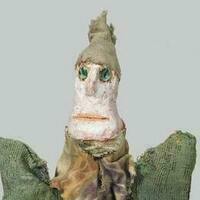
Žižek himself is a curious mixture of illusion and reality. In Trouble in Paradise, he speaks of Hamlet as a clown, and he himself is both intellectual and jester. Shakespeare’s jesters are conscious of their own unreality, and Žižek seems to be, too. As a man for whom the adjective “colourful” could have been specially invented, he is a cult figure who sends up his own cult status, a man in deadly earnest who is also an accomplished self-parodist. There is something fictional, larger-than-life, about his constant globe-trotting and flamboyant antics, as though he has strayed out of a David Lodge novel. His gargantuan appetite for ideas is admirable but also faintly alarming. One would not be altogether surprised to hear that he was put together by a committee and consumer-tested on various student focus groups.
When we read, another person thinks for us: we merely repeat his mental process. In learning to write, the pupil goes over with his pen what the teacher has outlined in pencil: so in reading; the greater part of the work of thought is already done for us. This is why it relieves us to take up a book after being occupied with our own thoughts. And in reading, the mind is, in fact, only the playground of another’s thoughts. So it comes about that if anyone spends almost the whole day in reading, and by way of relaxation devotes the intervals to some thoughtless pastime, he gradually loses the capacity for thinking; just as the man who always rides, at last forgets how to walk. This is the case with many learned persons: they have read themselves stupid. For to occupy every spare moment in reading, and to do nothing but read, is even more paralyzing to the mind than constant manual labor, which at least allows those engaged in it to follow their own thoughts. A spring never free from the pressure of some foreign body at last loses its elasticity; and so does the mind if other people’s thoughts are constantly forced upon it. Just as you can ruin the stomach and impair the whole body by taking too much nourishment, so you can overfill and choke the mind by feeding it too much. The more you read, the fewer are the traces left by what you have read: the mind becomes like a tablet crossed over and over with writing. There is no time for ruminating, and in no other way can you assimilate what you have read. If you read on and on without setting your own thoughts to work, what you have read can not strike root, and is generally lost.
[gallery] morning walk along the Brazos

[gallery] still life with lizard

[gallery] abandoned house, Namibia


ProTip: Don’t use 4square to checkin to the location you admin your darkweb drug marketplace https://t.co/vaXz0qCAvS pic.twitter.com/ByEC9QTSLO
— the grugq (@thegrugq) November 6, 2014
I have a reinforced understanding of medical tv shows as America’s primary expression of horror fiction. On any number of levels.Related: the whole thing is really an extended meditation on death. And, remember, this was one of America’s most popular tv shows. When you’re ignoring the plots and just half-listening to the dialogue, it becomes a weird endless sequence of studies on the permanent fog of death, how we approach it, how we prepare for it, and how there is nothing beyond it. House, the mighty atheist explorer, even goes there to look at one point, sticking a knife in a power socket to peek behind the veil and ensure the room beyond is empty. For eight years, America told itself a long story about death and the ways in which it comes, using the body of an English comedian to do it. And the wondrous, awful thing about it is that it never really backs off. House is always a brutal Modernist hero, the idealised American hospital (that most Americans will never see anything like) is still a waiting room for the graveyard, and death is always a hopeless final function that brings no peace. It is a hundred and seventy hour long dialogue on the end. That is an almost magically nihilist thing.
[gallery]

an update
… on some things:
-
A while back, I decided to ditch the New York Times — and I’m still regularly infuriated by the bigotry and ignorance of its coverage of religion. Twenty-five years ago Alasdair MacIntyre referred to the NYT as “the parish magazine of self-congratulatory liberal enlightenment,” and that’s as true now as it was then. But … but … I got so tired of clicking on links (Twitter, RSS feeds, random webpages) only to be told I had used up my quota and would need to subscribe if I wanted to read more … and eventually I weakened and resubscribed. I am a worm and no man. I would feel better if Get Religion would go full-time as an exposer of the NYT’s manifold abuses of reason, evidence, and charity.
-
I’ve complained a lot — too much, honestly — about Twitter, and even wrote a kind of eulogy for it. I now rarely visit what I call Big Twitter — which, by the way, explains why you are unlikely to hear from me if you send me an @-message there: I probably won’t see it. I have moved primarily to Little (i.e. private) Twitter and am much, much happier. I found myself on Big Twitter earlier this week and did not enjoy it at all. Why is it so hard for me to remember that that’s the way it goes?
-
I love writing for Books & Culture, so after a few months away I’m pleased to say that I will have some pieces coming in in the near future: reviews of Nicholas Carr’s The Glass Cage and Italo Calvino’s Complete Cosmicomics, followed (eventually) by my responses to Adam Roberts’s marvelous new edition of Coleridge’s Biographia Literaria and Les Murray’s New Selected Poems. Keep your eyes peeled!