
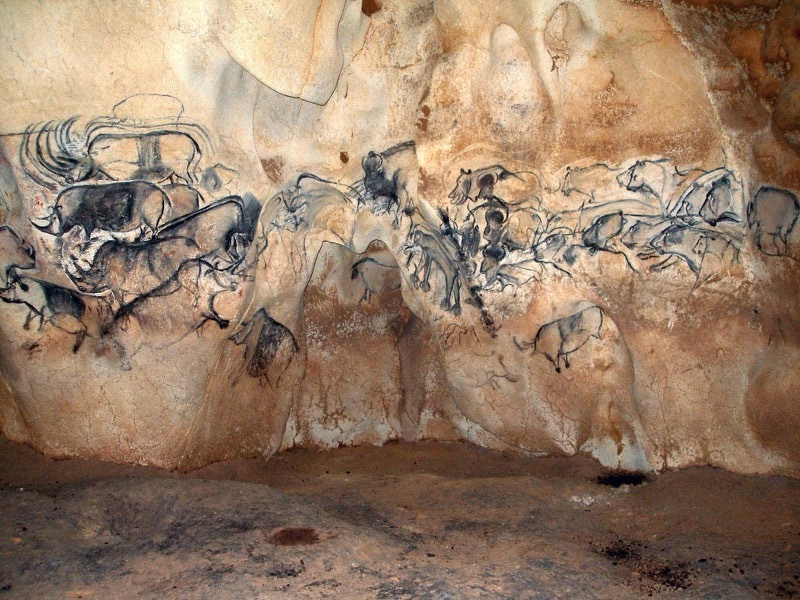
The practices of present-day ‘comparable’ communities strike me as a very poor guide. We have at different times labelled such groupings Indigenous, Marginalised, Tribal, Primitive; all names, tabooed or not, that circle around some kind of rearguard action – societies (cultures) on the defensive in a pitiless present. But at Chauvet, just look, the arrogance of achievement is unmistakable. The architectural historian Sigfried Giedion thought the paintings in the caves – he did not know Chauvet when he wrote, but Lascaux and Altamira were enough – celebrated the superiority of the world of beasts. His thesis, which was politely ignored, has much to recommend it. In the warm pockets of the Ice Age, the thunder of woolly rhinos going past must have spoken for itself. (Such animals were very little hunted, so the bone heaps suggest. No wonder.) But the Chauvet masters knew one thing the rhino and mammoth couldn’t do. There was a strange kind of action on the world in which human superiority, maybe uniqueness, was undisputed – already gloried in. It was there on the walls. Humans were able to represent the mammoth, make a convincing likeness of it. Was that ability driven by envy or homage? Was it a way of borrowing the giant’s strength, or a means of (fantasy) domination?