
All
Set in Turkey and filmed on location in Germany with no attempt to hide the artifice, the trenchantly honest and terrifically acted new film from The Teachers’ Lounge director Ilker Çatak might be the most important film yet made about Donald Trump’s America. Though it obviously has more specific ties to Turkey’s authoritarian President Recep Tayyip Erdoğan, Yellow Letters has plenty to share with western audiences about the role of art in political protest and the myriad forms that cancel culture can take.
So many of my fellow Americans think everything is about us — and also, apparently, that anything that’s not about us isn’t worth paying attention to.
It’s a weird time, to say the very least, to be putting out a book about curiosity and wonder and freedom and fun and humor and imperfection and magic. But it’s also a time when, I think, we could desperately use those things in our lives. Watching my kids draw and make music and come alive to the world unlocked something in me that I’ve been trying to get into book form for over 10 years.
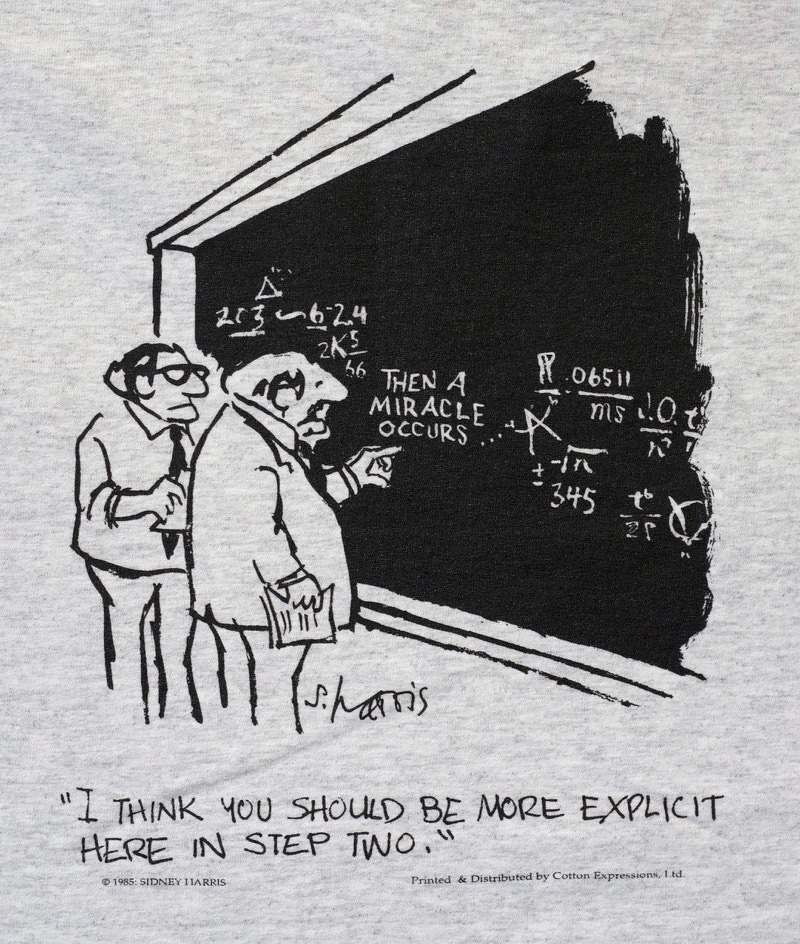
I keep hearing AI advocates say that the universal deployment of AI will create a “productivity explosion” and “unprecedented wealth creation” and will “end poverty.” All I want to know is: How? How will the money made by the big AI companies end up in the pockets of the poor? I’m not even asking for a plausible scenario — I’d be happy to see any scenario at all, anything more than “THEN A MIRACLE OCCURS.”
I’m pleased to say that I will be editing another volume in the Auden Critical Editions series: the 1951 collection Nones.

Mary Elizabeth Groom’s engravings from the 1937 Golden Cockerel Press edition of Milton’s Paradise Lost:

States struggled to work out their role in these rapidly changing systems. Private mail presented different problems: should couriers working for state-funded postal services be allowed to carry post on behalf of paying customers? For the states that underwrote postal systems, this was risky – it increased the risk of robbery since private mail often included money and valuables – yet attractive: an efficient postal service subsidised by private clients would be less of a drain on state resources. Controlling the carriers of private mail also made surveillance simpler. As time went on, the price of sending a private letter fell, so that more ordinary people were involved in the flow of mail and news: ‘What had started as a state privilege had become a preferred public service.’ Crucially, by the second half of the 17th century, the postal stagecoach had become the essential vehicle of European travel, carrying passengers at the same speed as it delivered the mail. The machinery of the post – its itineraries and printed guides, inns as relay stations, couriers with local knowledge – adapted seamlessly to facilitate a new era of tourism and would form the backbone of the Grand Tour. The infrastructure of posts and couriers that served states and merchants laid the foundations for a revolution in communications.
My friend and colleague Elizabeth Corey:
If there’s anything that could shake the confidence of the conservative warrior, it might be to consider what he’s sacrificing. I would put the question this way: what have you given up in fighting your political battles, in making your shocking and polemical arguments? Have you been calm and open toward your family, receptive toward the people who live alongside you, devoted to your students? Or has your soul changed, such that you no longer speak to old friends or write them off as traitors? Fighting can corrupt the soul. Nobody can be in Ithaka and Troy at the same time. And while you’re in Troy, Ithaka may well be crumbling — especially if nobody is there to tend it.
My disposition is fundamentally conservative, in that I am grateful for the cultural, spiritual, and artistic inheritance I have received and wish to preserve it, contribute to it, and transmit it to later generations. Even my increasing commitment to anarchism arises from my belief that anarchist practices best enable conservation. And like Elizabeth I lament that so many people nowadays call themselves conservatives when they have absolutely zero interest in conserving anything. They’re all fighting like madmen at Troy and have utterly forgotten Ithaka. It’s war for war’s sake.
If you do not believe that it is possible for someone’s life to be changed by reading and thinking together then I wish you well, but I do not think we are in the same profession and I am not sure we’re on the same side. I can tell you that some years ago now, a young man who was still a convinced atheist read Augustine’s Confessions and found in its pages an account of evil and responsibility that overturned his entire moral picture of the world. That same young man took in Plato and Machiavelli and Hegel and Marx in great gulps the following year and felt like he had fewer and fewer solid places to stand but a much better sense of where he was. He was fortunate enough to know other young men and women who felt the same way around the same time, and their late-night conversations (including several genuine toga-clad symposia) changed how they all saw the world and one another. This story is mine; it also looks a lot like the stories of a lot of people who’ve seen that it’s possible to teach and learn in a way that does not speak to making a living but simply to living.
Generative AI sabotages the proof-of-work function by introducing a category of texts that take more effort to read than they did to write. This dynamic creates an imbalance that’s common to bad etiquette: It asks other people to work harder so one person can work — or think, or care — less. My friend who tutors high-school students sends weekly progress updates to their parents; one parent replied with a 3,000-word email that included section headings, bolded his son’s name each time it appeared, and otherwise bore the hallmarks of ChatGPT. It almost certainly took seconds to generate but minutes to read. As breaches of etiquette go, where this asymmetric email falls is hard to say; I would put it somewhere between telling a pointless story about your childhood and using your phone’s speaker on an airplane. The message it sent, though, was clear: My friend’s client wanted the relational benefits of a substantial reply but didn’t care enough to write one himself.
One of the phrases I have been kicking around lately is “The Great Forgetting”: a hunch that in embracing AI, as an extension both of our capacity to remember and of our heuristic faculties in retrieving and arranging what is remembered, we run the risk of allowing faculties to wither that are in fact central to our capacity to think. (I made this case, and also that it is unevenly distributed across social classes, recently in the New York Times.) Building on these themes, my working hypothesis is that at least at the collective level AI is survivable, but only provided we counterbalance this effect by deliberately cultivating our human faculty for memory, as distinct from the digital kind.
Again: everybody knows. And 98% of us will simply do whatever their tech overlords want them to do. So the only question remaining is: What will the other 2% do?