
All
16 June 1939 the Daily Telegraph ran the following news story:
Village children at Hurst House School, Staplehurst, Kent, are being given regular television lessons in school. Nearly all the children come from nearby farms.
Citizenship and ‘general knowledge’ are taught through the study of news reels and the televising of events like Trooping the Colour and the departure of the King and Queen for Canada
The television lessons have been started by the headmaster, Mr H. Farrington, who says that television and the informal talks that follow the programme are probably of more real educative value to the children than most lessons given in class.
And so it begins.
As if all of this hassle wasn’t enough, consider the fact that you have to tend the turntable like a fire, flipping and adding logs as needed. And that’s where all of this inconvenience pays off. Like a fire, those records keep you company, asking for nothing but a little reciprocity and attention in return for sharing their warmth. It’s not something unfair and it’s not something unreasonable. They just ask you to care.
My phone asks me to turn on notifications. It also asks me to share my location data, install updates, and rate my in-app experiences. Sometimes scrolling on it literally makes me car sick but it keeps asking me to scroll, ignorant of my displeasure.
Smartphone life makes me miss the good old days when everything was a little more scarce and a little more meaningful. We missed our friends when we didn’t know what they were up to every second. We looked forward to taking girls on dates instead of staring at strangers on Onlyfans. Going to the video store to rent a few movies was an event in and of itself. What could feel more like the good old days than sitting next to the fire, cell phone on silent in another room, while enjoying the annoying crackle of remnant dust stuck in the supposedly ultrasonically cleaned grooves of a used Tal Farlow record?
Via Robin Sloan.
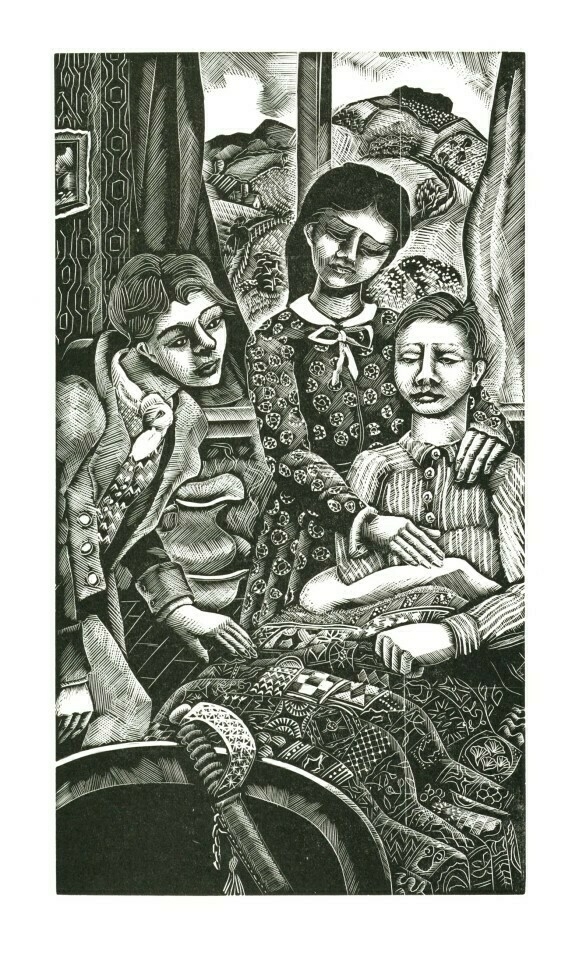
Beautiful engravings by Rachel Reckitt, for a never-published edition of The Mill on the Floss.

I wrote about The Devils’ Citadel (focusing largely on Humphrey Jennings), and now here’s The Devils’ Citadel Extended (focusing largely on John Ruskin).
A useful mental exercise: when people say “AI isn’t going anywhere” or “AI is here to stay,” substitute for “AI” the word “cancer.” A great many things that are here to stay are really bad and should be resisted as energetically as possible. Maybe AI isn't as bad as many fear. But the not-going-anywhere assertion is a way to avoid asking the key questions.
UPDATE: Just after posting this, I saw a review by Brad East of a new book celebrating online worship, and what does the author of the book say? “Church online is here to stay.” Of course he does. But this is even less defensible than “AI is here to stay,” because while it would be very difficult if not impossible to shut down the AI companies, any church can stop offering online worship at any time.
Note that I am not saying that online services are bad. My own parish church offers many online services, and I am not (yet) convinced that it’s as bad a thing as Brad says it is. (But “almost thou persuadest me….”) I am just decrying an all-too-common rhetoric that tries to invoke inevitability as a way of foreclosing debate before it gets started.
Whether on Twitter or Bluesky, nobody learns anything.
It’s an odd thing to say about the figure of Jesus in the Gospels, but I’ve always been struck by it — from time to time there’s a deep impatience in Jesus: How can I make this clear to you? You’re an unfaithful generation. He bursts out in exasperation at the disciples. Do you understand nothing? Even in exasperation of the crowds. Jesus said: You’re all looking for miracles.
In a strange way, I feel that’s a rather compelling aspect of the story of Jesus. There’s more going on in him than he can express, and sometimes it kind of bursts out. And when I think of what the divinity of Jesus means in that context, one of the signs of it is that feeling he’s got more to say than human language can carry. As he says in St. John’s Gospel, “I have many things to say to you, but you cannot bear them now.”
And it’s almost as if Jesus goes to the cross saying: The only way of telling you what the love of God is like is to absorb this monumental violent injustice and show you that God is not crushed by it.
The whole conversation (with Pete Wehner) is fantastic.
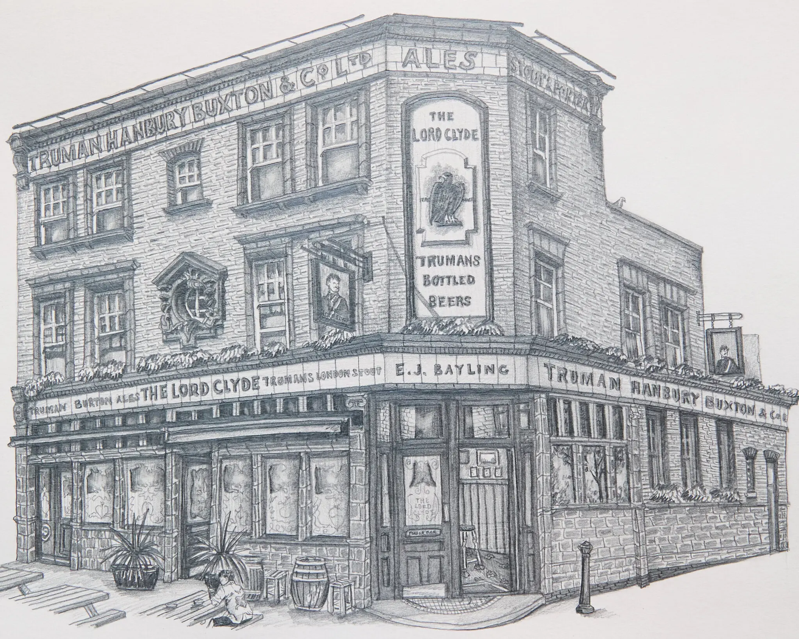
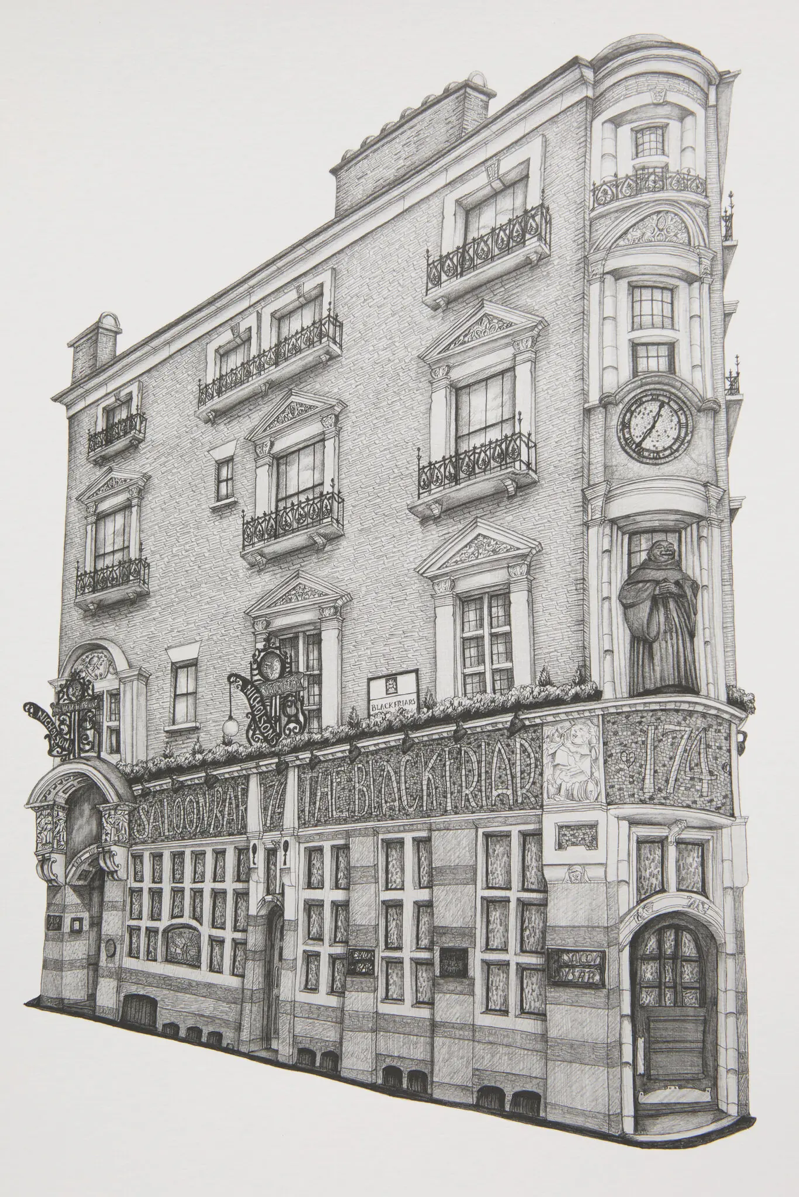
Terry Eagleton's tribute to Alasdair MacIntyre is the best I've read so far:
All this makes MacIntyre one of the great moral philosophers of the 20th century. He was a radical Scottish puritan, austere and high-minded, who ended up supporting the revival of monasticism and switched his sympathies from the Bolsheviks to St Benedict. His dissent from the priorities of the modern age took an incongruous variety of forms but remained wholly self-consistent. If he turned back to Aristotle and Aquinas, it was in order to move beyond what he saw as the scepticism and subjectivism of the present. His work showed up the limits of rationalism, but was deeply averse to the irrational. It could win praise from both Leftists and conservatives, but gave no comfort to neoliberalism. MacIntyre refused to subscribe to the view that the individual was at the centre of the universe; that reason is timeless and independent of practical social life; and that relations are primarily contractual and actions chiefly instrumental. In contrast with a mean-spirited utilitarianism, he saw society not as a means of individual self-promotion but as a good in itself. He was interested in practices like playing chess or writing poetry whose goods, as he would say, were “internal” to themselves rather than external goals to be pursued.
When Busman’s Honeymoon, the play co-written by Sayers and Muriel St Clare Byrne, opened in London it did so at the Comedy Theatre … which reminds me that decades later that venue would stage many Harold Pinter plays, and Pinter became its major patron. After a while he started hinting that the place should change its name to the Pinter Theatre. When management resisted, Tom Stoppard wrote to Pinter with a suggestion for resolving the impasse: “Have you considered changing your name to Harold Comedy?” (Lo and behold, the name was changed to the Harold Pinter Theatre, but only after the poor man’s death.)