
All
- Ted Gioia, “The Glorious Future of the Book”
- Austin Kleon, “Why Our House Is a Library”
The personhood trap: How AI fakes human personality: — something we’re suckers for because of what the philosopher Donald Davidson once called the “principle of charity,” that is, the assumption that our interlocutors are making sense. I wrote an essay a while back on how the principle of charity governs our responses to chatbots.
The AI business model: suicidal ideation as a revenue stream.
Convergence!
John Muir, writing in the Pasadena Star, 1909:

It would make a good and useful tattoo: Nothing dollarable is safe.
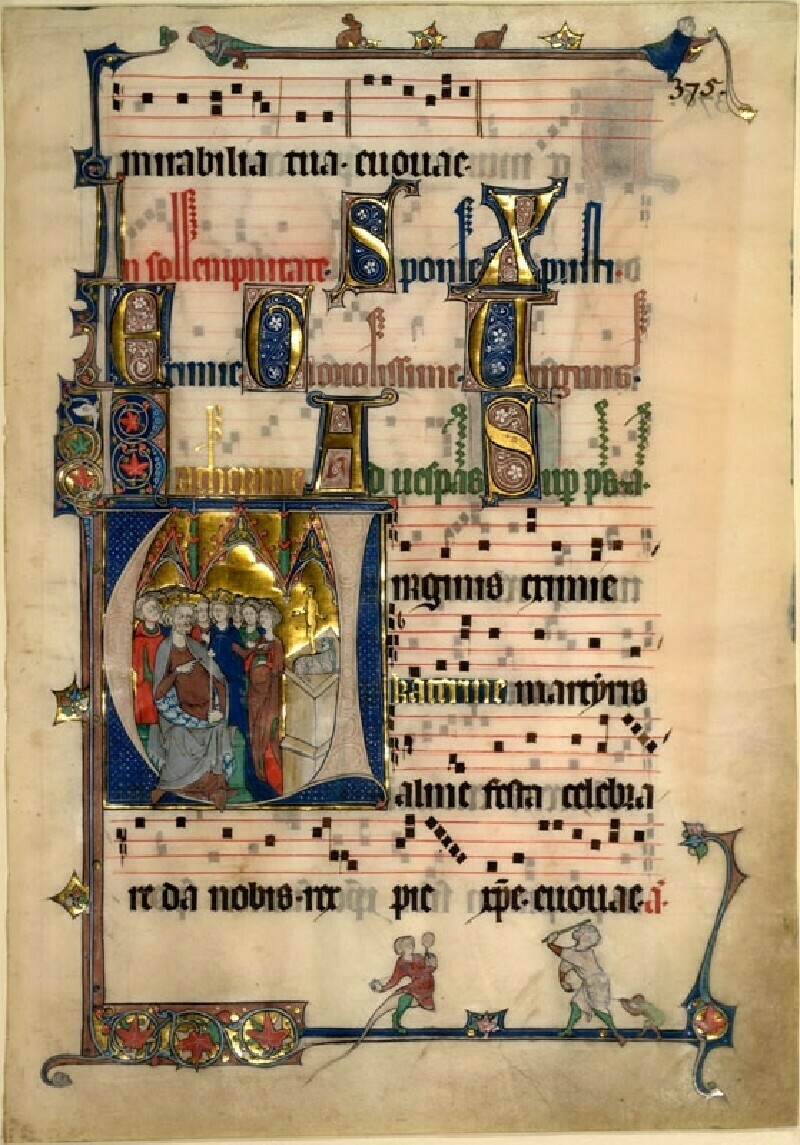
This “retrospective” on Houellebecq's Submission by John Hardy describes the book as a prophecy, which I don’t think it was. Here’s my review, written when the book appeared.
A brilliant and necessary essay by Marion Fourcade and Kieran Healy:
Being a legitimate self now requires one to be publicly identifiable, authentic and, increasingly, fully authenticated. What began as a celebration of individual uniqueness that avidly encouraged the production of digital evidence is evolving into an elaborate system of verification that will treat any trace as a potentially suspect record. As fake versions of ourselves start to circulate, we may soon find ourselves caught in endless cycles of proving and defending the reality of our own existence, submitting ourselves more and more to a machinery of institutionalised scepticism that would have repulsed the early internet’s champions of identity play and experimentation.
And:
Individuals equipped with the capacity to search the network and query large language model (LLM) oracles, and in possession of the self-confidence and the means to broadcast their findings, tend to become an authoritative source of opinion. At least that is how it feels to them. We can also understand why knowledge produced in this manner is often so emotionally charged. The more people invest in researching and developing their own understanding, the more their pursuit of knowledge transforms into a form of personal revelation, where everyone is both seeker and interpreter of their own truth. What began as an exercise in independent reasoning becomes a matter of belief, belief defended all the more passionately because it seems to have been self-discovered rather than externally given.
An older but excellent post by my colleague Philip Jenkins:
Quite regularly, the media produce claims about supposedly startling new discoveries concerning the Bible, alternative gospels, and/or Christian origins – just over the past decade, think for instance of “Jesus’s Wife” or the Gospel of Judas. A common theme in such reporting is just how astonishing and unexpected such finds are, and how their novelty would have shocked earlier generations. And in most cases, the weary academic response should properly be that actually, we have known all this stuff for a good long while, and usually for well over a century. The fact that we so often forget those earlier discoveries, and so grievously underestimate the intellectual daring of earlier generations, is in itself a significant component of the sociology of knowledge.

Researchers from Arizona State University:
Our investigation, conducted through the controlled environment of DataAlchemy, reveals that the apparent reasoning prowess of Chain-of-Thought (CoT) is largely a brittle mirage. The findings across task, length, and format generalization experiments converge on a conclusion: CoT is not a mechanism for genuine logical inference but rather a sophisticated form of structured pattern matching, fundamentally bounded by the data distribution seen during training. When pushed even slightly beyond this distribution, its performance degrades significantly, exposing the superficial nature of the “reasoning” it produces.