
Reading
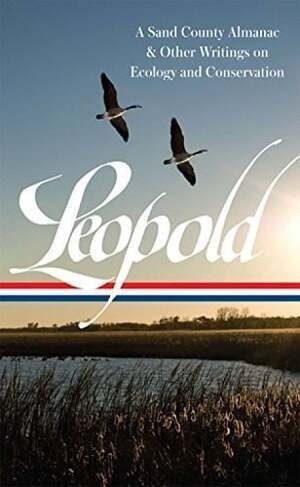
Currently reading: A Sand County Almanac and Other Writings On Ecology And Conservation by Aldo Leopold. Re: Leopold’s “land ethic” and his emphasis on the “biotic community,” I think: I just don’t know how to convince people who care only about money to care even a little bit about anything else. 📚
Finished reading: John Muir: Nature Writings (LOA #92) by John Muir 📚
The poor bit of measured time was soon spent, and while the saddles were being adjusted I again urged Emerson to stay. “You are yourself a sequoia,” I said. “Stop and get acquainted with your big brethren.” But he was past his prime, and was now as a child in the hands of his affectionate but sadly civilized friends, who seemed as full of old-fashioned conformity as of bold intellectual independence. It was the afternoon of the day and the afternoon of his life, and his course was now westward down all the mountains into the sunset. The party mounted and rode away in wondrous contentment, apparently, tracing the trail through ceanothus and dogwood bushes, around the bases of the big trees, up the slope of the sequoia basin, and over the divide. I followed to the edge of the grove. Emerson lingered in the rear of the train, and when he reached the top of the ridge, after all the rest of the party were over and out of sight, he turned his horse, took off his hat and waved me a last good-by. I felt lonely, so sure had I been that Emerson of all men would be the quickest to see the mountains and sing them. Gazing awhile on the spot where he vanished, I sauntered back into the heart of the grove, made a bed of sequoia plumes and ferns by the side of a stream, gathered a store of firewood, and then walked about until sundown. The birds, robins, thrushes, warblers, etc., that had kept out of sight, came about me, now that all was quiet, and made cheer. After sundown I built a great fire, and as usual had it all to myself. And though lonesome for the first time in these forests, I quickly took heart again, — the trees had not gone to Boston, nor the birds; and as I sat by the fire, Emerson was still with me in spirit, though I never again saw him in the flesh.
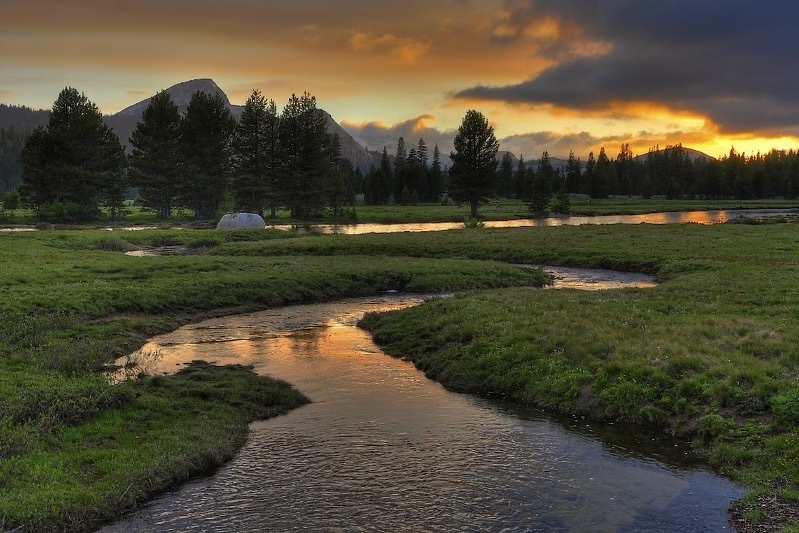
On the way back to our Tuolumne camp, I enjoyed the scenery if possible more than when it first came to view. Every feature already seems familiar as if I had lived here always. I never weary gazing at the wonderful Cathedral. It has more individual character than any other rock or mountain I ever saw, excepting perhaps the Yosemite South Dome. The forests, too, seem kindly familiar, and the lakes and meadows and glad singing streams. I should like to dwell with them forever. Here with bread and water I should be content. Even if not allowed to roam and climb, tethered to a stake or tree in some meadow or grove, even then I should be content forever. Bathed in such beauty, watching, the expressions ever varying on the faces of the mountains, watching the stars, which here have a glory that the lowlander never dreams of, watching the circling seasons, listening to the songs of the waters and winds and birds, would be endless pleasure. And what glorious cloudlands I should see, storms and calms, — a new heaven and a new earth every day, aye and new inhabitants. And how many visitors I should have. I feel sure I should not have one dull moment. And why should this appear extravagant? It is only common sense, a sign of health, genuine, natural, all-awake health. One would be at an endless Godful play, and what speeches and music and acting and scenery and lights! — sun, moon, stars, auroras. Creation just beginning, the morning stars “still singing together and all the sons of God shouting for joy.”

I’ve been suffering from eyestrain, so for my evening reading have turned to Stephen Fry narrating the Sherlock Holmes stories, which ranks as one of the three best narrations I have ever heard, the other two being Fiona Shaw’s The Mill on the Floss and Andy Serkis’s The Lord of the Rings. Spot-on in all respects: Simon Callow’s review of Fry’s Holmes. 📚🎧
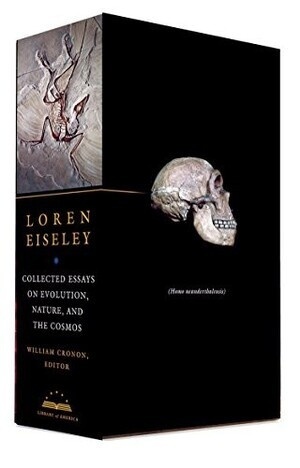
Currently reading: Loren Eiseley : Collected Essays on Evolution, Nature, and the Cosmos by Loren Eiseley. I’ve written occasionally over the years — here for instance — about how much Eiseley has meant to me since I discovered him at age fifteen or thereabouts. But how did I discover him? I well remember: He was quoted occasionally in Intelligent Life in the Universe, a 1966 book by I. S. Shklovskiĭ and Carl Sagan, which I borrowed from the East Lake Public Library in Birmingham, Alabama. That’s the kind of person I was at age fifteen. 📚
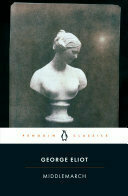
Currently reading: Middlemarch by George Eliot. This won’t be my last time reading this infinitely lovable book, but it will be my last time teaching it, so I’m warning my students to expect some melancholy moments. 📚
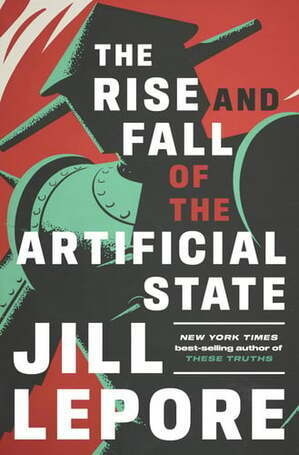
Finished reading: The Rise and Fall of the Artificial State by Jill Lepore. It’s a brilliant book — right down my alley in a dozen different ways. There’s a problem, though: it’s a book, and the people in government and the tech sector who most need to understand the story it tells don’t read books.
Oh, a few of them read books for entertainment and maybe even inspiration, though, as Lepore points out, they reliably misunderstand the ones they do read. (One darkly enjoyable chapter is essentially an expansion of Alex Blechman’s famous Torment Nexus tweet.) But both Silicon Valley and our governmental offices are dominated by people who would never think it a good use of their time to read a book in order to understand what it is they’re doing. And while once upon a time such leaders would have relied on book-reading advisors — Tyrion Lannister types — I don’t think that’s true today. People making massively consequential decisions for the U.S.A. and indeed for the whole planet desperately need to know the history that Lepore tells. The question is, How can they be brought to know it?
📚
Jill Lepore, The Rise and Fall of the Artificial State:
This book is an inquiry into what humans mean and intend in abandoning constitutional democracy, the liberal nation-state, and even humanity itself for rule by automation, government by machine, and replacement by artificial intelligence. Much in history is headlong but few grand transformations have been more precipitate or more heedless than the rise of what I call the Artificial State. Yet little seems to me more inevitable than its eventual fall, the exhale that follows every inhale, the day that follows night, Icarus’s plunge to the ocean after flying too close to the sun. The Artificial State is a fantasy about humans, machines, and the earth. This book is an archaeology of that fantasy.
📚

Finished reading: The Woman in White by Wilkie Collins. I haven’t read this in many years, and it’s just fabulous. The mastery with which Collins organizes and deploys his many threads of plot is something to behold. I’m tempted to to start over! 📚
Finished reading (for the first time in 30 years): Encounters with the Archdruid by John McPhee. If you’re new to McPhee, this might be the ideal place to start. It’s the book in which he perfects the narrative method he would follow for the rest of his career, and the first one in which he explores the geological themes that would later become his obsession. Nobody is better than McPhee at illuminating difficult questions by showing how real peropla engage those questions, and engage each other. 📚