
Reading

Finished reading: Twilight of Authority by Robert Nisbet (1975). Nisbet has long been an important writer for me, but this, the only one of his major books I hadn’t read, is a disappointment, vague and full of moot assertions. There’a a provocative point in the Preface, though: having made the familiar old-school conservative case that we suffer from a decline in civil society, in the various institutions that mediate between individuals and the state, he adds this:
Accompanying the decline of institutions and the decay of values in such ages [of decline as ours] is the cultivation of power that becomes increasingly military, or paramilitary, in shape. Such power exists in almost exact proportion to the decline of traditional social and moral authority. Representative and liberal institutions of government slip into patterns ever more imperial in character. Military symbols and constraints loom where civil values reigned before.
This is very much a book of the Vietnam era, so I’m sure it has no application to our own moment. 📚
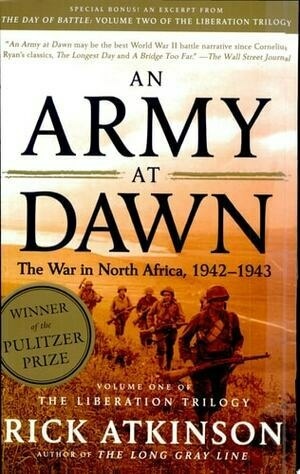
Currently reading: An Army at Dawn: The War in North Africa, 1942–1943 by Rick Atkinson. A brilliantly pitiless account — pitiless in that Atkinson makes no attempt to disguise how radically incompetent the Allies were at this early stage of the war. Strategic planners mentally deformed by arrogance, ignorance, or national chauvinism; tactical planners who couldn’t plan; logisticians who couldn’t organize; field commanders who were reckless when circumstances called for caution and timid when they called for boldness; navigators who couldn’t navigate; helmsmen who couldn’t steer; drivers who couldn’t drive; communications officers who couldn’t send or receive communications; artillerymen who couldn’t aim; infantrymen who ran brainlessly in any and all directions or went to sleep under hedges. If it weren’t so tragic it would be farcical. And if, as some wanted, the bosses had ignored North Africa and headed straight for France, I’d be writing this in German. 📚
Abandoned reading: The Matter With Things: Our Brains, Our Delusions and the Unmaking of the World by Iain McGilchrist. What an infuriating endeavor. McGilchrist seems to think that he he makes a claim stronger by giving, not three, not five, but forty-seven supportive examples — and that he can’t say what he wants to say about the hemispheres of the brain without pausing to articulate a Theory of Truth. I began as an exceptionally sympathetic reader and now want to throw these volumes as far from me as possible. 📚
I’m going in: The Matter With Things: Our Brains, Our Delusions and the Unmaking of the World by Iain McGilchrist 📚

The Uses of Pessimism by Roger Scruton:
Unscrupulous optimists believe that the difficulties and disorders of humankind can be overcome by some large-scale adjustment: it suffices to devise a new arrangement, a new system, and people will be released from their temporary prison into a realm of success. When it comes to helping others, therefore, all their efforts are put into the abstract scheme for human improvement, and none whatsoever into the personal virtue that might enable them to play the small part that it is given to humans to play in bettering the lot of their fellows. Hope, in their frame of mind, ceases to be a personal virtue, tempering griefs and troubles, teaching patience and sacrifice, and preparing the soul for agape. Instead, it becomes a mechanism for turning problems into solutions and grief into exultation, without pausing to study the accumulated evidence of human nature, which tells us that the only improvement that lies within our control is the improvement of ourselves.
📚

The Republic of Plato, trans. Allan Bloom, from Book VIII:
“Mustn’t it first be told how the transformation from timarchy to oligarchy takes place?”
“Yes.”
“And really,” I said, “the way it is transformed is plain even to a blind man.”
“How?”
“The treasure house full of gold,” I said, “which each man has, destroys that regime. First they seek out expenditures for themselves and pervert the laws in that direction; they themselves and their wives disobey them.”
“That’s likely,” he said.
“Next, I suppose, one man sees the other and enters into a rivalry with him, and thus they made the multitude like themselves.”
“That’s likely.”
“Well, then,” I said, “from there they progress in money-making, and the more honorable they consider it, the less honorable they consider virtue. Or isn’t virtue in tension with wealth, as though each were lying in the scale of a balance, always inclining in opposite directions?”
“Quite so,” he said.
“Surely, when wealth and the wealthy are honored in a city, virtue and the good men are less honorable.”
“Plainly.”
“Surely, what happens to be honored is practiced, and what is without honor is neglected.”
“That’s so.”
“Instead of men who love victory and honor, they finally become lovers of money-making and money; and they praise and admire the wealthy man and bring him to the ruling offices, while they dishonor the poor man.”
“Certainly.”
📚

Finished reading: Why I Am Not an Atheist: The Confessions of a Skeptical Believer by Christopher Beha. A very good book. More thoughts coming soon in The Dispatch. 📚

Finished reading: Cadillac Desert: The American West and Its Disappearing Water by Marc Reisner, a powerful book that will make you despair of humanity. Representative passage:
“You’re from the Park Service, aren’t you?” Mulholland demanded more than asked.
“Yes, I am,” said Albright. “Why do you ask?”
“Why?” Mulholland said archly. “Why? I’ll tell you why. You have a beautiful park up north. A majestic park. Yosemite Park, it’s called. You’ve been there, have you?” Albright said he had. He was the park’s superintendent. “Well, I’m going to tell you what I’d do with your park. Do you want to know what I would do?”
Albright said he did.
“Well, I’ll tell you. You know this new photographic process they’ve invented? It’s called Pathé. It makes everything seem lifelike. The hues and coloration are magnificent. Well, then, what I would do, if I were custodian of your park, is I’d hire a dozen of the best photographers in the world. I’d build them cabins in Yosemite Valley and pay them something and give them all the film they wanted. I’d say, ‘This park is yours. It’s yours for one year. I want you to take photographs in every season. I want you to capture all the colors, all the waterfalls, all the snow, and all the majesty. I especially want you to photograph the rivers. In the early summer, when the Merced River roars, I want to see that.’ And then I’d leave them be. And in a year I’d come back, and take their film, and send it out and have it developed and treated by Pathé. And then I would print the pictures in thousands of books and send them to every library. I would urge every magazine in the country to print them and tell every gallery and museum to hang them. I would make certain that every American saw them. And then,” Mulholland said slowly, with what Albright remembered as a vulpine grin, “and then do you know what I would do? I’d go in there and build a dam from one side of that valley to the other and stop the goddamned waste!”
📚
Currently reading: Why I Am Not an Atheist: The Confessions of a Skeptical Believer by Christopher Beha 📚
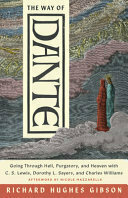
Finished reading: The Way of Dante by Richard Hughes Gibson. Full disclosure: Rick is one of my dearest friends. But by any measure this is a wonderful book. Lewis, Williams, and Sayers were all serious readers of Dante, but they read Dante in sustained and energetic conversation — often amounting to disputation, especially when DLS was involved — with one another. Rick beautifully traces this evolving dialogue, with the unique genius of Dante at the center of it all. 📚