victimology

I’ve been meaning for some time to write a brief post about Freddie deBoer’s case for forcing mentally ill people into treatment — or rather, about one element of the story. And then today I see a new post by Freddie on this review of this book by Jonathan Rosen, and that got the wheels turning. 

None of this is within my own area of expertise or experience. I have no authority here. I just want to call attention to one point. Rosen’s book is about his friend Michael Laudor, who in 1998 murdered his fiancée Caroline Costello during a psychotic episode. I have not read the book, but when I heard about it, I think originally from Freddie’s Substack, I immediately remembered a book that made a great impact on me when I read it forty years ago: The Killing of Bonnie Garland, by an eminent psychiatrist named Willard Gaylin. I was reminded of it because of of one small detail linking the two situations: Yale University, which Laudor, Costello, and Rosen all attended in the early 1980s, as did Bonnie Garland and the man who killed her, Richard Herrin, in the mid-1970s. 

Here’s how Gaylin describes the origins of his book: 

Richard Herrin, then twenty-three, had killed his college sweetheart, Bonnie Garland. He had hammered her to death in her sleep in her parents' home. This was the tragic culmination of a three-year romance. Richard Herrin, a poor Mexican-American boy, had been a junior at Yale University when he met seventeen-year-old freshman Bonnie Garland. Bonnie was a child of affluence. Daughter of Joan and Paul Garland, she had spent much of her childhood in Brazil, where her father was establishing a very successful international law practice. She had attended the fashionable Madeira School and went on to Yale, her father's alma mater.

Bonnie Garland was an unlikely victim of a killing. But then again, Richard Herrin was an unlikely killer. And the course of events following the killing was strange and unpredictable. Within two months of killing Bonnie, Richard Herrin was not in prison but attending classes at the State University of New York in Albany, working in a religious bookshop there, and being unstintingly supported both emotionally and financially by a Catholic community.

I am not a devotee of crime news; I rarely read it in the papers. But there was something unusually bizarre about this crime and its sequelae. I remembered one brief phrase from the reporting; Richard had been quoted as saying within hours of the killing, “Her head broke open like a watermelon.” Who speaks in those terms? What kind of human being even thinks that way? One might expect a general revulsion, a turning away from the vile and indecent. But many did not turn away. The Catholic community at Yale University, where both Richard and his victim, Bonnie Garland, had been students, mobilized by Ashbel (“A.T.”) T. Wall, a former roommate of Richard's and a member of an affluent and socially prominent New England family, along with Father Peter Fagan and Sister Ramona Pena, Catholic associate chaplains at Yale, began a crusade of compassion for Richard. The Garlands — her room in their house still soiled with their daughter's blood and brain tissue — started a counter-crusade. This would eventually include hiring a private eye, appearing on a TV talk show, and interviews in such gossip sheets as the Star and National Enquirer

Gaylin followed the case closely and came to focus on one question: In the aftermath of this killing, why were there so many more tears for Richard Herrin than for the young woman he killed? And this is his answer: 

Our mechanisms of identification and empathy are central to our concepts of what is good and what is right. From the day of the killing, Richard attracted a host of concerned and compassionate defenders. When one person kills another, there is immediate revulsion at the nature of the crime. But in a time so short as to seem indecent to the members of the personal family, the dead person ceases to exist as an identifiable figure. To those individuals in the community of good will and empathy, warmth and compassion, only one of the key actors in the drama remains with whom to commiserate and that is always the criminal. The dead person ceases to be a part of everyday reality, ceases to exist. She is only a figure in a historic event. We inevitably turn away from the past, toward the ongoing reality. And the ongoing reality is the criminal; trapped, anxious, now helpless, isolated, often badgered and bewildered. 

Gaylin attended Richard Herrin’s trial and noticed that the prosecuting attorneys did nothing to remind the jury of the former existence of Bonnie Garland. They did not even introduce a photograph of her. Meanwhile, the defense suggested that Bonnie — who had dated Richard for the better part of three years but had grown less interested in him — had not been sufficiently attentive to his emotional needs, had not really understood how difficult life was for him, a kid from the barrio, at Yale. Richard’s attorney did not accuse her of anything; as Gaylin notes, “the slight suggestion of her complicity and insensitivity was sufficient.” But gradually the defense was able to shift the jury’s attention in such a way as to suggest that she was really the one on trial. “She was diminished, and, in suggesting that she was somewhat responsible for her own fate, made an accomplice to her own killing. She was on trial, and was given no voice, no presence. No real attempt was made by the prosecution to bring her to life.” 

So the jury’s sympathies, like those of the Catholic community at Yale, shifted towards Richard. Later, after the trial, the villains in the story become Bonnie’s parents, rich white people who in their arrogance and entitlement wouldn’t forgive the troubled boy from the barrio

François Truffaut was the first person to note that the key scene in Psycho comes when Norman Bates cleans up the shower where Marion Crane has been murdered. For 45 minutes we, the audience, have been learning to sympathize with this imperfect young woman, obviously the protagonist of the story, and now she’s dead. What do we do? Truffaut says that we transfer our sympathies to Norman Bates, and the lengthy clean-up scene — which also involves the disposal of her body, which we never see again — gives us the chance to do that. 

But we don’t know that Norman Bates is Marion’s murderer. Wouldn’t things be different if we did know that he’s a killer? Gaylin’s argument is: Not necessarily. Not if the victim is dead and gone, absent, invisible. In the absence of the victim, Gaylin says, the murderer “usurps the compassion that is justly his victim's due. He will steal his victim's moral constituency along with her life.” The living sympathize with the living, not with the dead. And — this is in some ways Gaylin’s key concern — his own profession, psychiatry, does more than any other force in American life to facilitate the transfer of compassion from the murdered to the murderer. 

All this says nothing about the case of Michael Laudor and Caroline Costello — I know little about that and, again, haven’t read Rosen’s book. But I was greatly taken, all those years ago, with Gaylin’s explanation of how we transfer our sympathies from the dead to the living, from any absent victim to any present offender — whom, thanks to the mechanical workings of our criminal-justice and mental-health systems, we can easily perceive as “the real victim here.” It’s worth noting, perhaps, that when I first posted this reflection I read through it and noticed that the first sentence of this paragraph referred to “the case of Michael Laudor” — I had left out the name of the woman he murdered. 

the rise of detective fiction

In The Long Week-End, their entertaining, sardonic, and often insightful social history of England between the two world wars, Robert Graves and Alan Hodge assert that in the years immediately following the Great War, “Detective-novel writing was not yet an industry; Sherlock Holmes stood alone.” (That comment, like this post, refers only to the British situation; the American situation was quite different.) 

This is perhaps a bit of an exaggeration. Historians like Graves and Hodge tend to ignore the Sexton Blake stories, presumably on the grounds that they were mass-produced, by multiple authors who worked from simplistic templates, and were aimed primarily at younger audiences. But they were extraordinarily popular and it seems that almost everyone read at least some of them. (When Dorothy L. Sayers was ill at school — the Godolphin School in Salisbury — she wrote to her parents to ask them to send her some Sexton Blakes.) And then, on what one presumes G&H would have thought a higher level of literary ambition, there were the Father Brown stories — but Chesterton, having written a pile of them between 1910 and 1914, did not write another until 1923.

Meanwhile, the Sherlock Holmes wagon continued to roll, though with a pause (as many things paused) in the war years, during which Conan Doyle published only one Holmes story, “His Last Bow,” which was an exercise in patriotism and, moreover, a spy story rather than a tale of detection. But Conan Doyle would, with great reluctance and annoyance, resume Dr. Watson’s accounts of Holmes’s adventures in 1921.

Two other data points should be introduced here. First, the publication in 1913 of what would become one of the most influential novels of detection ever written, E. C. Bentley’s Trent’s Last Case. And second, the 1910 trial and conviction of Dr. Crippen, which renewed interest in what we now call True Crime.

If you look at these matters from the perspective of the year 1914, here’s what I think you see:

  • the Sexton Blake stories rolling ever onward, but according to a fixed formula; 
  • the Holmes stories continuing but more slowly, and at a far lower standard than Conan Doyle had established in the 1880s and 1890s; 
  • an interesting experiment in a type of detective radically different than Holmes (Father Brown), which appeared to be complete; 
  • another interesting experiment, this one a playful questioning of the plot conventions of the tale of detection (Trent’s Last Case); 
  • a renewal of interest in True Crime. 

So the future of tales of detection did not appear to be bright, and there was no reason to think that it would become a central genre of fiction.

Then the War came, and such topics were placed, not on the back burner but off the stove altogether. It was difficult, or embarrassing, or just plain shameful to think about a domestic murder or a crime of passion or a killing for money when the greatest slaughter in the history of humanity was ongoing. One could easily imagine that period marking the end of the detective story as a popular genre of fiction. 

When the War ended, though, it became possible and indeed desirable to think about such matters again. It was presumably a kind of relief to be able, once more, to consider malice and death on a human scale — death as a tragedy and a misery but not an unimaginably vast horror. So Conan Doyle resumed his Holmes stories with “The Adventure of the Mazarin Stone” in 1921, and Chesterton his tales of Father Brown with (I think) “The Resurrection of Father Brown” in 1923. But even more to the point:

  • Agatha Christie published her first mystery novel, The Mysterious Affair at Styles, in 1920;
  • Freeman Wills Crofts published his first, and by far most influential, mystery novel, The Cask, also in 1920;
  • Dorothy L. Sayers wrote her first detective novel, Whose Body?, in 1921, though it was not published until 1923;
  • The Thompson-Bywaters trial was held in 1922, and after the execution of the convicted murderers in January of 1923, their story became a matter of extravagant public fascination for a very long time.

And so we were off to the races. The Golden Age of detective fiction — influenced at least as much by True Crime as by previous stories and novels — had begun. And I cannot help thinking that it was shaped, then and later, by the great shadow of Death hanging over Europe in the aftermath of the Great War. 

00043363 900x900.

On renewing the art of biological taxonomy: “With genetic sequences, we can now identify the fundamental building blocks of life, but we need to be able to interpret genetic data in a way that humans can understand and use. That’s taxonomy’s job. And if we want to save what’s left of the vast diversity of life on Earth, we’ll have to reinvest in this science. How we delineate between species determines what we choose to save.”

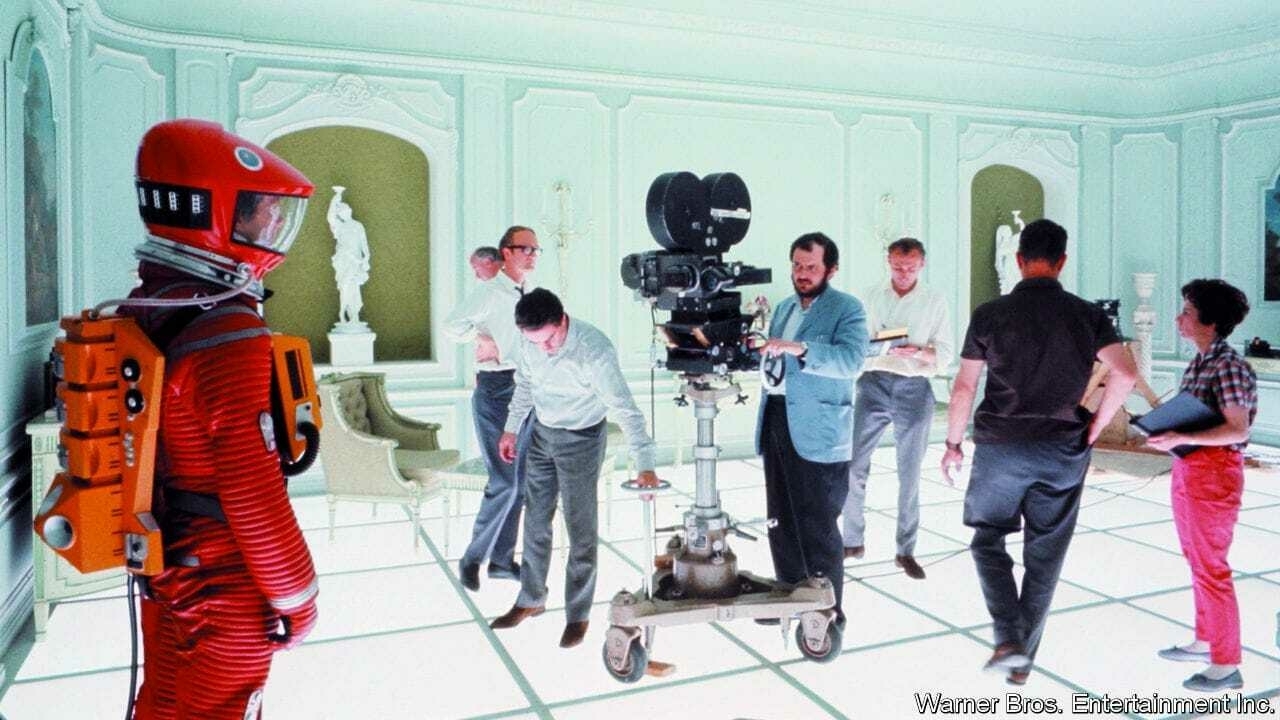
Anthony Lane on a new book about SF movies released in the summer of 1982:

Such is Nashawaty’s command of superlatives that he merits a sci-fi yarn of his own. “The Optimizer,” perhaps. Or “The Hyphenator.” Thus, “Star Wars” is lauded as “a true once-in-a-generation pop-culture juggernaut,” while the triumph of “The Wrath of Khan” was to turn “a cash-grab sequel into a franchise-resuscitating classic.” Far from scorning this excitable tic, I find it both judicious and contagious; the book’s parsing of “Halloween” as “a babysitter-in-peril slashterpiece” is hard to quibble with, and I wonder what other paragons of the medium would profit from so crisp a paraphrase. Ingmar Bergman’s “Cries and Whispers”? A crimson-tinged, don’t-hold-back Scandi cancerthon. Carl Theodor Dreyer’s “The Passion of Joan of Arc”? A chat-free high-stakes teen roast. Once you slip into the habit, you can’t stop.

I’m gonna have some fun with this game.