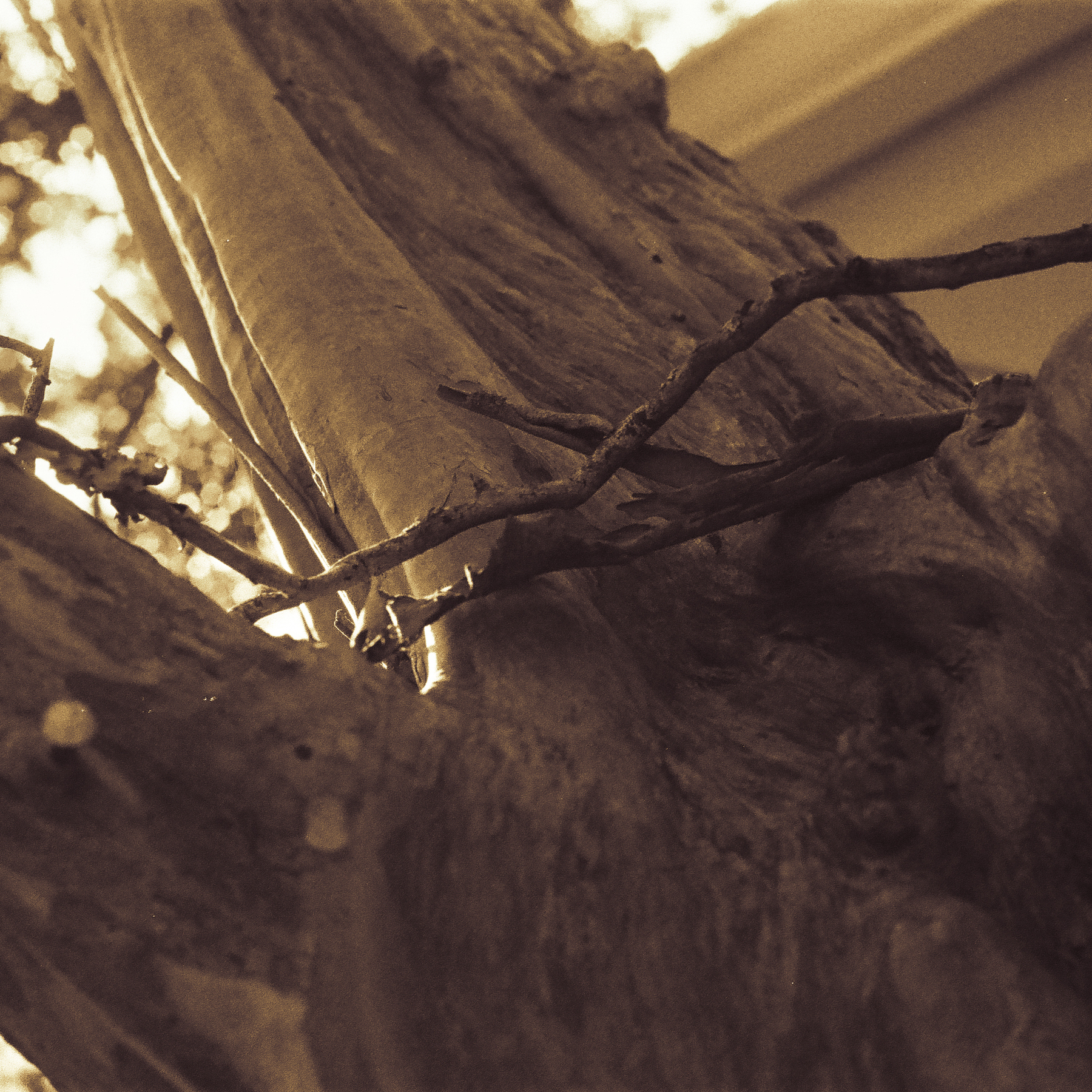
Model box for ‘Endgame’ by Samuel Beckett, designed by Tallulah Caskey, for the National Theatre, London
Mark Helprin: “Tending a fire enforces a sense of patience and tranquility. In that way it is like sailing a boat. You’re engaged by it and trapped by it; fire is captivating. Your time is captured so you have enforced idleness. Like music, it somehow coordinates the rhythms in your brain, or in your soul. It clears the air. Enforced idleness is the way I want to live. I want to be a prisoner of things that make me stop still.”
The Real Value of a Catholic Modernity
In 1996 the philosopher Charles Taylor delivered a lecture – later to be published with several responses – called “A Catholic Modernity?” But do you know what the truly essential value of a Catholic modernity is? It was a Catholic modernity that defeated Dracula.
The Catholic elements of the story are memorable. Most readers will readily recall Dracula shrinking back from a crucifix thrust in his face; many will also remember the consecrated Hosts with which Dr. van Helsing “sanitises” the big boxes filled with Transylvanian earth in which Dracula plans to hide himself; or the moment when, in the Transylvanian wilderness near the Count’s castle, he crumples more Hosts into powder that he uses to form a protective circle around Mina Harker.
But Dracula’s biggest mistake is to enter the world of technocratic modernity.
We know why he does it: he lives in a sparsely populated backwater, whereas London is the largest city in the world and offers an endless supply of victims: victims he can kill and victims he can make into an army of the Undead. But this man of the early modern era can only enter London by obeying the procedures of modernity, which is to say, by acquiring a modern identity. As James Scott has taught us – and this is a theme I pursue in an essay nominally about Agatha Christie’s Miss Marple – the modern state makes people legible. And it is because Dracula becomes legible that he is thwarted, discovered, and killed.
Because Dracula cannot move freely in the daytime, he must have a place of refuge and safety while the sun shines. So he needs both the aforementioned boxes – temporary coffins – and homes (“mansions”) or warehouses in which to keep them. To buy these things he needs money, which he has plenty of; but he also needs to follow the administrative procedures of the modern capitalist state. He can’t ship anything without giving a name and an address, and – more important to the story – without employing people, from real estate agents to plain old carters, who keep records. Our heroes’ long pursuit of Dracula is largely a matter of tracing the written records of everything Dracula does in England. Note also that the enemies of Dracula coordinate their plan of action with reference to the sequence of events that they have recorded using typewriters and phonographs. (Dracula is the first novel featuring voice memos.)
Dracula doesn’t understand this world. At one point he breaks into Dr. Seward’s office to destroy the handwritten journals and letters that document his evil deeds. But what he doesn’t know is that Mina Harker has made typewritten copies of it all. Dracula is like the Bishop of London in the sixteenth century who bought and burned copies of Tyndale’s New Testament, not realizing that Tyndale could use the proceeds to make more copies.
And modernity reigns not just in England: even in eastern Europe the pursuers are greatly aided by Mina’s knowledge of when the trains run — and by telegraphs they receive from London. Railway timetables, telegraphs, phonographs, typewriters, invoices, bills of lading, double-entry bookkeeping: these are the instruments by which Dracula’s pursuers draw their net around him. (And money – let’s not forget money. As Mina Harker writes in her journal, “Oh, it did me good to see the way that these brave men worked. How can women help loving men when they are so earnest, and so true, and so brave! And, too, it made me think of the wonderful power of money!”)
Dracula’s own powers – superhuman strength, the control of local weather, the ability to summon and direct brute creatures – cannot match the powers of his Enemy. And that Enemy is not Dr. Van Helsing or Jonathan Harker or any of the other people who chase him, but rather technocratic modernity itself — supplemented and strengthened by the spiritual technologies of the Church, that is, material objects sanctified for holy purposes.
Poor Dracula, he never had a chance – not against the double-reinforced power of a Catholic Modernity.
And here is a Tiffany window from a Philadephia church. It and its companion piece were saved from destruction by a man who bought them, along with othrer church furnishings, for six thousand bucks. He had no idea what he was buying: the windows were so covered with grime that they were unrecognizable.
Here’s an Agnes Northrop window, this one at the Art Institute of Chicago.
The Met has acquired “Garden Landscape,” a window made by Agnes Northrop in Lewis Comfort Tiffany’s workshop. Since the window is ten feet wide and seven feet tall, I’ll be eager to see where and how they display it.
On the last day of the year, I wrote a post on why I don’t do end-of-year posts.
Who's Counting?
I’m not doing an end-of-year roundup of what I’ve written this year, or what I’ve read, or what I’ve watched, or what I’ve listened to, or where I’ve traveled, or the museums I’ve visited, or the concerts I’ve attended – that last one because I didn’t attend any concerts in 2023, not even Taylor Swift’s Eras tour. But I’m not writing up any of that other stuff because I don’t know: don’t know how many books I’ve read, movies I’ve seen, etc. etc. I couldn’t tell you what the most-read posts on this blog are because I don’t have analytics enabled. I don’t know what my Top Ten Books of the Year are because I just don’t think that way.
I used to; when I was a teenager I kept a list of the Ten Best Books I’ve Ever Read and every time I read a book I felt obliged to sit down and think about whether it broke the top ten – and if so, where did it belong? (Arthur C. Clarke’s Childhood’s End reigned unchallenged at the top for quite some time – and then I read Ursula K. LeGuin’s The Dispossessed.) But then after a few years I realized that some of the books that meant the most to me were, unaccountably, not on the list; while some books that I had put on the list … I squirmed just seeing the titles. And the whole business was so much work. I now think of the day I crumpled up the sheet and threw it in the trash as my first real step towards maturity as a reader.
But it took me a lot longer to rid myself of that year-end feeling of accountability, of the calendar-turning responsibility to make a report. Now that I’ve put all that behind me, it seems odd that I ever thought that way.
Micro.blog has a great feature called Bookshelves, which I often – though not altogether consistently – use to note what I’m reading, less for myself than for those who ask. You can note what you want to read – which I never do, because I read at whim – what you’re currently reading, and what you’ve finished reading. But there are (blessedly) no dates on that page I just linked to, only book covers. I could figure out how many of those books I read in a given year, but I never have and never will. And in any case those three categories are insufficient: something important is missing.
I am inspired by my buddy Austin Kleon’s list of the books he didn’t read this year, the idea for which, he says, he got from John Warner. Inspired not to do that, exactly, but some year – not this year, mind you – to make a list of Books I Abandoned This Year.
I think one of the most interesting things you can do as a reader is to sit down and think about why you abandon a book, when that happens to you. Many, many pages in my notebooks discuss just this question. Over the years I gradually came to an awareness: the kinds of book I am most likely to abandon are history and theology; the kinds I am least likely to abandon are novels and biographies. It turns out that while I am deeply interested in both history and theology, my mind needs a human story to hook itself to. (Thus the great narrative historians, like Gibbon and C. V. Wedgwood, command my attention in precisely the same way that novels and biographies do.) Novels and biographies raise certain questions for me that I pursue by mining works of history and theology for information and insight, which means that I read quite a bit of history and theology; I just don’t read those books from beginning to end. I don’t read them the way I read narratives.
If you ask yourself why you’re abandoning a book you can learn a lot about your own intellectual habits, preferences, needs. The books you don’t finish can be even more important to you than the ones you do, if you learn to inquire into your own responses. And that’s one reason why I don’t make these year-end lists: they tell a misleading story.
And I’ve only noted one of the ways they mislead: What about short stories and poems and essays and even blog posts? In any given year, those short-form genres may shape your thoughts and feelings, may contribute to your flourishing, more than any work that happens to be book-length. One of Pascal’s pensées or one Psalm may matter more than a dozen books.
A few years ago, I started the practice of taking one hour each week to reflect on what I read and wrote in the previous seven days; and one morning each month to reflect on what I read and wrote in the previous month. I think that has been infinitely better for my intellectual and spiritual orientation than any year-end list could be. Something to consider, maybe?
A blessed new year to you, to me, and to this poor wounded world.
Finished reading: The Whalebone Theatre by Joanna Quinn. A lovely novel, at once melancholy and hopeful, about learning to cope with a changed world, and about the many forms and meanings of family. 📚