
Probing his riding companions, Robert [Pirsig, in Zen and the Art of Motorcycle Maintenance] comes to understand that John and Sylvia’s attitude of non-involvement with “technology” is emblematic of a wider phenomenon that was then emerging, a countercultural sensibility that seeks escape from the Man and all his works: “the whole organized bit,” “the system,” as they put it. The solution, or rather evasion, that John and Sylvia hit on for managing their revulsion at technology is to “Have it somewhere else. Don’t have it here.” The irony is that they ride their motorcycle out into the countryside to escape this “death force” that is trying to turn them into “mass people,” and it is precisely in these moments that they find themselves most intimately entangled with The Machine - the one they sit on. This dependence is an affront to their own sense of themselves as cultural dissidents. The problem, then, cuts rather deep. They are living a contradiction. It’s a bit like using Substack to write critiques of technology.
I wrote about how I decide what literary fiction not to read.
rational choices
The race is not always to the swift, nor the battle to the strong; but that is the way to bet.
There’s too much to read, right? Especially contemporary fiction. Too many choices. You have to develop a strategy of selection, a method of triage. I will always read more old books than new ones, as I think everyone should. But I don’t neglect what my contemporaries are doing. This summer, for instance, I plan to read Jon Fosse’s Septology and Zito Madu’s memoir The Minotaur at Calle Lanza. (Memoir is not fiction, of course, but it uses some of the same techniques and, for me, scratches some of the same itches.)
My own strategy for deciding what to read arises from these facts: Literary fiction in America has become a monoculture in which the writers and the editors are overwhelmingly products of the same few top-ranked universities and the same few top-ranked MFA programs — we’re still in The Program Era — and work in a moment that prizes above all else ideological uniformity. Such people tend also to live in the same tiny handful of places. And it is virtually impossible for anything really interesting, surprising, or provocative to emerge from an intellectual monoculture.
With these facts in mind I have developed a three-strike system to help me decide whether to read contemporary fiction, with the following features:
- The book is set in Brooklyn: Three strikes, you’re out.
- The author lives in Brooklyn: Three strikes, you’re out.
- The book is set anywhere else in New York City: Two strikes.
- The book is set in San Francisco: Two strikes.
- The book’s protagonist is a writer or artist or would-be writer or would-be artist: Two strikes.
- The author attended an Ivy League or Ivy-adjacent university or college: Two strikes.
- The book is set in Los Angeles: One strike.
- The author lives in San Francisco: One strike.
- The author has an MFA: One strike.
- The book is set in the present day: One strike.
I am not saying that any book that racks up three strikes cannot be good. I am saying that the odds against said book being good are enormous. It is vanishingly unlikely that a book that gets three strikes in my system will be worth reading, because any such book is overwhelmingly likely to reaffirm the views of its monoculture — to be a kind of comfort food for its readers. Even books as horrific as Hanya Yanagihara’s A Little Life — a novel I wish I had never read, and one of the key books that made me settle on this system — is comforting in the sense that we always know precisely whom we are to sympathize with and whom to hate. Daniel Mendelsohn is correct: “Yanagihara’s book sometimes feels less like a novel than like a seven-hundred-page-long pamphlet.” I would delete “sometimes.”
(Author graduated from Smith College, lives somewhere in New York City, book is set in New York City in more-or-less the present day: at least five strikes. I shoulda known.)
My system does not cover every eventuality. Among other things, it only applies to American writers, though the monoculture I have described extends overseas: for instance, Sally Rooney doesn’t live in Brooklyn, but she might as well; and her books aren’t set in Brooklyn, though they might as well be. I need to extend my system to account for this kind of thing. But I can continue to work on that.
I have a similar system for deciding whether to watch a movie; maybe I’ll write about that in another post.
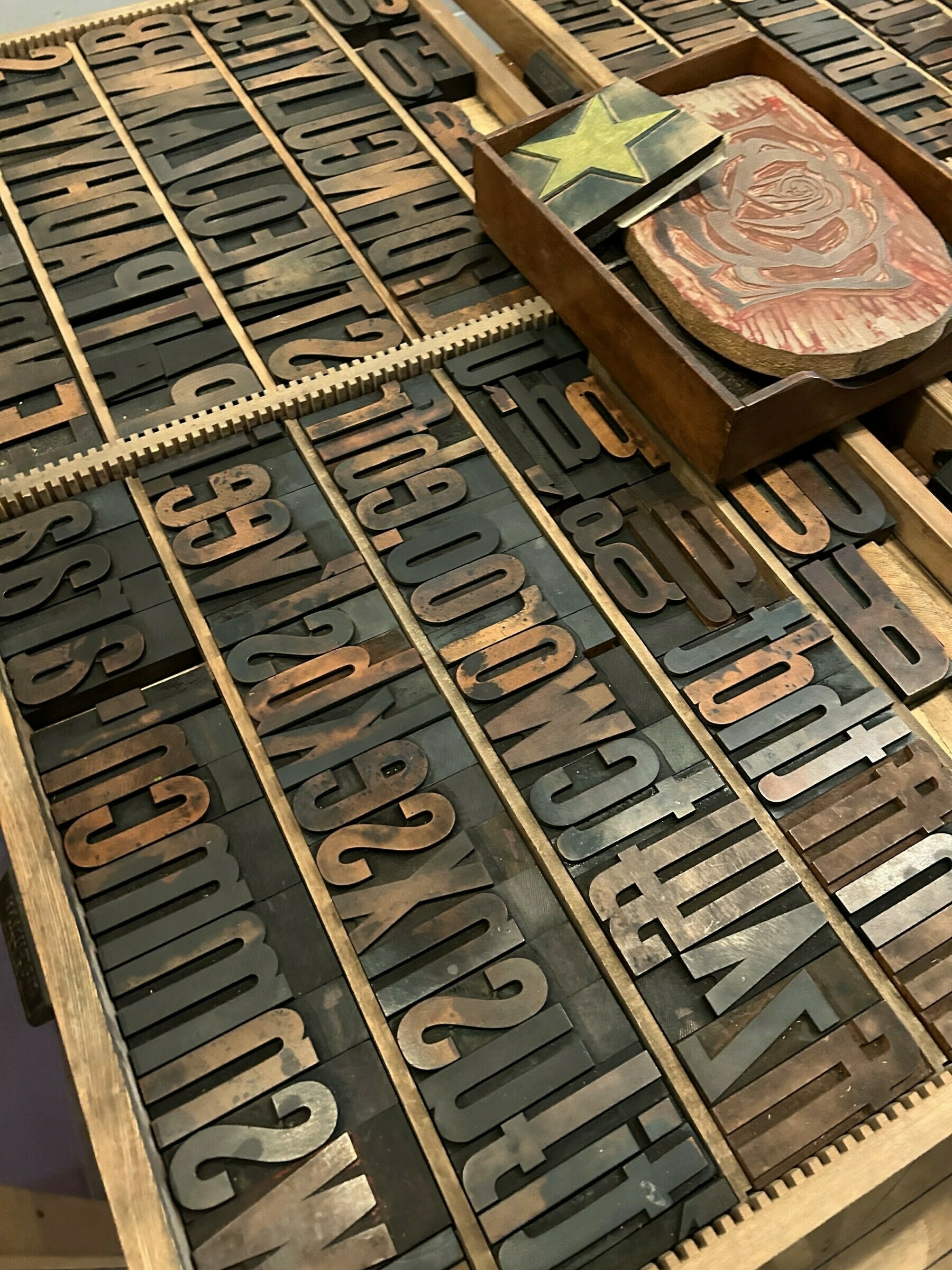
I just love type in cases.
The Guardian: “As people get older, they revise the age they consider to be old upwards.” This is good for me to know, since before too long I will officially be middle-aged.
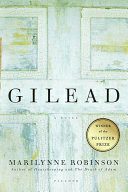
Currently reading: Gilead by Marilynne Robinson. I wrote a post about returning to this great book. 📚
Gilead revisited
The way we speak and think of the Puritans seems to me a serviceable model for important aspects of the phenomenon we call Puritanism. Very simply, it is a great example of our collective eagerness to disparage without knowledge or information about the thing disparaged, when the reward is the pleasure of sharing an attitude one knows is socially approved. And it demonstrates how effectively such consensus can close off a subject from inquiry. I know from experience that if one says the Puritans were a more impressive and ingratiating culture than they are assumed to have been, one will be heard to say that one finds repressiveness and intolerance ingratiating. Unauthorized views are in effect punished by incomprehension, not intentionally and not to anyone's benefit, but simply as a consequence of a hypertrophic instinct for consensus. This instinct is so powerful that I would suspect it had survival value, if history or current events gave me the least encouragement to believe we are equipped to survive.
– Marilynne Robinson, “Puritans and Prigs” (1996)
I’m re-reading Gilead now, in preparation for teaching it, and I am struck all over again by what an extraordinary book it is, what a gift it has been to so many readers — millions of them, maybe. (Promotional material for the book has long shouted A MILLION COPIES SOLD, but the count might be two million by now, and of course many thousands of people have read used and library copies.) Really, it’s some kind of miracle. The novels that have followed it are excellent novels indeed, but they aren’t miraculous. Gilead certainly is.
But today, twenty years later, would Gilead even be published by a big trade house? As long as the author could say that she teaches at the Iowa Writer’s Workshop, probably. Would it be widely read and celebrated? Almost certainly not. The self-appointed cultural gatekeepers would denounce it as a project of white cis-het imperialism, and trepidatious reviewers would either ignore it or offer, at best, muted praise. And if it were a first novel, it might not get published at all — though perhaps an outfit like Belt Publishing would take it on.
As I read Gilead today it still feels like a great gift, but also an artifact of a lost era.
costs
A brief follow-up to this post from last week: In our current climate of political assholery, no self-described “activist” can answer what I think of as an essential question: If you get what you want, what will be the costs? Every choice — every choice ever made by every human being — carries costs. Some of the costs are easily borne; some, though, are unmanageable, or even catastrophic. Especially if you’re a political activist, you have a responsibility to anticipate the costs of your preferred policy and develop a plan for dealing with them. But if you ask people who call themselves activists the question above, you’ll only get two responses: dumfounded blankness or sheer rage.
Me: I just spilled hot coffee all over my chest!
My son: Oh no! Is the coffee okay??
I wrote an extremely spoilery post about Gene Wolfe’s strange novel Peace.