
By this all people will know that you are my disciples, if you have love for one another. Whichever fate awaits us, Catholics and Christians of every political persuasion should remember that admonition and prove their fidelity by entering an uncertain future not just as disputants, but as friends.
Serious question arising from this: Are there any American Catholic thinkers for whom “fellow Christians” is a meaningful, operative category? I am inclined to think not. The frivolities of the so-called ecumenical movement of the previous century and the intensity of subsequent intra-Catholic disputes have combined put an end to that, at least for now. And this isn’t just a Catholic thing: as I have often commented in the past, the more strongly Christians feel that the faith is in decline, the less likely they are to think that we’re all in this together.

One thing about this wild, wild country It takes a strong, strong It breaks a strong, strong mind
— Bill Callahan, "Drover"
orbital obliquity
Planets which are tilted on their axis, like Earth, are more capable of evolving complex life. This finding will help scientists refine the search for more advanced life on exoplanets. […]
“The most interesting result came when we modeled ‘orbital obliquity’ — in other words how the planet tilts as it circles around its star,” explained Megan Barnett, a University of Chicago graduate student involved with the study. She continued, “Greater tilting increased photosynthetic oxygen production in the ocean in our model, in part by increasing the efficiency with which biological ingredients are recycled. The effect was similar to doubling the amount of nutrients that sustain life.”
“Orbital obliquity” is one of those scientific terms — like “persistence of vision” and “angle of repose” — that just cries out for metaphorical application.
All of the writers and thinkers I trust most are characterized by orbital obliquity. They are never quite perpendicular; they approach the world at a slight angle. As a result their minds evolve complex life.
P.S. Another of those metaphor-generating terms: “impact gardening.”
revisiting
People keep asking, but I don’t have anything to add to the current brain-dead kerfuffle over “Critical Race Theory” that I haven’t already said.
The overwhelming majority of people who want to argue about CRT don’t know whether CRT is a man or a horse.
We teachers, caught between those who want to enforce a particular vision of social justice in our classrooms and those who want to banish that vision, are being told that everything that is not compulsory is forbidden.
Five years ago I published an essay arguing that the key to the renewal of the university is the rebuilding of bonds of trust, especially between teachers and students — but also among all the other stakeholders of higher education.
le mot juste
Asked for comment on Facebook Bulletin, Substack spokeswoman Lulu Cheng Meservey said, “The nice shiny rings from Sauron were also ‘free.’”
more on sexual difference
My friend Adam Roberts’s response to my Tiptree-and-difference post pushes me to clarify a few points. Or rather, to realize that I can’t yet clarify a few points and need to think further.
Imagine a sliding scale of sexual difference, ranging from, on the far left, ... I don’t know, maybe having sex with a clone of yourself? — to, on the far right, “aliens in the shape of slime-blobs, or sentient piles of concrete blocks” (to quote Adam). Adam’s point is that the sexual xenomania of the man in “And I Awoke” is focused on aliens with a generally humanoid shape — aliens who, if you consider the possible morphologies of sentient life, manifest only minor differences from us.
So for any given person there will be a Point of Maximal Allurement — a point at which likeness and difference are balanced in such a way as to maximize desire. Tiptree suggests that if we humans ever do encounter aliens, that slider will, for many people, move to the right. New differences lead to new allurements. The question Adam asks is: Will it really happen that way? Is there, as Tiptree seems to think, a latent human xenophila just waiting for its chance to become manifest? (Adam has his doubts.)
But as I think about this I realize that Tiptree only occasionally suggests that such xenophilia is human — in the stories it is typically, rather, male. (The only exception I can think of is the unnamed, silent wife of the man in “As I Awoke,” and the strong suggestion is that her attraction to aliens is masochistic. The narrator’s sister in “A Momentary Taste of Being” is drawn to another world, another way of being, in a way that seems, to me anyway, unrelated to sexual desire.) And many of Tiptree’s stories represent male desire as a manifestation of male dominance: a man’s libido simply is the libido dominandi.
And that in turn makes me realize that I have not clearly defined allurement. Desire for intimacy ≠ desire for pleasure ≠ desire for conquest. And even if for men the third of those always displaces the other two, that doesn’t really answer the notorious Freudian question: “What do women want?” Tiptree’s stories — that is to say, stories written by a woman under a man’s name and almost always from the perspective of a male character — tell us a lot about what men want. But what do the women in “Houston, Houston, Do You Read?” want? In “The Women Men Don’t See,” what does Ruth want when she asks the aliens to take her away? She doesn’t say. Tiptree leaves such matters to the contemplation of the reader.
But did Alice B. Sheldon think she knew? She herself was twice married to men, but once said, “I like some men a lot, but from the start, before I knew anything, it was always girls and women who lit me up.” One could draw any number of conclusions about how her own patterns of desire shaped her fiction, and about why she does so much more to represent male desire than female, but it’s impossible to be confident that any of them are right.

difference
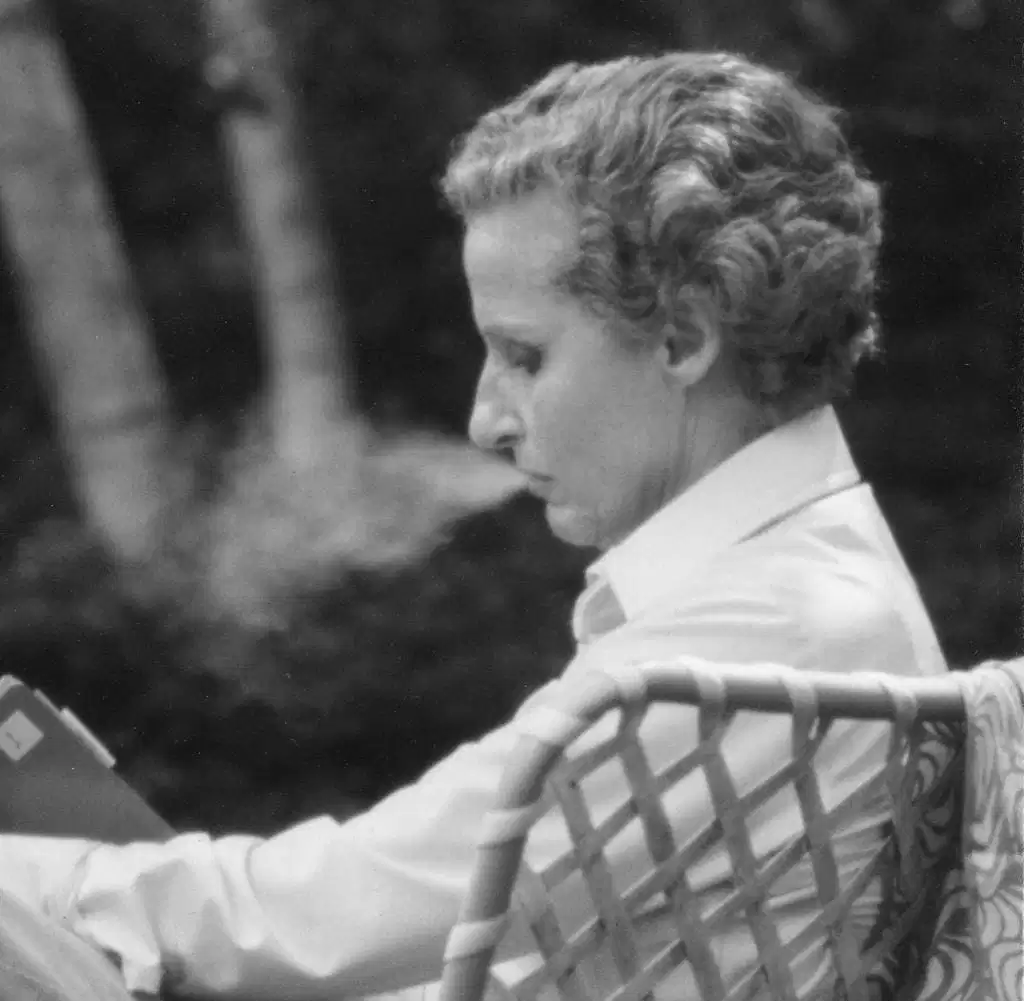
Lately I’ve been re-reading the stories that Alice B. Sheldon wrote under the name James Tiptree, Jr. and it occurs to me that almost all of them are meditations on the same theme: The way genuine difference, especially but not only sexual difference, simultaneously alienates and allures. Now, I should also add that the Tiptree stories seem unable to imagine this dialectic settling into a healthy tension; almost invariably the alienation and the allurement alike take pathological forms.
In “And I Awoke and Found Me Here on the Cold Hill's Side” we meet a man and, eventually, his wife who are in the grip of a kind of sexual xenomania, obsessively lusting for aliens of various species in a way that the man perceives as pathological but inevitable. Sometimes the man sees in the aliens a kind of beauty, and traits that present in exaggerated form what he finds desirable in human women, but essentially it is the very alienness that obsesses him: His sexual passion is awakened by the impossibility of sexual union. (This is also the theme of Samuel R. Delany’s famous story “Aye, and Gomorrah.”) The story’s title, of course, comes from Keats’s poem “La Belle Dame sans Merci,” in which a knight’s life is destroyed by his encounter with a beautiful fairy, an encounter with otherness that infects him with a permanent obsession that becomes a wasting disease.
But Tiptree’s stories often suggest that pathology dictates the typical patterns of relation between human men and human women. In “The Women Men Don't See” the women of the title are not sexually desirable to the man who narrates the story and are therefore invisible to him; he only sees them at all when he’s trying to decide whether they are potential sex partners, or rather sex objects. One of the women, the mother of the other one, understands this, and says to him,
“Think of us as opossums, Don. Did you know there are opossums living all over? Even in New York City.”
I smile back with my neck prickling. I thought I was the paranoid one.
“Men and women aren't different species, Ruth. Women do everything men do.”
“Do they?”
When, later in the story, Don discovers that the woman has planned an encounter with aliens and wants to be abducted by them, taken away from Earth, his first response is to try to shoot the aliens — but (of course; the story is very on-the-nose in multiple respects) he ends up shooting Ruth instead. She is not badly wounded, and later they have a final conversation.
“I think they're gentle,” she mutters.
“For Christ's sake, Ruth, they're aliens!”
“I'm used to it,” she says absently.
Living with men, living with other terrestrial species, living with aliens — it’s all the same to Ruth. (It’s no accident that she shares a name with the biblical character who leaves her homeland to dwell among strangers.) To the aliens, who insist in halting and malformed English that they are students, that they want to learn rather than harm, she will be an object of intense attention — they will see her. But is that kind of being-seen any better, really, than being invisible? She stakes her life on the possibility, however remote, that it will be; because she has no hope at all for the world she was born into.
“Houston, Houston, Do You Read?” — another haunting but schematic story — imagines a future in which, by some kind of time-accident, three astronauts are thrown forward into a future world in which all living humans are female clones. They are rescued from their ship and brought into one occupied by five women. Under the influence of a disinhibiting drug, the astronauts reveal their true impulses: one of them is consumed by a mania for domination, a second is consumed by violent sexual lusts, and the third, the classic “beta male,” feels both of those impulses but in a muted way. (I told you the story is schematic.) It seems obvious to the women — who observe these men with a kind of detached curiosity, as, perhaps, the aliens in “The Women Men Don’t See” will observe Ruth and her daughter — that the re-introduction of males into human society, a re-establishment of the old ways of sexual reproduction, would be a Very Bad Idea Indeed. Difference is interesting to them, perhaps, but after several hundred years of life without men it’s not interesting enough to make them want to change their social order. Much alienation, little allurement.
In the darkest Tiptree stories, the allurements of difference are depicted as fundamentally irrational impulses — irrational, but so powerful that they don’t allow for the calm decisions to separate and isolate that mark the decisive moments in “The Women Men Don't See” and “Houston, Houston, Do You Read?” The fantastically weird “Love Is the Plan the Plan Is Death” describes a species of creature, right on the cusp of sentience, one member of which tries to find ways to override the impulse to eat what you love. It turns out, though, that he, being male, isn’t one of the eaters; and that sometimes creatures do what they’d rather not do — if that’s The Plan. And in what seems to me Tiptree’s darkest story, “A Momentary Taste of Being,” the human passion to reach the stars is nothing other than the impulse that drives spermatozoa into a hostile environment where almost all of them will die.
Difference can be profoundly alluring, these stories seem collectively to say, but we should heed the countervailing feeling of alienation — if we can. It would be rational … but, in the end, how powerful is reason?
It’s fascinating to read these stories in our present moment, in which race occupies essentially the same cultural territory that sex occupied for Alice Sheldon and other women of her time. I suspect that Sheldon would have thought and maybe even felt differently about the alienation/allurement dialectic if she had had available to her our culture’s passionate commitment to gender as a social construct that is (therefore, so the faulty logic goes) amenable to infinite performative manipulation by individuals. For us, it’s racial difference that is especially often experienced in the way that Sheldon experienced sexual difference. When Reni Eddo-Lodge wrote Why I'm No Longer Talking to White People About Race she was basically making the decision that the women in “Houston, Houston, Do You Read?” make about men.
The homologies between racism and sexism are not new, of course, and we can trace them back a long way: for instance, it’s worthwhile, I think, to map the concerns of “The Women Men Don’t See” onto the similarly knotted tension between not-being-seen and being-seen-badly in Ellison’s Invisible Man. But because race is such a massive component of our current political disputes, people now commonly choose and indeed embrace alienation in that whole sphere. (I’ve have recently learned that a large family of my acquaintance, well known for its cheerful closeness, has now been divided and broken by disagreements over Donald Trump. And at least some members of the family feel that it would be morally irresponsible not to be so broken.)
I think it’s because race is so widely seen to be intractably binary — Whites and Others — while gender and even sex are seen as chosen and performative that racial tension has taken hold of our public imagination in ways that the #MeToo movement, in the end, didn’t. Think for instance of New York Governor Andrew Cuomo: his behavior towards women has been despicable, but he easily survived the outrage, which proved to last only a few days. (Alice Sheldon would not have been surprised by the behavior or the tolerance of it.) If his sins had been equal in seriousness but racist in character — if he had demonstrably treated Black people around him with the same callous manipulative disregard that he treated the women who worked for him — would he have a job now? The question answers itself.
(Of course, if he had been a Republican governor, then he would have had the smoothest sailing imaginable. Openly, bluntly racist figures are perfectly welcome in today’s GOP; it’s only critics of Donald Trump who aren’t. But that’s a story for another day.)
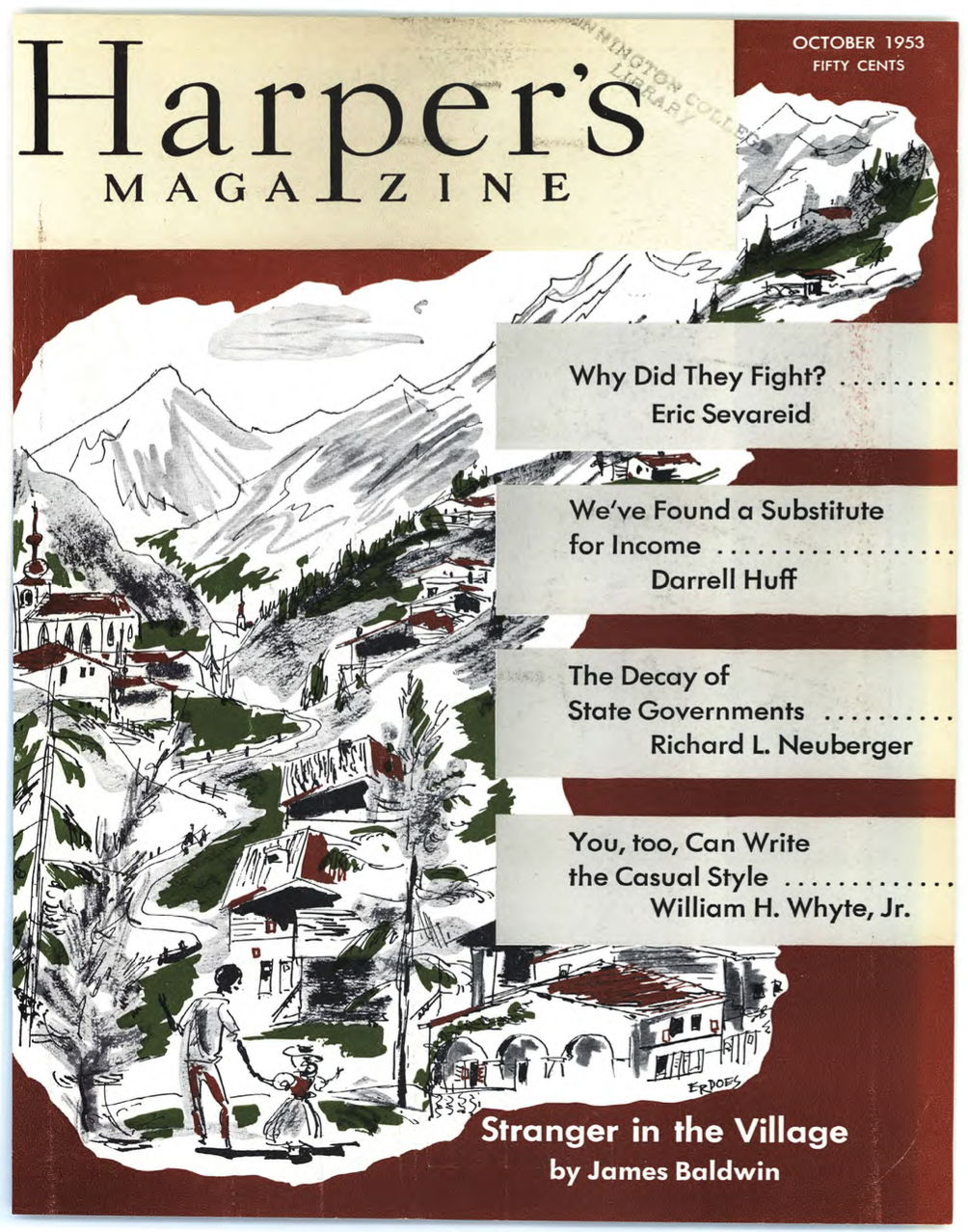
By way of conclusion, I’m going to make a simplistic statement that I may perhaps be able to unpack later: I believe that what we need when thinking about all forms of difference is (a) a frank acknowledgement of both allurement and alienation, and (b) an ability to achieve a genuinely tragic sense of history that does not succumb to despair. We should begin, collectively, by reading James Baldwin’s essay “Stranger in the Village.”
credit
Thomas Tuchel is known as a skilled practitioner of modern atacking football, but when he got to Chelsea in the middle of last season the first thing he attended to was his team’s defending. Under Frank Lampard the side had been leaking goals at an alarming rate, and Tuchel was content to set aside his tactical preferences for a while in order to plug the leakage. Chelsea’s first few games under Tuchel weren’t exciting, but they almost completely shut down opposing attacks, and then, with that foundation in place, Tuchel turned to the task of expanding his side’s offensive repertoire.
In these Euros, Gareth Southgate has done much the same for England. I complained in the group phase about his conservatism, but after today’s thrashing of Ukraine, it’s easy for me (and everybody else!) to see the wisdom of his approach. In the group stage they scored one, zero, and one; then against Germany they scored two; and now against Ukraine four. But they have yet to give up a single goal. It seems that this England squad, like Tuchel’s Chelsea, has learned that when you have well-earned confidence in your defending, then you can grow ever more ambitious and creative in attack.
So: a big thumbs-up to Gareth Southgate.

Looking ahead: On current form an England-Italy final is obviously the more likely, but all four sides are playing well and, even more important, are very well-balanced, with few evident weaknesses. I expect Italy to exploit Spain’s defensive limitations, and England to wear down Denmark; but no result would surprise me, and these are four very likable sides to boot. I will of course be cheering for England all the way, but I would be happy to see any of these four teams lift the trophy at tournament’s end.
tales of technocracy
The chief theme of my book The Year of Our Lord 1943 is that, in the midst of World War II, a series of Christian writers and thinkers discerned that the Allied victory over the Axis powers would be perceived not as a victory of democracy over tyranny but rather as a victory of technology. They sought to recommend humanistic models of education that would counterbalance the coming Novus Ordo Seculorum. But they were not successful, at least on their own terms; technocracy arrived, and dominated. Today’s surveillance capitalism is the product, in quite direct ways, of the particular form taken by the Allied victory in World War II.
I have just been re-reading some books that I first read almost fifty years ago — Isaac Asimov’s original Foundation trilogy and Arthur C. Clarke’s Childhood’s End — and am struck by how much they have in common, and how strongly they echo the themes of my story. Asimov’s three novels were originally published as stories between 1942 and 1950, then stitched together into novels; Childhood’s End was written in 1952. Clarke’s book is far, far more technically accomplished than Asimov’s creaky contraptions, and they differ dramatically in scale and setting: Clarke’s story treats of events that span a century on near-future Earth, while Asimov’s trilogy covers several hundred years and ranges around the entire galaxy. But their core concerns are remarkably similar, and are the product of the same historical moment to which my five Christian intellectuals in YOOL1943 were responding.
In the Foundation books a man comes to understand the historical development of humanity, past and future, and implements a plan for directing it; in Childhood’s End aliens who understand the historical development of humanity, past and future, come to Earth to implement a plan for directing it.
In both cases the new planned order successfully displaces an existing political structure quite like our own: unequal, decadent, sclerotic, tired.
In both cases satisfaction with the new order gives way eventually to a kind of complacency. In Asimov’s fictional world, the planet Terminus, guided by the science of the Foundation, comes to dominate its sector of the galaxy, but perhaps at the cost of its soul; in Childhood’s End, “The end of strife and conflict of all kinds had also meant the virtual end of creative art. There were myriads of performers, amateur and professional, yet there had been no really outstanding new works of literature, music, painting, or sculpture for a generation. … It was a much fairer, but a much smaller, planet than it had been a century before. When the Overlords had abolished war and hunger and disease, they had also abolished adventure.” Technocracy is powerful, and once a society experiences its blessings a return to an earlier status quo is unthinkable; yet as time goes by thoughtful people, knowing what technocracy enables, can’t help reflecting on what it inhibits or flatly disables.
The parallels eventually give way to significant divergences: Clarke is interested in imagining new and strange evolutionary pathways for humanity; Asimov wants to suggest that all empires follow the path Gibbon traced for Rome, energetic success giving way to decadence. But it’s noteworthy that both of them are so deeply invested in thinking about the ways old political orders give way to self-proclaimed Utopias; and both, also, see that the technocratic Utopia — as distinguished, I think, from the more traditional Utopias of authoritarian and totalitarian states — is a new thing in the world.
excerpt from my Sent folder: the Hitchens unit
You know, we could really get into the spirit of modern administration and come up with a way to measure the influence of public intellectuals. Perhaps the scale could be based on the Hitchens unit, one Hitchens (h) being the amount of public mindspace occupied by Christopher Hitchens in one year. I could then say that in the most recent fiscal year I delivered 0.02h, down, alas, from the previous year’s 0.035h. I could also articulate a Five-Year Plan for getting annual delivery up to 0.1h, with my really long-term goal being the achievement of a lifetime score of 1h.
DEI
That brings us to a final problem with [Diversity, Equity, and Inclusion] statements in hiring processes. Selecting for “correct” social views increases incentives to flatter and lie. Most faculty job applicants have spent two or more decades impressing teachers. It should be no surprise if they know what academic interviewers want to hear. (Or at least what the administration says interviewers should want.) Some of the people speaking insincerely will no doubt be passionate teachers and scholars willing to jump through hoops for an opportunity to do good work, but others will be slippery careerists who thrive by flattering. Why give them more chances to leverage their skills?
This is correct. The demanding of DEI statements from academic job candidates has nothing to do with the pursuit of social justice. Its purpose, rather, is to test candidates for subservience; to weed out those who ask difficult questions or exhibit independence of mind.
the rotting internet
Some colleagues and I joined those investigating the extent of link rot in 2014 and again this past spring.
The first study, with Kendra Albert and Larry Lessig, focused on documents meant to endure indefinitely: links within scholarly papers, as found in the Harvard Law Review; and judicial opinions of the Supreme Court. We found that 50 percent of the links embedded in Court opinions since 1996, when the first hyperlink was used, no longer worked. And 75 percent of the links in the Harvard Law Review no longer worked.
People tend to overlook the decay of the modern web, when in fact these numbers are extraordinary — they represent a comprehensive breakdown in the chain of custody for facts. Libraries exist, and they still have books in them, but they aren’t stewarding a huge percentage of the information that people are linking to, including within formal, legal documents. No one is. The flexibility of the web — the very feature that makes it work, that had it eclipse CompuServe and other centrally organized networks — diffuses responsibility for this core societal function.
A very interesting article — I’m saving it as a PDF because who knows what may happen to the link? (Maybe I should print it out as well….)
writing a Life
Over at the Hog Blog, I've written about Herman Hesse -- more specifically, about a passage from The Glass Bead Game, his novel about an archipelago of quasi-monastic institutions of learning:
When a member of the Castalian community completes his formal schooling, he (and yes, it’s always “he”) becomes free to pursue any course of study that he desires to pursue. Only one requirement is imposed upon him: Each year he must write a Life.
A what? A Life — an autobiography, and yet not an autobiography. The scholar must write a narrative of his life as it would have been if he had been born in another time and place. Some of the Castalian scholars enter into this task with great verve, deciding, for instance, that a Life of oneself as a medieval Dominican requires a composition in scholastic Latin. Some of the scholars who wrote such lives were led, in the end, to a belief in reincarnation — surely they had indeed lived the Life they had just written. But these were in the minority. For most “it was an exercise, a game for the imaginative faculties.” […]
The question I want to ask is simply this: Is the writing of a Life a game that, in our current moment, can be played? Hesse described each imagined Life as an “entelechy,” that is, the realization of a potential — but perhaps that assumes something like the pre-existence of souls, an Identity that somehow exists before it is embodied in, realized in, a particular culture, a particular gender, a particular ethnicity. In other words, it may be that the very concept of writing a life presupposes a humanism, an idea of the human spirit that precedes any particular embedding. Can we, dare we, think this?
I think belief in the social construction of the self is like denial of free will: these are positions that a skilled disputant can make a strong case for, but they remain outside the scope of lived experience. As Cardinal Newman might say, I may give nominal assent to the claim that my very self is wholly constructed by my social environment or that my every thought and act is determined, but I cannot give real assent to either claim.
But if you try — well, then, you absolve yourself from multiple human responsibilities. If you hold your actions to be predetermined, then you will never repent, and if you never repent you will never amend your life. And if you believe that your identity is wholly socially constructed, then you are unlikely be curious about, much less empathetic towards, those whose lives are constructed otherwise than yours. Their story is not and cannot be your story.
Of course, that selves are wholly social constructed is not a universally held view. As I note in the essay, our society is at the moment very confused about such matters: in general, educated people tend to think that even if race is a social construct the effects of one’s race are fundamental and unchangeable, while sex is (or in theory ought to be) infinitely malleable, but there is disagreement on both points and almost no one knows why they believe what they believe. The writing of a Life would make for a fascinating exercise in testing the limits of a belief in social construction and of a belief in total self-fashioning. I think I might write one myself.
Relatedly, I think, this powerful meditation from my friend MBD:
If people have an unmet desire for recognition, they can call attention to themselves by calling attention to their suffering. The thoughtless words, innocently ignorant slights, and verbal miscues of bystanders are reframed as a pervasive tyranny of micro-aggressions and mini-oppressions fraught with political meaning. This is the external crucible out of which identities are formed.
But as with so much else, I can’t help but see that the existential longing to become what you were meant to be, to somehow turn the sufferings you have endured into a transformative and liberating moment, is fundamentally religious. The experience of becoming what you were meant to be can only be a delusion in a materialist existence. It is the longing to discover Providence at work in one’s life, which is also the desire to discover a purpose that is given to you as a gift, but which has meaning and intelligibility in an objective universe. You find freedom in your predestined purpose precisely because the universe seems to open up to you when you discover it, fresh with new meaning, and deeper joys.
Identity politics the way we have them are the result of men and women who have been baptized into Christian longings, but who have been given only the intellectual and political tools of Whigs and Marxists for dealing with them. If political tyranny issues forth, it will only be an external reflection of the interior tyranny of lost souls, who are trying to get water to gush forth from a stone, even as they disclaim belief in the miraculous.
the real Adorno
Because of his influential analysis of fascism, his complex critique of capitalist social structure and culture, and his advocacy for political and individual freedom, Adorno seemed like a natural ally to the student movement. But, as historian Philip Bounds puts it, Adorno “rejected the idea that radical intellectuals had a duty to serve as cheerleaders for … revolutionary students.” When he refused to support what he called the students’ uncompromising “actionism” — Adorno’s word for the students’ nihilistic desire to act without need of justification — his own lectures and reputation became a target. He was shouted down, badgered, and defamed. In one incident, Adorno called the police to clear student occupiers of the Institute.
I have written about the inept history linking the Frankfurt School to contemporary social-justice movements, but not in the kind of compelling detail that Stern offers here.
economies
When, in August 1860, John Ruskin published an essay in Cornhill Magazine – an essay that would later become the first chapter of his book Unto This Last — readers were appalled by his argument that all workmen in a given profession should be paid the same, no matter whether they do their work well or badly. When he published Unto This Last, he said “it is a matter of regret to me that the most startling of all statements in them, – that respecting the necessity of the organization of labour, with fixed wages, – should have found its way into the first essay; it being quite one of the least important, though by no means the least certain, of the positions to be defended.”
But this insistence on the insignificance of his “startling” statement is belied by the title that he chose for the book. “Unto this last” is a line uttered by Jesus in the parable of the workers in the vineyard, in which the owner of the vineyard pays the people the workers who arrive at the end of the day the same that he pays those who worked all day long. This is of course a parable of the Kingdom, because all of Jesus’s parables are: the simplest point is that those who arrive late in the narrative of God’s redemptive work in the world, e.g. the Gentiles who hear Jesus’s message as opposed to the Jews who have been a part of this covenant history for hundreds and hundreds of years, are welcome to the same reward of eternal life that the old-timers are. It is not, most interpreters agree, a story about the principles of political economy. But nothing could be more characteristic of Ruskin’s thought that his belief that it is a principle of political economy, indeed the key principle of political economy, which is why he titles his book as he does.
Right from the beginning of Unto This Last Ruskin insists upon one governing point: that in thinking of political economy it is impermissible to treat human beings as what we today might call rational actors, people who simply maximize their own economic well-being, even when that comes at the expense of others. Or especially when it comes at the expense of others.
Disputant after disputant vainly strives to show that the interests of the masters are, or are not, antagonistic to those of the men: none of the pleaders ever seeming to remember that it does not absolutely or always follow that the persons must he antagonistic because their interests are. If there is only a crust of bread in the house, and mother and children are starving, their interests are not the same. If the mother eats it, the children want it; if the children eat it, the mother must go hungry to her work. Yet it does not necessarily follow that there will be “antagonism” between them, that they will fight for the crust, and that the mother, being strongest, will get it, and eat it. Neither, in any other case, whatever the relations of the persons may be, can it be assumed for certain that, because their interests are diverse, they must necessarily regard each other with hostility, and use violence or cunning to obtain the advantage.
For Ruskin, human beings are never purely economic (in our usual sense of that term) in their motives and actions, but are always actuated in considerable part by their affections. Another way to put this is to say that Ruskin thinks that political economy needs to take the gift economy into account as well as the market economy, and his bizarre (or apparently bizarre) plan for paying workers is a natural outgrowth of this emphasis.
More on all this in due course.
on re-reading Acts
I’ve been re-reading the book of Acts, and my chief response this time is: It’s wonderfully encouraging to see how bluntly and unapologetically Luke records a chronicle of confusion, ineptitude, and misdirected enthusiasm. The apostles are often a collective mess, and Luke does nothing to hide that from us. I find this strangely consoling.
It’s also fascinating to note how little the apostles understand the message they been entrusted with. They know that Jesus is the Christ, the promised Messiah of Israel, and they know that the Christ’s own people rejected him and demanded his death – but beyond that they’re a little fuzzy about what the life, death, resurrection, and ascension of Jesus mean. The idea that what Jesus offers them (and all of us) is God’s limitless grace is rarely mentioned. It’s there, but only in tentative and vaguely articulated form.
The Reformation’s idea of returning to the apostolic church is therefore, I think, only partly right. We want their spirit – their enthusiasm, their boldness in proclamation, their trust in God, their loving care for one another – but we don’t want their ignorance. How to develop theological depth and complexity without acquiring an accompanying institutional structure that tends toward sclerosis, that makes the communal life of the church stiff and inflexible and disconnected from its natural missional energies – that is the ongoing problem that Christ’s church faces, just as much as the structurally similar problem of navigating between legalism and antinomianism.
We don’t navigate those complexities very well, and never have, in large part because of pride. Every time a new Christian movement arises in a place where there is a dominant form of church, that dominant form should be grateful to the dissenters, because the dissenters – who are not necessarily correct to dissent – nevertheless reveal to the dominant church the ways it has fallen short, the needs and desires it has failed to meet or address. (The flip side of this point is Auden’s contention that Kierkegaard should have been grateful to the Danish Lutheran Church for teaching him the very Bible in which he found the standards by which he condemned it.) Every dissent contains a lesson for those with ears to hear, for those whose ears are not closed by pride.
One more noteworthy point about this narrative: Again and again, in their disputes with the new Jesus sect, the leading rabbis try to get management to take their side, to the ongoing puzzlement and frustration of the Romans, who repeatedly ask, “How is this our business?” A Roman official even has one of the rabbis beaten to discourage him from further approaches, yet still the rabbis return and demand Roman intervention. And of course this is what Paul, another rabbi, does as well: King Agrippa even comments to the Roman procurator Festus that Paul could have been freed and set on his way if he hadn’t appealed to Caesar (which seems to have set some unstoppable legal machinery into motion).
The Jews had a lot of practice dealing with hostile or at least semi-hostile occupying powers; they had been doing it for hundreds of years – though if N. T. Wright is correct they developed a particular hatred of the Romans when Pompey entered and desecrated the Temple in 63 BC. (This hatred apparently intensified when no equivalent of Judas Maccabeus appeared to resist the oppressor.) That said, Simon Schama, in his Story of the Jews, notes that before Pompey had even entered Jerusalem several rival claimants for Jewish leadership visited him, serially, to enlist his support against the others. So hatred there may have been, but hatred doesn’t preclude calculation, intrigue, and trying to get management to take your side.
editing tools
The kind of work I’m doing right now — my critical edition of Auden’s book The Shield of Achilles — is somewhat unusual, but some readers might be interested in the tools I’m using to get it done.
The first thing I did was to go to AbeBooks and order four copies of early editions of the book, two of the American edition (Random House) and two of the British (Faber). These need to be scrupulously compared for differences.
I selected one of them — the earliest, which means an American edition (the book came out here several months before it did in the U.K.) — and made it my working copy. Before annotating it, I took photos of every page of the book. Then I went through the book with a highlighter, marking every word or phrase that I believe will require annotation.
I grabbed a pencil and, on the pages and on sticky notes, made initial comments on ideas that need to go into my Introduction, calling attention to related passages.
Then I returned to the photos of the text. I opened the Photos app on my Mac, navigated to the photo of the first page, and typed the keyboard shortcut I use to invoke TextSniper. TextSniper is a fabulous app. When you invoke it you get an area-selection tool. Draw a rectangle around any text on your screen and TextSniper OCRs the text and copies it to your clipboard. There are other ways I could do this: for instance, I could scan the book into a PDF and then use an app like PDFpen to OCR the whole text. But that brings in a lot of extraneous material, for instance anything in the pages’ headers and footers. With TextSniper I get precisely the text I want — and it is the most accurate OCR tool I have ever used, by a long shot. So Photos to TextSniper to BBEdit — and very shortly I had a complete text of the book to work from.
Next: Markup — in Markdown. In this case basically headings and italics — pretty simple work that only took a few minutes. I went from a bunch of digital photos to a clean, accurate working text in little more than half an hour.
As soon as you start the work of textual editing you need to generate comments (about formatting, for instance) and queries for the eventual copy editor. And since Microsoft Word is the lingua franca of publishing, I therefore had to convert my Markdown file to Word. Most of the time I use pandoc for such conversions, but I find that Brett Terpstra’s Marked does a better job of preserving line breaks — and a book of poems has a lot of line breaks.
(So why not just paste the OCR’d text directly into Word, instead of using a text file as the intermediate stage? Because, as you surely know, structuring text in Word is a nightmare. You try to turn one line into a header and Word decides to make the next paragraph part of the header and change the typeface of the previous paragraph. And then you can’t figure out how to fix it. A plain-text file structured with Markdown is precise. My primary governing rule of writing and text-editing: Never open Word until you absolutely have to.)
Okay, so then I had my accurate, ready-to-be-annotated text in a Word file. Which left me with one final workflow problem to solve: adding the annotations, which in the published edition will appear at the end of the text. There are several ways to do this, involving split screens or external monitors or even second computers. But here’s what I did: I got out my little-used iPad and connected it to my MacBook Air with Sidecar. Now I can look at the Word file of the book’s text on the iPad and add annotations in BBEdit on the Mac. Baby, I got a stew going!