
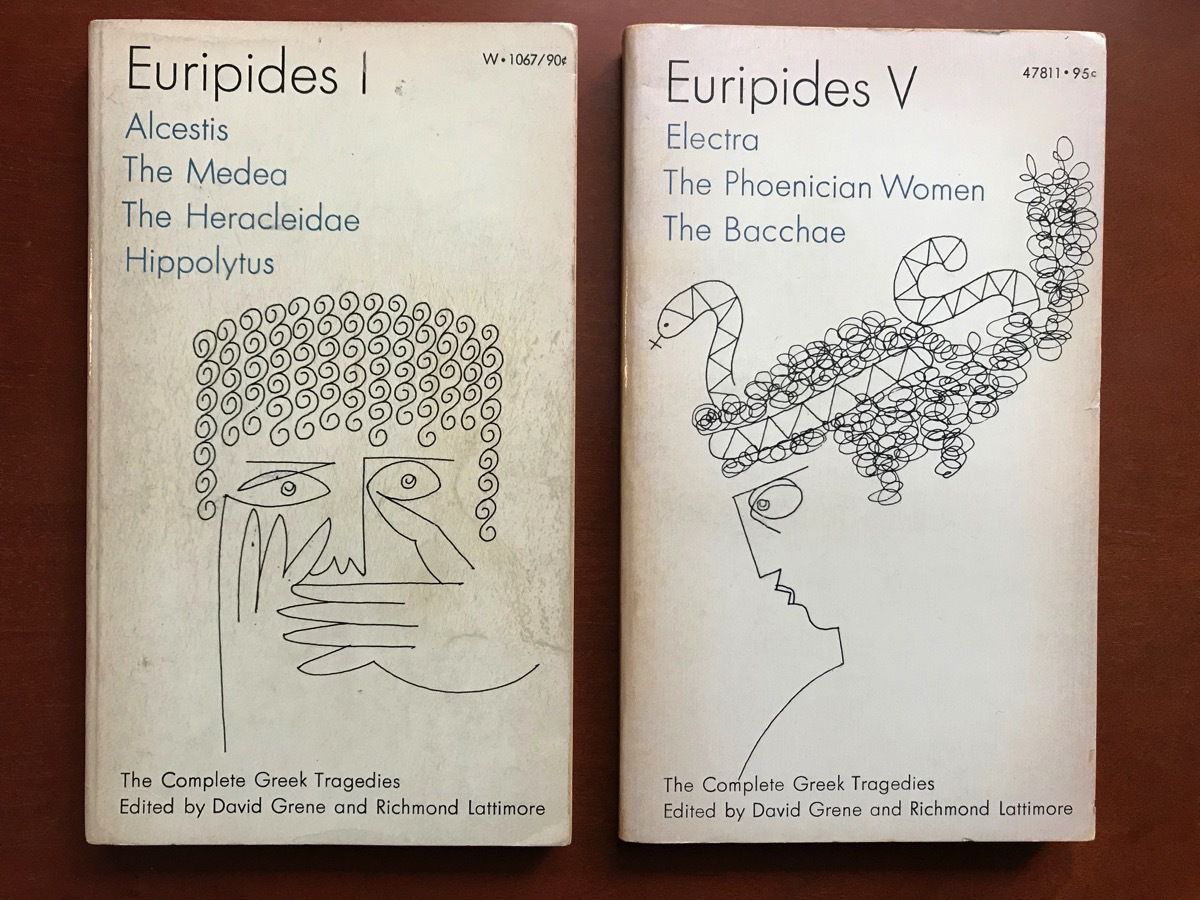
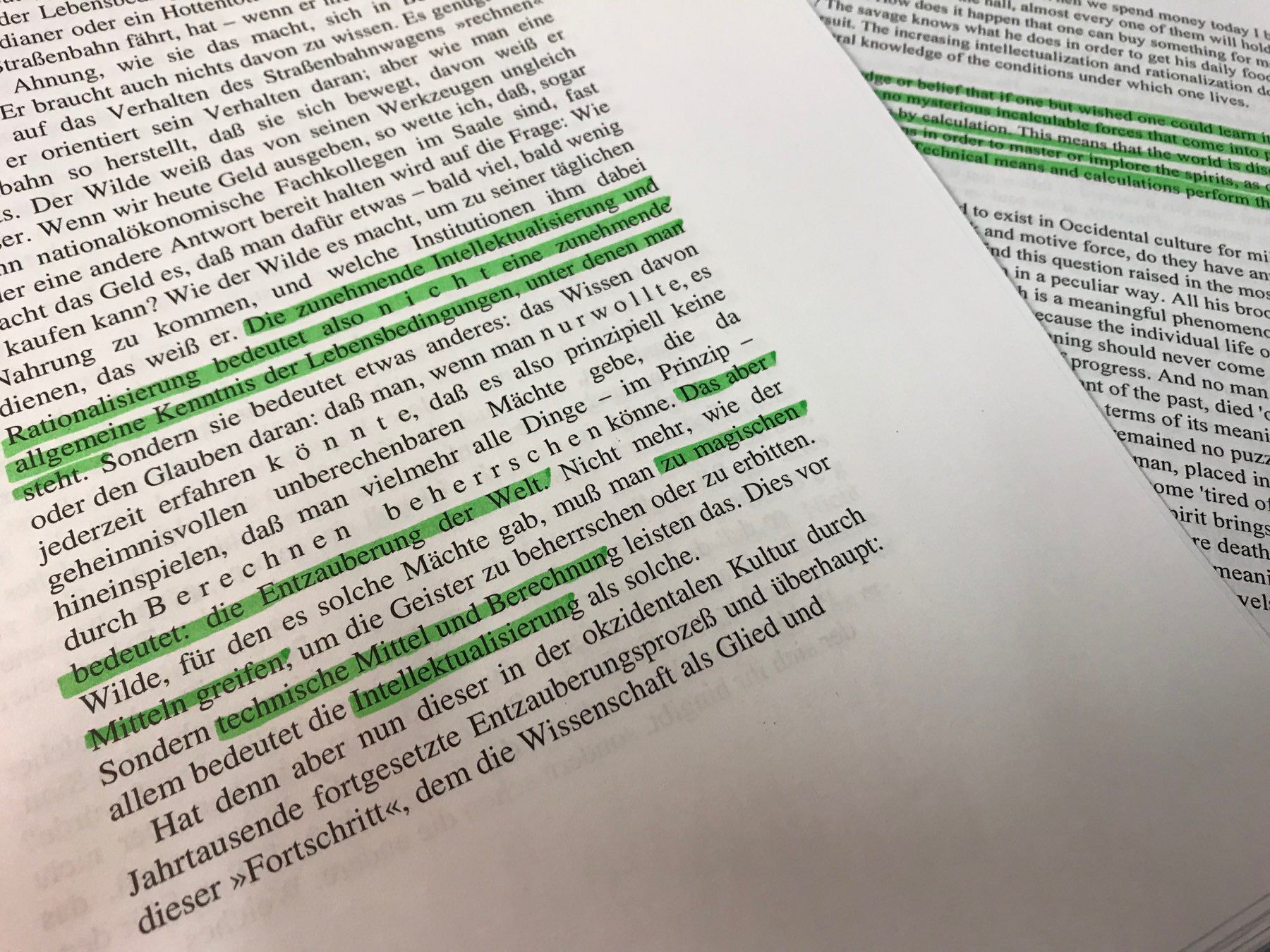
I love these old editions. I don’t really use them any more, but I like to take them out and look at them from time to time.
![mp-photo-alt[]=](https://cdn.uploads.micro.blog/404/2019/d7a9dfe1a4.jpg)
Update: PDFpen is just as good as ScannerPro at OCRing my handwriting.
Scanner Pro does an amazing job of recognizing my handwriting.
Plutarch and the end of the oracles
In my History of Disenchantment class, we’ve been discussing Plutarch’s essay on the cessation or the silence or the failure of the oracles. (The key word there, ekleloipoton, seems to be an odd one — I’m trying to learn more about it.) I read it long ago, but this is the first time I’ve taught it, and goodness, what a fascinating piece of work.
It was widely recognized in Plutarch’s time (late first and early second century A.D.) that the great oracles of the ancient world — the most famous of them being the one at Delphi, of course — had largely ceased to provide useful guidance or had fallen silent altogether. Some of the once famous shrines had been abandoned and had fallen into ruin. But no one understood why this had happened. Plutarch’s “essay” is a fictional dialogue — narrated by one Lamprias, who also takes the leading role in the conversation and may well be Plutarch’s mouthpiece — in which a group of philosophically-inclined men debate the possible reasons for the oracles’ failure.
In the opening pages of the dialogue, some of the participants deny that there is any real problem. They point to the inaccessibility of some of the shrines, and the lack of population in the surrounding areas: for them the issue is merely one of low demand leading to low supply. But this view is not widely accepted; most of the philosophers are uneasy about the oracles and feel that something is up. And after all, if low demand leads to low supply, why is there low demand? Even if the oracles are located in remote places, surely people would take the trouble to make a pilgrimage there if they believed that by doing so they could receive wise guidance for their lives.
To one of the participants, the answer to the whole problem is obvious: The gods are angry at us for our wickedness and have punitively withdrawn their guidance. But, perhaps surprisingly, no one finds this a compelling explanation. For one thing, it’s not clear to them there was any less wickedness in the earlier eras when the oracles flourished; and more to the point, are oracles given by the gods in the first place?
If they are, then shouldn't they continue forever, since the gods themselves are immortal, unless they are specifically withdrawn? Not necessarily, says one: “the gods do not die, but their gifts do” — a line he says is from Sophocles, though I don't know its source. Maybe the oracles lived their natural course and have now fallen silent, as one day we all will.
But what if oracles do not come from the gods, but rather from daimons? In that case the oracles might die because the daimons do. This leads to a long discussion about whether daimons are mortal, and if mortal or not whether they are necessarily good. (The one truly famous passage from this essay — in which someone recounts a story about a sailor instructed to pass by an island and cry out “The great god Pan is dead” — assumes that Pan was not a god but rather a daimon, the son of Hermes by Odysseus’s famously loyal wife Penelope.)
And this in turn leads to a very long conversation about the beings that populate the world and whether there might be other worlds populated differently and, now that we think about it, how many worlds are there anyway? (The most popular answer among the discussants: 185.) As I told my students, this is by modern standards a bizarre digression, especially since it takes up about half the dialogue, but our standards were not those of Plutarch’s time; and in any case the discussants might plausibly say that we can’t come up with a reliable solution to the puzzle of the silenced oracles unless we have a good general understanding of the kind of cosmos we live in.
In any event, the discussion eventually circles back around to the initial question, and in the final pages Lamprias gets the chance to develop the argument that he has been hinting at all along. In brief, he contends that oracles are always situated in or near caves because from those caves issue “exhalations of the earth”; and that certain people with natural gifts and excellent training of those gifts may be sensitized to the character of those exhalations, and in that way come to some intuitive and not-easily-verbalized awareness of what the world has in store for people. It’s almost a Gaia hypothesis, this idea that the world as a whole acts in certain fixed ways, and those “exhalations” attest to the more general movements of the planet. But these processes are, like all processes in Nature, subject to change over time. As a spring might dry up, or a river after flooding alter its course, so too the conditions for such exhalations might change so that there is nothing for even the most exquisitely sensitive and perfectly trained priestess to respond to.
The first and overwhelming response to Lamprias’s explanation is: Impiety! One of the interlocutors comments that first we rejected the gods in favor of daimons, and now we’re rejecting daimons in favor of a purely natural process. That is, Lamprias’s position is fundamentally disenchanting. To this Lamprias replies that his position is not impious at all, because they had all agreed earlier that in addition to humans and daimons and gods, none of whom create anything, we also have, abobe and beyond all, The God, “the Lord and Father of All,” and He is he first cause of all things, including exhalations of the earth and priestesses.
But whether it’s impious or not, Lamprias’s account is disenchanting, because it removes power from spirits and gods and concentrates them in a single transcendent Monad. His monotheism is a big step towards the religion of Israel, which tells us in the very first words of its Scriptures that the sun and moon and stars are not deities at all, but rather things made by YHWH, who alone merits our worship. Lamprias’s position, like that of the Jews, looks to those accustomed to polytheism as a kind of atheism. And by their standards that’s just what it is.
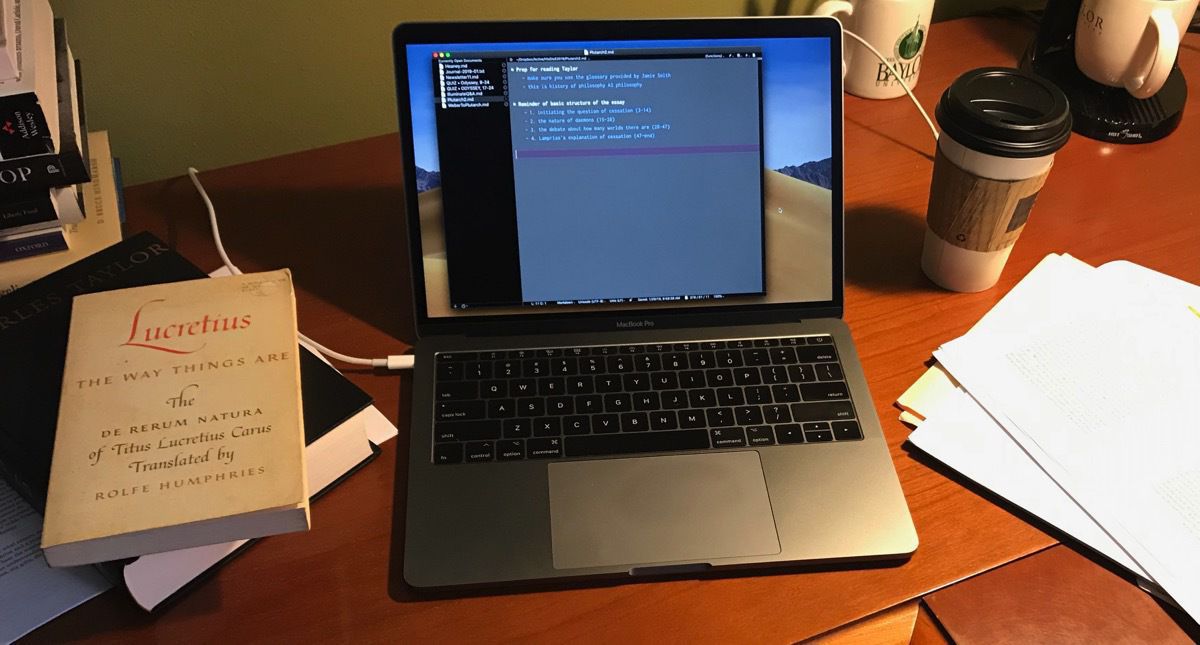
Working on Lucretius, Plutarch, Charles Taylor — and being reminded of how blessed I am to read and think for a living.
Europe
To the authors and signatories of this letter I have one thing to say: “The Faith is Europe, and Europe is the Faith.”
all the productivity guidance I got
I have very little time for the productivity cult, and think it especially injurious to the craft of writing — for several reasons, including those named by the late Jenny Diski here; but I do care about doing good work, and completing the work I have agreed to do. Especially when it comes to writing, I have two principles, and two only, that I follow.
I pay myself first. That is, if I need to get writing done then writing will be my first task of the day. If I try to get all the other stuff done before turning to writing, I’m usually too tired to write much or well.
When I work I work and when I play I play. When I’m writing I deny myself access to email, to social media, to fun internet sites. I don’t write a hundred words and then reward myself by watching a YouTube clip or arguing with strangers on Twitter. I just write until I have to do something else or am too worn out to write any more.
That’s it. That’s all the productivity advice I got.
“Gen Z” and social media
Christopher Mims of the WSJ has talked to a few members of Gen Z and is here to define the entire cohort’s use of social media for us. As someone whose job requires me to deal with members of that generation every day, and who has for the past decade taught classes on negotiating the online world, I think some of what Mims so confidently asserts is right, but other generalizations are very wrong.
The first of his seven points is: “Gen Z doesn’t distinguish between online and IRL.” This is, frankly, a ridiculous thing to say, first of all because any universal statement about an entire generation is (as I have often but fruitlessly commented) indefensible. Generational cohorts — even within a given country — are divided in serious ways by social class, by economic condition, by culture, by education. The only people Mims talks to are university students and people who work in, or study, the tech sector. It is, to put it mildly, not safe to assume that those people are representative of an entire generation.
But to the specific point: most of my students are very aware of the distinction between interacting online and IRL, and I have seen a distinct upturn over the past few years in insistence on the value of being present when with friends and not always checking your phone. (That’s noticeably stronger among my recent students than people five or six years older. My 26-year-old son tells me that he is almost the only person he knows who makes a point of putting his phone away when hanging with friends. He’s trying to set a good example.)
Mims’s second point: “Privacy online? LOL.” This is true to my experience, though (see above) I can’t assume that the young people I know are representative. But for what it’s worth, almost all of my students understand, in theory anyway, that anything they post online could come back to haunt them some day. I might add that every term I have students who are not on any social media at all, and when I ask them why, they usually cite privacy concerns as their chief reason for abstaining.
“3. Facebook is out, Instagram is in.” True, but Facebook has been out for a long time. Most of my students from a decade ago already saw Facebook only as a place to (a) post pictures of themselves for their grandparents and (b) find high-school friends they had lost touch with. Also, while Instagram is definitely big, not all use it in the “self-branding” way Mims assumes is normal. Many of my students have their Instagram accounts set to private, and I’m pretty sure that’s a trend. (Though it’s not really related to the privacy issues mentioned above, because people know that even their private posts can be screenshotted.)
“4. Social media is how they stay informed.” Also true, to my long-time frustration — though I am increasingly inclined to think that there’s no real difference between getting your news from social media and getting it from, say, the Washington Post, since so many journalists today take their marching orders from Twitter mobs. A small data point: Baylor buys access to the WSJ for everyone with a baylor.edu email address, but I have only ever met one student who has the WSJ app installed on his phone.
“5. Video is important, but it isn’t everything.” No, video isn’t everything, but it’s hard to overstate the centrality of visual communication (especially edited still images — Snapchat-style even when made outside Snapchat — and emoji) among most of my students.
Mims also quotes in this context a Pew report claiming that the “Post-Millennial” generation is probably going to be the “best-educated ever,” but by “best-educated” Pew means simply having the most years of education. And that is, ahem, not the same thing. But that’s a subject for another day.
“6. Gen Z thinks concerns about screens are overblown.” Some do, some don’t. The really interesting question is this: Even if we could determine what percentage of them are concerned about overdependence on screens, which would be hard, how will those views change over the next decade? When today’s college students are 30, will they be more or less dependent on their screens, especially their phones?
“7. But they’re still susceptible to tech addiction and burnout.” Indeed. Mims quotes a young woman who says, “I definitely think we all know that we’re addicted to our phones and social media…. But I also think we’ve just come to terms with it, and we think, that’s just what it is to be a person now.” I have seen, often, just this helplessness and defeatism, but I have also encountered many students who are not just aware of their condition but determined to do something about it.
“the instantaneous awareness of so much folly”
The instantaneous awareness of so much folly is not, I now think, healthy for the human mind. Spending time on Twitter became, for me, a deeply demoralizing experience. Often, especially when some controversy of national importance provoked large numbers of users into tweeting their opinions about it, I would come away from Twitter exasperated almost to the point of madness.I thought of a verse from the 94th Psalm: “The Lord knoweth the thoughts of man, that they are vanity.” After an hour or so of watching humanity’s stupidities scroll across my screen, I felt I had peeked into some dreadful abyss into which only God can safely look. It was not for me to know the thoughts of man.
social media, blogs, newsletters
The blogs I’ve written for (Kottke notwithstanding) have only had so much ability to retain me before they’ve changed their business model, changed management, gone out of business, or been quietly abandoned. They’re little asteroids, not planets. Most of the proper publications I’ve written for, even the net-native ones, have been dense enough to hold an atmosphere.
And guess what? So have Twitter and Facebook. Just by enduring, those places have become places for lasting connections and friendships and career opportunities, in a way the blogosphere never was, at least for me. (Maybe this is partly a function of timing, but look: I was there.) And this means that, despite their toxicity, despite their shortcomings, despite all the promises that have gone unfulfilled, Twitter and Facebook have continued to matter in a way that blogs don’t.
I’d very much like to dismiss what Tim says here — but I don’t think I can. He’s probably right. (And the asteroid/planet metaphor is an especially fertile one.) In light of Tim’s account of his experience, I’ve been reminded that my own opting-out of social media is a luxury — and I am therefore all the more grateful for that luxury.
I wrote in a recent edition of my newsletter,
On Tuesday morning, January 22, I read a David Brooks column about a confrontation that happened on the National Mall during the March for Life. Until I read that column I had heard nothing about this incident because I do not have a Facebook account, have deleted my Twitter account, don’t watch TV news, and read the news about once a week. If all goes well, I won’t hear anything more about the story. I recommend this set of practices to you all.
After reading the Brooks column I checked in on the social media I have access to, and I cannot readily express to you how strange the commotion seemed to me. The responses of people to this issue struck me as — this is going to sound very strong, but I promise you that it’s precisely how I felt — it struck me as the behavior of people in the grip of some manic compulsion, of some kind of mass hysteria. There are no rational criteria in light of which what happened between those people on the National Mall matters — none at all.
And then I was filled with relief that I hadn’t got caught up in the tsunami — which, if I had been on social media, I would have been as vulnerable to as the next person, I’m sure — and filled with determination to make my way to still higher ground. Maybe you can’t do that, but if you can you probably should. (And, to be perfectly straightforward, there are a great many people who say they can’t disconnect from social media who in fact just don’t want to, or are afraid of what will happen if they do.)
Relatedly: I was chatting with the wonderful Robin Sloan about these matters earlier today, and Robin expressed his hope that “a tiny, lively, healthy Republic of Newsletters is possible — it really is!” I love everything about that formulation: Republic of Newsletters, yes, but also that it’s “lively" and “healthy” — and tiny. Numbers, metrics are not what matters here. What matters is relation. What matters is “Only connect.” I replied to Robin,
I think so — I really really do. Opt in, read or don't read as the fancy strikes you, and if you have a comment or a question, hit reply. What could be simpler? (As you and Craig Mod commented in that recent WSJ piece, email may be the Tom Bombadil of internet communication: last, as it was first. Well, you didn't use that metaphor, I admit. But it's fascinating that the pattern, for some of us anyway, seems to be internet to open Web to walled gardens to open Web to internet.)
Facebook is the Sauron of the online world, Twitter the Saruman. Let’s rather live in Tom Bombadil’s world, where we can be eccentric, peculiar perhaps, without ambition, content to tend our little corner of Middle Earth with charity and grace. We’ve moved a long way from Tim Carmody’s planetary metaphor, which, as I say, I feel the force of, but whether what I’m doing ultimately matters or not, I'm finding it helpful to work away in this little highland garden, above the turmoil of the social-media sea, finding small beautiful things and caring for them and sharing them with a few friends. One could do worse.
Count Malcolm as: intrigued but uncertain

Christie and the mystery
After reading this fascinating essay by John Lanchester, my first thought, I will admit, was that he might have read my essay on “Miss Marple and the Problem of Modern Identity” — or ought to read it. But since he surely has never read anything by me and never will, let’s move on.
can’t stop, won’t stop
VP Mike Pence says, “Criticism of Christian education in America must stop.” No it musn’t. Nobody and nothing is above criticism. Demanding that others stop criticizing your preferred group is a cheap identity-politics move. It would simply be a good thing if the critics made some effort to understand what they’re criticizing, though of course that’s not going to happen. I can’t imagine a cohort less likely to inform itself about conservative Christianity than the cohort of American journalists.
these people now run the world
I suppose there’s a 2×2 here: sane versus crazy, alive versus dead.The possibility of sane and alive is the hope that drives rationalists. The possibility of crazy and alive is what fuels the stack-lucky, and increasingly, the latter is a better bet.
But neither bet is a certainty. The reality of sane and dead is what brings down the rationalists. The reality of crazy and dead is what brings down the weird.
Crazy and dead is apparently the ground state of human civilization. When things break crazy, the lunatics end up running the asylum.
A lunatic, by my definition, is a stupid person in Cipolla’s sense: a person who causes losses to another person or to a group of persons while himself deriving no gain and even possibly incurring losses.
Yep, these people now run the world.
The Stone Table
One of the best books I read last year is The Stone Table, by Francis Spufford. But don’t look for it on Amazon or Google Books, because you won’t find it. For legal reasons it can’t (yet) be published, and if you think about the title you might be able to guess what those legal reasons are.
It’s a small masterpiece. I so, so hope you’ll get to read it some day.
SRO for Jemar Tisby at Baylor
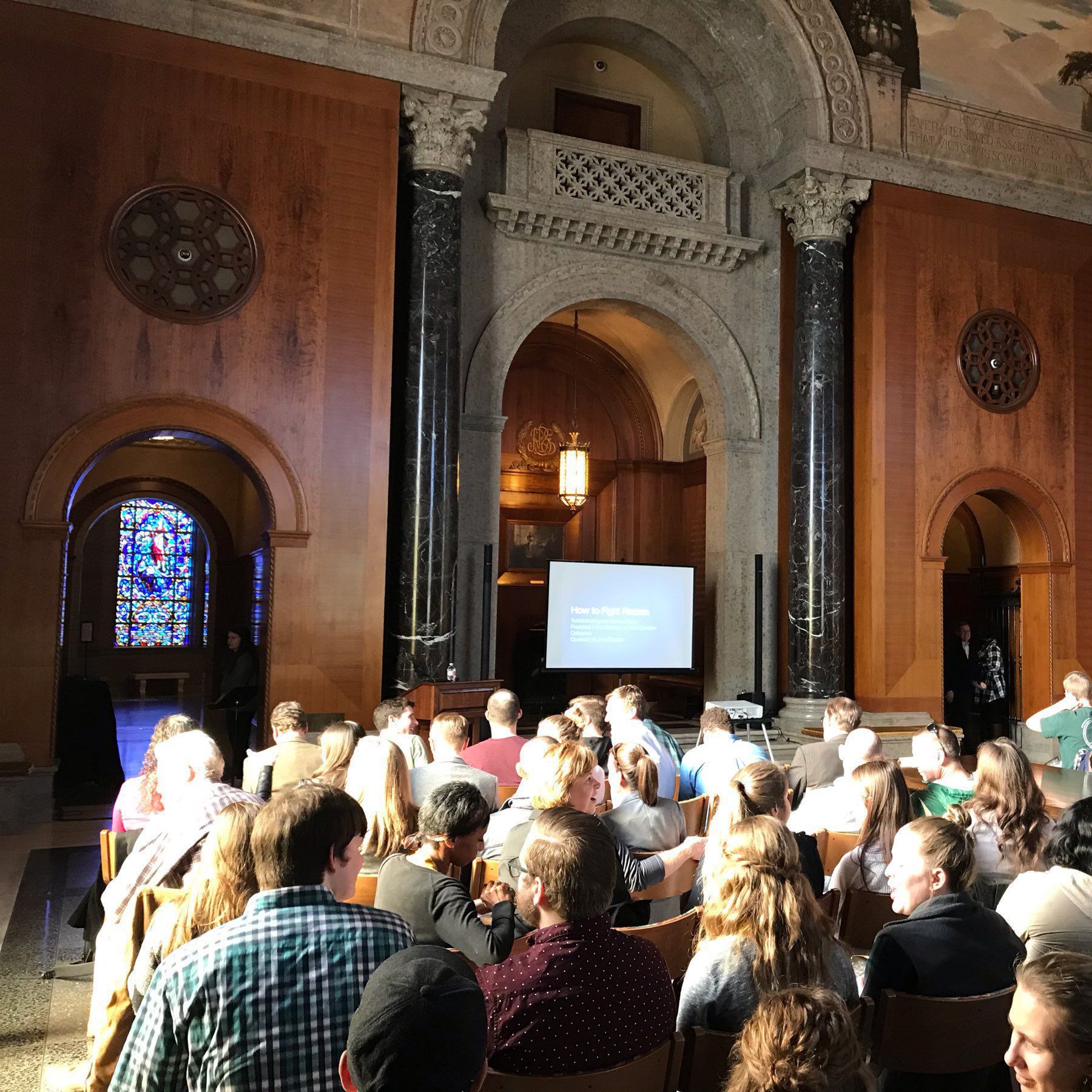
It’s fun, but it’s also work.
it’s worse than you thought
- Karen Pence Is Teaching at Christian School Where They Believe “that God spoke the heavens, the earth and all living things into existence in six days”
- Karen Pence Is Teaching at Christian School Where They Believe that Salvation Comes To Us “through faith and trust in Jesus Christ alone, unaided by human effort”
- Karen Pence Is Teaching at Christian School Where They Believe “that Jesus Christ will physically return in the air to take the church out of the world to be with Him forever”
- Karen Pence Is Teaching at Christian School Where They Believe that “The unbelieving dead of all time will then be raised and given eternal bodies to face God in final judgment after which they will be thrown into the lake of fire to eternal torment”
- Karen Pence Is Teaching at Christian School Where They Believe that “Mankind’s continued unbridled wickedness brought further judgment, which destroyed the earth in a worldwide flood”
Sure, go ahead and reject the only person who can fix this mess. (Via Nina Massey)
![mp-photo-alt[]=](https://cdn.uploads.micro.blog/404/2019/1dd29f89c6.jpg)
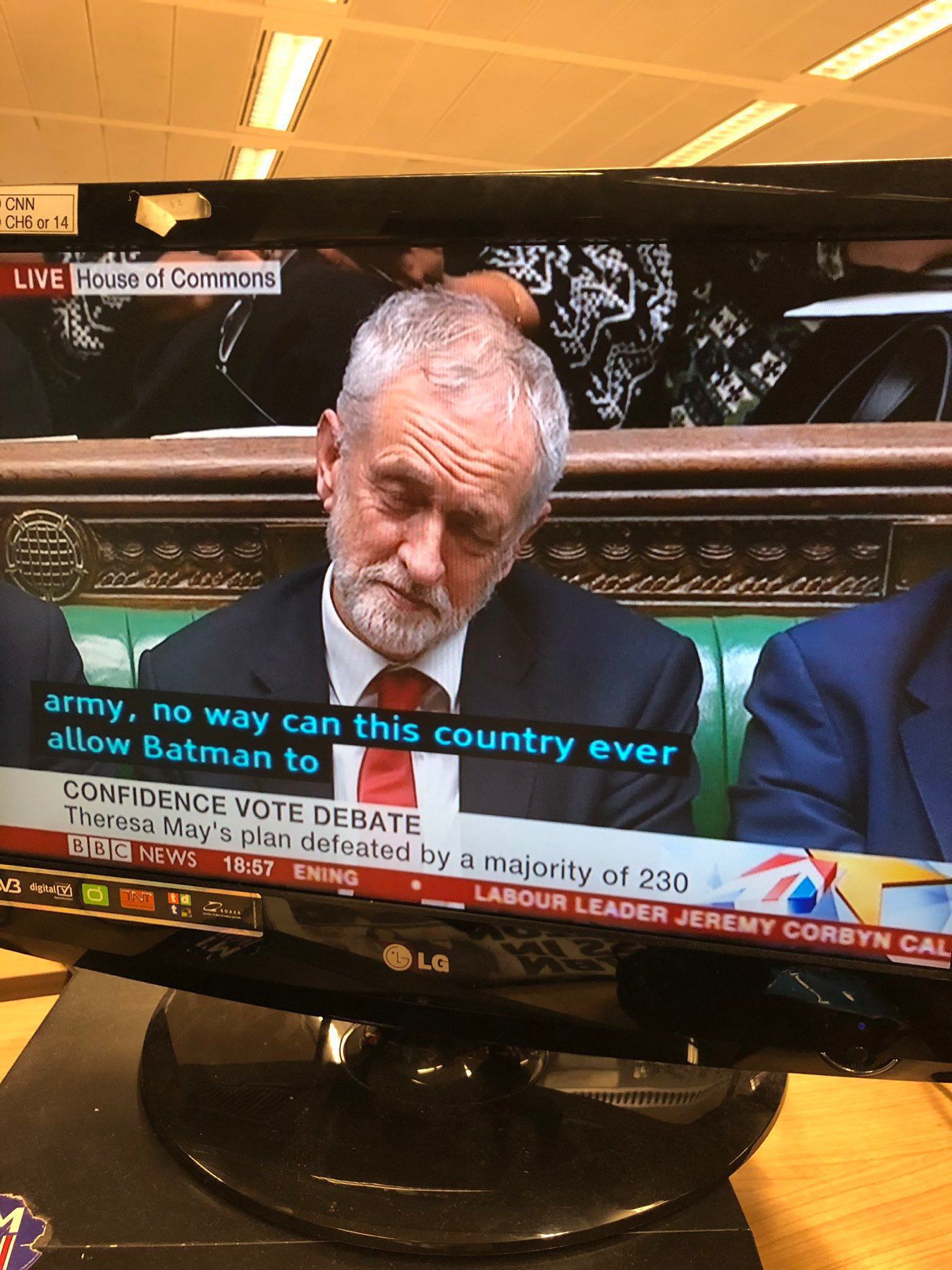
most popular people EVAR
Hidalgo is among the premier data miners of the world’s collective history. With his MIT colleagues, he developed Pantheon, a dataset that ranks historical figures by popularity from 4000 B.C. to 2010. Aristotle and Plato snag the top spots. Jesus is third.
This is one of those statements that ought to create immediate skepticism. If we think only of the present moment, we can easily discover that there are approximately 2.3 billion Christians alive today, all of whom have heard of Jesus — but how many have heard of Plato and Aristotle?
So if you go to the Pantheon website, you find this description of their methods:
To make our efforts tractable, Pantheon will not focus on culture, as it is understood in its broadest sense, but on cultural production. In a broad sense, culture can be understood as all of the information that humans — or animals — generate and transmit through non-genetic means. At Pantheon, however, we do not focus on the entire range of cultural information, but in a subset of this information that we define narrowly as cultural production. That is, we do not focus on cultural information such as passed on family values or societal trust, but on cultural production as proxied by the biographies of notable historical characters.
Why they believe that “the biographies of notable historical characters” form a reliable proxy for “cultural production” they do not say. Isn’t there a great deal of cultural production that is non-biographical in character? Art, music, literature, clothing, cooking, moral guidelines and taboos, religious teaching … the overwhelming majority of we typically think of as "cultural production” is non-biographical, it seems to me. So I’m already scratching my head.
But even setting that aside: the Pantheon website directs readers to cite the article that presents the structure of Pantheon 1.0, and if you consult the preprint of that article available here you’ll see that the dataset draws heavily, I think it’s fair to say primarily, from … Wikipedia. And similar sources. By the way, an earlier attempt at the same kind of ranking — one that Pantheon tries to improve on by using more foreign-language Wikipedia sites — put Jesus at the top, followed by Napoleon (?) and then Mohammed.
This is all poppycock and balderdash. It’s interesting and perhaps even useful to see what data dominates Wikipedia, but Wikipedia, in any and all languages, is not a reliable indicator of universal historical “popularity” — whatever that means — and still less of “cultural production.” I think the Pantheon database will be valuable, but it won’t ever do what its makers are saying it already does.