
Not really what I expected when searching for “Christian calendar” …

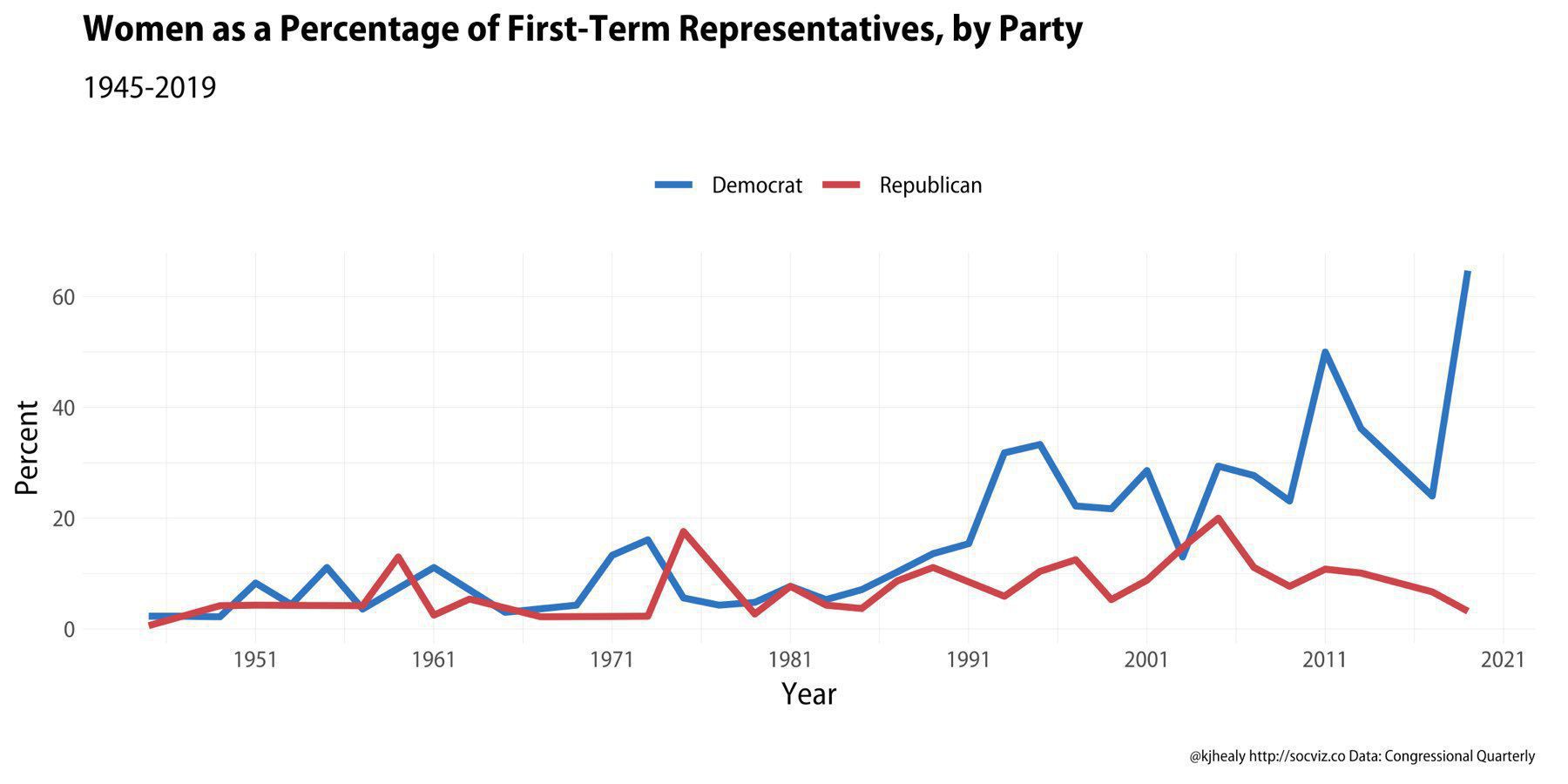
Interesting data from Kieran Healy.
A sermon by the Rev. Jessica Martin, for Remembrance Day
Solemn Orchestral Requiem Eucharist, 11 November 2018, Ely Cathedral
- Epistle: 1 Peter 1.3–9
- Gospel: John 5.19–25
The dead will hear the voice of the Son of God, and those who hear will live. — John 5.24
From where we stand, on the shore where the living are confined, we see only the impassable swift stream set between us and the dead who have gone before us. Hamlet, in Shakespeare’s play, talked despairingly of ‘the bourn from which no traveller returns’. A ‘bourn’ is a river – Northern and Scottish usage still calls rivers ‘burns’. It is a one-way crossing, says Hamlet; we do not come back.
But in our Christian hope we give that river a name. We call it ‘Jordan’. Because for us it is the baptismal river, through which our Lord Jesus passed and, as he came up out of the water, was acclaimed by God as his Beloved Son. When we call the death-crossing ‘Jordan’ we remember that Jesus passed through the deep waters of death in order to be embraced by the everlasting life of God.
So Jesus, human and finite as we are, mortal as we are, yet carrying within him the power and glory of God, joins together death and life. He bridges the unbridgeable crossing. He speaks the words of life in the place to which the dead have gone, and the impossible happens: the dead hear his voice, and live.
Today we remember especially the dead who died with their lives and their promise unfinished and unfulfilled. They died by violence, and their loss is beyond our understanding. We see the waste of the lives they did not live as we look upon the tossing waste of waters between them and us, and we mourn for them even as we thank them for the actions of their often brief lives. As we do these things, we grieve that the dead cannot hear us.
But the dead can hear one voice. They can hear the voice of the one whom death could not hold, the one through whom death is joined back into life. In our Lord Jesus Christ, who knows our griefs and has carried our sorrows, the unspeakable joy of God’s life beyond loss is his gift to the dead and to those who die. He joins us, in himself, to the Creator of all things, redeeming all the lost time, and saving everything that is good and true. For the dead will hear the voice of the Son of God, and those who hear will live. Amen.
Amazon’s exploitative lust
If nothing else, Amazon’s HQ2 decisions may accelerate America’s great divergence, where highly educated urbanites are doing better and better, and everyone else is doing worse. Amazon has jobs outside of cities too, of course, but those are often low-paying and grueling jobs that don’t have much room for upward mobility. “If you project forward to the dismal geography of a future in which Amazon utterly dominates, you have a handful of places that are doing well, where there are high-paid tech jobs,” Stacy Mitchell, the co-director of the Institute for Local Self-Reliance, told me. “Then you have a bunch of cities and neighborhoods, that if they’re lucky, will maybe they get some warehouse jobs at $15 an hour and nothing else.”Yep. I used to be suspicious of the phrase “costal elites,” but it seems more apt every day. And as those elites congregate with one another, and concentrate their wealth in ever-smaller enclaves, and increasingly see the 95% of the American landmass between the coasts as material (human and natural) to be exploited for their economic purposes, they also complain ever more vociferously that the American political system — with its “undemocratic” institutions like the Senate — prevent them from exercising even more complete domination over places they will never see and people they will never know.
the imminent collapse of an empire
Writers generally don’t get to choose the titles of their pieces, but the confusion in the title and subtitle of this report by Alexandra Kralick — Are we talking about sex or gender? I mean, it’s not like bones could tell you anything about gender — is reflected in the report itself. Sometimes it’s about “the nature of biological sex”; at other times it’s about the false assumptions that arise from gender stereotypes. Kralick weaves back and forth between the two in unhelpful ways.
On the specific question of whether sex is binary, and the contexts in which that matters, if you want clarity you’d do well to read this essay. But for the moment I’m interested in something else.
There’s a passing comment in Kralick’s essay that caught my attention: “The perception of a hard-and-fast separation between the sexes started to disintegrate during the second wave of feminism in the 1970s and ’80s.” The phrase “second-wave feminism” has been used in various and inconsistent ways, but it is typically associated with “difference feminism,” an emphasis on “women’s ways of knowing” being different than those of men. And in that sense it’s better to say that “the perception of a hard-and-fast separation between the sexes started to disintegrate” as a result of the critique of second-wave feminism as being too “essentialist” in its modeling of sexuality and gender. The most influential figure in that critique was Judith Butler, whose book Gender Trouble set in motion the discourse about gender as choice, gender as performance, gender as fluid and malleable, that we see embodied in Kralick’s essay.
So while I don’t think Kralick has the details of the history quite right, she’s definitely correct to suggest that scientists are having this conversation right now — or not so much having a conversation as making declarations ex cathedra — as a direct result of intellectual movements that began in humanities scholarship twenty-five years ago.
So for those of you who think that the humanities are marginal and irrelevant, put that in your mental pipe and contemplatively smoke it for a while.
Many years ago the great American poet Richard Wilbur wrote a poem called “Shame,” in which he imagined “a cramped little state with no foreign policy, / Save to be thought inoffensive.”
Sheep are the national product. The faint inscription Over the city gates may perhaps be rendered, “I’m afraid you won’t find much of interest here.”The people of this nation could not be more overt in their humility, their irrelevance, their powerlessness. But …
Their complete negligence is reserved, however, For the hoped-for invasion, at which time the happy people (Sniggering, ruddily naked, and shamelessly drunk) Will stun the foe by their overwhelming submission, Corrupt the generals, infiltrate the staff, Usurp the throne, proclaim themselves to be sun-gods, And bring about the collapse of the whole empire.Hi there scientists. It’s us.
how I drew my mental map of politics
Over at Rod Dreher’s joint, he’s got a great series going in which people explain how they have have formed their mental maps of the political world. I’ve been reflecting on my answer to this question.
I voted for the first time in the 1976 Presidential election, for Jimmy Carter. (I was old enough by a few weeks.) I had high hopes for Jimmy. They were not fulfilled. I was a pretty serious lefty at the time — the two magazines I subscribed to were New Times (look it up) and the Village Voice — but in the Carter years I started reading and seriously considering the conservative critique of American liberalism. George Will’s columns meant a lot to me in those days. Gradually I came to believe that the American left, or the Democratic Party anyway, talked a good game about the poor and disenfranchised but wasn’t interested in taking meaningful action; and that in relation to political and economic life generally Margaret Thatcher was right to say (if indeed she did say) that “the facts are conservative.” In 1980 I voted for Reagan.
Over the next few years I became convinced that Republicans were no more likely to live up to their rhetoric than Democrats. They preached about defending liberty and yet supported some of the world’s worst and cruelest tyrants. The trumpeted their pro-life commitments and yet took no meaningful action against the country’s abortion regime, even when they had a great deal of power. They claimed to speak for ordinary people like me and yet did nothing but help the rich get richer. They were no more likely to assess their economic policies in the light of evidence than Democrats were likely to assess their social policies in that light.
The Reagan years were for me an education in political cynicism. In the 1980s I came to believe what I still believe: That almost no elected politicians have principles that they’re willing to stake their careers on, and those who have such principles typically last a single term in office; that the rare politician who has integrity almost certainly lacks courage, while those who have courage lack integrity; that the extremely rare politician who has both courage and integrity will surely lack judgment; that the members of both major parties care primarily about getting and keeping power, secondarily about exerting that power over the powerless, and beyond that about nothing else whatsoever; that both parties are parties of death, differing only on their preferred targets (though they are equally fond, it seems, of military action in Asia); that the only meaningful criterion by which to judge who to vote for is encapsulated in the question Who will do less damage to our social fabric?
And because they’re all going to do damage, just of different kinds, for the last thirty years I have voted for third-party or write-in candidates. For much of that time I knew that I couldn’t vote for Democrats and debated whether I could vote for Republicans. The answer to that question was always No. But recently I have come to be absolutely certain that I can’t vote for Republicans, and have debated whether I can vote for Democrats. The answer to that question is, so far, also No, and I cannot envision that changing.
I oppose false equivalences as forcefully as anyone. But there are also true equivalences. And so I say, as I have said for three decades now: A plague on both their houses.
And here’s something else new I want to try either tomorrow or Friday….

The food-truck scene in Waco is getting better and better. Today I had a fabulous huarache al pastor at Gary’s Grill (outside Pinewood Roasters).

Psalm
God, give me enough light and will To say just what I see, See what I do, Do what I say, Say what you will.
Kingdom
[caption id=“attachment_36107” align=“aligncenter” width=“700”]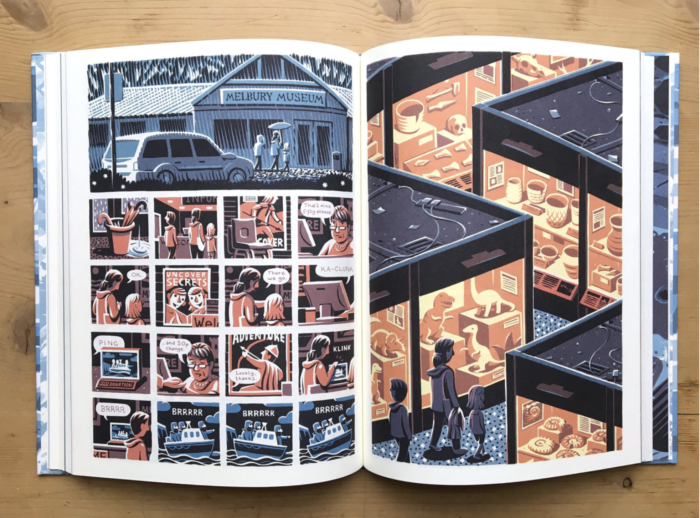 Jon McNaught, Kingdom[/caption]
the contingency of collaborative art
Big day for me yesterday: More Blood, More Tracks arrived. It’s extraordinary — could be the best of the bootleg series, but then I might well think that, since I believe Blood on the Tracks to be Dylan’s masterpiece, and one of the great achievements of American music.
On the first disc — the six of them closely follow the order of recording — Dylan plays solo, and there are some harrowing moments there. At one point Dylan is playing “You’re a Big Girl Now” solo, and it’s a totally devastating performance. But you keep hearing the buttons of his vest clicking against the back of his guitar as he plays. Somebody later asked the engineers why they didn’t stop him, and the chief engineer said that they just couldn’t. “We were awed and freaking out and scared. It was intense.”
But then on the second disc he brings in Eric Weissberg and his band (called Deliverance, in those days, because they had played in the great film of that name). At one point you hear the engineer ask what Dylan wants to play next, does he want to continue with what they’ve been working on? Dylan replies, “No, the one we’re gonna do is,” and he starts strumming and wordlessly singing the tune to “You’re Gonna Make Me Lonesome When You Go.” Suddenly the band kicks in: drums and bass, then, quickly, an organ fill, a little electric guitar — and it’s magic. They’re in a perfect groove. It’s butter. But of course they have to stop, because they’re not recording yet. Dylan says, “Okay, we’re about ready,” and the engineer starts the tape, and the band tries to get right back into that groove they were in, and for about thirty seconds they’ve got it — and then it falls apart. They do another take, but this time it’s too fast. On every take someone messes up. Finally, Dylan gives up in frustration.
And that’s it for Eric Weissberg and Deliverance. From then on Dylan plays basically with a string band (guitars, acoustic bass, mandolin, with a few occasional additions). The recorded version of “You’re Gonna Make Me Lonesome” is a great song, but I really think that the full-band version could’ve been even better — if they had been able to get that groove back. But it didn’t happen. And then Dylan took the whole recording session in another direction, which was surely for the best — I can’t think of any other songs on the album that would have benefitted from adding drums and electric instruments, and I can think of several that would have been greatly compromised by that kind of sound.
But the whole sequence is a reminder of just how contingent recording music is — of the number of elements that need to come together to create a certain vibe and mood; of the constant danger of those elements not coalescing, which might leave the whole project teetering on the brink of failure; of how that failure might be the fortuitous opening to something new and better; of layers and layers of possibilities lost and new possibilities gained. To a guy who does most of his creative work alone, it’s scary and fascinating.
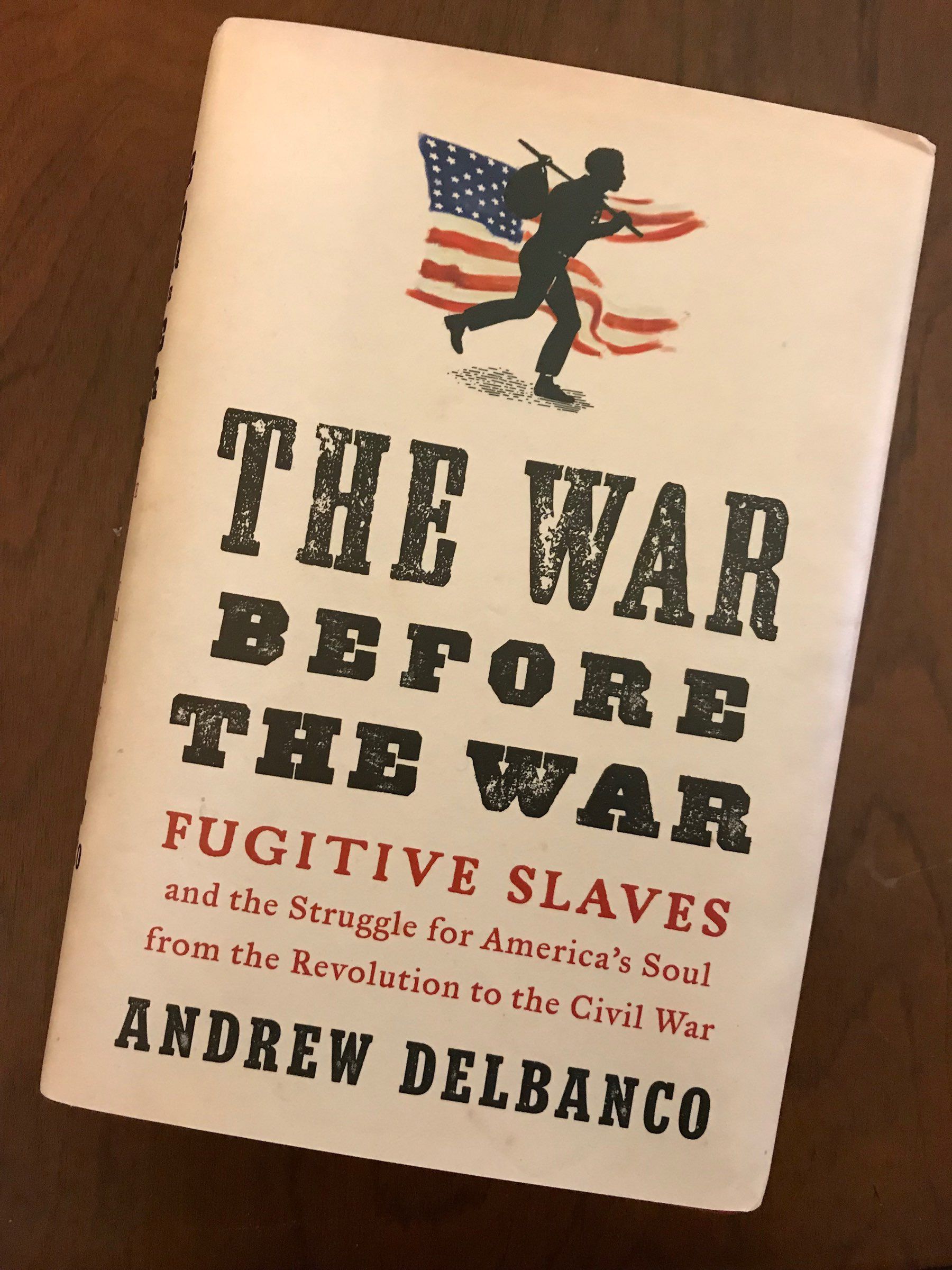
This is not a good book, this is a truly great book. I hope to find time soon to say why I think so, but in the meantime, please read it if you can.
academic labor as social media
The current argument about whether scholars should cite the work of nasty people — here is the argument against citing them, and here is a rebuttal — is interesting primarily as a reminder of how citation actually functions in many academic fields, including my own. It is not, typically, an acknowledgment of genuine intellectual indebtedness, but rather a signaling mechanism, a way to mark tribal affiliation.
Pick any recent article in a humanities journal and you’re likely to see several citations that don’t acknowledge the source for a specific idea, or an argument to which the author is responding (positively or negatively), but rather what one might call affiliational suggestion. Here’s an example from a recent article, chosen at random:
My language of counts and miscounts obviously owes a debt to Jacques Rancière, Disagreement: Politics and Philosophy, trans. Julie Rose (Minneapolis, 1999).But what debt, specifically, is owed? This the footnote does not say, nor is is meant to say. The message is: “I have read and approved of appropriate critical texts.”
Note that in the essay that promoted this conversation Nikki Usher concludes, “We need to start asking questions about whether there are ways to have frank discussions with editors and even reviewers about why we might not want to keep reinforcing the academic fame and reputation of someone who would not do the same were the situation reversed.” And Usher is exactly right that this is how much academic citation works. By citing someone you pay them in the currency of reputation, because reputation itself is largely a function of simplistic metrics. I have seen departmental websites that list, alongside the name of faculty members, sparklines showing the history of their numbers of citations. Basically, academic citation works, nowadays, like a social media platform. To cite someone in your article or books is, effectively, a retweet. Except that you don’t get to say, and no one would believe you if you did say, “Retweets are not endorsements.”
I am tempted to formulate a new Law: Over time all cultural work asymptotically approaches the condition of Twitter.
what's the point?
It’s hard to feel like there’s a point to public writing at the heart of Trump’s ascendancy. Certainly there’s no point to even trying to speak to self-identified conservatives who have aligned themselves with Trump: the will-to-power mendacity and moral vacuity melts anything like honest engagement like a butterfly tossed in a furnace. But it is not merely Trump and his followers. When is the last time you can recall seeing anyone who was meaningfully persuaded by arguments or evidence that contradicted or challenged a belief or position they had previously articulated? When I see people telling me that the only way to deal with people who hold dangerous, untrue or morally bankrupt views is to engage them in a persistently reasonable way, to have a dialogue, I can’t help but think that this is just another untrue idea. Or at least it is a kind of religious dogma by self-anointed rationalist thinkers. It is not an evidence-based proposition about how people shift their values or come to hold new thoughts or ideas. It doesn’t matter whether we are talking about people with whom one has personal or familial standing or total strangers, whether this is about a neighborhood or a nation. What passes for reason and evidence among educated readers and writers often feels as if it is just a value system local to them, and no more likely even so to lead to thoughtful changes in perspectives or beliefs among them. I feel no more likely to persuade a person who is in every respect a peer to change a view they have committed to, no matter how strong my arguments or evidence might be, than I am to persuade a stranger with completely different values and social location. And yet, I feel I am persuadable: that I change what I think about specific issues and arguments quite frequently in response to what others say and argue. Perhaps I am wrong even about myself; perhaps this is an unearned vanity. If I am right, then it feels as if I have chosen the worst strategy in Prisoner’s Dilemma: vulnerable to persuasion in a world that increasingly sees persuadability as a vulnerability to be exploited.Tim, I feel you. Boy do I feel you. Indeed, so strongly do I share this sense of pointlessness that a few months ago I withdrew a book proposal because I could see no reason to write in the face of the current maelstrom of wrath and bullshit. But then, a little later, I decided to write that book after all. Why?
Certainly not because I think that “the only way to deal with people who hold dangerous, untrue or morally bankrupt views is to engage them in a persistently reasonable way, to have a dialogue.” Most people who hold such views are indeed unpersuadable in the absence of some fairly dramatic intervention in their lifeworld, some experience that forces a rethinking. In the ordinary course of rhetorical events, I have no means of reaching them.
Nor are they interested in reaching me — and by “they” I mean people on the extremes of the right and left. What such folks share, generally speaking, are the following traits:
- vociferousness
- a deep commitment to the political power of social media
- a preference for saying the same things over and over and over again
- a belief in the usefulness of either intimidating or humiliating dissenters
But I console myself by thinking that there aren’t as many of them as hanging out on Twitter might make you think. There are reasons to believe that many Americans are more politically complex than is commonly believed, and you don’t have to be a Beltway centrist to think so. (It’s odd how many commentators seem genuinely afraid of anything that would give aid and comfort to centrist politics, and who conflate an awareness of political complexity with a commitment to centrism.) Those are the people I want to write for, and listen to; and both acts are worth doing whether there are a great many of them or whether, like Milton, I will have “fit audience though few.” The clan of those who, like Tim, are “vulnerable to persuasion in a world that increasingly sees persuadability as a vulnerability to be exploited.” My people.
And then: writing is what I do. I don’t know how to be a not-writer. Maybe no one will read this book, but I think I have to write it anyway. Saith the Preacher, “In the morning sow thy seed, and in the evening withhold not thine hand: for thou knowest not whether shall prosper, either this or that, or whether they both shall be alike good.”
.jpg)

it’s not gonna change
Social media platforms — and Facebook and Twitter are as guilty of this as Gab is — are designed so that the awful travels twice as fast as the good. And they are operating with sloppy disregard of the consequences of that awful speech, leading to disasters that they then have to clean up after.The social media companies have shown who they are over and over and over and over. It’s not gonna change. Ever.And they are doing a very bad job of that, too, because they are unwilling to pay the price to make needed fixes. Why? because draining the cesspool would mean losing users, and that would hurt the bottom line. Consider this: On Monday, New York Times reporters easily found almost 12,000 anti-Semitic messages that had been uploaded to Instagram in the wake of the synagogue attack.
Warren Ellis is extremely correct
Usual Hermitage Bullshit Notice – MORNING, COMPUTER:
On Saturday at 1201am I turned off my social media. I have a private IG account for looking at nice pictures, and Twitter lists for news, but I’m not posting on or participating in the public internet for the next several months. I tell people on my newsletter, all the time, to tune their internet connections until they are useful and fun. The public internet stopped being fun for me some years ago, and I disconnect from it for half of each year at least. I like newsletters, blogs and RSS, podcasts, email, messaging apps and complete thoughts. The public network turned into something I don’t really enjoy or get anything out of.
how could we be convinced?
George Scialabba is one of the best essayists around, but his review of John Gray’s Seven Types of Atheism is not one of his better efforts. It begins thus:
Our hominid ancestors first appeared around six million years ago. They started to use symbols around 150,000 years ago, and the first of the major religions began 5,000 years ago. What are we to make of this? Did humans have souls before then? If not, how did we acquire them? If so, why didn’t God reveal Himself throughout 99.9 percent of humanity’s life span? What was He thinking? And God’s puzzling silence didn’t end with the advent of religion. The God of the Old Testament was fairly communicative, and the gods of the Hindu pantheon made frequent appearances, at least for a while. But since Jesus ascended to heaven (or, if you prefer, since the angel Gabriel finished dictating to Muhammad), transmissions have all but ceased.This would seem to call for some explanation. As the infidel Tom Paine scoffed: “A revelation which is to be received as true ought to be written on the sun.” The devout Cardinal Newman agreed but thought it had been: “The Visible Church was, at least to her children,” he wrote in 1870, “the light of the world, as conspicuous as the sun in the heavens, and the Creed was written on her forehead.” Unfortunately, the Church’s radiance has dimmed somewhat since then, and many unbelievers have wondered why God can’t write “YES, I EXIST” across the night sky in mile-high flaming letters visible (to each viewer in her own language, of course) everywhere on earth, each night for a week, once a year. Is that too much to ask of an omnipotent, infinitely loving Being? To which my first reply is: You really haven’t thought this through, have you? Let’s set aside any doubts about the assumption that our hominid ancestors of six million years ago belong naturally in the category “humanity.” Let’s also not ask too many hard questions about what a “major religion” would have looked like among the early symbol-using hominids. (Does Scialabba expect to find prayer books and sacred vestments in the remnants of the Pleistocene? He might as well say that we know those ancestors didn’t war with each other because they had no guns.) Let’s not bring in a Pentecostal or Sufi to address the question of whether transmissions from the Divine “have all but ceased.”
Let’s focus instead on the second paragraph quoted above. I would like to ask Scialabba this: If you looked up one starry evening and saw “YES, I EXIST” — presumably signed “Love, God” or something, because otherwise the point would scarcely be obvious — written across the night sky in mile-high flaming letters, would you immediately start believing in God?
And the answer is: Of course not. You’d think that this was some kind of high-tech prank, or a covert operation of the Koch Brothers. Later, when you discovered that other people had seen the same thing in their own language you’d be more concerned, but you’d doubt that it could be God, because why would God want to reveal Himself or Itself only to the literate? Surely the committed atheist would attribute this sky-writing to some powerful extraterrestrial civilization with a weird sense of humor — the Culture, maybe — before admitting the existence of God on these grounds.
Now, gentle readers, some of you may be saying that I am missing the point, the point being not that God, if there were a God, would reveal His existence to us in precisely this way, but that He would reveal it in some way, in some unmistakable way. But what would that unmistakable way be? What method of communication might avoid the rather obvious drawbacks, the clearly limited power to convince, of fiery skywriting?
I’m not sure it’s even possible to convince everyone that a given being is the Biggest Baddest Being of Them All — who knows what lurks out there in the universes? But even if that were possible it wouldn’t address the God of classical theism. David Bentley Hart puts this point with exemplary precision and clarity in The Experience of God:
To speak of “God” properly, then — to use the word in a sense consonant with the teachings of orthodox Judaism, Christianity, Islam, Sikhism, Hinduism , Bahá’í, a great deal of antique paganism, and so forth — is to speak of the one infinite source of all that is: eternal, omniscient, omnipotent, omnipresent, uncreated, uncaused, perfectly transcendent of all things and for that very reason absolutely immanent to all things. God so understood is not something posed over against the universe, in addition to it, nor is he the universe itself. He is not a “being,” at least not in the way that a tree, a shoemaker, or a god is a being; he is not one more object in the inventory of things that are, or any sort of discrete object at all. Rather, all things that exist receive their being continuously from him, who is the infinite wellspring of all that is, in whom (to use the language of the Christian scriptures) all things live and move and have their being. In one sense he is “beyond being,” if by “being” one means the totality of discrete, finite things. In another sense he is “being itself,” in that he is the inexhaustible source of all reality, the absolute upon which the contingent is always utterly dependent, the unity and simplicity that underlies and sustains the diversity of finite and composite things. Infinite being, infinite consciousness, infinite bliss, from whom we are, by whom we know and are known, and in whom we find our only true consummation. All the great theistic traditions agree that God, understood in this proper sense, is essentially beyond finite comprehension; hence, much of the language used of him is negative in form and has been reached only by a logical process of abstraction from those qualities of finite reality that make it insufficient to account for its own existence. All agree as well, however, that he can genuinely be known: that is, reasoned toward, intimately encountered, directly experienced with a fullness surpassing mere conceptual comprehension.How might that God impress Himself upon our understanding in unmissable, unambiguous, indisputable ways? I confess that I can think of no way except to write a conviction of His existence on every human heart. And whether that has been done, who can know? It’s not the kind of point on which it would be safe to take anyone’s word for Yes or No.
I’ll end with this. In Book V of Milton’s Paradise Lost, an angel named Abdiel asserts that God the Father created every creature, including the angels themselves, through the mediation of the Son. To this Lucifer replies scornfully:
That we were formd then saist thou? and the work Of secondarie hands, by task transferd From Father to his Son? strange point and new! Doctrin which we would know whence learnt: who saw When this creation was? rememberst thou Thy making, while the Maker gave thee being? We know no time when we were not as now; Know none before us, self-begot, self-rais’d< By our own quick’ning power, when fatal course Had circl’d his full Orbe, the birth mature Of this our native Heav’n, Ethereal Sons. Our puissance is our own, our own right hand Shall teach us highest deeds, by proof to try Who is our equal: then thou shalt behold Whether by supplication we intend Address, and to begirt th’ Almighty Throne Beseeching or besieging.“Created by someone else? I don’t recall being created by someone else. We must be self-begot, self-raised by our own quickening power. I am my own maker.”
Waco Creek
[caption id="" align=“aligncenter” width=“677”]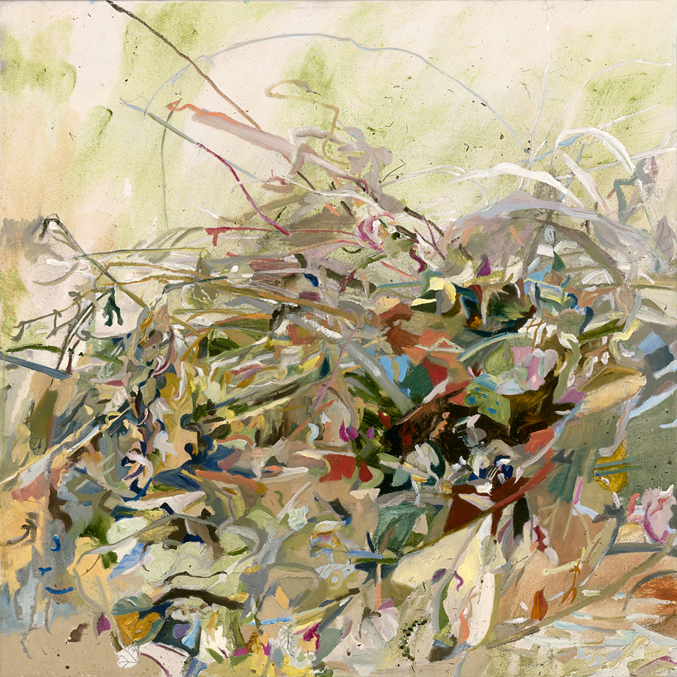 Erika Huddleston, Waco Creek VI NEW ROAD, 27 x 27 inches, oil on canvas[/caption]
